- Place
- Ignalina, Utena, and Švenčionys District Municipalities
- Region
- Aukštaitija
- Type
- national park with lake, forest, wetland, and cultural-heritage landscapes
- Address
- Aukštaitija National Park, Ignalina, Utena, and Švenčionys districts
- Coordinates
- 55.34391, 26.05693
- Visit duration
- 2-3 days if you want to combine lake, woodland, cultural-heritage, and ethnographic-village routes
- Best time
- May to September is most convenient for longer walks and water routes; in spring and autumn, check trail, road, and weather conditions.
Aukštaitija NP, Lithuanian National Park
Lithuania's oldest national park spans three districts
Aukštaitija National Park was established on 29 March 1974 as the Lithuanian SSR National Park and received its present Aukštaitija name in 1991. The oldest of Lithuania's five national parks extends through Ignalina, Utena, and Švenčionys district municipalities.
Official sources retain two area figures: the Saugoma.lt territory profile gives 40,974 hectares, whereas the VSTT and VLE park profiles give 41,056 hectares. The coordinate 55.3439098, 26.0569303 is a representative point near Meironys, not universal gates or the beginning of one route.
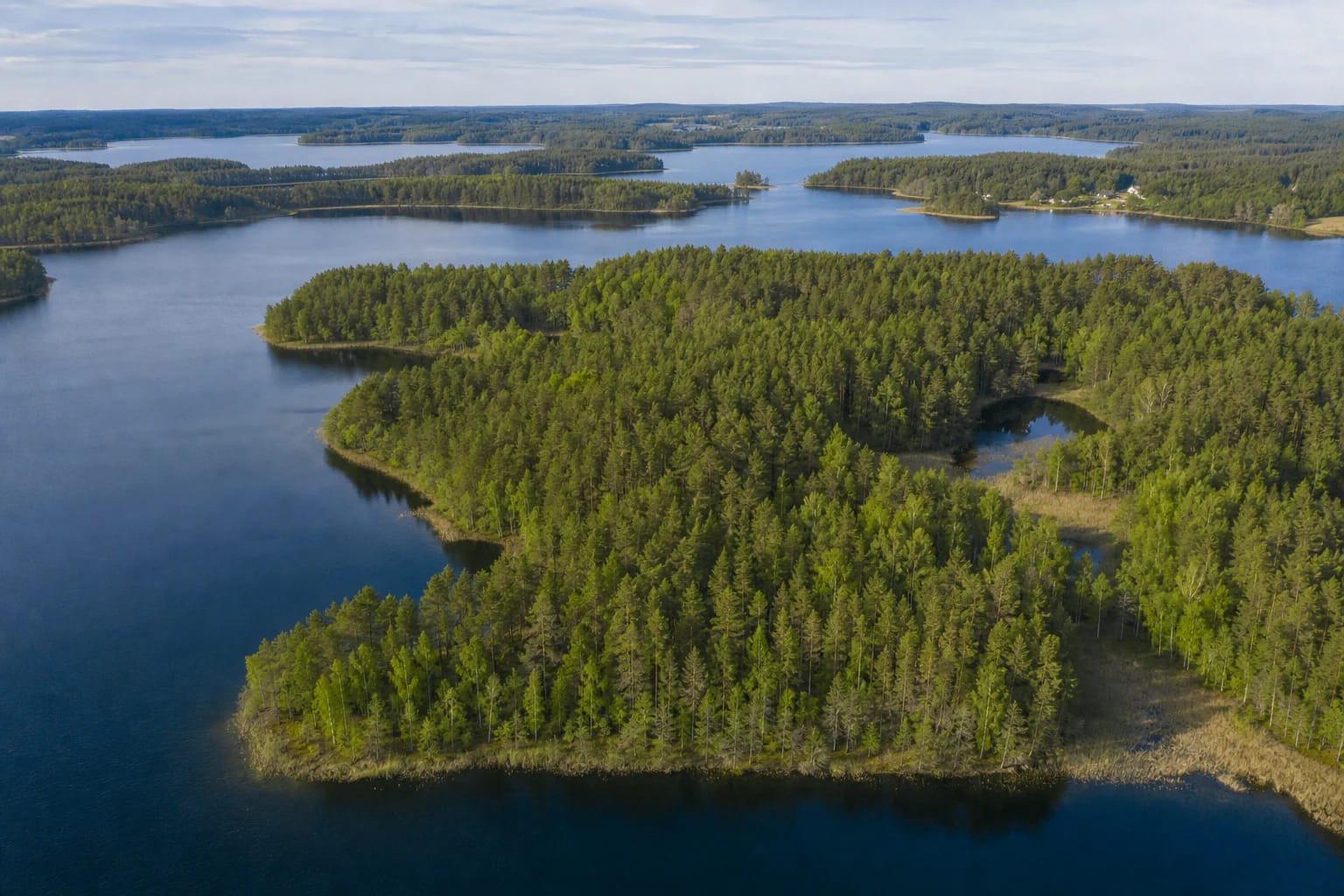
The park's core is formed by 127 lakes and two old forests
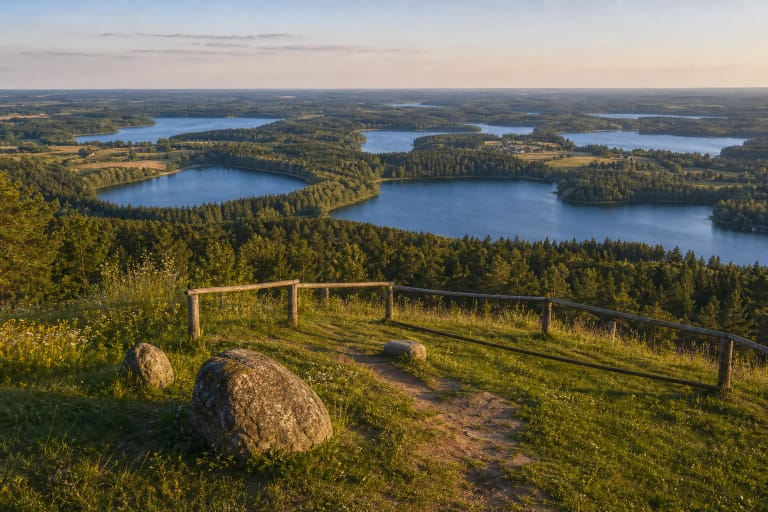
VLE counts 127 lakes within the park. The largest are Kretuonas, Dringis, and Tauragnas, with Tauragnas also Lithuania's deepest lake. Streams and narrow channels connect lake basins framed by the Ažvinčiai and Minčia forests; woodland covers about 65 per cent of the park, lakes about 15 per cent, and wetlands roughly 2,000 hectares.
Saugoma.lt lists two strict nature reserves and 28 designated reserves. Together they protect the Baluošas, Linkmenas-Ūkojas, Tauragnas, and Utenas lake basins, the Šiliniškės ridge and Ladakalnis, the upper Žeimena, forests, wetlands, and habitats of rare species.
Natural values are connected to a living cultural landscape
Aukštaitija National Park protects more than woodland and water: it includes hillforts, barrow cemeteries, Stone Age settlements, ethnographic villages, the Palūšė church ensemble, watermills, and the Stripeikiai Museum of Beekeeping.
Ladakalnis, the Ginučiai and Papiliakalnė hillforts, Palūšė, and the old villages tell different layers of the region's history. Visit them as separate stops rather than trying to fit the whole story into one short walk.
The easiest way to explore the park is to choose one lake-district direction
VLE describes a 14 km circular walking route from Ginučiai watermill, a 25 km cycling route from Palūšė, and a 30 km water route from Palūšė. Waymarking, water levels, and services can change, so consult current information from the park administration before setting out.
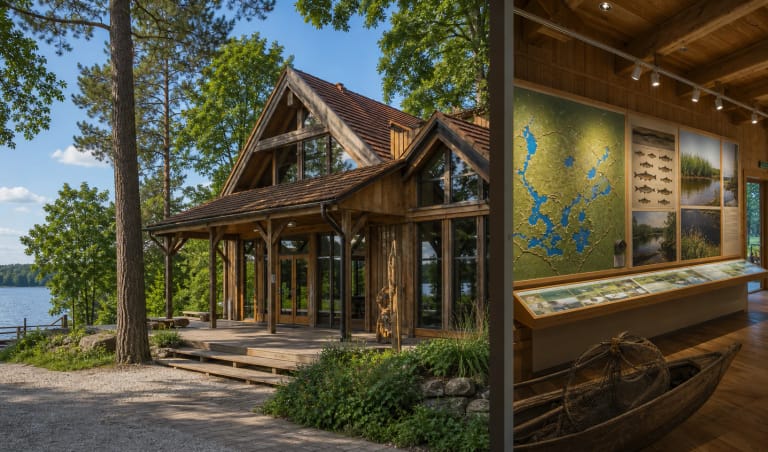
For many itineraries, the practical starting point is the park visitor centre at 16 Lūšių Street in Palūšė. The representative coordinate near Meironys is not the address of the visitor centre, Ladakalnis, a campsite, or boat hire - select a specific site and navigate to its actual approach.
A protected area has clear visiting rules
The state park visitor ticket is voluntary and helps maintain protected areas. It does not include separately charged museums, exhibitions, tours, or other services, so check current prices and opening times on each venue's official page.
Use designated recreation areas, pitch tents at campsites, and light fires only in established fire sites. Respect signs and seasonal restrictions, do not drive on unauthorised roads or disturb wildlife, and take all rubbish away.