- Place
- Ignalina District Municipality
- Region
- Aukštaitija
- Type
- national park visitor centre and exhibition
- Address
- Lūšių g. 16, Palūšė, Ignalina District
- Coordinates
- 55.32894, 26.10222
ANP Visitor Centre in Palūšė, Aukštaitija National Park Visitor Center in Palūšė
The best place to start the park
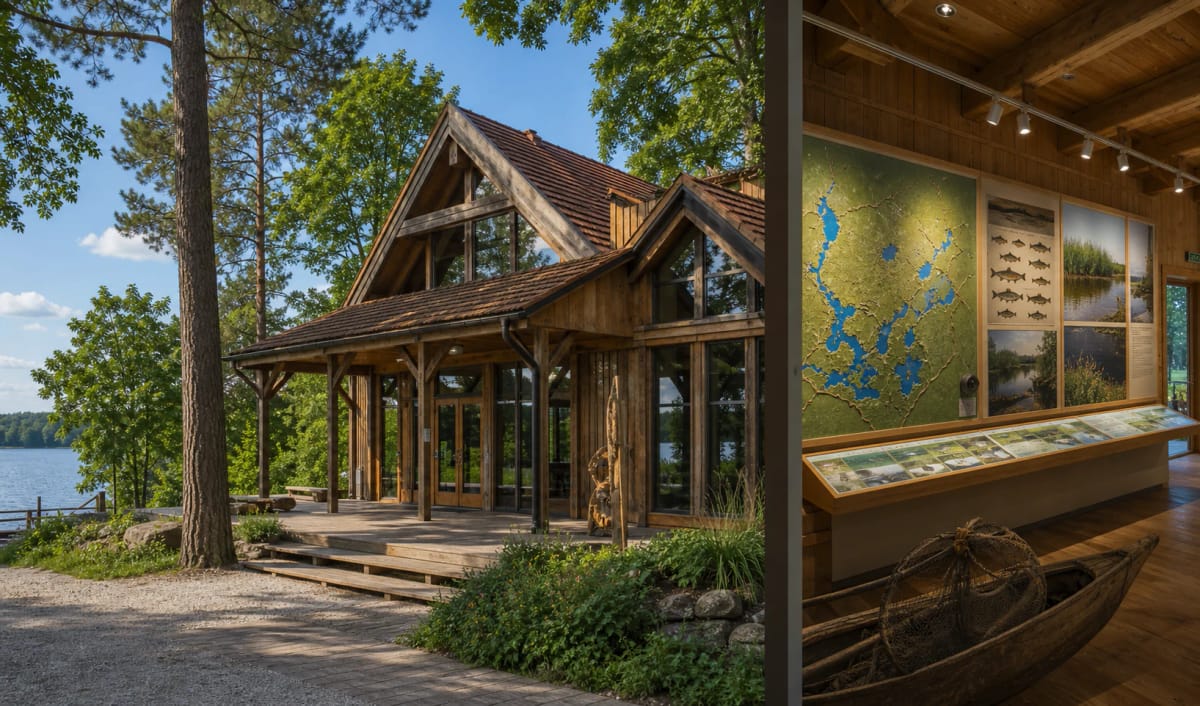
The Aukštaitija National Park Visitor Centre in Palūšė is the most practical place to begin a journey through Lithuania's oldest national park. Here you get more than a map or a quick recommendation: the centre explains why the region's lakes shaped distinctive ways of life and cultural traditions.
The official theme of the exhibition is the lake districts that determined distinctive cultural traditions. That wording is accurate: Aukštaitija National Park is presented not as a list of separate beauty spots, but as a connected system of lakes, forests, villages, and traditions.
Lakes, fishing, and old work
The exhibition presents older and modern fishing methods, timber rafting, and traditions of moving animals across water. These topics help visitors understand that the Aukštaitija lake district was not only a recreation area, but also a space of work, transport, and survival.
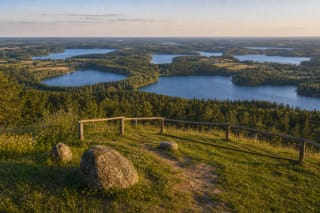
That context is useful once you leave the centre. When you walk to Lake Lūšiai, Palūšė Church, or the Ladakalnis panorama, the water reads not only as scenery but also as the basis of old crafts, routes, and village life.
The scale of Lithuania's oldest national park
Aukštaitija National Park was established on March 29, 1974, and is the oldest national park in Lithuania; its directorate is in Palūšė, by the visitor centre. The park stretches across the meeting point of Ignalina, Utena, and Švenčionys districts. Area figures differ slightly by source: VLE gives 41,056 ha, while protected-area information gives 40,974 ha. About 65 percent of the territory is forest and 15 percent is lakes.
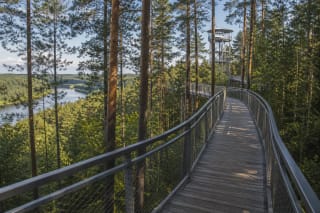
The visitor centre helps separate the park's themes: nature, villages, walking and cycling routes, water trips, viewpoints, and cultural-heritage sites. That is why it is worth stopping before, not after, your trip: you will know what to look for in such a large, lake-filled landscape.
The lake district: what to remember about the park's waters
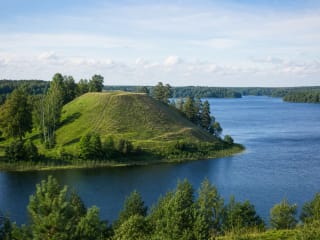
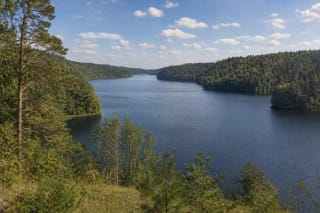
The park contains 127 lakes, mostly in its central part, connected by channels and streams. The largest is Kretuonas, 829 ha, while Tauragnas, 512 ha, is Lithuania's deepest lake. The Žeimena flows through the park, and protection focuses on the stability of its upper-course ecosystem. Another exceptional example is Baluošas with Ilgasalė island, where a small lakelet lies inside the island.
These facts belong to the whole park, not only to the visitor-centre building, but they explain why a route that begins in Palūšė quickly opens into a broad geography of lakes and islands. Beside the centre stands the 1757 wooden church of Palūšė with its bell tower, one of the park's best-known folk-architecture monuments.
Opening hours and planning
At the time of research, protected-area information listed the visitor centre as open Monday-Saturday 9:00-18:00 and Sunday 10:00-16:00, with a lunch break from 12:00 to 13:00; hours may be shorter before public holidays.
No reliable permanent ticket price was found during research, so check the official centre page for current prices and any paid services. If you are planning a water or walking route, arrive with enough time to ask about seasonal conditions.