
Lithuania’s ethnographic regions
Aukštaitija
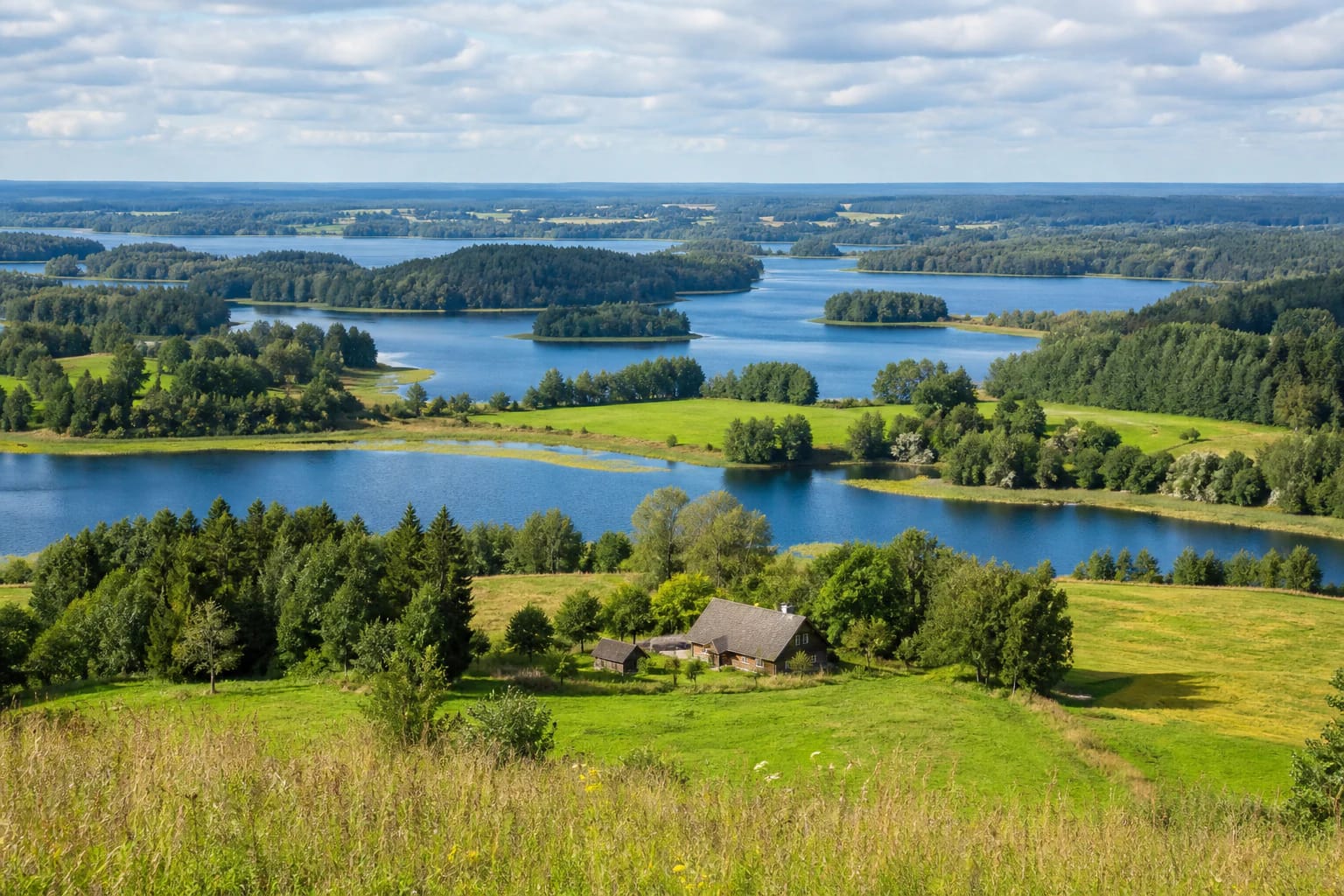
Aukštaitija is Lithuania's largest ethnographic region, stretching across the country's north-east and east. It is known for lakes, forests, hillforts, manor estates, and the sutartinės polyphonic singing tradition.
Aukštaitija
Where to start
Choose a place, compare visiting times or explore the area on the map.
Key places to visit in Aukštaitija:
Kernavė Archaeological Site
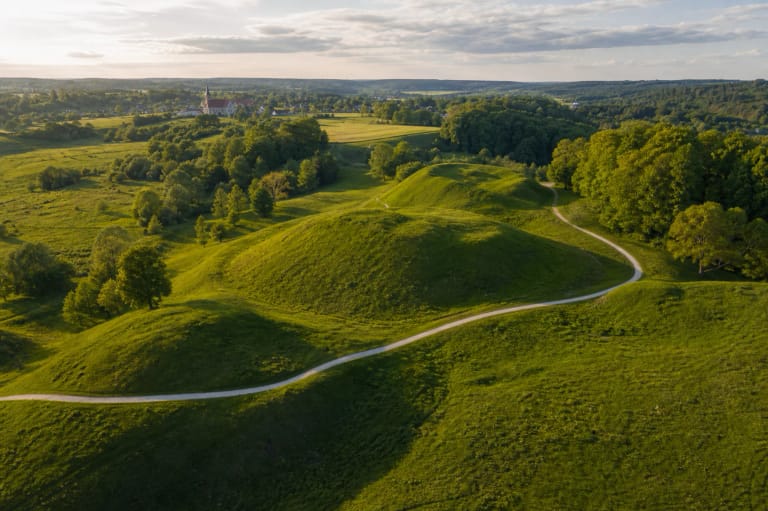
Kernavė Archaeological Site is a UNESCO-protected cultural landscape of the Neris valley, Pajauta Valley, and five hillforts, preserving some of the…
Ukmergė Hillfort
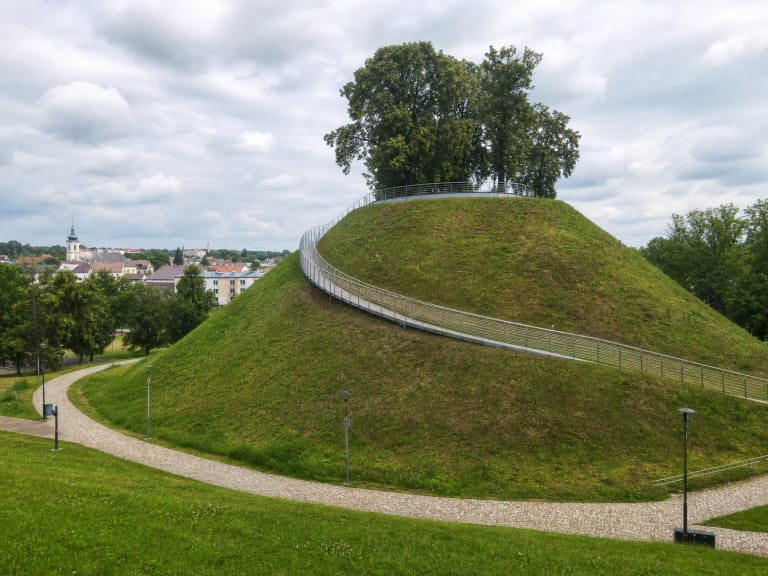
Ukmergė Hillfort is the city-centre site of Vilkmergė Castle by the confluence of the Ukmergėlė and Šventoji, dated to the fourteenth-mid-fifteenth…
Taurapilis Hillfort
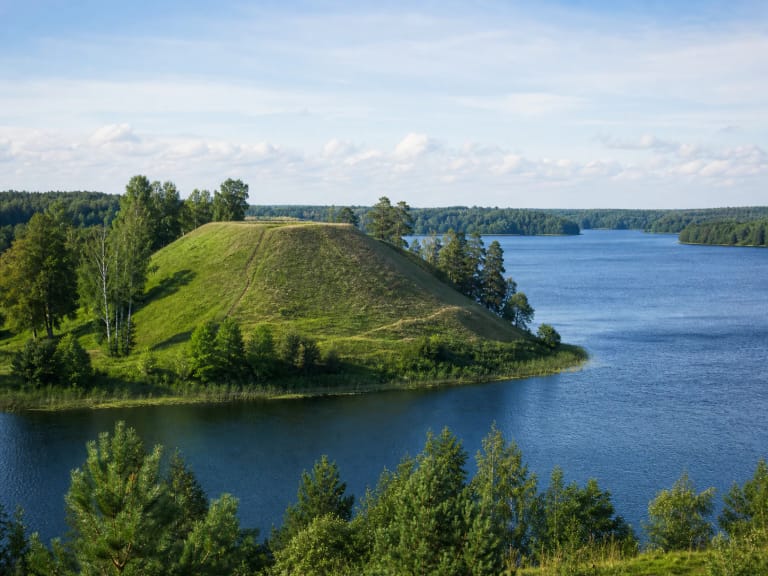
Taurapilis Hillfort stands on the southern shore of Lake Tauragnas.
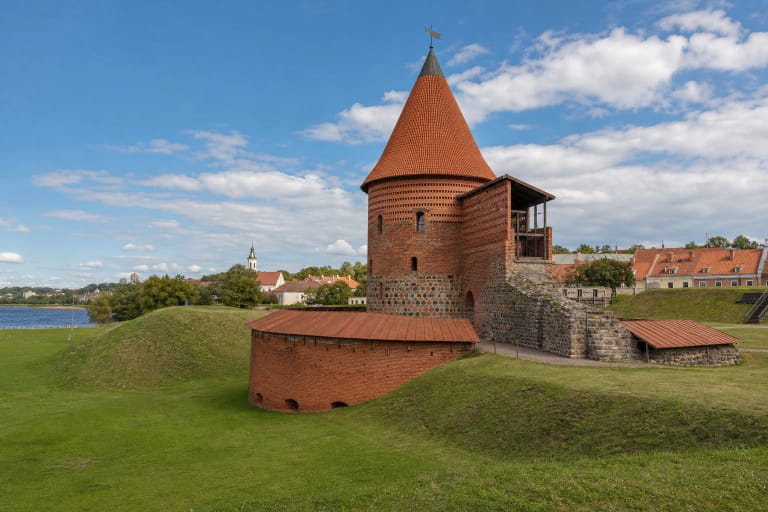
Kaunas Castle
Kaunas Castle at the Nemunas and Neris confluence is one of Lithuania's oldest brick castles and the clearest sign of medieval Kaunas' defensive role.
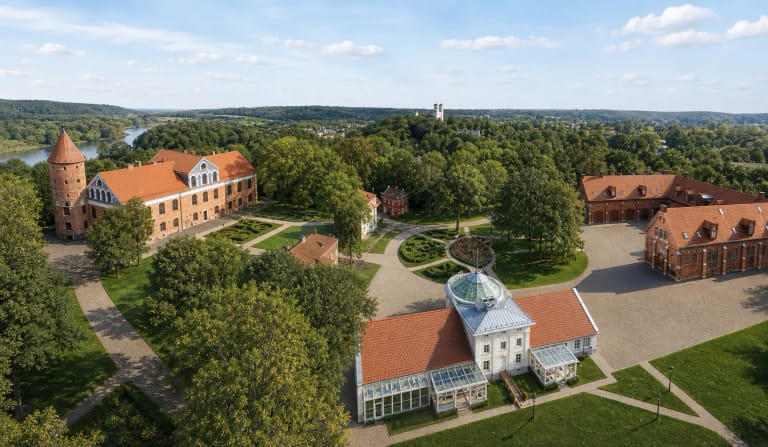
Raudondvaris Manor
Raudondvaris Manor by the Nevėžis is one of Lithuania's clearest Renaissance manor ensembles, today operating as a cultural, event, and heritage…
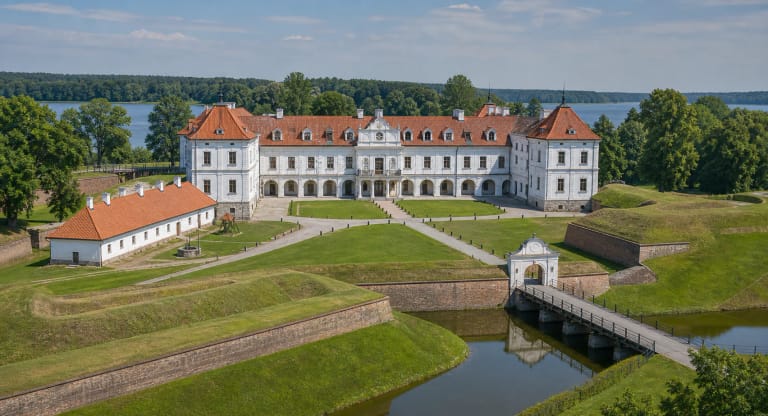
Biržai Castle
Biržai Castle is the Radziwiłł bastion-fortress complex beside Lake Širvėna, with reconstructed palace buildings, the Sėla museum, and a visible…
All places in this guide
Places on the mapKernavė Archaeological Site2-4 hoursUkmergė Hillfort45 minutes-1 hourTaurapilis Hillfort1-1.5 hoursKaunas Castle1-1.5 hoursRaudondvaris Manor1-2 hoursBiržai Castle1.5-3 hoursPakruojis Manor2-4 hoursTaujėnai Manor1.5-3 hoursStelmužė Oak30-60 minutesPuntukas Stone30-60 minutesMikieriai Outcrop30-60 minutesCow Cave45-90 minutesMokas and Mokas's Son30-60 minutesAnykščiai Tree Canopy Walk1-1.5 hoursKirkilai Observation Tower45-90 minutesMindūnai Observation Tower30-60 minutesSartai Observation Tower30-60 minutesBijeikiai Observation Tower30-60 minutesLadakalnis30-60 minutesPajauta Valley1-3 hours with the hillforts and museumLake Asveja1-3 hours for the Dubingiai side, a full day with trails or boatingLake Tauragnas1-3 hours for shores and nearby objectsKauno Marios2-4 hours for one route, a full day with trails or a boat tripJurkiškis Stream Nature Trailabout 30-90 minutes, depending on pace and conditionsJuniper Valley Educational Trail45-90 minutesMūša Tyrelis Educational Trail2-4 hours for the full routeDubrava Strict Nature Reserve Educational Trail45-60 minutes, longer with the return on the same routeŠventoji Nature Trail in Anykščiai2-3 hoursPažaislis Monastery1-2 hours, longer with a guided tour or concertKaunas Ninth Fort1.5-3 hoursChrist's Resurrection Basilica45-90 minutes, longer with the terrace or a guided tourLithuanian Museum of Ethnocosmology1-2 hours for a daytime tour; night programmes depend on weather and bookingRumšiškės Open-Air Museum2-5 hours, or a full day with an event or long walkMolėtai Astronomical Observatory1-2 hours with an organised programme; independent visiting is limitedAnykščiai Narrow-Gauge Railway1-3 hours, depending on route and eventDubingiai Castle Site1-1.5 hoursFormer Kaunas Central Post Office20-45 minutes for the exterior; longer during a tour or eventŽaliakalnis Funicular15-40 minutes; longer when combined with Žaliakalnis and the Resurrection BasilicaLithuanian Officers' Club in Kaunas20-40 minutes for the exterior; 1-2 hours during an event or arranged visitAleksotas Funicular20-45 minutes; longer with the Aleksotas viewpointNational M. K. Čiurlionis Museum of Art1.5-3 hours; longer with temporary exhibitions and virtual-reality experiencesVytautas the Great War Museum1.5-3 hours; longer with the tower, education, or the military-technology exhibition at another addressRomuva Cinema in Kaunas10-20 minutes for the exterior; 1.5-3 hours with a film screening or eventPienocentras Palace10-25 minutes for the exterior; interior is usually not a tourist siteBank of Lithuania Palace in Kaunas15-30 minutes for the exterior; about 1 hour on an official tourResearch Laboratory in Kaunas15-30 minutes for the exteriorPažanga Palace10-20 minutes for the exterior; interior only if access is arranged in advanceLand Bank Palace in Kaunas10-20 minutes for the exteriorChamber of Commerce, Industry and Crafts Palace15-25 minutes for the exterior; longer only with reliable interior accessKaunas County Municipality Palace10-20 minutes for the exterior and memorial plaqueState Savings Bank Palace in Kaunas10-25 minutes for the exterior; the interior is administrative, not a permanent tourist exhibitionPhysical Education Palace in Kaunas10-25 minutes for the exterior; interior depends on active university useFirefighters' Palace in Kaunas10-20 minutes for the exterior; the building is still an active fire stationKaunas Sports Hall10-20 minutes for the exterior; the interior is most reliably visited during events or hired activitiesLabour Palace in Kaunas15-30 minutes for the exterior; interior is most reliably seen during events, exhibitions, or arranged activitiesKaunas State Philharmonic15-25 minutes for the exterior; 1-2 hours or more when attending a concertKaunas Evangelical Reformed Church10-20 minutes for the exterior; interior is most reliably visited during services or parish eventsJewish Bank in Kaunas10-15 minutes for the site and context; 1-2 hours or more if visiting the zoological museumKaunas City Sickness Fund Palace10-15 minutes for architecture from the street; this is an active medical institution, not a museum visitKaunas Tatar Mosque10-20 minutes for the exterior and Ramybes Park context; interior only during prayer times or by arrangementNeo-Lithuania Student Corporation Palace in Kaunas15-25 minutes for the exterior and Parodos Hill context; interior only during events or by arrangementMaironis Lithuanian Literature Museum1-2 hours; 2-3 hours with a tour, cellars, garden, and temporary exhibitionsKaunas State Musical Theatre10-20 minutes for the exterior and City Garden; 2-3 hours with a performanceHigher Technical School in Kaunas10-20 minutes for the exterior from Tvirtoves aleja; interior only during institutional events or by arrangementHistorical Presidential Palace in Kaunas1-1.5 hours; longer with a guided tour and temporary exhibitionsSugihara House in Kaunas45-90 minutes; longer with the documentary film or an educational programmeKaunas Choral Synagogue15-30 minutes for the exterior; longer only by arranged visit or during an eventSt. Michael the Archangel (Garrison) Church in Kaunas20-45 minutes for the exterior and square; longer during services, events, or when the interior is openAteitininkai Union Palace in Kaunas10-20 minutes for the exterior; longer as part of a Laisvės aleja modernism routeVytautas Magnus University Medical Faculty Palace15-25 minutes for the exterior; longer only with an arranged university or event visitKaunas Clinics Complex20-35 minutes for the historic part of the complex from the outsideHouse of Perkūnas in Kaunas15-25 minutes for the exterior; longer only with an arranged exhibition or tourTadas Ivanauskas Zoological Museum in Kaunas1-2 hours for exhibitions; longer with an education programme or tourAukštaitija National Park Visitor Centre in Palūšė45-90 minutes; longer if you are planning a park route on siteLabanoras Forestfrom 2 hours for one stop to a full day for a routePaliesius Manor45-90 minutes for the setting; longer with a concert or eventCirkliškis Manor45-90 minutes for exterior and park; longer with a local eventSalakas Church of Our Lady of Sorrows20-45 minutes; longer when attending servicesSudeikiai Church of the Blessed Virgin Mary30-60 minutes, longer when combined with the Lake Alaušas shoreZarasai Regional Museum1-1.5 hours; longer with branches or temporary exhibitionsDusetos Art Gallery30-60 minutes; longer for openings or educationStelmužė Church of the Cross of the Lord Jesus30-60 minutes; longer with Stelmužė Oak and the manor landscapeAstravas Manor45-90 minutes for the exterior, park, and Širvėna lakeshoreBiržai Evangelical Reformed Church20-45 minutes; longer during a service or eventLikėnai Park and Smardonė Spring30-60 minutes; longer with Biržai Regional Park sitesPasvalys Sinkhole Park30-60 minutes; longer with a Pasvalys town routePanevėžys Regional Museum1-2 hours; longer with branches or educational programmesPanevėžys Cathedral of Christ the King20-45 minutes; longer when attending MassKupiškis Reservoir1-2 hours for the shore; half a day with rest or water activitiesAntašava Manor30-60 minutes for the exterior; longer with the park and town settingŠimonys Forestfrom 1-2 hours for selected stops to a full day for a forest routeJoniškėlis Manor45-90 minutes for the exterior, park, and complex; longer with local eventsLithuanian Aviation Museum1-2 hours; longer with education or the Flight Discovery CentreDevils' Museum in Kaunas45 minutes-1.5 hoursKaunas Picture Gallery1-2 hours; longer with a temporary exhibition or eventLithuanian Education Museum1-1.5 hours; longer with an educational programmeVDU Botanical Garden in Kaunas1-2.5 hours; longer during flowering periods or with the conservatoryJiesia Landscape Reserve and Napoleon Hill45 minutes-1.5 hoursKaunas Fortress Seventh Fort1-2 hours; longer with a tour or eventKaunas Fortress Sixth Fort1-1.5 hours; longer with a guide or eventKaunas Fortress First Fort45 minutes-1 hour; only for safely accessible parts of the territoryScience Island in Kaunas1.5-3 hours; longer with children or an education programmeArt Deco Museum in Kaunas1-1.5 hours; usually with a reserved guided experienceAtomic Bunker in Kaunas1-1.5 hours; depends on the tour formatPaberžė and the 1863 Uprising Museum1-2 hours; more with the church, cemetery, and Tėvas Stanislovas memory sitesDotnuva Monastery Ensemble45 minutes-1.5 hours; longer with interior visit or MassBaisogala Manor45 minutes-1.5 hours; about 45 minutes inside the palace with a guideĄžuolija Reserve Educational Nature Trail45 minutes-1.5 hoursVyžuonos Pinewood Nature Trail2-3 hoursMinčia Watermill30-60 minutes for exterior viewing, longer with booked servicesDauniškis Park and Fountain30 minutes-1.5 hoursSirvėta Mythological Trail45 minutes-1.5 hoursZarasai Observation Circle20-45 minutesŠiliniškės Observation Tower30-60 minutesHorse Museum1.5-3 hoursRokiškis Manor1.5-2.5 hoursBurbiškis Manor1.5-3 hoursBistrampolis Manor1.5-2.5 hoursSiesikai Castle1-1.5 hoursKėdainiai Old Town1.5-3 hoursKirkilai Karst Lakes1-2 hoursŠeimyniškėliai (Voruta) Hillfort1-2 hoursŽiegždriai Geological Trail1-1.5 hoursKačėniškė Hillfort Area1-1.5 hoursCliffs of Kauno Marios Regional Park2-5 hoursGražutė Regional Parkhalf a day to a full dayGinučiai and Papiliakalnė Hillforts45 minutes-1.5 hoursGinučiai Watermill30-60 minutes from outside, longer if you book the exhibition visitDubingiai Bridge20-45 minutes, longer with Dubingiai Castle SiteBaluošas Ilgasalė1-3 hours on a water route, depending on the starting pointLake Sartai1-3 hours for shores and viewpoints, longer for water routesŽeimena River1-3 hours for stops, a full day or several days for paddlingPakalniškiai Hillfort30-60 minutesKulautuva Pinewoods1-3 hours; longer if choosing longer wellness routesVersva Landscape Reserve30-90 minutes depending on the chosen section of the valleyKulionys Hillfort30-60 minutesPuntukas' Brother20-45 minutesPresident's Oak in Debeikiai10-20 minutesVarniškės Oaks15-35 minutesOld Hollow Trees of Labanoras1-3 hours depending on the chosen trailKaunas Town Hall45-90 minutes; longer for exhibitions or eventsKaunas Archcathedral Basilica30-75 minutes; longer if attending services or a guided routeSt. George the Martyr Church and Bernardine Monastery in Kaunas30-75 minutes; longer if combined with the castle and SantakaPalūšė Church of St. Joseph20-60 minutes; longer if combined with Palūšė village and Lake LūšiaiBeekeeping Museum in Stripeikiai1-2 hours; longer with an educational activity or family visitNarkūnai Hillfort45-90 minutes; longer if combined with an Utena-area routeŽagarė Manor Estate1-2.5 hours; longer with park, visitor centre, and Žagarė routeŽagarė Esker1-2 hours; about 3.6 km for the educational trailKrekenava Regional Park Visitor Centre45-90 minutes; longer with a guide or route planningDovainonys Outcrop30-90 minutes; longer with the trail toward the Uolė stream and hillfortsKrekenava Basilica30-90 minutes; longer during services or indulgence feastsAlanta Manor1-2 hours; longer with galleries and the towerIlzenbergas Manor1.5-3 hours; longer with the park, island, and toursŽasliai Traditional Crafts Centre45-120 minutes, only after confirming an educational programme or eventLost Shtetl Museum in Šeduva3-4 hoursSalos Manor1-2 hours, longer with the park or an eventVideniškiai Monastery45-90 minutesKavarskas St. John Spring and Lourdes20-40 minutes; longer with the church and cemetery Lourdes grottoŠeteniai1-2 hours with the park and Nevėžis valleyAnykščiai Church of St. Matthew the Apostle and Evangelist30-45 minutes with the tower climbAntalieptė Reservoirseveral hours by kayak, up to a full dayJonas Biliūnas' Grave "Laimės žiburys"20-40 minutesVytautas the Great Church in Kaunas20-40 minutesSt. Gertrude Church in Kaunas20-30 minutesSt. Francis Xavier (Jesuit) Church in Kaunas30-60 minutesMykolas Žilinskas Art Gallery1-1.5 hours when operating; currently closed for reconstructionNational Kaunas Drama Theatre1.5-3 hours for a performance; 10-15 minutes for the facadeKėdainiai Minaret20-40 minutesŽiežmariai Synagogue30-45 minutesPalėvenė (Komarai) Manor30-60 minutes with park and dolomite columnsRaguvėlė Manor1-1.5 hoursBikuškis Manorabout 1 hour with the park and lake viewsPašiliai Bison Enclosure1-2 hours with the forest and trailUpytė Hillfort30-45 minutes; 1.5-2 hours with the townPresident Antanas Smetona's Užugiris Manor1-1.5 hours; 2-3 hours with the school-museum and birthplaceSaldutiškis Manor30-60 minutes with the park and linden alleyAdomynė Manorabout 1 hour; longer with the park or an educational programmeŠlyninka Watermill1-2 hours with a tour or educational programmeVaitkuškis Manor30-45 minutes for the ruins and parkŽalsvasis Spring15-30 minutesOld Zapyškis Church30-45 minutesDaugyvenė Cultural History Museum-Reserve1.5-3 hours for one department; a full day for severalSkaruliai Church of St. Anne30-45 minutesLinkuva Carmelite Monastery45-60 minutesVandžiogala Holy Trinity Church30-45 minutes, or 1 hour with the old cemeteryČiobiškis Manor30-45 minutes for exterior estate and church viewingPienionys Manor30-45 minutes for exterior views of service buildings and parkGačionys Manor1.5-2 hours for the park and car museumŠešuolėliai Manor1-1.5 hours for the territory and park by prior arrangementŽvelgaitis Hillfort30-60 minutesVelikuškės Hillfort30-60 minutes; more if also visiting Sala HillfortKalnelis Hillfort20-40 minutesAntalieptė Carmelite Monastery30-60 minutesPalėvenė Dominican Monastery30-60 minutesTroškūnai Church and Monastery30-45 minutesKėdainiai St Joseph's Church20-30 minutesVetygala Outcrop30-45 minutesTabokinė Exposure30-45 minutesLake Kretuonas1-2 hours for the lake, birdwatching, and Lygumai towerKupiškis Ethnography Museum1 hour; longer if visiting branchesKruonis Pumped Storage Hydroelectric Plantabout 1.5 hours for the tourKaišiadorys Cathedral20-40 minutesLake Drūkšiai2-4 hours for the shore and a viewpointIgnalina Nuclear Power Plant1 hour for the information centre; several hours for an expeditionStasys Museum1-1.5 hoursBiržai Pedestrian Bridge over Lake Širvėna30-60 minutes with stops"ab" Underground Printing Press30-45 minutes, with advance registrationVytautas Valiušis Ceramics Museum1 hour; 2-3 hours with an educational programmeJoniškis Synagogue Complex45-60 minutesBattle of Grunwald Memorial Park30-60 minutesAntanas and Jonas Juška Ethnic Culture Museum45-60 minutesBadger Cave Geological Trail45-90 minutesAdomas Petrauskas Museum30-45 minutesSirvėta Regional Parkhalf a day to a full dayAnykščių vynas2-2.5 hours for a tour with tastingVepriai Lake1-2 hours by the lake; add 2-3 hours for the full Calvary routeLituania Restituta Independence Monument10-15 minutes; can be combined with a walk through Ukmergė Old TownNalšia Museum1-1.5 hours for the main museumTadas Ivanauskas' Obelynė Homestead1.5-2 hours for the house, park, and orchardŽeimiai Manor1 hour for a pre-booked tour of the manor and parkJonava Regional Museum1-1.5 hoursBabtynas-Žemaitkiemis Manor1-1.5 hours for the estate and collections, by prior arrangementStačiūnai Windmill30-45 minutes by prior arrangementPanevėžys Narrow-Gauge Railway Station and Depot1 hour for the depot programme; 2-4 hours with a train tripRinkuškiai Brewery40 minutes to 2.5 hours, depending on tours and tastingsLaukminiškiai Village Museum45 minutes-1 hour by prior arrangementObeliai Freedom Fights History Museum1-1.5 hoursTervydžiai Dendrological Park1-1.5 hours, by prior arrangementDoll House Museum1-1.5 hours by prior bookingVisaginas and the Visaginas City Museum1-1.5 hours for the museum; half a day with the city walkGinučiai Oak Grove30-60 minutes for the grove; half a day with the ridge trailUtena Regional Museum1-1.5 hoursFreedom Fights Museum in Utena45-60 minutesLake Fishing Museum45-60 minutesTauragnai Regional Museum30-45 minutesMeironys Ethnographic Villagehalf a day with the educational trail and PalūšėAngel Museum and Sacred Art Centre60-90 minutes; 2-3 hours with St Matthew's Church, its tower viewpoint, and Bishop's SquareChurch of St Matthew the Apostle and Evangelist in Rokiškis45-75 minutes; 2-3 hours with Independence Square and Rokiškis ManorUkmergė Local History Museum1.5-2 hours; approximately 3 hours with a temporary exhibition or the 1.5-hour guided tourAntanas Baranauskas and Antanas Vienuolis Memorial Museum1-1.5 hours; approximately 2 hours for an unhurried visit to the writer's house, granary, and Stanislovas Petraška exhibitionAntazavė Manor1.5-2 hours; approximately 3 hours with a booked craft workshop and a walk through the park terracesUtena Church of the Ascension of Christ30-45 minutes; approximately 1 hour when attending Mass and exploring the churchyard and Angel chapel quietlyDegučiai Nature Trail1-2 hours; the official time for a slow interpretive walk is 2 hoursJuozas Miltinis Drama Theatre15-30 minutes for the exterior; 1 hour 20 minutes for an educational tour; 2-4 hours for a performanceKrekenava Observation Tower30-45 minutes for the tower; 1-2 hours with the Sensory Trail and visitor centreKupiškis Church of the Ascension of Christ30-45 minutes; approximately 1 hour when attending Mass and examining the five altars quietlyPasvalys Regional Museum1-1.5 hours; allow 2 hours with the Antanas Poška display, children's room, or a booked educational activityĄžuolynas Park1-2 hours for the main paths; 2.5-3 hours including Adam Mickiewicz and Song valleys and the sports-complex surroundingsPakruojis Synagogue45-75 minutes; allow about 60 minutes for the educational programmeMažieji Žinėnai Hillfort45-90 minutes for the enclosure, ramparts, and a safe Neris view; longer if descending forest paths towards the ŠlėnaKaunas Fortress IV Fort1.5-2 hours for a guided tour; about 45-60 minutes for only the permitted surface route and memorialKėdainiai Regional Museum1-2 hours; approximately 3 hours with Kėdainiai Old Town and the Radziwiłł MausoleumFolk Music Museum in Kaunas45-60 minutes for a booked educational session; independent exhibition visits are currently unavailableHoly Trinity Seminary Church in Kaunas25-45 minutes for the church and exterior, if the interior is openKėdainiai Town Hall20-40 minutes for the building and courtyard; longer for an event or guided visitRozalimas Forest Park1.5-2.5 hours one way; 3-4 hours when returning along the same trailKaukas Stairs30-60 minutes; about 1.5 hours when combined with a Žaliakalnis modernist architecture walkJoniškis Basketball Museum1-1.5 hours with an interpretation; groups agree their duration when bookingKačerginė Springs Trail1-2.5 hours, depending on the selected 2.6-5.5 km option or the full route of roughly 6 kmMinaičiai Partisan Bunkerabout 45-60 minutes with an advance-booked tour; allow longer on commemoration daysNemunas Island in Kaunas1-2 hours; 3-4 hours with Science Island, the pool, or an eventKaunas Fortress Fifth Fort1.5-2 hours with a guide; less only for permitted above-ground parts of the fortJuozas Miltinis Memorial Apartment30-45 minutes independently; 45 minutes for a guided tour; 50-60 minutes for an educational activityŽagarė Cherry Orchard30-60 minutes for a quiet walk; longer when combined with other places in ŽagarėPabiržė Holy Trinity Church30-45 minutes; approximately 1 hour when attending Mass and examining the interior quietlyVabalninkas Church of the Assumption of the Blessed Virgin Mary30-45 minutes; approximately 1 hour when attending Mass and examining the church and churchyard ensemble quietlyBiržai Regional Park Visitor Centre45-60 minutes; longer with a specialist or while planning a park routePasvalys Church of St John the Baptist30-45 minutes; longer with the museum tour or a serviceLabanoras Regional Park Visitor Centre45-75 minutes for the exhibition; longer for route planning or an educational activityKulautuva Park45-90 minutes; 2-3 hours with Kulautuva's pinewoods and historic town routeAnykščiai Arts Incubator - Art Studio45 minutes to 2 hours; longer for an exhibition, workshop, or eventRadviliškis Church of the Nativity of the Blessed Virgin Mary30-45 minutes; about 1 hour before or after Mass if you want to examine both the church and the belfry calmlyBaisogala Church of the Holy Trinity30-45 minutes; about 1 hour with the churchyard and, if available that day, the surroundings of the Komarai family burial cryptPanevėžys Puppet Wagon Theatre30-45 minutes for the building and courtyard; longer for a specific performance or education programmePanevėžys Church of Saints Peter and Paul30-60 minutes; longer if the church is open and you want to see the organ and churchyardGabrielė Petkevičaitė-Bitė Public Library1-2 hours; longer for a tour, exhibition, or work in a reading roomRamygala Church of St John the Baptist30-60 minutes; longer if the interior and churchyard heritage can be seenLaurynas Gucevičius Square30-60 minutes for the square and fountain; longer when combined with the museum, library, church, and central KupiškisTauragnai Church of St George20-40 minutes for the exterior; longer only when interior access is arranged around Mass or with the parishZarasai Church of the Assumption of the Blessed Virgin Mary30-60 minutes; longer if the interior and churchyard gates can be examined quietlyDusetos Holy Trinity Church30-60 minutes; longer if you can see the interior and the churchyard Stations of the CrossOld Utena Post Station30–60 minutesTaujėnai Church of the Exaltation of the Holy Cross30–60 minutesDusetos Sculpture Park30–75 minutesKauno Street in Jonava20-45 minutes; about 1.5-2 hours with Jonava Regional Museum and a historic-centre walkChurch of St James the Apostle in Jonava30-60 minutes; 1.5-2 hours with Jonava Regional Museum and a walk beside the NerisJoninės Valley45-90 minutes for the valley, amphitheatre and pond paths; longer during an eventTaurosta Park45 minutes-1.5 hours; longer if continuing along the Neris by bicycleLight Tower. Guardian of the City10-20 minutes; about 1-2 hours with a central Jonava routeJonava Old Jewish Cemetery30-45 minutes; about 1.5-2 hours with Kauno Street and Jonava Regional MuseumJonava Ponds1.5-3 hours for a walk beside several or all four ponds; longer with swimmingPedestrian and Cycle Bridge over Žeimiai Street15-30 minutes; about 1-2 hours with Joninės Valley and the Jonava PondsKėdainiai Evangelical Reformed Church and Radziwiłł Mausoleum45-75 minutes; 2-3 hours with a Kėdainiai Old Town routeKėdainiai Old Market Square and Synagogue Complex30-45 minutes for the square and exteriors; 1-1.5 hours with the Multicultural Centre exhibitionKėdainiai Šviesioji Gymnasium15-30 minutes for the facades; about 45-60 minutes only when access to the courtyard or historic interior has been arrangedJanina Monkutė-Marks Museum-Gallery60-90 minutes for the exhibitions; add 90-120 minutes only for a pre-booked workshopTraditional Crafts Centre at Arnetai House30-45 minutes for the centre and current exhibition; approximately 1.5 hours with a pre-booked workshopKėdainiai Great Market Square and Janusz Radziwiłł Monument30-45 minutes for the square and monument; 2-3 hours with the surrounding Old Town sitesSkinderiškis Kęstutis Kaltenis Dendrological Park2-3 hours for the principal circuit; 3-4 hours for a botanical walk through more collection plotsPanevėžys Photography Gallery30-60 minutes; about 2-3 hours with Panevėžys Regional Museum and Stasys MuseumPadaliai-Čiobiškis Reaction Ferry10-20 minutes for a crossing without a queue; allow 30-45 minutes for waiting and a brief stop on both banksMaisiejūnai Hillforts45-90 minutes for both hillforts; up to 2 hours when including the barrow-cemetery areaCardinal V. Sladkevičius Homestead and Guroniai Rosary Mysteries Park45-75 minutes; roughly 1.5-2.5 hours with a pre-arranged exhibition visit and the separate birthplace crossGirelė Nature Trail and Birdhouse Avenue45-75 minutes to Girelė I Pond; 1.5-2 hours when returning along the same trailPanevėžys Civic Art Gallery60-90 minutes for the main gallery; 90-150 minutes with the Ceramic Art Pavilion and courtyard display‘Ekranas’ Reservoir Shore1-2 hours for the main terrace and several recreation areas; 2.5-4 hours for a longer out-and-back walkPanevėžys Culture and Recreation Park1.5-3 hours for the path loop, Nevėžis bank, and recreation areas; allow half a day with the playgrounds, disc golf, or a picnicPanevėžys Freedom Square30-60 minutes for the square; 1.5-2.5 hours with Old Riverbed Park, the theatre, and nearby cultural venuesPanevėžys Old Riverbed Park45-90 minutes for the pond, island, and terraces; 1.5-2.5 hours with an evening fountain show and nearby city-center sightsSkaistakalnis Park1-1.5 hours for the principal paths, ponds, and bridges; 2-3 hours with the 12-stop route or an event at PragiedruliaiJ. Masiulis Bookshop20-45 minutes for the shop and facade; 1-2 hours with the courtyard and nearest central cultural sightsPanevėžys Windmill I15-25 minutes for the exterior from public approaches; interior access only with advance confirmation from the administratorPanevėžys Church of the Holy Trinity30-45 minutes for the exterior and interior when open; about 1 hour with the rectory setting and Nepriklausomybės SquarePanevėžys Orthodox Church of the Resurrection20-35 minutes for the exterior and cemetery complex; longer if interior access has been arranged or you attend a serviceOld Mill in Ramygala45-90 minutes when a programme or mill visit has been arranged in advanceĮstra Aviation Museum1-1.5 hours for the outdoor and indoor displays; around 2 hours with a pre-booked educational programme or a separate visit to the Porcelain GalleryFlax Museum in Stultiškiai Windmill45-75 minutes for the displays; about 90 minutes with a pre-arranged practical workshopJuozas Tumas-Vaižgantas and Book Smugglers Museum60-90 minutes for the museum; workshops last about one hour, with extra time needed to walk from the car parkJuozas Zikaras Memorial Homestead45-60 minutes for the house and yard; 60-90 minutes with a pre-booked educational programmePuziniškis Museum - Gabrielė Petkevičaitė-Bitė's Birthplace1-1.5 hours for the exhibition and manor setting; longer with a pre-booked educational programmeBiržai Narrow-Gauge Railway Complex30-45 minutes for a self-guided exterior look; do not rely on published hours for interior accessWinding Bridge over the Apaščia River15-30 minutes; about 1-2 hours when continuing along Lake Širvėna and across the long pedestrian bridgeBiržai Independence Square20-40 minutes; 1.5-2.5 hours with Biržai Castle, the historic centre, and nearby cultural stopsPasvalys City Watermill15-30 minutes to view the building and weir only from publicly accessible parts of the Lėvuo riverbankBaltasis Spring at Barklainiai15-30 minutes to see the collecting ring, short mineral-whitened channel, and Orija bankBaltic Way Valley of Crosses20-40 minutes for the altar, crosses, and surviving inscriptions; longer during a commemorative eventKupiškis (Aukštupėnai) Hillfort30-60 minutes for the summit, earthwork ring, and views; longer if continuing along the Kupiškis Reservoir shoreUošvės Liežuvis Island Dendrological Park1-2 hours for the island paths, tree labels, and reservoir views; longer during eventsHanseatic Merchants' Flax Warehouse15-25 minutes for the exterior and its trading context; interiors only during an announced event or an arranged visitDidžiosios Kovos Partisan District Memorial Park1-2 hours for the principal crosses and memorials; longer for more of the 55-hectare grounds or a guided visitLino Verdenė Spring45-90 minutes for the walk from the car park, a close look at the spring, and time on the Lake Sėtikis shoreSirvėta Regional Park Visitor Centre45-75 minutes for the exhibition and route planning; 2-3 hours with Šventa Manor or the 1.3 km Mythology TrailLygumai Observation Tower20-40 minutes for the tower; 1-2 hours with stops around Lake KretuonasMolėtai Technical Museum1.5-2.5 hours; allow longer for a guided visit, a working-vehicle demonstration, or a rideBriedžių Takas Moose Trail30-60 minutes for the sculpture park; 1.5-2 hours with the reservoir bridge, beach, and town centreMusninkai Church of the Holy Trinity and Belfry30-45 minutes for the church, belfry, churchyard, and Alfonsas Petrulis's grave from outside; about 60 minutes if interior access is arrangedUkmergė Old Fire Tower30-45 minutes for the climb, historical panels and panorama; approximately 1.5-2 hours with Ukmergė Local History Museum and Kęstučio SquareUkmergė Castle Park30-60 minutes for the park; 1.5-2 hours with Ukmergė Hillfort and the local history museumPivonija Forest Wellness Trail45-75 minutes for one loop with pauses; up to 1.5 hours for a longer visitVyžuonos Park in Utena45 minutes-2 hours; longer when using the sport areas or continuing into Utena City GardenUtena City Garden30-60 minutes; about 1.5 hours with the Riflemen's House and Utena Regional MuseumKrašuona Park45-90 minutes; about 2 hours with the Utena Manor approaches and City GardenUtenio Square30-60 minutes; 1.5-2 hours with Utena Regional Museum and City GardenUtena Church of Divine Providence20-40 minutes; approximately 1 hour when attending Mass and viewing the stained glass quietlyLake Visaginas1-3 hours for the beach and shore paths; half a day with a Visaginas architecture routeThe Crane, Visaginas's City Symbol10-20 minutes; 1-2 hours with a walk through central VisaginasVisaginas Commemorative City Stone10-20 minutes; 1-2 hours with Sedulinos Avenue and central VisaginasChurch of St Paul the Apostle in Visaginas30-45 minutes; approximately 1 hour when attending MassVisaginas Orthodox Church of the Nativity of St John the Baptist20-35 minutes for the exterior and interior if the church is open; about 1 hour when attending the Divine LiturgyIgnalina Regional Museum1-1.5 hours; allow 1.5-2 hours with a tour, educational session, or temporary exhibitionDidžiasalis Observation Tower20-40 minutes; 2-4 hours with Didžiasalis village and other Sirvėta Regional Park sitesProfessor Adomas Hrebnickis Homestead Museum1-1.5 hours; allow up to 2 hours with a pre-arranged tour and an unhurried walk through the parkIgnas and Lina Monument15-30 minutes; about 1 hour with the Lake Paplovinis shore and footbridgeMolėtai Sculpture Park30-60 minutes for the park; about 1.5-2 hours with an unhurried continuation along the Lake Pastovis shoreGurakalnė Bog Nature Trailabout 30-45 minutes for the roughly 0.5 km route; allow longer to observe plants and negotiate the boards and stairs carefullyLiudgardas Slope Nature Trailabout 1.5-3 hours for the roughly 3.6 km outward-and-return walk, excluding long lakeside stopsŠčiūrys Cape Nature Trailabout 3-4 hours for the complete route; allow longer for extended lakeshore and interpretation-panel stopsSartai Regional Park Visitor Centre45-75 minutes for the exhibition and route planning; 1.5-4 hours for a pre-booked activity, tour, or walkGražutė Regional Park Visitor Centre60-90 minutes for the three indoor exhibitions and route planning; 3-4 hours with a pre-booked Salakas or park programmeGreat Island in Lake Zarasas1.5-3 hours for a walk and the beach; half a day with a water activity or eventŠavaša Nature Trailabout 2 hours for the officially stated 1.5 km interpretive section; allow 2-3 hours with the walk back, stops, and careful footingAnykščiai Regional Park Visitor Centre45-75 minutes for the exhibition and route planning; longer with a pre-booked educational activity or guided walkChurch of the Assumption of the Blessed Virgin Mary in Joniškis40-60 minutes for the church and churchyard; 2-3 hours together with the synagogues, town square, and Joniškis museumsŽagarė Outcrop30-45 minutes; allow up to one hour to study the beds and the remains of a lime kilnOld Žagarė Church of St Peter and St Paul30-45 minutes for the church and churchyard; 2-3 hours together with Old Žagarė, Žvelgaitis Hillfort, and other town sitesPakruojis Church of St John the Baptist30-45 minutes; longer for Mass or an interior visit arranged in advancePakruojis Firefighters' Society Shelter45-75 minutes; the museum's booked firefighting education session lasts about 60 minutesŽeimelis Evangelical Lutheran Church20-35 minutes for the exterior and churchyard; 45-60 minutes if you enter during a pre-arranged visit, service, or eventRadviliškis Culture and Recreation Park1-2.5 hours for the sculptures, serpentine hill, and active areas; longer during the city festival or a family outingRadviliškis TE-4567 Steam Locomotive15-30 minutes for the exterior; allow longer to explore the station surroundings and other town sitesŠeduva Church of the Discovery of the Holy Cross45-60 minutes; longer if you want to examine the interior and churchyard calmly before or after MassŽalgiris Arena2-4 hours depending on the event; a tour takes 45-60 minutes; arrive 1-2 hours before a major eventNemunas and Neris Confluence Park1-2 hours for the confluence point, paths, and park features; 2-3 hours when combined with Kaunas Castle or the Old TownKalniečiai Park1-2 hours for a circuit of the pond and a rest; 2-3 hours when using the play or sports areasKartlandas Kaunas45-90 minutes for one session including registration, briefing, and waiting; 1.5-3 hours for several sessions or a groupLABI Park4-7 hours; allow a full day if you want to explore the different zones without rushingDraugystė Park in Kaunas1-2 hours for a walk and the fountain area; 2-3 hours when using sports or children's spacesPanemunė Pinewood1-2 hours for one loop; 2.5-3 hours for a longer route including the Nemunas riverbankKalita Hill1-2 hours for summer activities; 2-4 hours for a ski session when the slopes are openDainava Park in Kaunas45 minutes to 1.5 hours for a pond circuit and the sculptures; 2-3 hours with children's, sports, or community activitiesSafari Park Anykščiai2-4 hours; a shared or Defender tour lasts about 45 minutes, with additional time needed for the Mini Zoo and leisure areasMarvelė Cascades45-90 minutes for the cascades, bridge, and landscaped valley; allow longer only if making a separate visit to Fort ISodeliškiai Manor Homestead2.5-4 hours for both museums and the grounds; longer with an education session, windmill demonstration, meal, spa booking, or overnight staySantarvė Park in Kaunas30-60 minutes for a short walk; 1-2 hours with the playground, exercise equipment, or summer reading roomYard Gallery (Kiemo galerija), Kaunas25-45 minutes, longer if you read the artwork stories and QR materialKėdainiai Central Park1-2.5 hours for a walk around the pond and islands; longer with an event, pedal boat, or a separate minaret visitDainuva Adventure Valley2.5-3 hours for the adult course package including the briefing; about 1-1.5 hours for the children's coursesLaisvės Alėja in Kaunas25-35 minutes to walk the pedestrian section without stops; 1.5-3 hours with the fountain, facades, monuments, and one museum or theatreZarasai Water Sports Park1.5-3 hours for preparation, a riding session, and time beside the waterKrikštėnai Manorabout 1-2 hours for a pre-confirmed restaurant visit and exterior view; accommodation, sauna, and events require their own bookingAsveja Regional Park Visitor Centre45-75 minutes for the centre; 2-4 hours with the separately visited Dubingiai Castle Site and bridge; the Jurkiškis trail needs extra time and a separate approachDaumantai Outcrop45-75 minutes for the upper platform and constructed stairway; longer if the entire lower trail is open and safeRaubonys Amusement Park5-8 hours; allow a full day if you want to try most operating ridesPearl Fallow Deer Park1.5-3 hours; longer with a picnic, education session, or reserved rest areaŽalvaris Park3-6 hours; a full day when adding water activities, games, or a picnicMolėtai Town Beach1-4 hours for a short rest or a half-day with swimming and a lakeside walkSurvilai Homestead Barefoot Trail1-2 hours for the trail, washing feet, and resting; longer when combining other activitiesKupa River Valley Park45 minutes-2 hours depending on the chosen river sectionKazys Šimonis Park45 minutes-1.5 hours, longer when using sports facilitiesInland Dune in Dumšiai Forest30-75 minutes, only when training-area information and entrance signs clearly permit accessUNO Park Kaunas2-3 hours; regular courses allow two hours and the 2026 extreme ticket up to 2.5 hoursBakainiai Hillfort1-2 hours for the hillfort, outer ward, lower bailey, and Liaudė valleyPastovis and Pastovėlis Lakes Walking Route1.5-3 hours depending on the chosen loop and stopsJoniškis City Park30-90 minutes, longer during eventsMini Lithuania Miniature Park30-75 minutes; the growing display may eventually require longerČiobiškis Cavedo not plan a visit until safe access is officially announcedJosvainiai Military Base60-120 minutes only on an authorised organised tourAkmeniai Manor30-60 minutes for the exterior and garden by prior agreement; longer for an event or stayAlgirdas Brazauskas Park in Kaišiadorys30-60 minutes; about 1.5 hours with the Lomena riverbank and nearby city sightsMolėtai Fountain15-30 minutes; about 1-2 hours with the square, museum, and Lake Pastovis waterfrontMolėtai Regional Museum1-2 hoursUkmergė Wake Park1.5-4 hours depending on the booked session and activitiesMikalojus Daukša Oak15-35 minutes; about 1-2 hours with the Babėnai Forest routeVytautas Park in Kėdainiai45-90 minutes; longer when children use all the active-recreation zonesBaltic World Tree15-30 minutes, or about an hour with Kazys Šimonis ParkBaltų Sodas Baltic Garden45 minutes-1.5 hoursAlpakalnis Alpaca Farmabout 1 hour for an animal session; up to 4 hours with a reserved gazebo and longer stayLionginas Šepka Sculpture Park30-60 minutesPanevėžys Musical Theatre1.5-3 hours, depending on the performance or concertSvalia River Park30-60 minutesChurch of Our Lady Queen of the Rosary in Vepriai20-45 minutes; longer for a service or the Calvary routeLokėnėliai Hillfort45-90 minutesChurch of the Nativity of the Blessed Virgin Mary in Žeimiai30-60 minutesDog Keksas Sculpture5-15 minutes; 45-90 minutes as part of an Ukmergė Old Town walkVienybės Square in Kaunas20-45 minutes; 1-2 hours with the War Museum and Laisvės AvenueKaunas Museum for the Blindabout 45-90 minutes, depending on the booked tourKaunas Fortress Third Fort45-90 minutes; longer on a tour or during an eventLithuanian Sports Museum45-90 minutesLithuanian Basketball House60-90 minutes; about 2.5 hours with the combined programmeMuseum of Lithuanian Medicine and Pharmacy History45-75 minutes; guided tours last 45-60 minutesMikas and Kipras Petrauskas House60-90 minutesKaunas City Chamber Theatre1.5-2.5 hours, depending on the performanceKaunas State Puppet Theatre1-2 hours, depending on the performanceKaunas Artists' House30-90 minutes; allow the duration stated for an eventSalomėja Nėris and Bernardas Bučas House Museum60-90 minutesBalys and Vanda Sruoga House Museum60-90 minutesKaunas Holy Spirit (Šilainiai I) Church30-60 minutes; longer if you combine it with the Milikonių Hill viewpointDarsūniškis Church of the Assumption of the Blessed Virgin Mary30-60 minutes; longer if you combine the visit with Mass and a walk through DarsūniškisDūkštas Church of St Stanislaus Kostka30-45 minutes; longer if you combine it with the lakes and museums around DūkštasKaunas Photography Gallery30-60 minutes; longer for an event or photobook browsingAbraomas Kulvietis Obelisk20-40 minutes; longer if you want to take in the fields and surrounding ridgeLabanoras Church of the Nativity of the Blessed Virgin Mary45-90 minutes; longer if you visit the church, belfry museum, and churchyardAnykščiai Chapel25-45 minutes for an exhibition; longer for a concert, lecture, or workshopBiržai Church of St John the Baptist25-45 minutes; longer when attending MassBiržai Culture Centre1.5-3 hours for an event; about 15 minutes for the exteriorChildren's Literature Museum1-1.5 hours; longer with an educational sessionJuozas Zikaras House Museum45-75 minutesJuozas Tumas-Vaižgantas Apartment Museum45-60 minutes; longer with a guided visitJuozas Gruodis House45-75 minutes; longer for an educational session or garden eventBiliūnai Traditional Crafts Centre1-2 hours; longer with a craft or machinery demonstrationGirionys Park1-2 hours; longer when combined with the reservoir shoreLaumėnai Nature Trail2-3 hours one way; longer when returningRising from the Water Sculpture Park30-60 minutes; longer for audio and a shore walkMilikoniai Hill Viewpoint20-45 minutesŠlienava Church of the Visitation10-25 minutes to view the works and historic ensemble from a safe public placeKaunas Church of St Nicholas30-50 minutes if the church is openKaunas Evangelical Lutheran Church of the Holy Trinity25-45 minutes if the church is openSacred Heart of Jesus Church in Šančiai30-50 minutes, coordinated with church openingAdelė and Paulius Galaunė House Museum60-90 minutes; longer for an exhibition or tourLiudas Truikys and Marijona Rakauskaitė House Museumclosed for renovation; allow about 60-90 minutes after reopeningDubrava Twin Trees20-40 minutes, longer with a walk in Dubrava ForestZarasaitis Lake Beach1-3 hours, or longer for swimming and sportFirst World War Museum in Turmantas45-75 minutes, longer when continuing to field fortificationsUpper Šventoji Nature Trailabout 4 hours for the 10.5 km circuit, excluding long stopsSalakas Nature Trailabout 2.5 hours for the complete circuit of almost 5 kmLake Luodis1-3 hours for a shore visit; half or full day for boating and SalakasLake Aisetas1-3 hours for one shore; a day for a longer paddleLake Siesartis1-3 hours on shore; half a day by boatLake Bebrusai1-3 hours on shore; half a day by boatLake Galuonai1-3 hours on shore; half a day by boatAlkūnai Oak20-40 minutes, longer when walking through the forestEthnographic Homestead and Ancient Celestial Observatory45-90 minutes, or 2-3 hours with a booked workshopKruonis Church of the Blessed Virgin Mary, Queen of Angels20-40 minutes for the exterior; longer if your visit coincides with Mass and entry is appropriateJonava Bridge15-30 minutes for a look and a short walk on the pavement, if traffic and conditions are safeAlizava Church of St John the Baptist20-40 minutes for the exterior; longer if your visit coincides with Mass and entry is appropriatePabaiskas Church of the Holy Trinity30-60 minutes; longer if you walk around the full churchyard complexPaparčiai Church of St Stanislaus the Bishop and St Francis of Assisi30-60 minutes; longer if combined with a route around PaparčiaiKopūstėliai Missile Base History Club1.5-2.5 hours for a pre-arranged tour; longer for an educational programme or history festivalCuriocity in Kaunas2-4 hours; a day ticket supports a longer outingKaunas Fortress Second Fort45-75 minutes for the exterior grounds; longer only during an organised event or tourKaunas Annunciation Orthodox Cathedral20-40 minutes; longer for a service or pre-arranged tourLinkmenys Holy Trinity Church30-60 minutesVilkynė Ferry at Vilkija10-20 minutes for a crossing without a queue; allow 30-45 minutes for waiting and brief stops on both banksJonava Alpacasabout 1 hour for the education session; 1.5-2 hours including the walk from parking and a circuit of Jonava's pondsWakeUp Kaunas1-3 hours, depending on the cable session and services selectedTriušiukų Slėnis Rabbit Valley1.5-2.5 hours; allow longer with young children or a break in the gazeboTiltiškės Water Mill20-40 minutes for the exterior and river setting; arrange any interior access separatelyChurch of St James the Apostle in Alanta20-40 minutes for the exterior and churchyard; up to 1 hour for the interior when openPaukščių Kaimas Bird Villageabout 1.5-2 hours for an educational programme; agree the length of an individual visit with the hostsPalūšė Beach1-3 hours for swimming and rest; half a day with a Palūšė and Meironys walkKvintiškės Reported Marian Apparition Site30-60 minutes for a quiet visit; longer for Mass or the 30 June pilgrimage observanceKrokulė Spring20-40 minutes for the spring, chapel, and grounds; up to 1 hour with nearby Lygamiškis HillfortMoškėnai Hillfort45-75 minutes for the climb, enclosure, and visible defensive ringsLavender Farm in Mockūnai1-2 hours; allow about 1.5 hours for the educational programme aloneEco Barefoot Park1-2 hours for the trail, rest, and washing feetEibariškiai Observation Tower20-40 minutes for the tower and nearest pond shore; 1-2 hours with a longer park walkChurch of the Lithuanian Martyrs in Berčiūnai30-60 minutes for the church and Way of the Cross; longer for Mass or the 13 June commemorationPakruojis City Park45-90 minutes for the sculptures, river, and several bridges; longer during an event or with the synagogue and town centreRaubonys Watermill-Cardery-Spinneryabout 1 hour for the main programme; 2-4 hours for a separate wool-felting workshopWitch Museum in Pačkėnai30-60 minutes; longer for a workshop or programmeFormer Alanta Synagogue30-60 minutes; arrange interior access with the museumSvėdasai Church of St Michael the Archangel30 minutes-1 hour; longer if Mass or a full complex walk is part of the visitJoniškis Cultural Centre1-2 hours; an event, exhibition, or amateur arts activity may take longerMuseum of Feelingsabout 45 minutes; longer with a workshop or creative activityUžpaliai Manor Stables - Kamenyčia60-90 minutes for a pre-arranged introduction to the building and collectionsMarimontas Watermill Fragments30-60 minutes for the mill fragments and serpentine section; longer as part of a park routeBalninkai Glass Museum and Picture Gallery1-1.5 hours for the permanent displays; about 2.5 hours with a pre-booked workshopŠiaulė Hill Observation Tower30-45 minutes for the tower and panorama; 1.5-2 hours with the trail to Kudinai HillfortLygumai Holy Trinity Church20-40 minutes for the architecture and churchyard; about one hour when attending MassAmsterdam School Museumabout 2 hours for the tour, plus up to 30 minutes to look around independentlyPranas Mašiotas Fairy-Tale Park30-60 minutes for the carvings, panels, and Mašiotynė setting; longer for an educational session or eventNemunas and Nevėžis Confluence45-90 minutes; up to 2-3 hours with a longer walk along the reserve edgePabradė Church of Mary, Queen of Families30-60 minutes; longer for Mass or a parish eventBarbora Boulder45-90 minutes from the nearest safe stopping point; a longer route depends on the chosen forest roadMolėtai Church of Saints Peter and Paul25-45 minutes for the architecture and interior; about one hour when attending MassKarmėlava Church of St Anne20-30 minutes for the chapel, old churchyard, and gates; up to 45 minutes if the interior can be visited quietlyAnykščiai City Park30-60 minutes for a quiet walk; longer during a town festival or when combined with central Anykščiai sightsBurbiškis Manor in Anykščiai Districtabout 1 hour for a tour; 2-3 hours when combining the house, park, and a pre-booked restaurant visitLake Rubikiai1-2 hours for one shore or viewpoint; half a day for swimming or boating; a full day for a wider lake-district circuitVilnoja Stone Sculpture Park45-90 minutes for the main circuit; up to 2 hours when reading artwork information and taking photographsTuputiškės Serpentine15-30 minutes for the road itself; 45-90 minutes when walking safely from Pavilnys and combining it with another sightDeltuva Evangelical Reformed Church Ruins20-40 minutes; about 1-2 hours when combined with Deltuva's other historical markersDubingiai Church of St George20-40 minutes for the church and churchyard; 2-4 hours with the castle site, bridge, and visitor centreInturkė Church of the Assumption20-40 minutes for the church and churchyard; 1-2 hours with a walk through Inturkė and toward Lake GaluonaiKietaviškės Church of the Holy Trinity25-45 minutes for the church and churchyard; 2-3 hours with Elektrėnai and Abromiškės sitesMonument to Grand Duke Alexander in Panevėžys15-30 minutes for the monument; 1-2 hours with Old Riverbed Park, Freedom Square, and the city museumMenas Theatre in Panevėžys1.5-2.5 hours for a performance; 15-30 minutes for the building and Don Quixote sculptureWake Panevėžys1-2 hours for a water activity if the park reopens; 30-90 minutes for the public Ekranas reservoir shoreKazokai Bridge Ruins and Viewpoint30-60 minutes; 1.5-2 hours with a longer walk in the Nevėžis ValleyFormer Slabada Mill Dam30-60 minutes; up to 2 hours with the recreation area and a Nevėžis Valley walkDaniliškis Linden Avenue30-60 minutes; 1.5-2 hours with the Daniliškis manor site and Nevėžis Valley surroundingsRokiškis Lake Recreation Area1-3 hours; half a day if swimming or using seasonal water activitiesKnypava Market Square20-40 minutes; 2-3 hours with the other historic squares of KėdainiaiJonava Partisan Memorial and Vytis Stele20-40 minutes; longer to read the memorial plaques and walk along the NerisKaunas Holy Cross Carmelite Church20-40 minutes for the exterior, churchyard, and interior when openKėdainiai St George's Church25-45 minutes for the architecture, interior, and view from the churchyardGeographical Centre of Lithuania20-40 minutes for the centre marker, stone circle, and a short walkSurviliškis Suspension Bridge over the Nevėžis20-40 minutes for the bridge and riverbank approaches; longer on the Camino Lituano or a Nevėžis valley walkSt Anthony of Padua Church in Kalviai20-40 minutes for the exterior, churchyard, and lake view; longer if the church is open or you attend MassJuozas Grušas House-Museum45-60 minutes independently; about 1 hour with a pre-booked guided tourUkmergė Church of Sts Peter and Paul35-60 minutesThe “Šančiai Times” Mural10-20 minutes; 45-75 minutes with a Nemunas riverside walk and other Šančiai sightsLiudvika and Stanislovas Didžiuliai Memorial Homestead Museum45-75 minutes; about 1.5-2 hours with an education session and a separate stop at the Didžiuliai graves in PadvarninkaiTauragno Slėnis Recreation Area1-3 hours for the shore, piers, a picnic, and time beside the waterChurch of St Michael the Archangel in Žiobiškis25-45 minutes; 45-60 minutes if the interior is open for a quiet visitKačerginė Linden Park30-60 minutes; 1-2 hours with the playground, an exhibition, or an eventNetoniai Hill45-90 minutes; longer when combined with the cycle route along the right bank of the NemunasMikieriai Suspension Bridge20-40 minutes for the bridge and both approaches; 1-2 hours when combined with Mikieriai OutcropKernavė Church of Our Lady of the Scapular30-60 minutes; longer if attending Mass and visiting the old church site and both chapelsJūžintai Church of St Michael the Archangel20-40 minutes for the exterior; 45-75 minutes if access to the interior and the museum in the cells has been arranged in advanceM. K. Čiurlionio Bridge20-40 minutes to cross the bridge and take in the Nemunas valley; longer with a Freda or Aleksotas routeTrijų mergelių Bridge30-60 minutes to cross and read the valley; longer if you continue along Panemunė Pinewood pathsSimonas Daukantas Pedestrian Bridge10-20 minutes to view it from the city side; crossing is currently impossible because of repairsVytautas the Great Monument15-30 minutes for the monument and square; longer if you continue along Laisvės AvenueSteponas Darius and Stasys Girėnas Monument20-40 minutes for the monument; longer with an Ąžuolynas and sports-complex routeVytautas the Great Bridge20-45 minutes to view the bridge from the riverbank and cross itFreedom Warrior (Vytis) Sculpture20-40 minutes for the sculpture, Santaka Park paths, and the Kaunas Castle surroundingsŽagarė Cultural Centre45-90 minutes depending on the event, education session, or exhibitionMeno Parkas Gallery45-90 minutes for one exhibition; longer for an opening, talk, or educational eventViking Village2-4 hours depending on the education session and chosen activitiesWe Died for the Motherland Monument20-40 minutesŠirvintai District Municipal Cultural Centre60-120 minutes depending on the event, exhibition, or education sessionKaunas Church of St Anthony of Padua20-40 minutes for the exterior and a quiet interior visit; longer during Mass or a parish eventGarsios Tylos Observatory1-2 hours; an evening programme may run longerGiedrius Mazūras Sculpture Park in Antalgė1.5-3 hours for the park, studio, and a workshopJono Šimonėlis Sculpture Park in Sirutėnai30-60 minutesWooden Sculpture Park – Praeities takas45-90 minutesOkuličiūtė Manor House30-60 minutesKamariškiai Manor60-120 minutesAntalieptė Water Mill30-60 minutesBartkuškio Dune30-60 minutes for the dune and approach; longer if you continue walking through Bartkuškis ForestKernavė Tourist-Educational Trail ‘Come, human, let silence embrace you’about 1.5-2 hours with stopsLake Bėlys2-4 hours for recreation; 30-60 minutes for a short stopŽirnajai1-3 hours for recreation and swimming; longer for fishing or boatingLake Žeimenys30-60 minutes for one lakeshore stop; 1-3 days for a water route through the lake districtLentainiai Hillfort1-2 hours for the climb, summit, and Neris valley viewsRingovė Hillfort1-2 hours for the earthworks, foot, and Nemunas valley viewsPaberžė Hillfort with Settlement30-60 minutesUpninkai State Botanical Reserve1-2 hours for exploring the surroundings when a lawful access route is availablePiepaliai (Babtynas) Hillfort with Settlement30-60 minutesVieškūnai Hillfort45-90 minutes; longer if combined with a walk along the Kaunas Reservoir shoreGastilionys Outcrop2-4 hours with the Rumšiškės Forest educational trail; the outcrop is best viewed from the reservoirKalviai Lake1-3 hours for the beach and shore; longer if combining the lake with Kalviai ChurchVilūnai Lake30-90 minutes for the shore and beach area; longer if combining it with Vilūnai village sitesLake Neprėkšta1-2 hours for the beach and shore; longer if combining it with a Palomenė-Žasliai routePakalniškiai Nature Trail1.5-2.5 hours for one direction and the return; the trail itself is nearly 3 kmLampėdžio Lake1-3 hours for the shore; about 2-3 hours for swimming and leisure or about 8.5 km for the cycling loopŽaisa Spring15-30 minutes at the spring; about 1-1.5 hours for the roughly 3.2 km short loop from Girionys recreation areaKleboniškis Forest Park1-3 hours for a short walk; the full 10 km cycle path and deeper forest need more timePanemunė Beach1-3 hours, for a short rest or a beach-and-Panemunė Pinewood combinationSkaistgirys Barefoot Trail1-2 hours; longer if you explore the valley and towerŽagarė Esker Educational Trailabout 1.5-2 hours; longer if you continue towards Žvelgaičiai Lake and other pointsMiknaičiai Lakeabout 30-60 minutes for the 1.2 km out-and-back; several hours for the 6.0 or 6.8 km loopRapolas Boulderdepends on the Girinio Trail section chosen; allow time for the woodland approach, riverbank, and a quiet stop by the boulderGirinis (Woodsman's) Trailabout an hour with the five stops, the Girinis shelter, and the lookout stopŠvenčiuliškiai Pinea short stop by the tree; allow longer when combining it with a Nevėžis valley routeKalnelis Multi-Trunk Pinea short stop by the tree; allow longer for a Nevėžis valley and Krekenava park routeStepanionių Pond20-45 minutes for a shore view; allow longer for fishing or a quiet staySkalių Kalnas Outcrop30-60 minutes; longer if access is safe and you explore the Mūša valleyPakalniai Hillfort45-90 minutes; longer if you walk along Vidinkstas LakeElmė Six-Trunk Oak30-60 minutes; longer if you arrive by bicycle or join a Regional Park routeSkudutiškis Spring30-60 minutes for the spring, stones, and woodland clearing; longer if you walk from SkudutiškisTroškūnai Forestry Nature Trail1-2 hours for the trail with stops; allow extra time for the museum, arboretum, and sculpture parkLake Alaušashalf a day for one shore area; allow a full day for the whole lake landscape and its stopsKiementas Lake1-2 hours for the public swimming place; allow half a day with Giedraičiai and Piliakiemiai HillfortPuziniškis Oak30-60 minutes; longer if combined with the P6 walking routeMedžiukalnis Spring15-30 minutesParagiškės Hillfort with Outer Bailey30-60 minutes for the hillfort platform, outer bailey, and approach from ParagiškėLake Avilys1-3 hours for a chosen shore and lake views; plan a separate longer route to explore the wider landscapeKlykių Lake1-2 hours for a chosen shore and a quiet break; longer if combined with a Tauragnai-area itineraryMeironys Nature Trail2-4 hours, depending on the chosen 3.7 km, 5 km, or 5.5 km loop and your stopsBalninkai Beach1-3 hours for swimming and lakeside time; longer if combined with a Balninkai town routeLake Zarasas2-4 hours for the shore, observation circle, and Great Island; longer if you choose activities on the waterLake Kertuojai1-3 hours, depending on the shore you choose, photography, and time to restLake Dūburys1-3 hours, depending on the shore lawfully accessible, photography, and time to restLake Alaušai1-3 hours, for a brief landscape stop or a longer day around the Molėtai lakesLake Baluošas2-5 hours; longer if you combine the lake with a water route, ethnographic villages, or park sightsLake Parsvėtas1-2 hours, for a short waterside stop or combined with sights around DūkštasAlaušas Lake Beach1-3 hours, for a short swim and rest or a longer day around SudeikiaiIgnalina Town Beach2-4 hours for the beach and swimming; half a day with an Ignalina town or Aukštaitija routeŠirvintos Beach1-3 hours for swimming, relaxing, and walking by the city pondBartkuškis Pond30-60 minutes beside the water; longer when fishing with a valid permitBečiai Spring30-60 minutes for the spring and a short walk; longer with Bečiai Pond and the Vepriai areaŽiegždrių Linden Tree30-60 minutes for the tree; 2-3 hours with the full geological trailDubrava Arboretum1-2 hours for the main collections and a leisurely walkVilkija Observation Deck20-45 minutes; longer when combined with Vilkija centre and the riverfrontNeveronys Observation Deck30-60 minutes; longer when descending to the lagoon and resting at the viewpointMetelio Rapids45-90 minutes for the rapids, bank, and a short restKiemeliai Lake30-60 minutes for the lake and reachable surroundings, if access is suitable that dayGirelė II Pond Beach1-3 hours for beach time, sport, and an unhurried breakRokai Recreation Area Beach45-90 minutes for the beach and reachable recreation areaBaltasis Lake30-60 minutes; longer for a slow lakeside stop or forest walkŽagarė I Hillfort (Raktuvė Hill)30-60 minutes; longer for a quiet look at the chapel and cemetery surroundingsŽvelgaičiai Lake1-3 hours; longer for the Žagarė Esker trail or other Žagarė sightsSkaistgirys Observation Tower45-90 minutes; longer for the barefoot trail and sculpturesLaičiai II (Paežeriai) Dam Bathing Site1-2 hours for the beach and recreation area; longer if combined with Rozalimas Forest ParkArimaičiai Lake1.5-3 hours for the beach and southern shore; half a day if Velžiai Hillfort is included“Prie pušyno” Recreation Area1-3 hours; allow longer if you walk the full Žagarė esker trailBiržai Regional Park1-2 days, depending on which karst, water, and cultural-heritage places you chooseĄžuolpamūšė Hillfort30-60 minutes; longer if combined with a Biržai Regional Park routeBradesiai Oak20-30 minutes; longer if combined with a Lake Sartai and regional-park routeUžušiliai Nature Trail30-60 minutes; shorter for the trail alone, longer if using the rest areaSkaistė Lake Beach1-3 hours; longer if you plan swimming and active recreationPiniava Leisure Area1-2 hours for the riverfront, sport and play areas, and a short restVelžys Beach1-3 hours for swimming, time on the sand, and active recreationAntazavė Church of Divine Providence30-60 minutesBerčiūnai Beach1-2 hours for the beach and a quiet walk along the SanžilėPumpėnai Beach1-3 hours; longer during community eventsImbradas Church of the Crucified Jesus30-50 minutesPušalotas Beach45-120 minutes; longer if combined with a visit to Pušalotas townDuobakalnis Birdwatching Platforms1-2 hours; longer if using the Duobakalnis campsite or walking to the lagoonSt Casimir's Church and the Tiberias Community in Baltriškės45-90 minutesAnykščiai Regional Park1-3 days, depending on the trails, sites, and visitor-centre programme you chooseAnykščiai Pine Forest2-4 hours for a chosen forest, valley, or interpretive route; longer when combining several Anykščiai sitesStoriai Nature Trail1-2 hours, including the 1.2-kilometre walk out, return, and stops at the interpretation panelsAukštaitija National Park2-3 days if you want to combine lake, woodland, cultural-heritage, and ethnographic-village routesVirintai Lake1-3 hours at one shore point selected in advanceBaluošai Rest Area30-60 minutes for the viewpoint and a short rest; longer when combined with Lake Baluošas or Alka village routesŠvento Lake Beach1-3 hours for the shore and swimming; longer when combined with another Gražutė Regional Park siteVelikuškės II Hillfort, called Sala30-60 minutes; longer when visiting Velikuškės I Hillfort as wellKukuižė Lake Nature Trail30-60 minutes; longer if continuing into Sausašilis Forest beyond the boardwalkPublic Beach at Lake Arinas1-2 hours; longer if you continue walking through JoniškisInturkė Beach1-3 hours; longer if you also visit Inturkė or boat on Lake GaluonaiPurviniškiai Campsite2-4 hours for a day stop; longer for a tent stayAlmajo Campsite2-4 hours for a day stop; longer for a tent stayIneigos Campsite2-4 hours for a day stop; longer for a Būka trip or tent stayLinkmeno Campsite2-4 hours for a day stop; longer for a tent stay or lake paddleGaveikėnai Campsite2-4 hours for a day stop; longer for a tent stay or a Lake Dringis paddleVaišniūnai Campsite2-4 hours for a day stop; longer for a tent stay or extended time on the waterBrazauskai Family House Exhibition45-75 minutes; allow up to 1.5 hours for slower reading and a conversation with a museum guideMantagailiškis Manor1-2 hours; arrange entry and events in advanceUpytė Traditional Crafts Centre1–2 hours; longer with an educational programme or on an event dayBiržai Aeroclub1-3 hours; reserve a flight in advanceSuspension Bridge at Vadaktėliai20–45 minutes; longer if you walk both banks of the NevėžisEnergetinis Labyrinth30-60 minutes; the route is outdoors, so time depends on weather and ground conditionsKlementas Sakalauskas Private Museum1.5–2.5 hours; longer if you want to hear the collection's storiesChristmas Tree Ornaments Museum30–60 minutes; longer if you book an educational programmeGallery of Antique Teapots30-60 minutes; longer if you want to browse the collection and have teaIdėjų parkas “Bunkeris”30 minutes–2 hours, depending on the park and programmePandėlio Manor Park45 minutes-1.5 hours; longer if you want to walk all the avenues and the pondLeliūnai St Joseph's Church30-60 minutes, depending on Mass and whether the interior is openJakiškiai Manor1–2 hours, depending on the agreed walk-through or eventLaumė Homestead by Mūša Tyrelis2–4 hours, depending on the education programme, walk, and agreed activityKaunas Church of St Joseph (Vilijampolė)20-40 minutes for the exterior and a quiet visit if the church is openBiržų alus1-2 hours, depending on the tour selected and museum visitKavarskas St John the Baptist Church30-60 minutes; longer if your visit coincides with worship or you walk around the whole churchyardSantakos Railway Bridge1-2 hours for the approach and views; longer if walking the routeKaunas Small Church of the Resurrection30-60 minutes, depending on whether the church is open and services are taking placeRimšė Holy Trinity Church30-60 minutes for the church; longer when combined with Rimšė's surroundingsAdutiškis Church of Our Lady of the Scapular30-45 minutes for the exterior and churchyard, with the interior fitted around the parish scheduleKaunas Church of St Vincent de Paul (Petrašiūnai)20-40 minutes for the exterior and a quiet visit if the parish permits entryLouis Armstrong Square30-60 minutes for the square and riverside settingŠvedriškė Church of St John the Baptist30-60 minutes for the church; longer when combined with Lake AzvintisAkmenėliai Manor Farmstead1-2 hours for an arranged visitKarkažiškė Church of St Peter and St Paul30-45 minutes; longer if you combine it with a Švenčionys District routeAukštoji Panemunė Church of the Holy Name of the Blessed Virgin Mary30-60 minutes; longer if you combine the visit with a Panemunė routeSantakos Suspended Footbridge over the Žeimena30-60 minutes for the bridge and the confluence surroundingsVR ARENA Panevėžys40 minutes-4 hours, depending on the open or private sessionKazitiškis Church of St Stanislaus the Bishop30-45 minutes; longer if combined with an Aukštaitija itineraryPakruojis Cultural Centre1-2 hours; depending on the particular event or exhibitionPašilė St. Barbara Church30-45 minutes; longer if the church is open and services are taking placeVyžuonos St George Church30-60 minutesŽiežmariai St. James the Apostle Church45-60 minutes; longer if the church is open and services are taking placeJonava St. John the Apostle Church Chapel20-40 minutes; longer if you attend a serviceŠešuoliai St. Joseph Church30-60 minutes; longer if the church is open and services are taking placeRaginėnų Hillfort with Settlement45-90 minutesAstravas Manor Estate Bridge-Dam30-60 minutes for the bridge, water passage, and nearest part of the parkBiržai Castle Bridge30-60 minutesRomo Jonausko “Keistenybių muziejukas”about 1 hour if the visit has been arranged in advanceSmalvų Church of the Blessed Virgin Mary of the Rosary20–40 minutes; longer during Mass or while seeing the groundsŽemaitkiemis Church of St Casimir20–40 minutes; longer if the church is open or Mass is taking placeAleksotas Viewpoint20–45 minutes; longer if you wait for changing light over the panoramaPedestrian Bridge over the Nevėžis20–40 minutes; longer if you cross it slowly, study the relief and stay by the riverGreen Valley Molėtai2–4 hours; longer if you plan fishing, food and time with the animalsSidabravas Church of the Holy Trinity30–60 minutes; longer if the church is open and you want to see the churchyard and townŽeimelis Žiemgala Museum1-2 hoursMikalojus Katkus Memorial Museum45-90 minutesMeniškas kaimas Traditional Crafts Centre1-3 hoursŠventybrastis Church of the Transfiguration30-60 minutes; depending on whether the church interior is openNausodės Horses1-2 hours; depending on the chosen riding, education, or celebration programmeObeliai St Anne's Church30-60 minutes; depending on interior access and servicesUtena Rašė Hippodrome1-3 hours during a public event; access at other times is unconfirmedPabradė Reservoir Dam (Pabradė Cardboard Factory Dam)45 minutes to 1.5 hoursMemory Square in Kėdainiai30-45 minutes“Stumbras” Factory Museum2-2.5 hoursKaišiadorys Railway Station Water Tower20-40 minutes for the tower exterior and railway settingŠirvintos Jaunimo Garden30-60 minutes for a quiet walk, picnic, or eventKrakes Church of St Matthew the Apostle and Evangelist20-40 minutesAleksotas Church of St Casimir30-60 minutes; longer if combined with the Aleksotas funicular and other south-western Kaunas sightsVisaginas Arts Residence “Taškas”1-2 hours for an arranged programme; a shorter visit is possible for a particular eventGudžiūnai Church of the Sacred Heart of Jesus30-60 minutes; longer if attending services according to parish arrangementsŠironija Hemp Farm2-3 hours depending on the chosen education; shorter only by prior arrangementŠeduva Cultural and Crafts Centre45-90 minutes depending on the exhibition or event; longer for an educational programmeIgnalina Church of the Nativity of the Blessed Virgin Mary30-60 minutes; longer if the church is open and you want to see the interiorReškutėnai Church of St Isidore30-60 minutes; longer when combined with village sculptures and the Lake Kretuonas areaKlovainiai Church of the Holy Trinity30-60 minutes; longer if the church is open and you want to see the interiorŠvenčionių City Park30-60 minutes; longer if combined with Nalšios Museum or a town eventSkudutiškio Church of the Holy Trinity30-45 minutes; longer if combined with the Skudutiškis spring and stonesTabariškių Church of Christ the King30-45 minutes; longer if combined with a Ringaudai and western Kaunas District routeAngiriai Reservoir1-3 hours, or longer if you separately seek a lawful shore approachSartai Recreation Siteseveral hours to several days if you stay in a cabinUžpaliai Church of the Holy Trinity30-50 minutes for the church, belfry, and churchyard; longer if you add a route through UžpaliaiJosvainiai Suspension Bridge over the Šušvė20-40 minutesStirniai Church of the Martyrdom of St John the Baptist30-60 minutesŽeimena Campsite1-3 hours, or longer for an overnight stay
About this area
Aukštaitija is Lithuania's largest, northernmost, and eastern ethnographic region: a land of lakes, forests, uplands, and hillforts where the core of the Lithuanian state first formed. Visitors come for Aukštaitija National Park with Palūšė and Ladakalnis, the hills around Anykščiai, the upper Nemunas and Šventoji river valleys, manor estates and small towns, and living traditions of sutartinės singing, beekeeping, and farmhouse beer.
Aukštaitija: land of lakes and uplands
Aukštaitija covers north-eastern and eastern Lithuania and is the country's largest ethnographic region. Its name is linked with higher, hilly terrain: glacial uplands, ridges, and deep lakes. The region holds Lithuania's densest concentration of lakes; Aukštaitija National Park alone has about 120, including Tauragnas, Baluošas, and Lūšiai.
The region includes Utena and Panevėžys counties, much of Vilnius and Kaunas counties, and part of the Šiauliai area. Important centres include Panevėžys, Utena, Anykščiai, Rokiškis, Zarasai, Ukmergė, Biržai, and Kupiškis, while Kaunas gathers the western Aukštaitian lands. Forests, lake districts, river valleys, and fertile northern plains near the Mūša and Lėvuo shape the landscape.
The Aukštaitian dialect and regional identity
Aukštaitians speak the Aukštaitian dialect, considered the closest to standard Lithuanian and one of the foundations of the modern written language. It is divided into western, eastern, and southern Aukštaitian subdialects; eastern Aukštaitian is further divided by local pronunciation patterns, such as Utena, Vilnius, Panevėžys, Kupiškis, and Anykščiai speech varieties.
Aukštaitian identity rests not only on language but on historical memory: these lands became the nucleus of the Lithuanian state. Today regional museums, dialect publications, folklore ensembles, and community festivals from Rokiškis to Anykščiai keep that identity visible.
History and heritage
Aukštaitija is one of Lithuania's oldest settled regions. Its dense network of hillforts marks Iron Age and medieval settlements and defensive sites. From Aukštaitian lands, the Lithuanian state began to take shape in the thirteenth century, which is why the region is often called one of Lithuania's cradles.
In later centuries manor culture strongly shaped the region. Rokiškis, Burbiškis, Bistrampolis, Raudondvaris, Palėvenė, and many other estates survive as architectural and park monuments. In the late nineteenth and early twentieth centuries Aukštaitija was also important to the Lithuanian national revival, book-smuggling, and resistance during the press-ban period, especially in the Panevėžys and Kupiškis areas.
Sutartinės, beer, and living traditions
The clearest cultural sign of Aukštaitija is sutartinės, a distinctive multipart polyphonic singing tradition that lived especially in north-eastern Aukštaitia. In 2010 sutartinės were inscribed on UNESCO's Representative List of the Intangible Cultural Heritage of Humanity. Traditional wind instruments, including skudučiai panpipes and daudytės wooden trumpets, are closely associated with this sound world.
Aukštaitija is also famous for farmhouse beer. Biržai, Pasvalys, and Pakruojis are often treated as Lithuania's beer heartland, where rural brewing skills still live. The regional table features lake fish, potato dishes, dumplings, cheeses, and honey; beekeeping has deep roots here. Seasonal calendar festivals give visitors another way to understand the region's traditions.
What to see: parks, manors, and hillforts
For nature travel, the main destination is Aukštaitija National Park, Lithuania's first national park, founded in 1974. It includes the Palūšė visitor centre, wooden Palūšė church, Ginučiai watermill, ethnographic villages, and the Ladakalnis viewpoint, where a ring of lakes opens below. Around Anykščiai, visitors can explore the treetop walking path, the narrow-gauge railway, and Puntukas Stone in the Šventoji valley.
History-minded travellers should visit the Stelmužė Oak near Zarasai, one of Europe's oldest oaks, as well as Aukštaitian hillforts such as Ginučiai and Taurapilis, and the Rokiškis and Burbiškis manors. The region also pairs well with urban heritage in Panevėžys, Kaunas, and Anykščiai. The places-to-visit stream below gathers the full regional list.
Practical tips for travellers
Aukštaitija is broad, so plan around a few anchors: lake districts such as Aukštaitija National Park, Sartai, and Zarasai; the Anykščiai area; and a manor route. Summer suits kayaking on the Šventoji or park lakes, autumn is best for viewpoints and forests, and winter brings skiing in the Anykščiai hills.
Distances between sights can be significant, so a car is usually the easiest way to travel. Many manors and museums work seasonally, so book tours in advance where possible. On hillforts and in protected areas, stay on marked paths, avoid littering, and protect slopes, which are both landscape and archaeological values.
Aukštaitija: frequently asked questions
Where is Aukštaitija?
Aukštaitija is Lithuania's largest ethnographic region, covering the north-east and east of the country, including Utena and Panevėžys counties and parts of Vilnius, Kaunas, and Šiauliai counties.
Why is it called Aukštaitija?
The name is connected with the higher, hilly terrain of glacial uplands and deep lakes. Historically, Aukštaitian lands also became the core of the Lithuanian state.
What dialect is spoken in Aukštaitija?
The Aukštaitian dialect is spoken here. It is considered closest to standard Lithuanian and is divided into western, eastern, and southern Aukštaitian subdialects with many local speech forms.
What are sutartinės and why are they linked with Aukštaitija?
Sutartinės are a distinctive multipart singing tradition that lived in north-eastern Aukštaitija. They were inscribed on UNESCO's intangible cultural heritage list in 2010.
What should you not miss in Aukštaitija?
Aukštaitija National Park with Palūšė and Ladakalnis, Anykščiai with the treetop path, narrow-gauge railway and Puntukas Stone, the Stelmužė Oak, and the region's manors and hillforts.
Where are the most beautiful lakes in Aukštaitija?
Many of the deepest and most scenic lakes are in Aukštaitija National Park, including Tauragnas, Baluošas, and Lūšiai. The Zarasai and Sartai lake districts are also important.
What is Aukštaitija known for besides nature?
Farmhouse beer, especially around Biržai and Pasvalys, beekeeping, manor culture, sutartinės, and a dense network of hillforts.
When is the best time to visit Aukštaitija?
Summer is best for lakes and kayaking, autumn for forests and hilltop views, and winter for skiing around Anykščiai.
Aukštaitija: what else to see
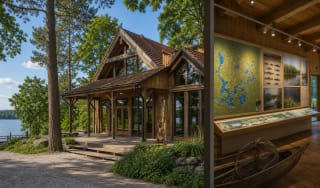
Aukštaitija National Park Visitor Centre in Palūšė
The best starting point for exploring Aukštaitija's lakes and ethnographic villages.
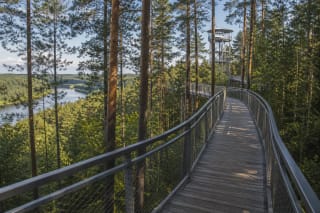
Anykščiai Treetop Walking Path
One of the region's best-known sights, giving a bird's-eye view over Aukštaitian forest.
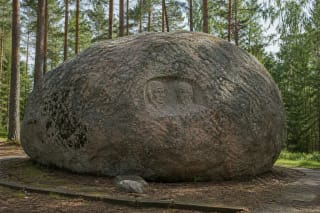
Puntukas Stone
Lithuania's second-largest boulder in the Šventoji valley near Anykščiai.
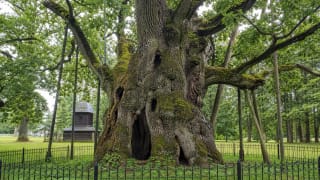
Stelmužė Oak
One of Europe's oldest oaks near Zarasai, a living symbol of Aukštaitija.
Sutartinės
The UNESCO-listed multipart singing tradition that once flourished in Aukštaitija.