- Place
- Vilnius City Municipality
- Region
- Vilnius
- Type
- renewed historic city park on the grounds of the old Evangelical Reformed cemetery, with marked archaeological outlines
- Address
- 1 Reformatų Square, Vilnius
- Coordinates
- 54.68130, 25.27625
- Visit duration
- 45 minutes to 1.5 hours; longer if you read each heritage marker and combine the park with nearby New Town sights
- Best time
- a weekday morning or late afternoon from May to September, when the planting is visible and the historical layers are easier to study quietly
Reformatų parkas, Reformatų sodas, Reformatų skveras, Reformers' Park
Three names describe the same park, but not the church across the street
Vilnius Municipality calls the place Reformatų Garden, the official green-space manager uses Reformatų Park, and Reformatų Square is common in addresses and everyday Lithuanian. All three names mean the roughly 2.6 ha green space between Pylimo, K. Kalinausko, Teatro, and J. Basanavičiaus streets. Coordinates 54.681300, 25.276247 mark a representative point in the western-central grounds, not a single gate.
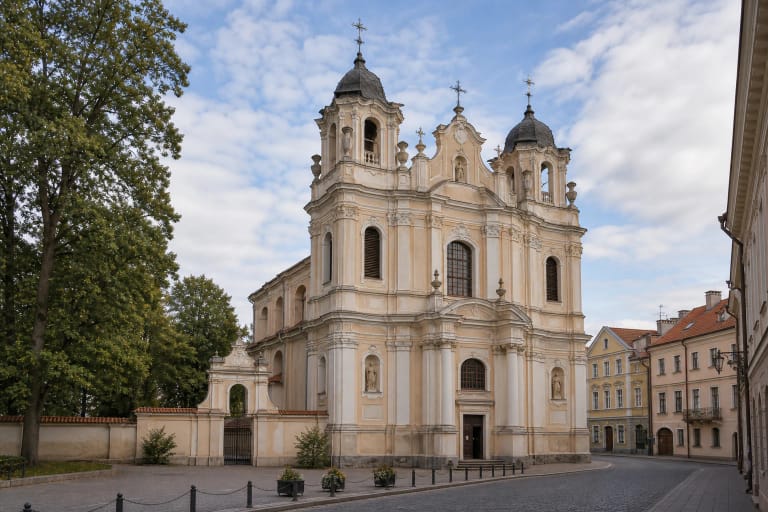
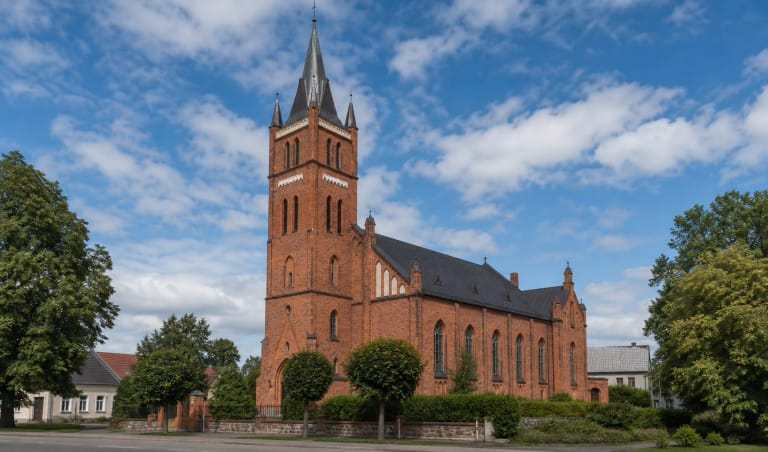
The present Vilnius Evangelical Reformed Church stands across Pylimo Street at number 18. Built in 1830-1835, it is not inside the park. The timber Reformed church that once stood in the cemetery was a different and much earlier building; a fieldstone outline now marks its footprint.
This is a public park but also the registered site of the old Evangelical Reformed cemetery. New burials no longer take place and most grave markers have disappeared, so the grounds do not immediately resemble a cemetery. Respect is still due where no monument can be seen above the lawn.
The cemetery began in the sixteenth century, but no single foundation date tells the whole story
The official park manager traces Evangelical Reformed burials here to 1558. A firm documentary milestone came in 1582, when Lithuanian Grand Duchy nobleman Eustachy Wołłowicz allocated the plot to a Reformed hospital and cemetery. It is therefore clearer to treat 1558 as the earliest boundary of the burial tradition and 1582 as a documented date in the property's history.
After violence against the Reformed community in Vilnius in 1639, a 1640 decision required its place of worship to move beyond the city wall. In 1641 the congregation relocated to its existing cemetery plot and erected a timber church. That building was destroyed and the cemetery desecrated in 1682, but King John III Sobieski later permitted reconstruction.
The old burial ground was full by the early nineteenth century. In 1830, the Reformed community received a new section in the shared Protestant cemetery on Tauro Hill, and burials here ended around that year. Once the present masonry church had been built on Pylimo Street, the old timber church in the cemetery was demolished. Reformatų Park must also not be confused with the remains of the later Protestant cemetery on Tauro Hill.
Red clinker and fieldstone lines mark structures that no longer stand
Archaeologists working in 2018-2019 found graves, crypts, cemetery wall and fence remains, the timber church site, traces of the consistory, and foundations of two mausoleum chapels. The finds prompted the renewal scheme to respond more closely to the surviving heritage below ground, and selected foundations were conserved.
Fieldstones mark the timber church plan in the lawn. Red-clinker lines indicate the locations of the Schröter Chapel, Winhold Chapel, consistory, and sections of the cemetery boundary. These are not reconstructed buildings, and not every line is an exposed archaeological display; most authentic fabric remains protected beneath the surface.
The Schröter family chapel-mausoleum, built in 1777, was the burial ground's most prominent surviving structure before its Soviet-era demolition. The Winhold Chapel dated from the early seventeenth century. Many Vilnius Reformed citizens were buried here, including cartographer and entomologist Charles Hermann de Perthées, who died in 1815, but the exact location of his grave is no longer known.
The Soviet square and its 1983 memorial reshaped the cemetery terrain
Although monuments were still maintained in the disused cemetery until 1945, the post-war authorities converted the grounds into a public square and progressively removed grave markers and historic features. This happened over time, so the destruction of the cemetery should not be attributed solely to the later 1983 project.
In 1983 an architectural and sculptural memorial to Soviet partisans and underground activists opened here. Its bunker- or trench-like terraces cut through the grounds, and the Schröter Chapel was demolished during the transformation. The memorial's sculptural component was eventually moved to Grūtas Park, while the concrete landforms remained in the Vilnius square for years.
The latest park project removed the concrete structures, returned the ground to a gentler profile, and incorporated archaeological markers into paths and lawn. Following the 2018-2019 excavations and design revisions, Reformatų Park reopened in summer 2021. Preserving mature trees and favouring restrained events reflected the burial ground's character.
A pergola, water and mature shade define the park today
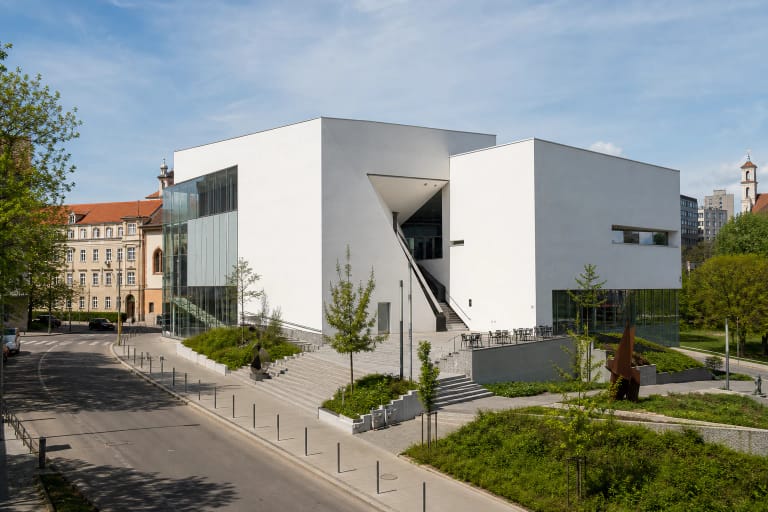
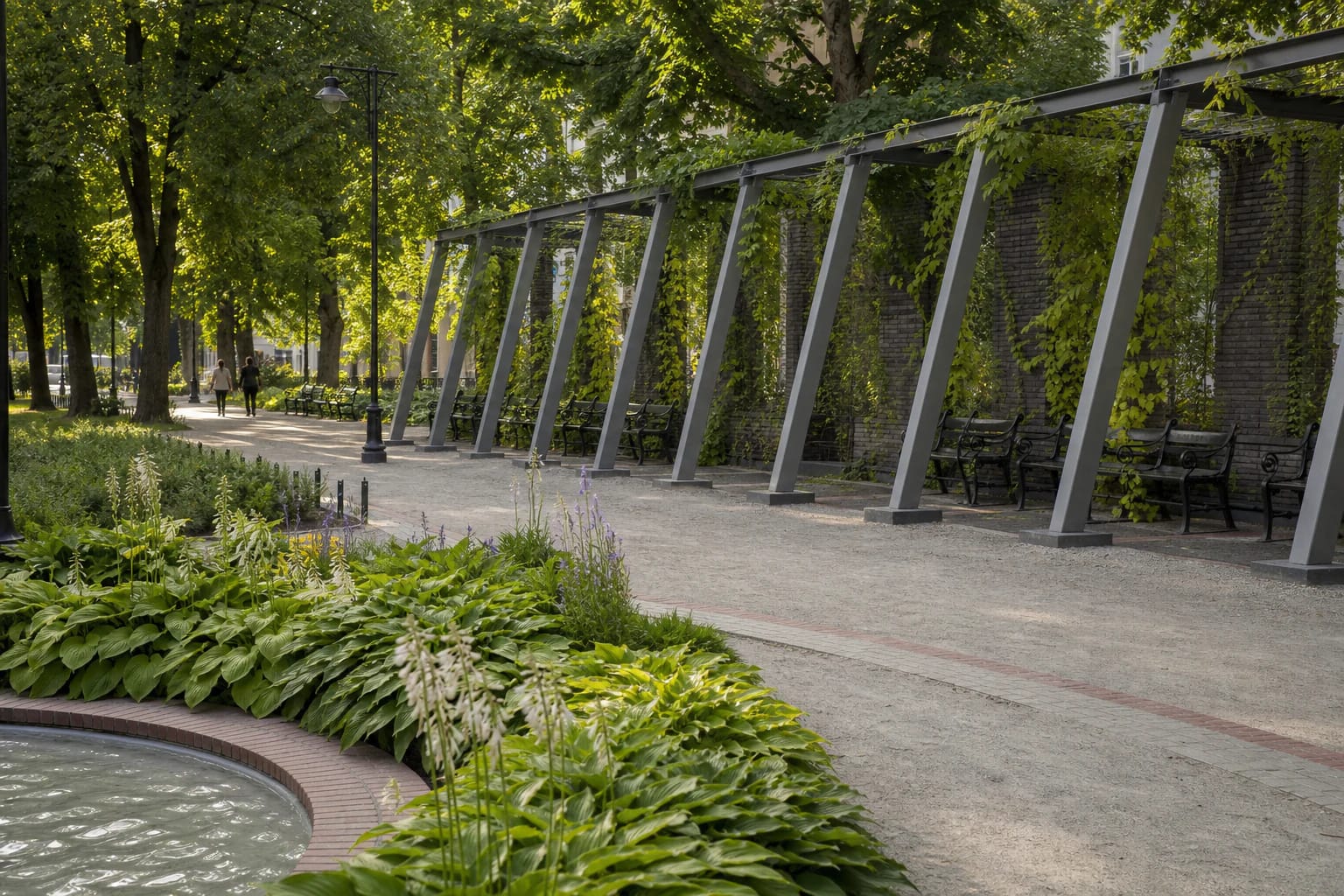
The principal everyday resting place is a large vine-covered pergola lined with benches. A broad central lawn, compacted-gravel paths, ornamental perennial beds, lighting, bins, and a system of shallow water pools and channels complete the landscape. A children's playground occupies the western side.
The manager's facility list also names drinking fountains, ornamental fountains, a public toilet, and a café. Their inclusion does not guarantee operation at every hour or throughout the year: water features and drinking-water points may be seasonal, while the toilet and café follow schedules separate from the park's 24-hour access. Check current official information if any one service is essential to the visit.
An online visitor survey in 2024 collected 345 responses. Passing through the area, walking, and resting in nature were the most common functions, while paths, benches, and drinking fountains featured prominently in reported use. Because participation was voluntary and online, the results should not be read as representative of every Vilnius resident.
Access is free around the clock, while the monument construction area may change
Vilnius City Parks lists the grounds as open from 00:00 to 24:00, and there is no admission ticket. This remains a historic burial site, however, making loud recreation, climbing on heritage markers or planting, and careless dog walking particularly inappropriate. Daylight is best for a first visit, when the subtle outlines and path surfaces are easiest to read.
Most principal connections are reasonably level, but compacted gravel, short stair links, slush, or temporary construction barriers can make wheeled access harder. Several surrounding streets provide entrances, so visitors with limited mobility should choose the gentlest approach on site rather than rely on the representative coordinate alone. Central-street parking is limited and subject to the current paid zones; public transport is usually more dependable.
A monument to the pioneers of the Reformation and Lithuanian writing is under construction in the park, with ten granite columns planned. On 21 July 2026, project organisers still described it as being built and the municipal page discussed it in the future tense. No dependable official report confirming a completed unveiling was found, so do not plan a journey on the assumption that the monument is finished; check the latest construction status first.