- Place
- Vilnius City Municipality
- Region
- Vilnius
- Type
- private museum of modern and contemporary Lithuanian art
- Address
- Pylimo g. 17, Vilnius
- Coordinates
- 54.67948, 25.27779
MO, Modern Art Centre, MO Museum
MO Museum: why it belongs on a Vilnius route
MO Museum is not a classic walk-through-the-halls-and-leave museum, but one of the most active contemporary culture spaces in Vilnius. It stands at Pylimo g. 17, on the boundary between the Old Town and New Town, so visitors enter a place where historic Vilnius, postwar urban modernisation, and today's cultural pull meet.
MO's official description emphasises that since October 18, 2018, the museum has operated as a place for good leisure: exhibitions, film, educational activities, concerts, and events for different age groups take place here. That means MO is worth planning not only around an exhibition, but also around the day's programme.
The initiative of Danguolė and Viktoras Butkai
MO began as the personal initiative of scientists Danguolė and Viktoras Butkai. VLE states that the institution was established in 2009 and until 2017 was called the Modern Art Centre. The official museum stresses that before opening on Pylimo Street, MO worked for almost a decade as a museum without walls: the collection, publications, education, and projects already existed, but did not yet have the current building.
This is an important part of the story because MO is not a renamed state institution or a relocated old museum. It is a private patronage project that created a new address for modern and contemporary Lithuanian art in central Vilnius.
The MO collection: Lithuanian art since the 1960s
The official MO page lists a collection of about 6,000 modern and contemporary artworks. It covers the golden fund of Lithuanian art from the 1960s to the present, and since 2011 the collection has held national-significance status.
The collection core consists of painting, graphic art, photography, and video art, supplemented by sculpture, performance, installations, and other interdisciplinary works. MO also highlights art that remained marginalised in the Soviet period for ideological reasons, as well as artists who entered the art scene after the restoration of independence.
Daniel Libeskind's building
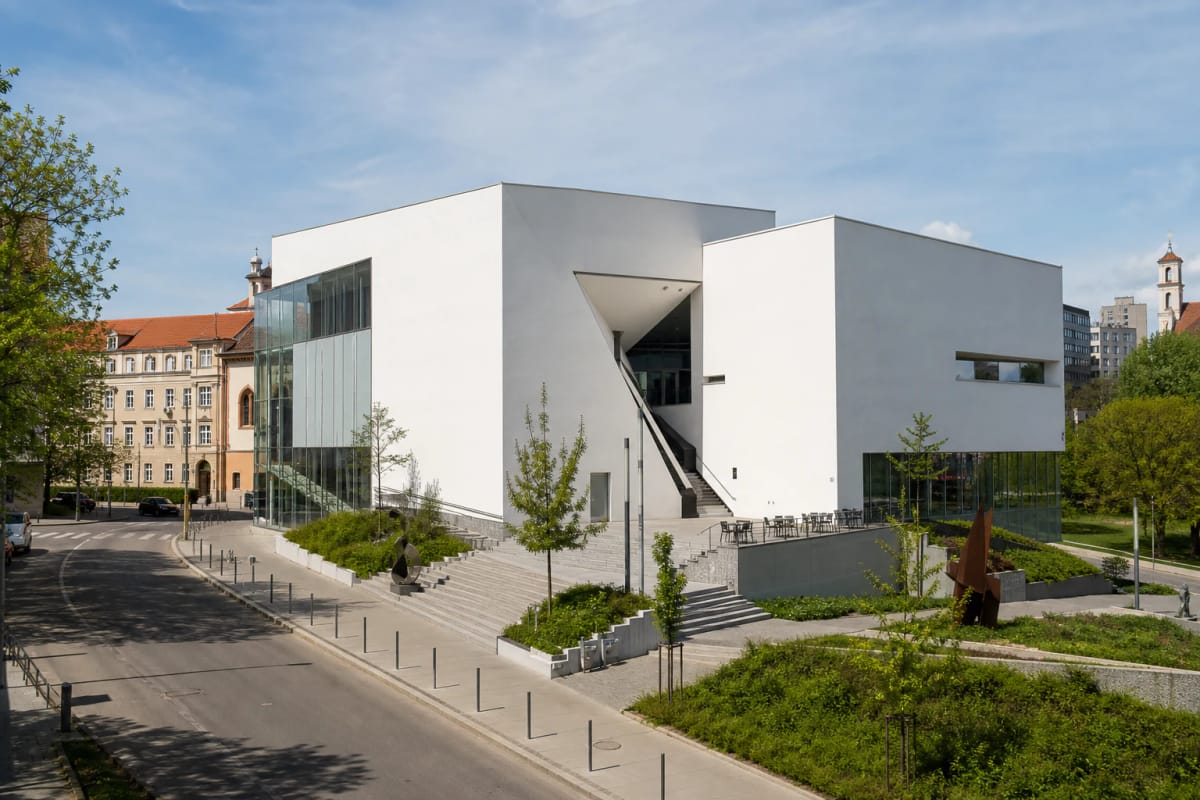
MO Museum's building was designed by Daniel Libeskind in cooperation with the Lithuanian office Do Architects. MO's own architecture description calls the museum a cultural gateway between the medieval old town and the more modern eighteenth-century Vilnius, and presents the project as Studio Libeskind's first work in the Baltic states. Studio Libeskind's project description also gives an area of 3,100 sq. m and a building height of 17 m.
The building is worth seeing both outside and inside. White volumes, a diagonal entrance cut, open terrace, sculpture garden, and interior staircase make the museum an urban space rather than only a sealed container for exhibits. This is one reason MO is often visited even by people who come for an event, bistro, or meeting.
The layer of the former Lietuva cinema site
MO appeared on a culturally sensitive city site where the Lietuva cinema once stood. This fact matters not only for urban memory: the museum inherited part of a public culture-place function and transformed it into another format, from a cinema hall to modern art, education, discussions, and city community events.
A visit to MO can therefore also be read as a story of Vilnius urban change. The building shows how a central Pylimo Street area moved from Soviet-period cultural infrastructure into a contemporary culture centre created by private initiative.
What to do at MO Museum
The MO experience depends on the specific exhibition. The official website constantly updates the exhibition and events calendar, so before going it is worth checking whether a major exhibition, smaller display, film, concert, talk, or education activity is taking place. This is not a museum where you always see the same permanent route.
Even if you do not have much time, it is worth stepping into the museum's public spaces: the sculpture garden, terrace, cafe, shop, and reading or rest areas. MO's official description emphasises that these spaces are intended for broad leisure, and that the sculpture garden and terrace are open to city residents and guests.
Practical visiting
The official general information gives the address as Pylimo g. 17 and notes that tickets can be bought at the desk or online. At the time of research, MO was closed on Mondays, usually opened from 12:00 on weekdays, sometimes until 21:00, and from 11:00 on weekends, with Saturday until 21:00 and Sunday until 19:00. A regular ticket was about 5 EUR, reduced ticket 3 EUR, family ticket for two adults and up to four children about 11 EUR, and visitors with disabilities plus one accompanying person entered free. Since exhibitions, times, and prices change, the most practical source is MO's own website.
MO fits easily into a walking route through central Vilnius: from Trakų, Vokiečių, or Vilniaus streets, Reformatų Garden, and the Old Town-New Town boundary. With an exhibition, 1-2 hours is usually enough, but if you plan an event, education session, or evening on the terrace, allow more time.