- Place
- Grūtas, Druskininkai Municipality
- Region
- Druskininkai
- Type
- open-air museum of Soviet sculptures and ideology
- Address
- Parko g. 49, Grūtas, Druskininkai Municipality
- Coordinates
- 54.02489, 24.06361
What Grūtas Park is
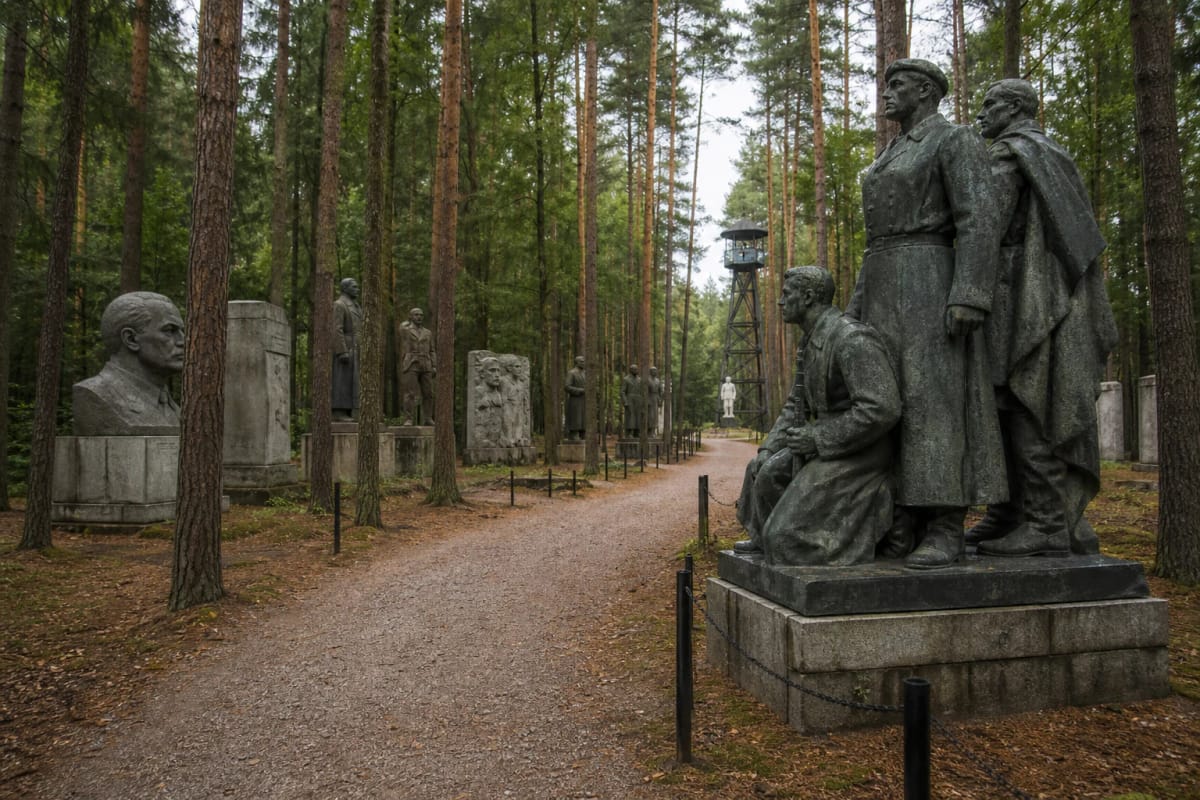
Grūtas Park is near Druskininkai, in the village of Grūtas. It is an open-air museum that gathers monuments, sculptures, ideological signs, documents, and propaganda settings from the Soviet occupation period.
VLE states that the park opened on April 1, 2001, and was founded by entrepreneur Viliumas Malinauskas. Because of its subject, the park is not simply an entertainment site. It functions as a difficult place of historical memory, where it is important to understand the ideology these monuments once served.
Scale of the outdoor exhibition and famous sculptures
The official park website describes the outdoor exhibition as a route of about 2 km. VLE states that the park displays 86 works by 46 artists, that the whole territory covers about 20 ha, and that the museum collections hold about 36,000 exhibits and storage units in total.
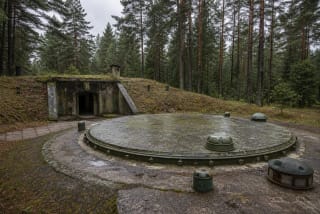
Among the best-known monuments are the sculpture of Vladimir Lenin that stood in Vilnius in 1952-1991, by sculptor Nikolai Tomsky, and Kryžkalnis Mother, by sculptor Bronius Vyšniauskas, 1972. The sculptures are arranged in a forest-and-path setting among guard towers and camp-fragment motifs, pushing visitors to read the visual language of propaganda slowly.
Museum halls, documents, and propaganda
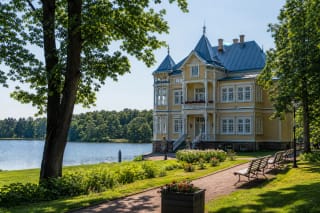
Grūtas Park is not only a storage place for sculptures. It has an information and museum centre in a wooden building reminiscent of a 1950s house of culture, a gallery of socialist-realist paintings, and a club-reading room that recreates an authentic village election-agitation point with portraits, slogans, and cinema and reading-room space.
For that reason, the park is worth seeing by reading context rather than rushing from monument to monument for photographs. Without explanations, the sculptures can quickly become strange decoration; the documents and exhibitions help separate artistic form from the regime it served.
How the park appeared and the Ig Nobel Prize
According to park and VLE data, work to gather Soviet monuments began in 1999, and the park opened in 2001 after monuments removed from public spaces after independence were brought together in one place. In the same year, Grūtas Park founder Viliumas Malinauskas received the Ig Nobel Peace Prize, the satirical Improbable Research award, for creating the park.
This origin matters: Grūtas Park grew out of the question of what to do with symbols of occupation power. One answer was to destroy them; another was to move them into a controlled museum setting, where they lose their function of veneration and become objects of study.
Cafe, visitor facilities, and events
The park has a cafe seating more than 250 visitors. It offers Dzūkija dishes with mushrooms and a Soviet-nostalgia menu, sells themed souvenirs, and publishes the park newspaper Grūto parko tiesa. Visitors, especially families, also find a small animal area and an amusement park recalling the Soviet period.
Every year on May 1 and May 9, satirical humour festivals are held in the park. The site therefore works not only with history, but also with ironic rereading of that history.
Opening hours and tickets
At the time of research, the official park pages stated that Grūtas Park opened daily at 9:00 and closed at dusk: in January-February at 18:00, March-April at 20:00, May at 21:00, June-August at 22:00, September at 20:00, October at 19:00, and November-December at 17:00. Because this is a seasonal outdoor exhibition, check the official page before travelling.
At the time of research, official prices listed adult tickets at 15 EUR, children aged 4-16 at 9 EUR, students at 11 EUR, school pupils and pensioners at 10 EUR, and an audio guide at 10 EUR. Free and reduced-admission groups exist, and prices may change.