- Place
- Kėdainiai, Kėdainiai District Municipality
- Region
- Aukštaitija
- Type
- historic market square and public urban garden
- Address
- Knypava Market Square, Kėdainiai
- Coordinates
- 55.28599, 23.97492
- Visit duration
- 20-40 minutes; 2-3 hours with the other historic squares of Kėdainiai
- Best time
- in the warmer months when the fountain operates; check the programme and traffic restrictions on event days
Knypava Square, Knypava Market, Knypavos Rinkos aikštė
The third square: not the Great or Old Market
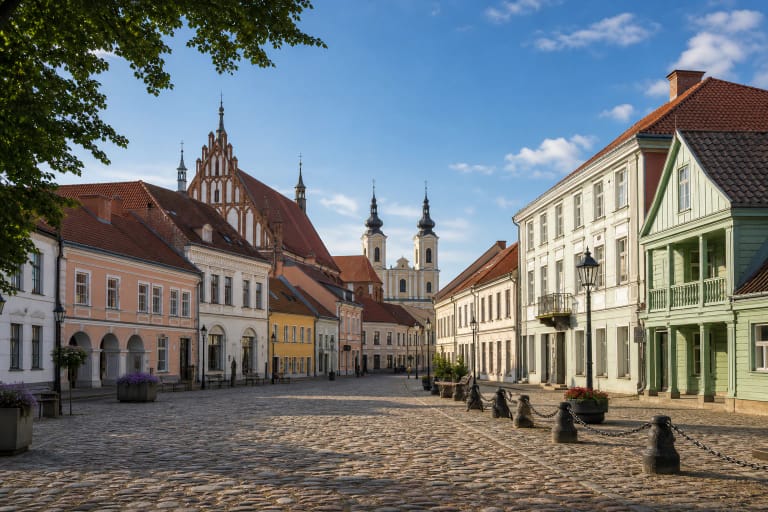
Kėdainiai's historic centre is organised around more than one square. Knypava Market lies west of Didžioji Street, between Knypavos, S. Jaugelio-Telegos, and Josvainių streets. It is greener and more intimate than the representative Great Market, so it feels more like a civic garden than an open trading ground today.
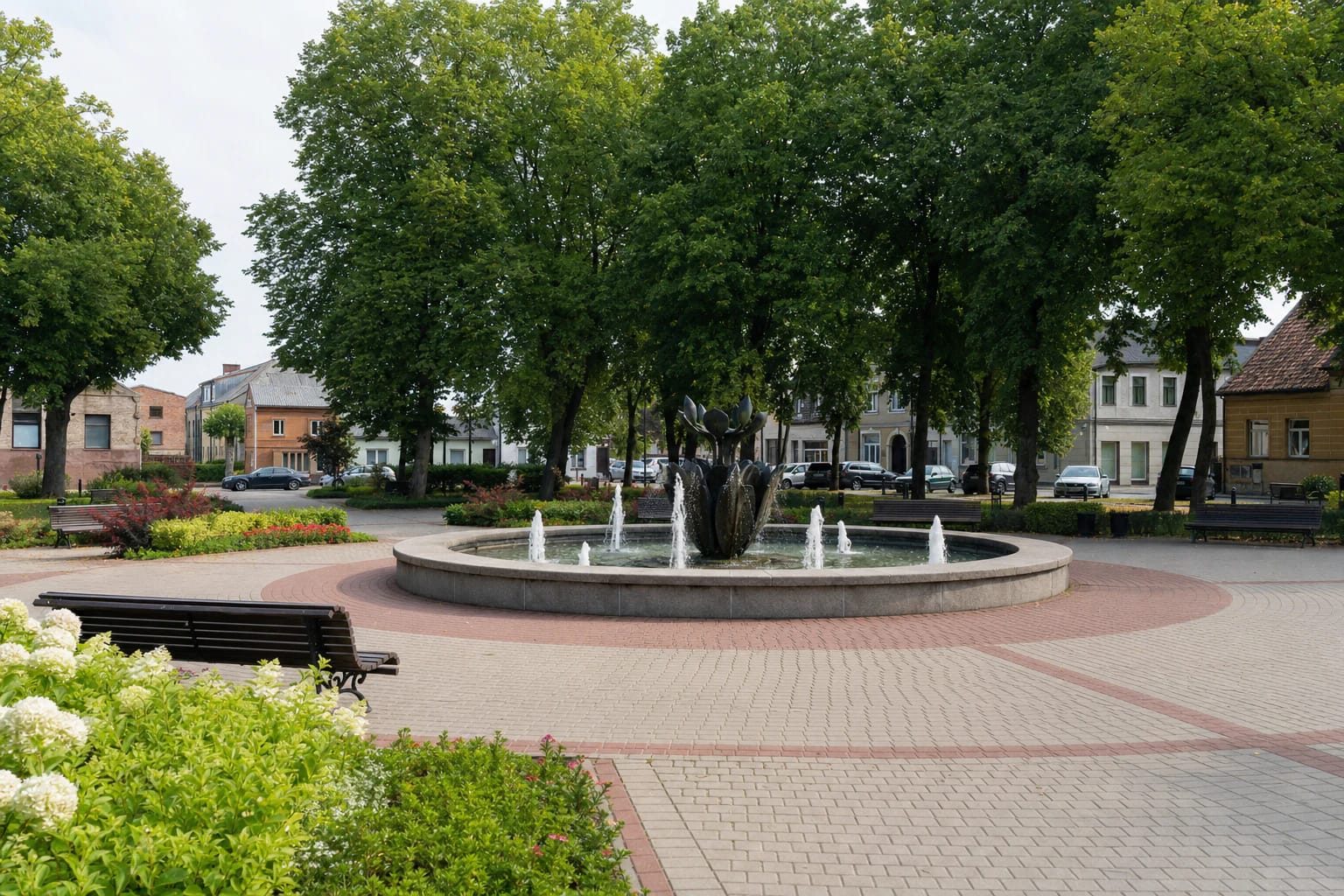
The present focal point is a circular fountain surrounded by paths, benches, flower beds, and mature deciduous trees. The reason to stop is not one surviving seventeenth-century building but the history of the place itself and the successive layers of town planning.
Merchants from Königsberg brought the Knypava name
The square was laid out in the early seventeenth century as Kėdainiai expanded rapidly as a self-governing town of trade and crafts. Official visitor information associates its beginnings with German merchants arriving from the district of Königsberg known in German as Kneiphof. The Lithuanian form of that place name became Knypava.
Sources present the story that German merchants bought prized Lithuanian horses here for Prussia as a likely interpretation, so it should not be treated as an indisputably documented fact. The trading role nevertheless fits the wider city: during the seventeenth-century high point, Kėdainiai had six market squares, nineteen streets, and ten craft guilds.
An Orthodox church and monastery appeared here in 1652
In 1652, Duke Janusz Radziwiłł built a wooden Church of the Resurrection and founded a men's monastery at the square's southern approach. The municipality's history associates the foundation with the wishes of his Orthodox wife, Maria Lupu. It is a clear trace of the multi-confessional Radziwiłł town.
The small monastery was chronically underfunded and did not survive. The wooden church no longer stands at Knypava either: official visitor information says the building is preserved at the Lithuanian Open-Air Museum in Rumšiškės. Do not look for a church façade or monastery ruins in the square; the layer survives here as history rather than an intact ensemble.
From a market to a fountain and event space
The square now serves as an everyday place to rest and meet. In the warmer months, the fountain anchors the composition, while tree shade and benches offer a pause between old-town sights. Fountain operation depends on the season, weather, and maintenance, so there may be no water in early spring or late autumn.
Municipal programmes and notices use Knypava Square for concerts, installations, commemorations, and parts of the town festival. On event days, a stage or equipment may occupy part of the space and traffic may be restricted in surrounding streets. Check the Kėdainiai cultural calendar first if you want a quiet architectural walk.
Access and a practical walking route
The square is public, free, and has no set opening hours. Most of its surface is paved and reasonably level, but approaches require crossing streets and kerbs. In 2025 the municipality announced work to lower pedestrian-crossing kerbs by Knypava Square, though visitors with specific access needs should judge the current conditions on site.
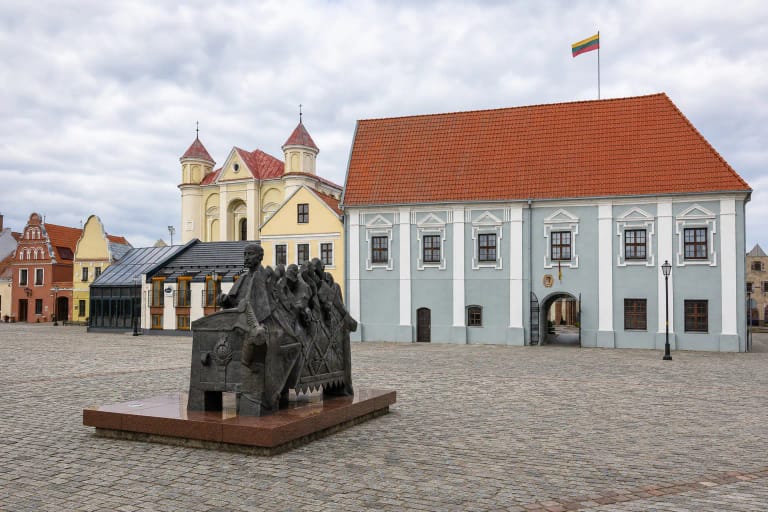
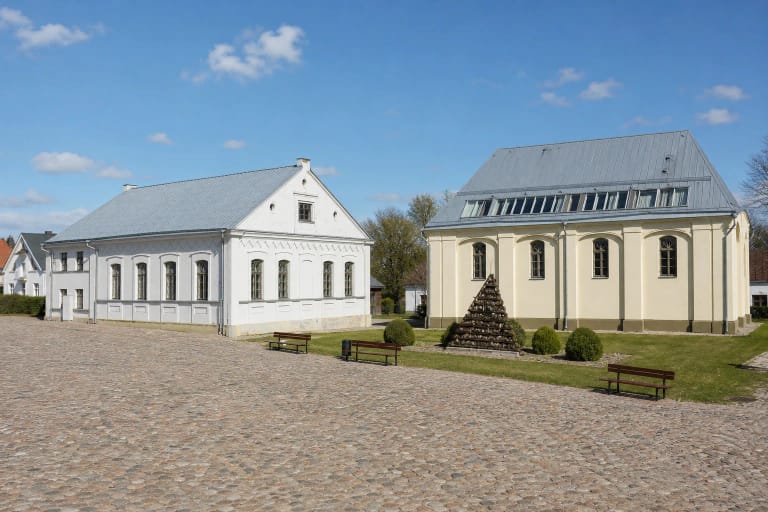
From Knypava it is easy to continue to St Joseph's Church, the Great Market, Town Hall, and the synagogues on the Old Market. Park only in marked spaces and do not drive onto the civic garden. Google Maps showed 4.7 out of 5 from 66 reviews on 27 July 2026; the figure changes over time.