- Place
- Kaišiadorys District Municipality
- Region
- Kaunas Region
- Type
- Open-air ethnographic museum with homesteads from Lithuania's regions
- Address
- L. Lekavičiaus g. 2, Rumšiškės
- Coordinates
- 54.86800, 24.21400
Lithuanian Ethnography Museum, Lithuanian Open-Air Museum, Rumšiškės Museum
Rumšiškės Open-Air Museum: Name and Essence
Many visitors still call this place Rumšiškės Open-Air Museum or the Lithuanian Open-Air Museum. The current official name is the Lithuanian Ethnography Museum, but the old name remains important in searches and public memory.
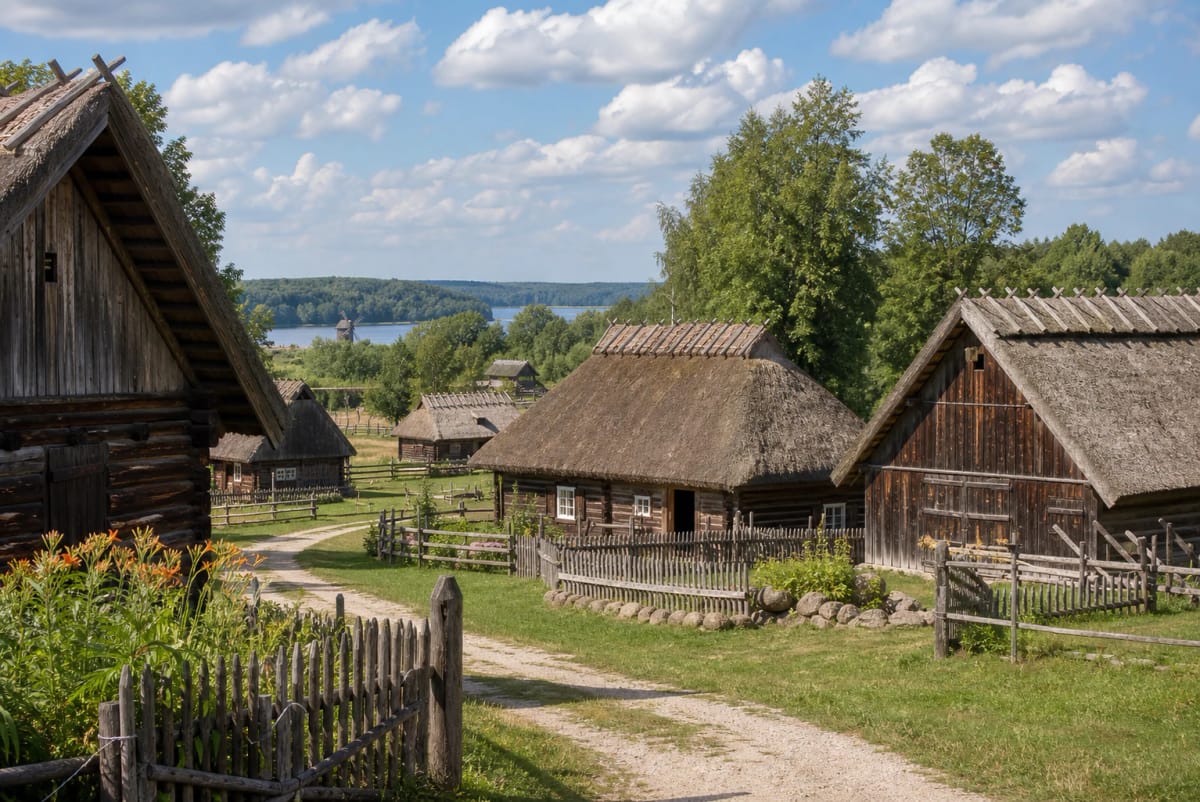
This is not a museum in one building. In Rumšiškės you walk through a large open territory where homesteads, farm buildings, town spaces, and craft environments from different Lithuanian regions have been relocated and restored.
VLE describes the museum as a skansen-type open-air museum and states that it is one of the largest in Europe: it covers 195 ha and exhibits 149 immovable buildings. At the beginning of 2026 the collection had more than 95,900 exhibits, including about 85,000 pieces of furniture, household items, and textiles.
How the Museum Appeared
The museum was founded in 1966 on the site of Pieveliai village, and the first exhibitions opened to visitors on June 21, 1974. Its idea was to preserve traditional Lithuanian rural architecture, domestic life, and regional differences at a time when many old buildings were disappearing or losing their original setting. VLE states that on November 17, 2023, the Lithuanian Open-Air Museum became the Lithuanian Ethnography Museum.
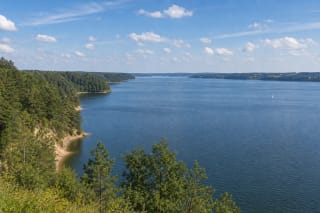
The location beside Kauno Marios gives the museum a special landscape: homesteads stand among small hills, paths, trees, and water panoramas, so the visit is both a heritage and nature route.
Lithuania's Regions in One Place
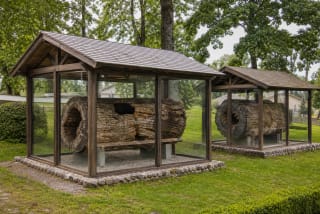
The museum's central value is its regional structure. VLE states that the exhibition is arranged by ethnographic regions: Dzūkija, Aukštaitija, Suvalkija, Žemaitija, and Lithuania Minor. Visitors can compare roofs, yard plans, building sizes, fences, woodwork, and everyday details. Among the most valuable exhibits is a Žemaitian numas built in 1856.
This comparison is practical even for visitors who are not academic ethnographers. In a few hours it becomes clear that Lithuania's countryside was not uniform: each region had its own building logic, environment, and way of life.
Town Area, Crafts, and Everyday Life
Beyond homesteads, the museum has an important town exhibition, craft demonstrations, seasonal events, and educational programs. It shows not only houses but social life: trade, church, workshops, festivals, and work.
If an event is taking place, the experience changes greatly. Open buildings, crafts, food, music, and visitor flow help show the living side of tradition, but they also require more time and patience.
Twentieth-Century Memory
Rumšiškės is often associated with old rural life, but the museum also has a harder twentieth-century memory layer. Exhibitions on deportation, resistance, and occupation experiences complicate the romantic image of homesteads.
That matters because Lithuanian rural history does not end with beautiful wooden buildings. The museum also allows discussion of coercion, loss, relocation, and how people tried to preserve identity.
How to Plan Time
The museum is large, so a brief stop often gives only a surface impression. To walk the main regions calmly, plan at least 2-3 hours; with children, an event, or an educational session, plan half a day.
This is an outdoor site, so shoes and weather matter. After rain, paths can be damp, and on a hot day you will need water. During research the museum was open daily: in the warm season, roughly May-September, exhibitions operate more fully and usually longer, often until 18:00; in winter hours are shorter and some homesteads or areas may be closed. Check official hours, tickets, and events before going.
What to See Nearby
Rumšiškės combines well with Kauno Marios, Pažaislis Monastery, Juniper Valley, or Kaunas city sites. It is a good one-day trip choice from Kaunas.
For a cultural-heritage route, combine the museum with traditional architecture, manors, and small regional museums. Rumšiškės gives the broad picture of Lithuanian rural life; other places let you go deeper into one region.