- Place
- Kėdainiai, Kėdainiai District Municipality
- Region
- Aukštaitija
- Type
- centre for traditional-craft workshops, folk-art exhibitions, and the architectural heritage of an early modern merchant house
- Address
- 21 Radvilų Street, Kėdainiai
- Coordinates
- 55.28522, 23.97980
- Visit duration
- 30-45 minutes for the centre and current exhibition; approximately 1.5 hours with a pre-booked workshop
- Best time
- a weekday morning with a workshop booked in advance; without a reservation, arrive no later than 4.30 pm
Arnetų namas, Senjorų (Arnetų) namas, Senior Minister's House, Arnet's House, Arnetai House
This is both a working craft centre and a rare seventeenth-century town house
At 21 Radvilų Street, visitors encounter two equally important attractions rather than a conventional display behind glass. One is an active branch of Kėdainiai Regional Museum, where makers demonstrate traditional processes, teach small practical sessions, and present folk-art exhibitions. The other is Arnetai House itself, one of the most tangible legacies of the Scottish community that lived in Kėdainiai during the seventeenth and eighteenth centuries.
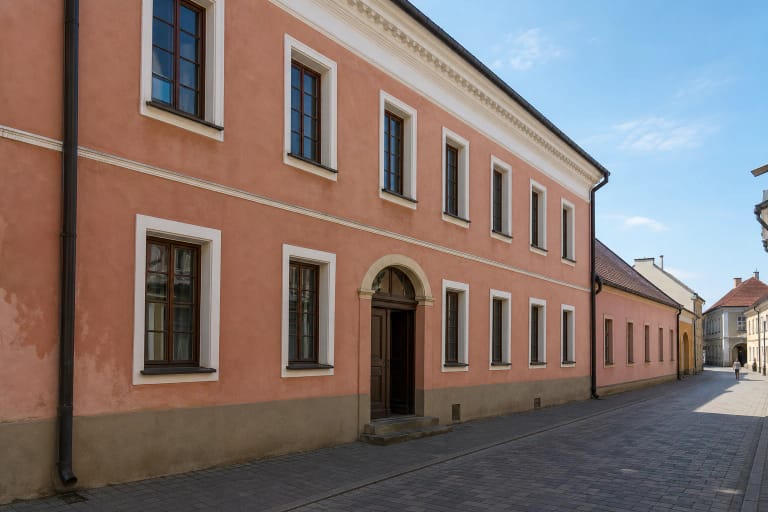
The restrained rendered street front conceals the building's most memorable side. Two two-storey wings meet in an L around the courtyard, where dark timber galleries rise above stairs and paving. Clay-tile roofs, regular rectangular windows, and simple plastered walls give it the scale of a prosperous merchant's home, not an aristocratic palace.
Allow 30-45 minutes for a current exhibition and the accessible parts of the house and courtyard. A practical session usually lasts an hour, so reserve approximately 90 minutes once arrival and preparation are included. The map pin at 55.285218, 23.979799 marks the centre of the building footprint, not a particular doorway; visitor access may be arranged through the courtyard.
Scottish merchant John Arnot built the house during Kėdainiai's golden age
The masonry house was built in the mid-seventeenth century by the Scottish-born grain merchant Jonas Arnetas, whose original name appears as John Arnot. It is already identified as masonry on a 1661 plan of central Kėdainiai and in the town's 1663 inventory. A ten-year lease of nearby Apytalaukis Manor in 1654 suggests the scale of Arnot's commercial ambitions before war and failed harvests damaged the enterprise.
Jonas and his wife Barbora Žolkevičiūtė owned the property until 1675, when the Evangelical Reformed community bought it for 3,000 Polish złotys. It became a parsonage known as Plebania Senjorska, the senior minister's residence. This explains the protected building's other Lithuanian name, Senjorų (Arnetų) namas, or the Senior Minister's (Arnetai) House.
The Reformed Church retained the property until the Second World War. It was nationalised and converted into flats under Soviet rule, then returned to the Evangelical Reformed community in 1999 and leased to the municipality. Following restoration and adaptation, the Traditional Crafts Centre opened here in spring 2015.
A domed kitchen, vaulted cellar, and luftcloset reveal the household behind the facade
The present appearance is the product of more than one period. Before remodelling in the first half of the nineteenth century, the house had Renaissance forms and a tall, steep gable roof covered with Dutch tiles. The roof was later lowered and the elevations recast in restrained Classical forms. A vaulted gateway approximately 3.5 metres wide once led from the street into the courtyard, with the owner's shop immediately beside it.
Nineteenth- and twentieth-century alterations erased the original character of many rooms, but several exceptionally informative domestic features survive. Brick barrel vaults cover the cellar below the junction of the wings. Inside is a domed virenė, the combined hearth, chimney, and historic kitchen space. On the upper storey beside the chimney survives a small vaulted privy known as a luftcloset; LIMIS describes it as Lithuania's only surviving room of this function in a house inhabited by townspeople.
The Register of Cultural Property lists the house under code 26105 as a state-protected site of regional importance. Its protected features include the L-shaped volume, masonry and vaults, the form of the covered timber galleries, a gateway fragment, the type of spiral timber stair, and the interiors of the virenė and privy. Do not assume that the cellar and every historic room are opened during every free visit; ask which heritage spaces form part of the route when booking.
Craft is explained through material, tool, movement, and the visitor's own hands
The centre is not simply a showroom for finished objects. Its published programmes include traditional band braiding, ceramics, wickerwork, woodcarving, wool felting, rag-doll making, and paper cutting, with wax-resist egg decorating offered around Easter. Certified makers introduce the raw material, tools, patterns, and cultural context before participants produce a small piece themselves.
Programmes listed on 18 July 2026 were deliberately intimate: ceramics accepted up to seven participants, most other sessions up to eight, and the seasonal Easter-egg workshop up to ten. Most lasted one hour, while egg decorating took 90 minutes. Some impose age limits - the rag-doll session is intended for ages 7-16 and paper cutting starts at seven - so families should choose from the full programme description rather than the title alone.
The house also stages folk-art exhibitions from Kėdainiai and other Lithuanian regions, alongside training, lectures, and seminars. Staff advise makers seeking national-heritage certification and maintain information about certified producers in the district. The museum states that the centre was named Lithuania's most successful traditional crafts centre in both 2017 and 2023.
Free admission does not mean that a practical workshop is free
On 18 July 2026, the official timetable was Monday-Friday 8 am-5 pm. The centre closes one hour earlier before public holidays and does not open on public holidays; the museum's general visitor information says final admission is 30 minutes before closing. Weekend visitors should not expect ordinary access, although separately advertised events occasionally use different hours.
The free admission stated on the branch page covers an ordinary visit during opening hours. Practical sessions are booked by calling +370 645 05168 and charged separately. On the review date, a one-hour band-braiding session cost €3 per adult and €2 for listed concession groups. Ceramics, wickerwork, woodcarving, felting, and several other practical sessions were generally €5 and €3 respectively, with ceramic firing listed as an additional €2.
Treat those figures as a verified snapshot from 18 July 2026 rather than a promise for a future date. When booking, confirm the programme, participants' ages and number, working language, final fee, whether a finished piece can be collected the same day, and which historic rooms will be accessible. A free look at an exhibition and a paid making session are two distinct ways to visit.
Radvilų Street works best as part of a compact old-town walk
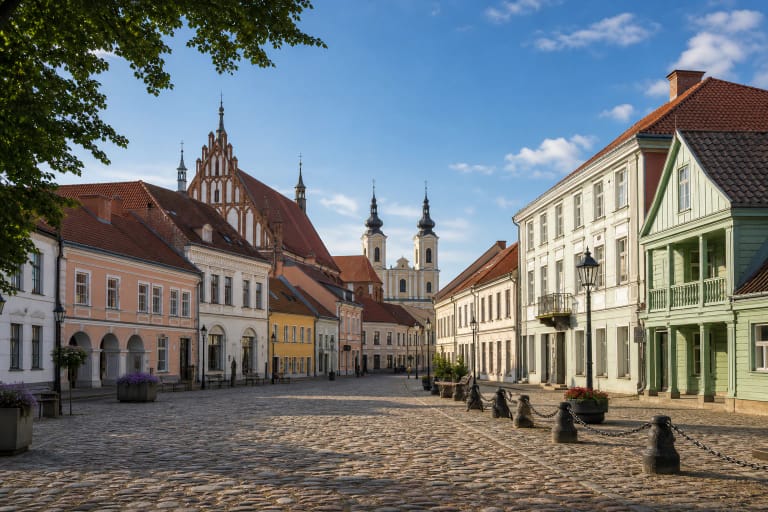
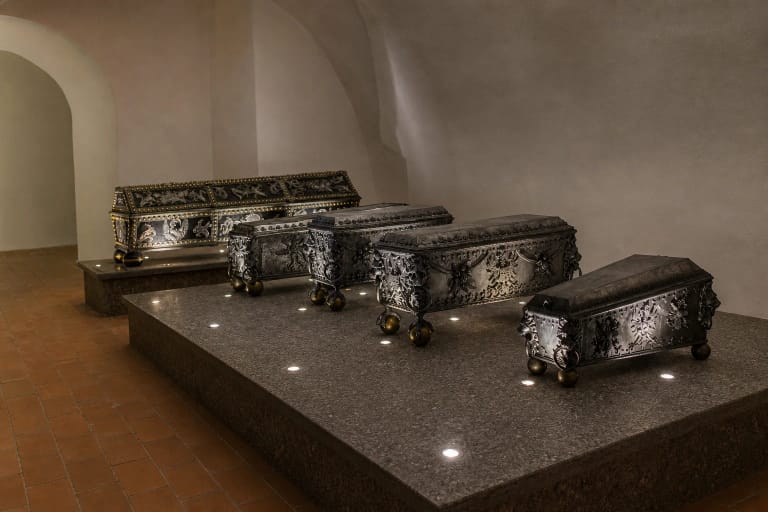
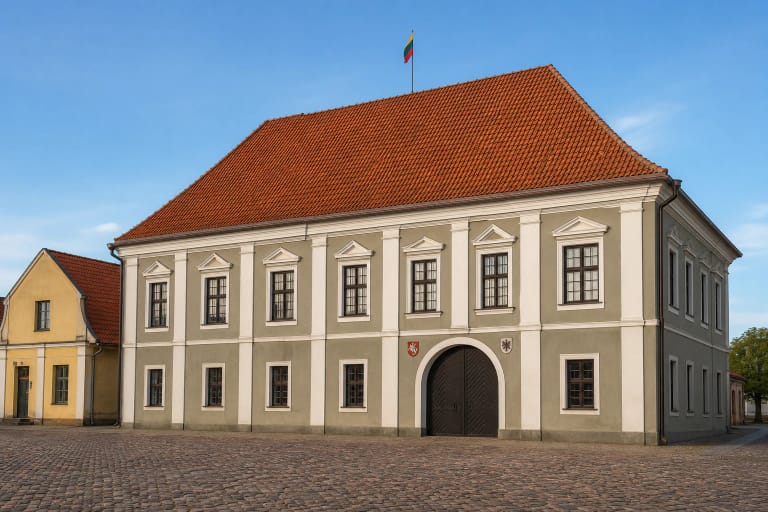
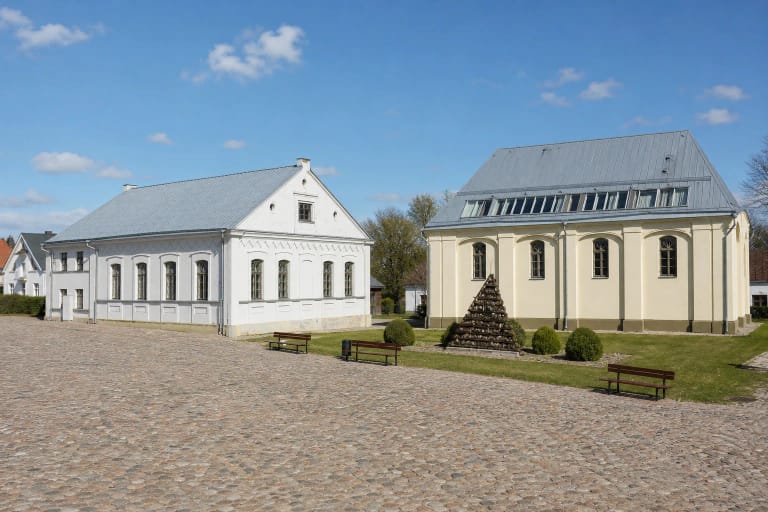
Arnetai House stands immediately beside the Great Market, so there is no reason to drive between the central sights. Kėdainiai Town Hall and the Evangelical Reformed Church with the Radziwiłł Mausoleum are only a few minutes away. Continue on foot to the Old Market, synagogue complex, and the main Kėdainiai Regional Museum. On a weekday, build the itinerary around the fixed start time of an Arnetai House workshop.
Wheelchair access is arranged through the courtyard, where staff must open the gate, and there is a lift inside. Because the protected plan still involves historic thresholds and because workshop rooms vary by programme, call before travelling to confirm the accessible entrance and whether the spaces you want to see can be reached. This is particularly worthwhile for an independent visitor or anyone working to a strict tour time.
Without a booking, consider Arnetai House a free old-town stop whose depth depends on that day's activities. With a reservation, it becomes one of Kėdainiai's most practical cultural experiences: a seventeenth-century merchant house joins a living skill, and the small object you make records not only what you saw but what you learned to do.