- Place
- Vilnius City Municipality
- Region
- Vilnius
- Type
- active pilgrimage sanctuary in the historic Church of the Holy Trinity, housing the original image of the Merciful Jesus
- Address
- 12 Dominikonų Street, Vilnius, LT-01131
- Coordinates
- 54.68145, 25.28554
- Visit duration
- 30-60 minutes for the architecture, original painting, and quiet prayer; longer for Mass or adoration
- Best time
- a weekday morning or a gap between Masses for a quieter visit; always check the current liturgical schedule on the official website
Shrine of Divine Mercy in Vilnius, Divine Mercy Sanctuary Vilnius, Former Church of the Holy Trinity, Vilniaus Dievo Gailestingumo šventovė
A global pilgrimage site easily missed on narrow Dominikonų Street
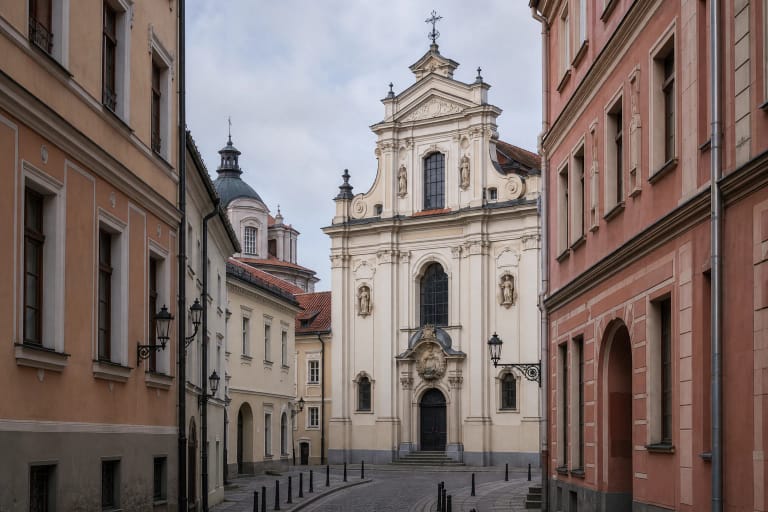
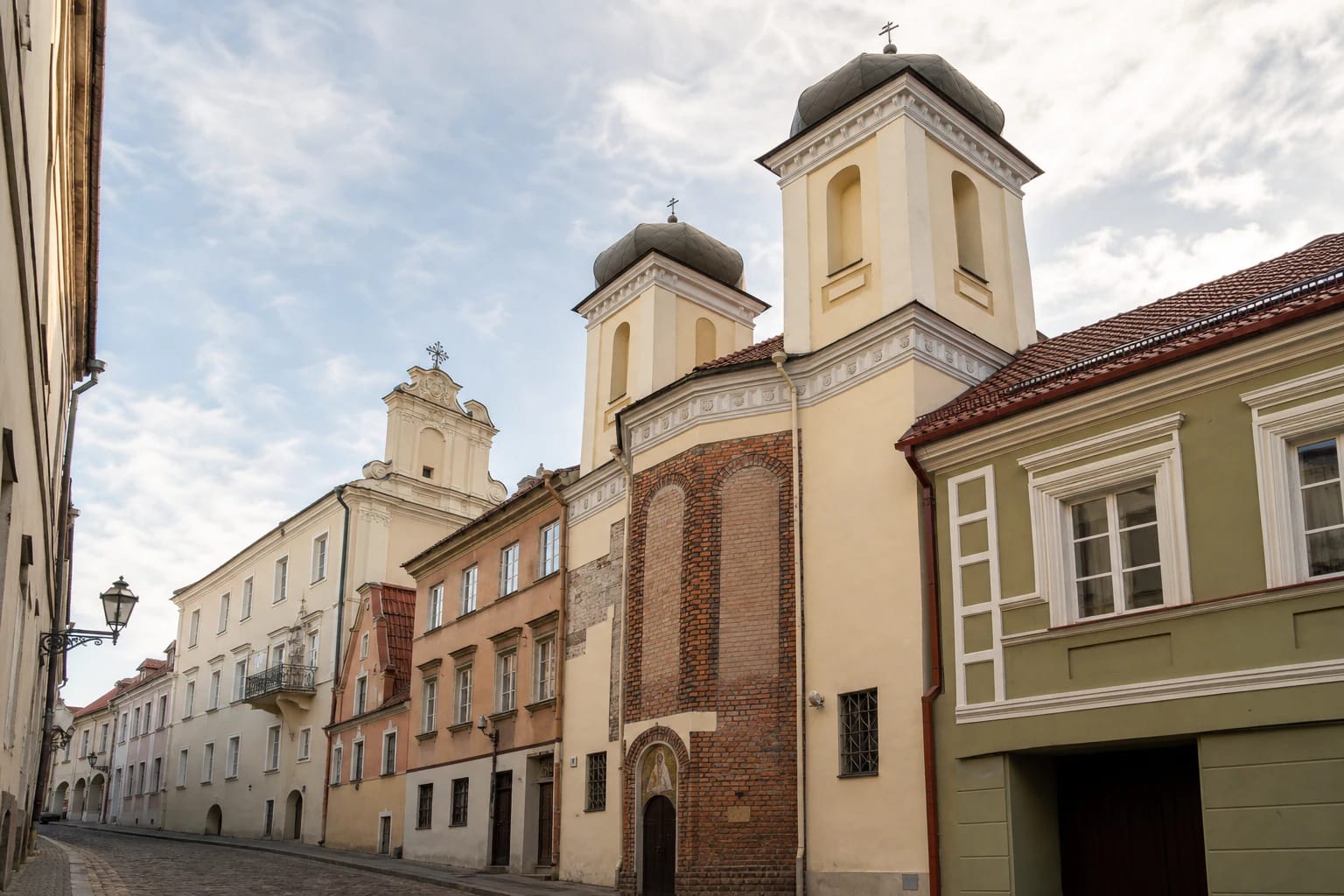
The shrine is embedded in the continuous Old Town frontage at 12 Dominikonų Street. From the street, visitors first see a three-sided red-brick volume with two low pale-rendered towers rising above it, each pierced by arched openings and capped with a dark sheet-metal roof. This is a restrained facade that almost merges with neighbouring houses, not a monumental church facing a square.
The Lithuanian Universal Encyclopedia describes a twin-towered, single-nave building that combines Gothic, Baroque, and Historicist elements. The present street-side apse was reconstructed during repairs in 1971, after part of the facade collapsed in 1968. A close look from the public street reveals how old brick, render, and later interventions record distinct phases of the building.
Inside, the scale becomes even more intimate: a white single-nave space leads directly to the original image of the Merciful Jesus. The deliberately restrained interior keeps attention on the painting, tabernacle, candles, and continuous prayer rather than on decorative abundance.
The former Church of the Holy Trinity changed in form, use, and denomination
Sources differ on the earliest chronology. The Lithuanian Universal Encyclopedia dates the first masonry church here to the late fourteenth or early fifteenth century, while AUTC and the shrine's own history associate the surviving Gothic church with the late fifteenth or early sixteenth century. The shared conclusion is more important: this was Vilnius's late-medieval Church of the Holy Trinity, subsequently altered many times.
Following fires in 1748 and 1749, the church was reconstructed with a new presbytery and sacristy, two towers, and a changed main entrance. It belonged to Vilnius University, and the university's rector and astronomer Marcin Poczobutt-Odlanicki served here from 1781 to 1805. The building became a grain store in 1817, then passed to the Orthodox Church in 1821 and was remodelled as the Church of the Annunciation.
The church returned to Catholic use in the early twentieth century, but was closed again in the Soviet period and used for secular purposes. It was repaired in 1971 after the 1968 collapse. Its sacred role was restored after independence, and on 18 April 2004 the church was consecrated as the Vilnius Shrine of Divine Mercy.
The altar holds the original 1934 image of the Merciful Jesus
This is not a later copy of the famous image. Eugeniusz Kazimirowski painted it in Vilnius in 1934 under Father Michał Sopoćko's direction. Saint Faustina visited the studio and explained how Christ had appeared in her vision: one hand raised in blessing, the other touching his robe at chest level, with a pale ray and a red ray issuing from the heart area.
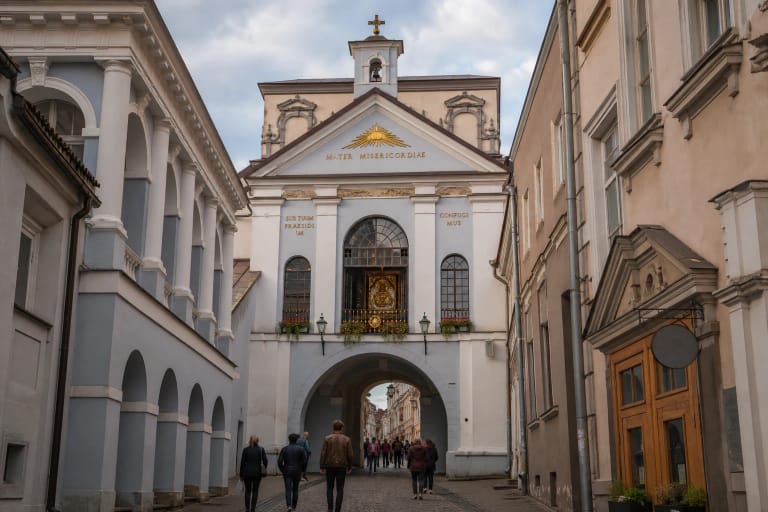
The painting received its first three-day public veneration at the Gates of Dawn in April 1935. It later hung in Saint Michael's Church, travelled to Belarus after that church closed, and was secretly returned to Vilnius in 1986 for display in the Church of the Holy Spirit. Conservators restored it in 2003, and it moved to the present shrine in 2005.
The painting's journey should be distinguished from the history of the building itself. The church is several centuries old but became the Shrine of Divine Mercy only in the twenty-first century; the image was made elsewhere in Vilnius and arrived on Dominikonų Street later still. The meeting of these two separate histories created the site's present significance.
A round-the-clock sanctuary is a place of prayer, not a museum
On 29 July 2026, the official website stated that the shrine was open 24 hours a day and maintained perpetual Eucharistic adoration. Even a late visitor therefore enters an active place of worship. Walk in quietly, silence phones, do not obstruct the altar, and never photograph people at prayer.
The same day's official schedule listed daily Mass at 10:00 in Lithuanian, 12:00 in Lithuanian, 16:00 in Polish, and 20:00 in Lithuanian, with an additional Lithuanian Mass at 18:00 on Sundays. Confession times and special celebrations may differ. Check the official website before travelling because liturgical schedules change.
No admission fee is published, although donations to maintain the shrine are voluntary. The official pages do not provide a complete description of a step-free route, accessible toilet, or individual assistance. Visitors with mobility, visual, or hearing requirements should contact the shrine before travelling to confirm current conditions.
Follow the story of Divine Mercy through Vilnius
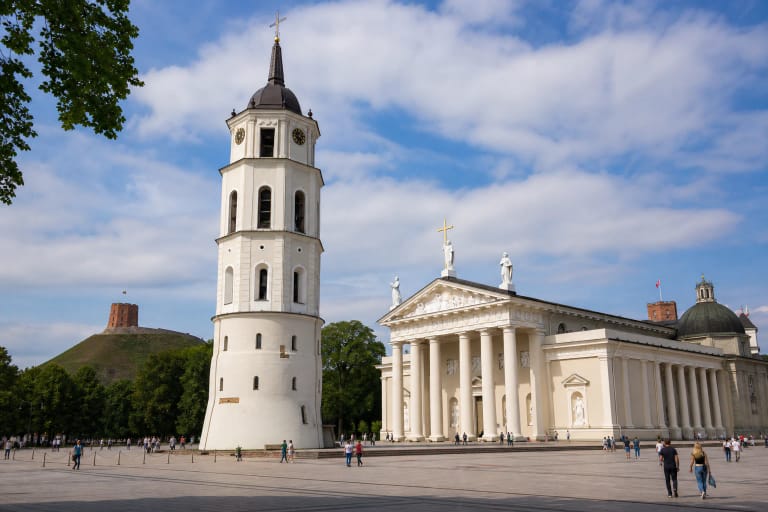
The shrine stands at 12 Dominikonų Street, within an easy walk of Town Hall Square, Vilnius Cathedral, and the Gates of Dawn. Coordinates 54.6814494, 25.2855421 mark the building itself. Dominikonų Street is narrow, so do not stop a car at the entrance; plan to use a legal public parking space farther away.
Allow 30-60 minutes for the architecture, painting, and its documented story. Stay longer for Mass, adoration, or unhurried prayer. Leaders of large groups should arrange the visit in advance and must not deliver a loud commentary while people are worshipping.
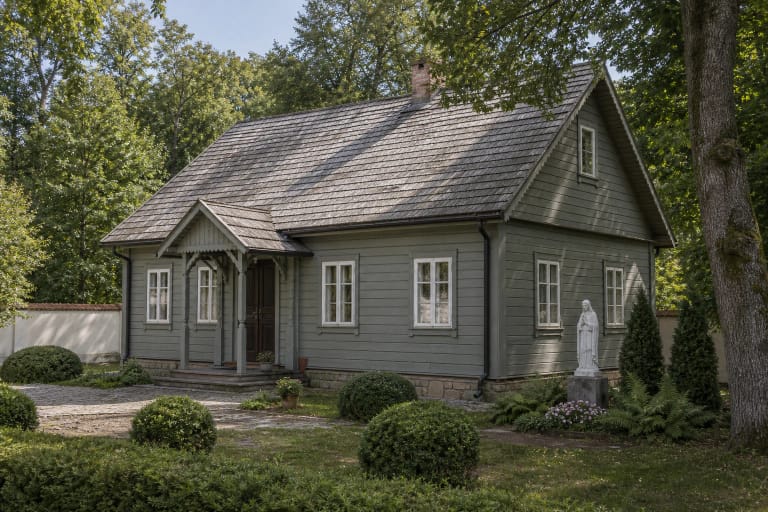
The most historically coherent pairing is not a random Old Town checklist but Saint Faustina's House and the Gates of Dawn. The house preserves the setting of Faustina's life in Vilnius, the Gates of Dawn witnessed the painting's first public veneration, and the Dominikonų Street shrine is the original work's present home.