- Place
- Vilnius City Municipality
- Region
- Vilnius
- Type
- street area of Vilnius Old Town's craft and Jewish quarter
- Address
- Stiklių, Gaono, Antokolskio ir Žydų gatvių aplinka, Vilnius
- Coordinates
- 54.68030, 25.28610
Stiklių Street Quarter, Glass Quarter, Stiklių kvartalas
A small quarter that holds a great deal of Vilnius
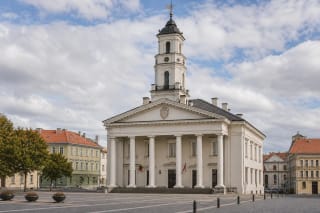
The Glass Quarter is not a single building or museum. It is a cluster of narrow old-town streets where the scale of Vilnius is especially clear: Town Hall is close, the university is close, and between them remain the memories of craftsmen, merchants, courtyards, and the former Jewish quarter.
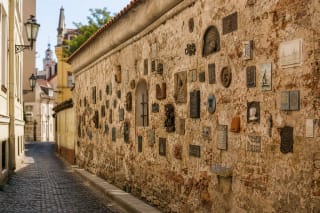
The most important thing here is not to hurry. The surroundings of Stiklių, Gaono, Antokolskio, and Žydų streets work like a text: street names, courtyard gates, window rhythms, stone paving, and small perspectives say more than any single viewpoint.
Why the name Stiklių Street matters
The name Stiklių, meaning glassmakers or glassworkers, recalls Vilnius as a city of craftsmen. The quarter's history reaches the sixteenth century, when goldsmiths from various lands settled here; from the seventeenth century, glassblowing workshops produced not only everyday vessels for townspeople but also luxury goods for the nobility. In the nineteenth century, because glass production and trade were so abundant, the quarter had as many as three Stiklių streets: First, Second, and Third.
The first printing house of the Grand Duchy of Lithuania also operated in this quarter, founded in the early sixteenth century by the printing pioneer Francysk Skaryna. The street name is a good key to the area: here Vilnius opens up as a city where great history lived beside small crafts and trade, so the Glass Quarter rewards a slow walk rather than only a quick photograph.
The Glass Quarter and the memory of the former Jewish quarter
For centuries, the Glass Quarter was the heart of historic Vilnius' Jewish quarter. The community that lived here for more than 600 years was not only residential; it was a small city of goldsmiths, glassblowers, craftspeople, and financiers. Nearby stands the monument to the Vilna Gaon, Elijah ben Solomon Zalman, who gave his name to neighbouring Gaono Street.
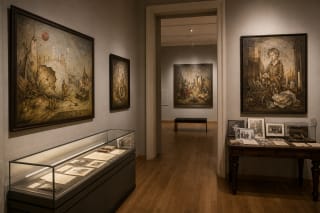
Even if the quarter today looks like a place of restaurants, hotels, and small shops, the street network recalls a dense urban layer where different communities lived and worked. This memory should be read carefully, because it is marked by everyday culture and by the losses of the Holocaust. It is worth combining the route with the Samuel Bak Museum or the Museum of Lithuanian Jewish Culture and Identity.
UNESCO old-town context
The Glass Quarter is part of the Vilnius historic centre. UNESCO values the Vilnius historic centre as an outstanding example of a Central and Eastern European city in which Gothic, Renaissance, Baroque, and Classical layers developed together.
The Register of Cultural Property lists Vilnius Old Town as a protected territory. That means the Glass Quarter is valuable not only for individual facades, but also for its urban fabric: street directions, plot scale, courtyards, and the density formed over centuries.
How to walk the Glass Quarter
The shortest route begins at Town Hall Square, rises into Stiklių Street, turns toward the area of Gaono and Žydų streets, and can then continue toward Vilnius University or Dominikonų Street. Thirty to forty-five minutes is enough for this kind of walk.
For a more serious route, allow up to an hour and a half and include several stops: Town Hall, the Glass Quarter, signs of the former Jewish quarter, the university ensemble, and one Jewish culture museum. There is no single ticket or opening time for the quarter itself, because these are public city streets.