- Place
- Nida, Neringa Municipality
- Region
- Neringa
- Type
- dune landscape and prisoner-of-war memorial site
- Address
- south of Nida, between Parnidis and Gliders' dunes
- Coordinates
- 55.28775, 20.99134
- Visit duration
- 30-60 minutes; 1.5-2 hours when combined with the Parnidis and Gliders' dune area
- Best time
- in daylight and calm weather; use only permitted paths because dune vegetation is easily damaged
Valley of Death, Valley of Death by Parnidis Dune
Which place is called the Valley of Death
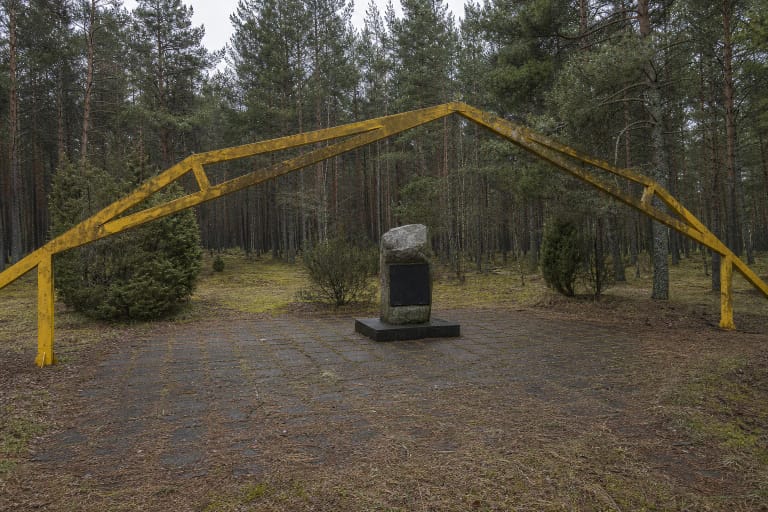
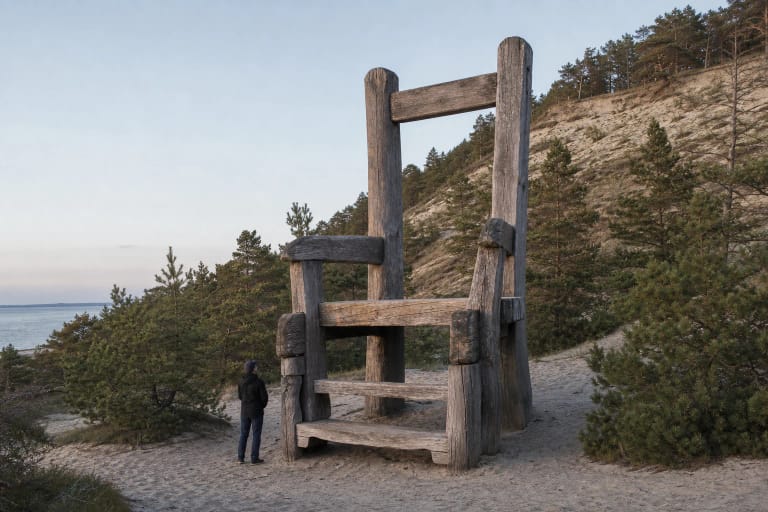
The Valley of Death is a dune hollow south of Nida, between Parnidis and Gliders' dunes. This page's coordinate, 55.2877531, 20.9913395, marks the valley landscape, not Sundial Square on the Parnidis summit or the separate Valley of Silence by Neringa's Chair.
The site lies in a protected Curonian Spit landscape. Sand and sparse vegetation do not make it an open off-trail area: follow local signs, barriers, and national-park rules, and do not enter closed dune sections.
The prisoner-of-war camp account
The national park, the Encyclopedia of Lithuania Minor, and Krašto gidas connect the valley with a French prisoner-of-war camp during the Franco-Prussian War of 1870-1872. In this established local account, prisoners worked on dune stabilisation, endured harsh conditions, and some died.
However, a guide published by the same national-park directorate dates the camp to 1916, during the First World War, and cites Johannes Sembritzki. The park and heritage sources therefore disagree on the date: this page presents both accounts rather than selecting either as conclusively proven.
Assessing the burial place
Krašto gidas and the Encyclopedia of Lithuania Minor say the dead were buried in a camp cemetery, but the sources used on this page provide neither an archaeological report nor precise coordinates for confirmed graves. This page therefore cannot identify a specific verified burial place inside today's visited hollow.
A cross or other memorial marker in the landscape is not, by itself, archaeological confirmation of a grave. Treat the markers respectfully while distinguishing commemoration from a burial location established through documents and fieldwork.
A quiet and responsible visit
Visit in daylight, wear footwear suitable for sand, and carry water. Check seasonal path restrictions on site: wind, shifting sand, and conservation needs can change the most suitable approach.
Do not cross barriers, touch memorial markers, or leave your own crosses or objects without the land manager's permission. Treat the Valley of Death as a quiet memorial landscape and allow a separate stop for the panorama from the Parnidis summit.