- Place
- Nida, Neringa Municipality
- Region
- Curonian Spit
- Type
- linear educational walking route with four viewpoints and stairs to the top of Parnidis Dune
- Address
- From Neringa Sports School at 2 Lotmiškio Street to the Sundial on Parnidis Dune, Nida
- Coordinates
- 55.29492, 20.99070
- Visit duration
- about 1 hour for the 1.9 km route in one direction; 1.5-2 hours with the return, four viewpoints, and information panels
- Best time
- early morning or late afternoon in dry weather without strong wind; exposed sections become hot at midday in summer
Parnidis Dune Educational Trail, Parnidis Trail, Parnidžio pažintinis takas
The 1.9 km trail is a route to the dune, not another name for the summit
The official Curonian Spit guide gives a length of 1,900 m, while a newer State Service for Protected Areas description calls it an approximately 2 km route. It begins behind Neringa Sports School at 2 Lotmiškio Street, heads towards the Valley of Silence, and then climbs to Parnidis Dune. The finish is the Sundial platform on the dune top.
This is a linear route, not a loop. The approximately 1.9 km distance takes visitors to the summit, so the return to Nida must be planned separately: retrace the same trail or descend from the Sundial to town by another permitted walking route. Coordinates 55.294919, 20.9907042 mark a representative point on the trail, not its start, finish, or a car park.
The Parnidis Dune page covers the 54 m dune itself, the Sundial, and the summit panorama. This page follows the journey: where the trail starts, what terrain and surfaces to expect, why the stair location changed in 2022, what appears along the way, and how much additional time a return requires.
The 2022 route follows moving sand, with the stairs now in their fourth location
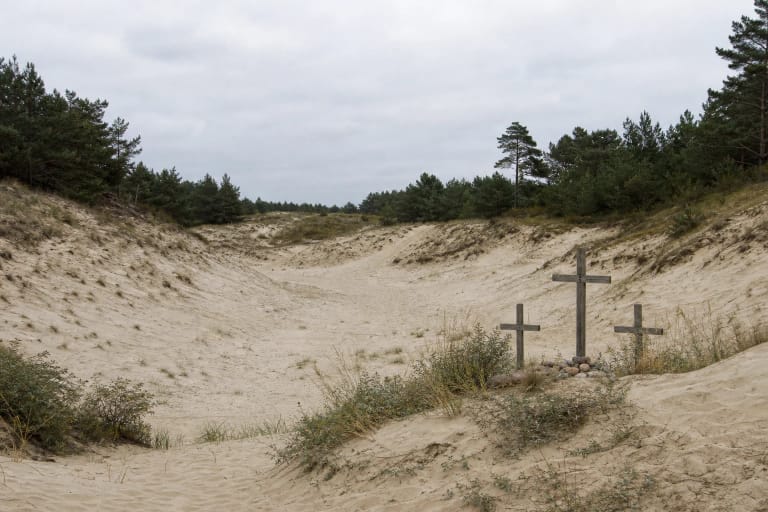
The present Parnidis Dune educational trail opened in March 2022. It crosses the western side of the Valley of Silence, while the previous stairs, used for almost three decades, were closed and dismantled. The national park authority identifies this as the fourth location used for stairs to Parnidis Dune.
The move was not a decorative update. Parnidis Landscape Reserve contains the national park's only surviving chain of actively drifting dunes, so planners selected a location that fitted the present relief and was less vulnerable to wind-blown sand. The path concentrates foot traffic on one reinforced line instead of allowing many informal tracks to scar the dune.
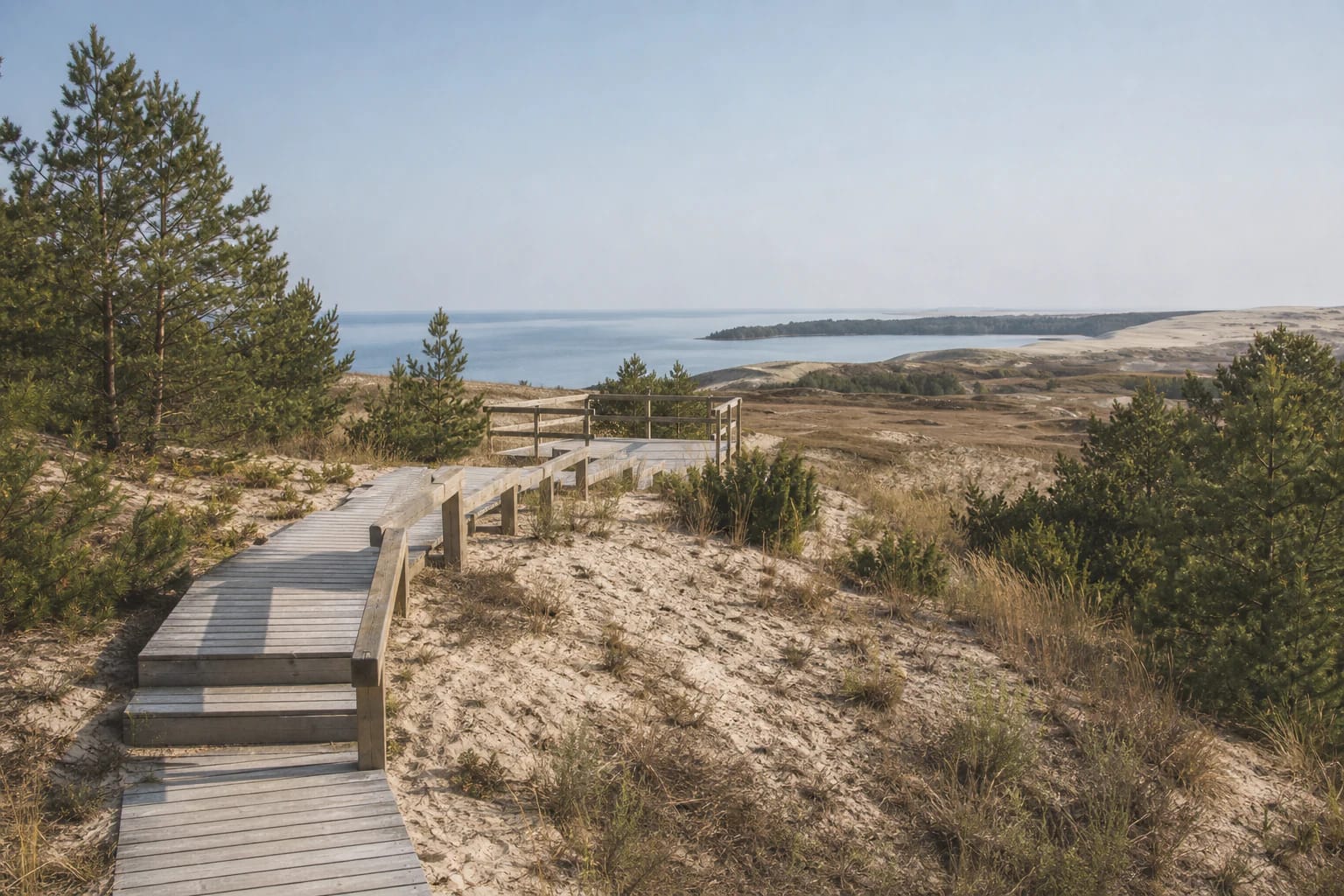
Larch was used for the stairs, viewpoints, and parts of the walkway. The national park described this as Neringa's first project to use larch for its durability. Wood and restrained structures are more than a visual choice: they must function on relief continually reshaped by wind and sand.
Four viewpoint stops explain the landscape before the Sundial
The trail is more than one long staircase to a panorama. Four viewpoints, 22 individually designed benches, small rest areas, six information panels, reserve boundary markers, and the interactive Build a Dune feature stand along the way. Treat the published hour as time for stopping and reading the landscape, not as a sporting target.
Several layers of the Curonian Spit follow one another from Nida: planted pine woodland, natural sand grasslands, damper meadows, grey dunes with mosses and lichens, and more open white-dune sand. The Lithuanian Universal Encyclopedia calls the Great Dune Ridge the spit's principal relief feature, and this short trail reveals its structure before the final viewing platform.
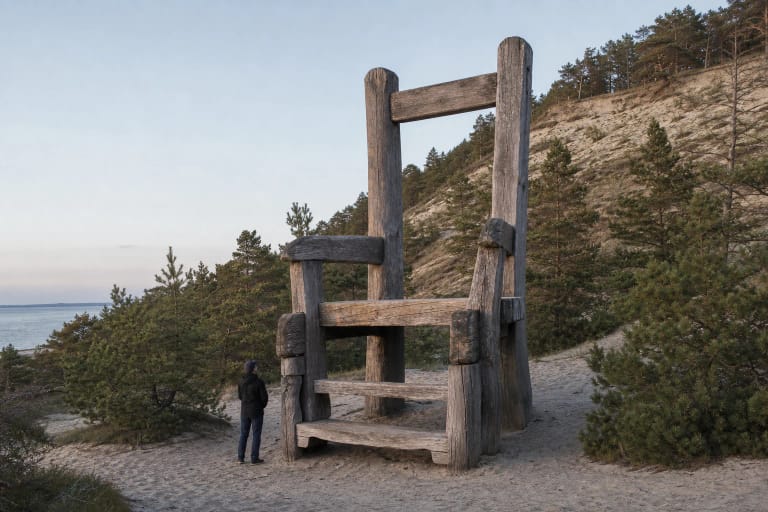
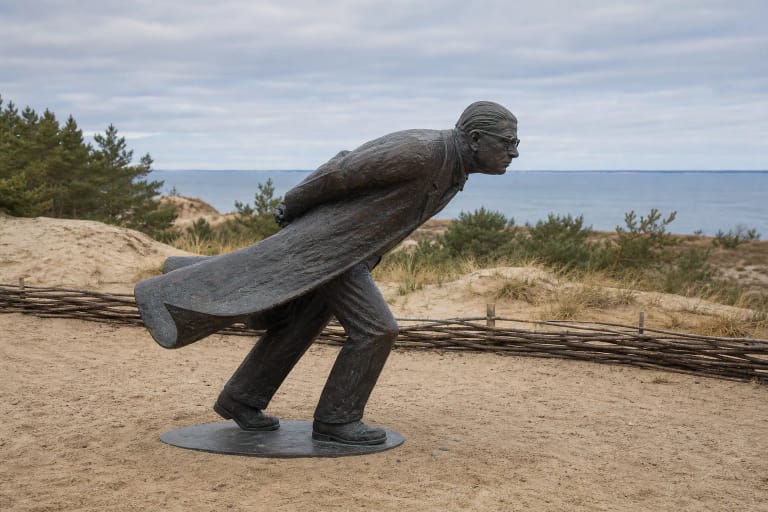
Neringa's Chair fits naturally into the Valley of Silence near the beginning, while the Against the Wind sculpture stands near the Parnidis routes. These are independent artworks with their own histories, not decorations for the official nature panels. The trail's core subjects remain relief, vegetation, moving sand, and the effort to guide visitors without eroding the dune.
Do not leave the trail even when the sand looks firm
The 168.90 ha Parnidis Landscape Reserve protects a complex of planted and partly drifting great dunes and the low lagoon-side dune plain known as the palvė. Red-listed plants here include seaside centaury, sea holly, and dark-red helleborine, while tawny pipits breed in the reserve. A low plant or grey patch of lichen is not empty ground.
The park authority explicitly prohibits walking on the slopes of Parnidis Dune. Use only designated paths, stairs, viewpoints, and platforms, and never cross boundary markers or barriers. Dune wardens patrol Parnidis Landscape Reserve in summer because climbing slopes, making shortcuts, and trampling vegetation accelerate erosion.
Gliders' Dune, visible to the south, lies within Grobštas Strict Nature Reserve. It is not another stage of this trail and independent access to its dunes is prohibited. The drifting-dune chain is a view from the finish, not an invitation to continue across open sand.
Stairs, sand, and the return matter more than the modest distance
Much of the route uses woodland or compacted-earth paths, timber walkway sections, and stairs, but loose sand remains in places. The full trail is not step-free, so it cannot honestly be described as wheelchair-accessible or suitable for anyone unable to use stairs. A pushchair can reach some sections, but the complete climb will be difficult.
No admission charge or fixed staffed opening schedule for the Parnidis trail was published on 29 July 2026. The park offered a voluntary visitor pass: EUR 1 for a single visit, EUR 5 for 30 days, and EUR 25 for an annual pass valid in all state parks. Check prices and purchase methods on the official page because they may change; ferry, Neringa vehicle-entry, and parking charges are separate.
Walk in daylight and safe weather. Exposed sections offer little shade in summer, wind can strengthen quickly, and wet boards or stairs may become slippery. Carry water, a wind-resistant layer, and closed footwear. Never go around a temporary barrier or warning sign encountered on the route.