
Things to do in Lithuania
Things to do in Nida
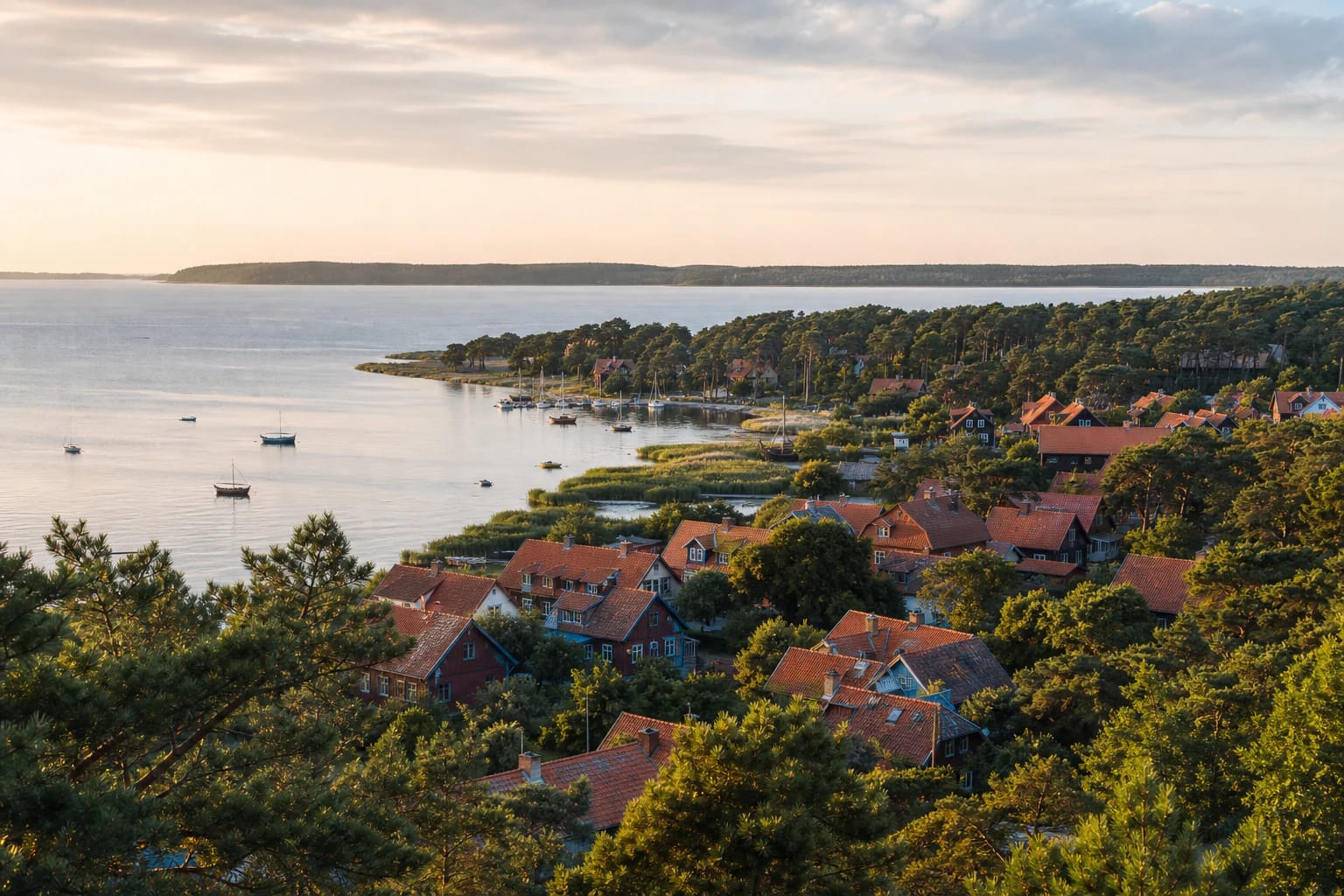
Nida is the southern part of Neringa on the Curonian Lagoon and the main base for exploring the Curonian Spit: sand dunes, fishermen's heritage, a lighthouse, and a UNESCO-protected landscape between the lagoon and the Baltic Sea.
Nida
Where to start
Choose a place, compare visiting times or explore the area on the map.
Key places to visit in Nida and the Curonian Spit:
Parnidis Dune
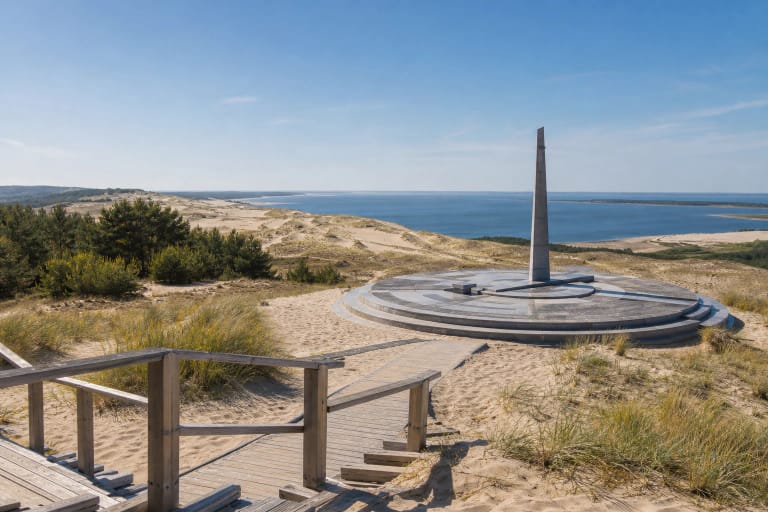
Parnidis Dune is one of Nida's strongest viewpoints: a 54.2 m dune ridge, white-dune landscape, directions toward the Curonian Lagoon and Baltic Sea,…
Nagliai Nature Reserve educational trail
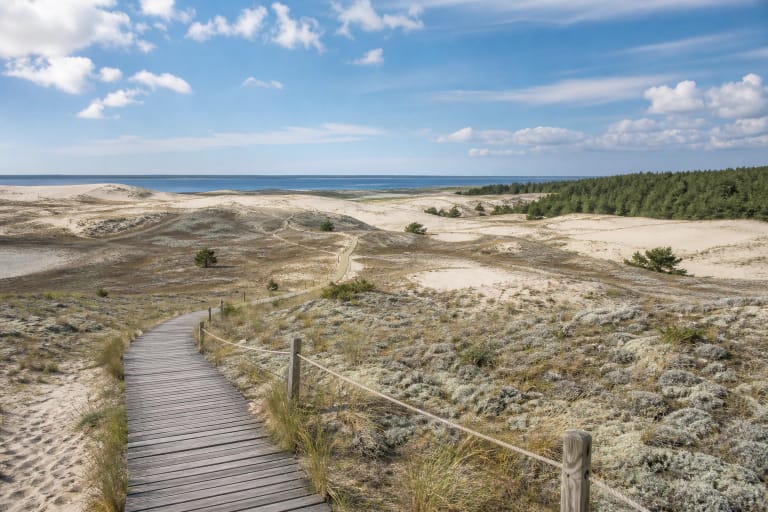
The Nagliai Nature Reserve educational trail crosses one of the most sensitive Curonian Spit landscapes: grey and white dunes, protected-species…
Vecekrugas Dune
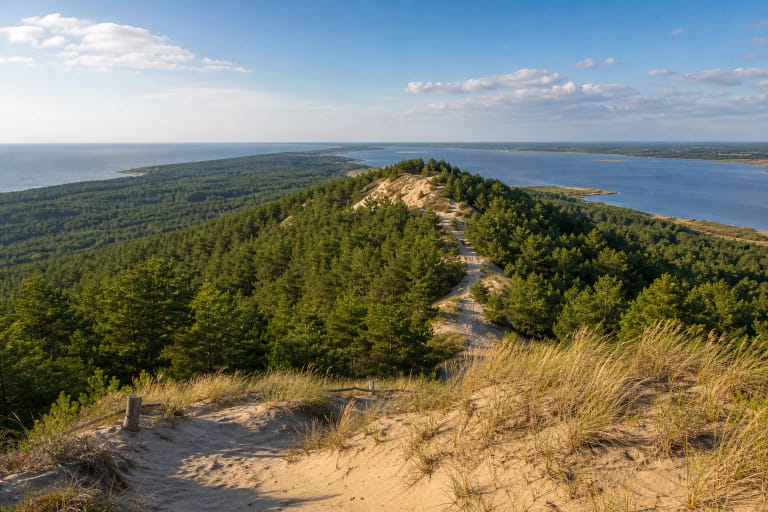
Vecekrugas Dune near Preila is one of the highest dunes on the Curonian Spit: a 67.2 m geomorphological natural monument with views across forest,…
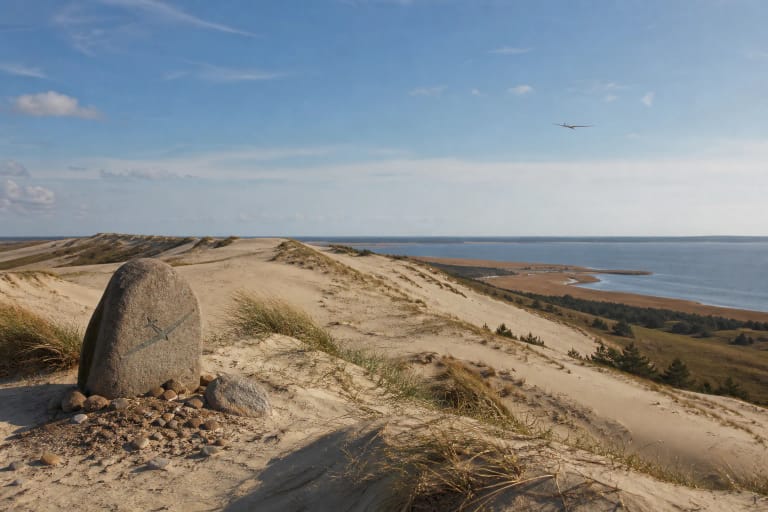
Gliders' Dune
Gliders' Dune, also called the Great Dune, lies south of Nida.
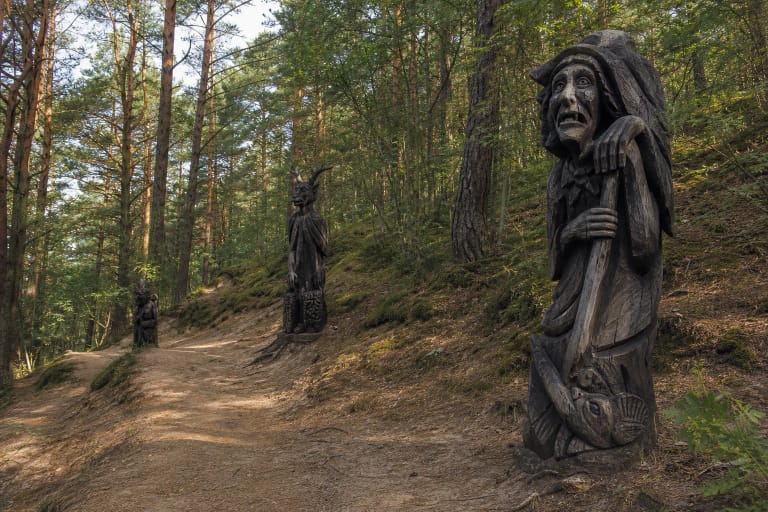
Hill of Witches
The Hill of Witches in Juodkrantė is a wooden sculpture trail in a pine forest, where the world of Lithuanian fairy tales, legends, witches, and…
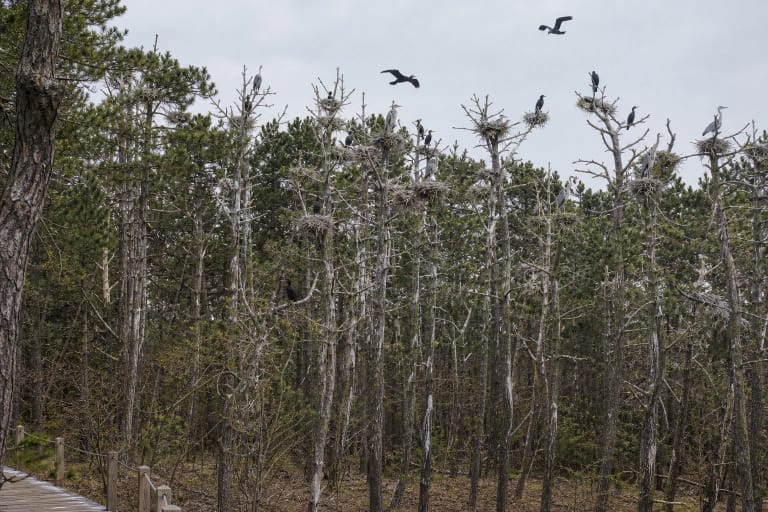
Juodkrantė cormorant and grey heron colony
The Juodkrantė cormorant and grey heron colony around Garnių Hill is one of the most striking natural stops on the Curonian Spit, where visitors see…
All places in this guide
Places on the mapParnidis Dune45-90 minutesNagliai Nature Reserve educational trail45-75 minutesVecekrugas Dune45-90 minutesGliders' Dune45-90 minutesHill of Witches45-90 minutesJuodkrantė cormorant and grey heron colony20-45 minutesNida Lighthouse20-45 minutes; longer with a walk over Urbas HillThomas Mann Memorial Museum45 minutes-1.5 hours; longer with an exhibition or Thomas Mann Festival contextCuronian Spit History Museum45-90 minutes; longer when combined with a Nida cultural routeAmber Bay and the Sound Catcher45 minutes-1.5 hours; longer with the Juodkrantė dendrological trail and lagoon shoreJuodkrantė Old Cemetery and Krikštai20-40 minutes; longer with a historic Juodkrantė walkLiudvikas Rėza Cultural Centre45 minutes-1 hour; longer during an event or exhibitionPervalka Lighthouse20-45 minutes from shore; longer by boatPreila Ethnographic Cemetery20-40 minutes; longer with a walk through PreilaNida Evangelical Lutheran Church20-40 minutes; longer during a concert or with the old cemeteryNida Fisherman's Ethnographic Homestead30-60 minutesMizgiriai Amber Museum45-75 minutesMary Help of Christians Church in Nida20-40 minutesNida Art Colony30-90 minutes for an exhibition or event; longer for residency and course participantsNida Ethnographic Cemetery and Krikštai20-45 minutesPervalka Village45-90 minutes; 2 hours or more with a shore routePreila Village45-90 minutes; 2-3 hours with a walking routeBulvikis Cape30-60 minutes; longer when combined with the Nida-Preila routeKarvaičiai Village Site and Dune45-90 minutes; longer with a Preila walking routeSkirpstas Hill and the Liudvikas Rėza Sculpture20-40 minutes; longer with a Pervalka shore routeAvikalnis Cape20-45 minutesJuodkrantė Dendrological Educational Trail45-75 minutes one way; 1.5-2 hours returning along the same path or connecting with central JuodkrantėPreila Beach2-4 hours; longer if you plan to swim or wait for sunsetJuodkrantė Beach2-4 hours; longer for a coastal walk or sunsetJuodkrantė Evangelical Lutheran Church20-40 minutes; longer for a service, concert, or visit to the old cemeteryNida Harbour30-60 minutes for the waterfront and harbour panorama; arriving by boat depends on permission and mooring arrangementsNida Gliding School Memorial Stonea short stop at the memorial site; the complete official 19 km gliding-school heritage route takes 3-5.5 hoursAgainst the Wind Sculpture in Nida15-30 minutes; 1-2 hours with the Parnidis Dune viewpoints and sundialVytautas Kernagis Memorial Sculpture15-30 minutes; longer for the music or a walk along the lagoon promenadeJuodkrantė Pier20-45 minutes for the pier and lagoon panorama; a boat trip follows the selected operator's timetableJuodkrantė Stone Sculpture Park45 minutes-1 hour 15 minutes; longer if you read the labels and walk the full waterfront sectionCuronian Spit National Park Visitor Centreabout 1 hour for the exhibition presentation, plus time for the reading room and outdoor spaceArtists' Dune in Preila30-60 minutes; longer when walking from central Preila or lingering at the viewpointNida Aerodromeonly for a pre-arranged visit or an announced public event; do not plan an independent walk around the aerodromeNida Weathervane Display30-60 minutes for the full waterfront displayNida Walk of Fame15-30 minutes for the handprints; 45-60 minutes with the harbour and lagoon waterfrontLNDM Pamario Gallery in Juodkrantė45-90 minutes for the exhibitions and outdoor sculptures; longer for an education session or eventJuodkrantė Lighthouse10-20 minutes at the tower; 1.5-2.5 hours with the Miško katedra routeNida Central Beach1-4 hours; longer for a full beach day in suitable weatherNida Naturist Beach1-3 hours; longer in suitable beach weatherChairs for Two in Neringa15-30 minutes; about 1 hour with a section of the dendrological trailPervalka Birdwatching Tower20-45 minutes; 1-2 hours with a Pervalka shoreline walkOžkų Ragas Birdwatching Tower20-45 minutes; 1-2 hours with a walk from PreilaNeringa's Chair15-30 minutes; 1-2 hours with a Valley of Silence and Parnidis trail walkThe Italian View in Nida15-30 minutes; 45-90 minutes with the Thomas Mann Memorial Museum surroundingsLife on the Curonian Spit in the Mid-19th Century15-30 minutes; 45-90 minutes when reading the engravings and combining it with an old-town walkValley of Death in Nida30-60 minutes; 1.5-2 hours when combined with the Parnidis and Gliders' dune areaParnidis Educational Trailabout 1 hour for the 1.9 km route in one direction; 1.5-2 hours with the return, four viewpoints, and information panelsSmiltynė-Juodkrantė Section of the Curonian Spit Cycle Path2-3 hours one way with short stops; 4-6 hours if returning by the same routeUrbo Hill45-90 minutes; longer if you visit Nida Lighthouse or combine the stop with other Nida routesPervalka Beach2-4 hours; longer when combining the beach with Pervalka village, a forest walk, or birdwatching
About this area
Nida is the southern part of the town of Neringa on the Curonian Lagoon, only a few kilometres from the Kaliningrad Region border, and the most convenient base for exploring the whole Curonian Spit. This narrow sand peninsula lies between the open Baltic Sea and the calmer lagoon, bringing together seaside nature, Curonian fishermen's heritage, and quiet resort life. The whole spit - from Smiltynė through Juodkrantė, Pervalka, and Preila to Nida - belongs to Curonian Spit National Park and is listed as UNESCO World Heritage as a cultural landscape shaped by both people and nature.
Why visit Nida and the Curonian Spit
The Curonian Spit is a narrow sand peninsula almost 100 km long, separating the Curonian Lagoon from the Baltic Sea. Lithuania holds its northern part, and Nida is its centre and largest settlement. Lithuanian encyclopedic sources describe Nida as the southern part of the town of Neringa on the Curonian Lagoon and as the centre of Neringa Municipality inside Curonian Spit National Park.
The place is exceptional because three landscapes meet here: windblown white dunes, a pine-covered protective dune ridge, and the shores of two waters - the brackish lagoon and the open sea. Because this natural and human-shaped landscape has rare value, the Curonian Spit was inscribed on the UNESCO World Heritage List in 2000.
Nida became known in the nineteenth century as a place that attracted artists and holidaymakers, and in the twentieth century it developed into a true resort. Today it combines quiet rest, cultural tourism, and a lively calendar of events, including Thomas Mann, jazz, and folklore festivals.
Dunes, lagoon, and Baltic Sea: the nature of the spit
The best-known symbol of Nida is Parnidis Dune, one of the few still-drifting dunes accessible by an educational path and stairs, with a granite sundial-calendar at the top. From the dune ridge, visitors can see the lagoon, the sea direction, and the white-dune landscapes stretching toward Sklandytojai and Nagliai.
North of Nida, between Pervalka and Juodkrantė, lies Nagliai Nature Reserve with the Dead, or Grey, Dunes - a place where sand once buried old Curonian fishing villages. Nida's old cemetery and Curonian memorial signs also recall this dramatic history of the spit.
Visitors who come for water get two very different edges: long sandy Baltic beaches on the sea side and the calmer lagoon shore with the yacht harbour. Lithuanian sources also mention Grobštas Reserve, the lagoon marl exposure, and many geomorphological natural monuments near Nida, including Agila, Karvaičiai, Skirpstas, Vingis dunes, and Urbas Hill.
Nida town: fishermen's heritage and the Thomas Mann House
The old part of Nida preserves colourful Curonian fishermen's houses with shutters and wooden details, while the open-air ethnographic fisherman's homestead shows how people lived at the end of the nineteenth century. The lagoon weathervanes, once used to mark which village a boat belonged to, have become a symbol of the whole region.
Above town rises Urbas Hill with the Nida Lighthouse, from whose surroundings broad lagoon and dune views open. The town also has the Evangelical Lutheran church built in 1888, recalling the Protestant past of the region, and the Catholic Church of Mary Help of Christians, built in 2003.
One of the most visited cultural stops is the Thomas Mann Memorial Museum in the house where the Nobel Prize-winning writer spent his summers in 1930-1932. The Neringa History Museum, Mizgiriai Amber Gallery, and the history of the former H. Blode hotel add to Nida's cultural profile.
Juodkrantė, Pervalka, and Preila
If you travel to Nida from Klaipėda, it is worth stopping in the other settlements of the spit. Juodkrantė is known for the Hill of Witches, an oak-grove trail of wooden sculptures based on Lithuanian mythology and fairy-tale motifs, and nearby, above the lagoon, is one of Lithuania's largest grey heron and cormorant colonies.
Pervalka and Preila are the smallest and quietest settlements of the spit, set between the great dune ridge and the lagoon. They suit visitors looking for slower rest. Pervalka Lighthouse and the ethnographic cemetery of Preila remind travellers that these places also have old fishing-community roots.
The whole spit is connected by educational and cycling routes, so Nida combines well with trips to Juodkrantė or the Dead Dunes - by car, bicycle, or lagoon boat.
Practical tips: how to get there and when to visit
The Curonian Spit is reached by ferry from Klaipėda. The Old and New ferry crossings take passengers and cars to Smiltynė, and from there a single road of about 48 km leads to Nida through Juodkrantė, Pervalka, and Preila, with bus service along the route. In summer, boat travel between Nida, Juodkrantė, and Klaipėda is also popular.
Because the Curonian Spit is a national park, cars entering it pay an environmental fee, especially in the warm season. Check current ferry and boat timetables and tariffs before travelling, because they change by season.
The best time for a full visitor experience is May to September, when museums, boats, and beaches are active. Spring and autumn are attractive for quiet walks and bird migration, while winter is very calm. When visiting dunes, stay only on marked paths and stairs: drifting sand is highly vulnerable, and leaving the paths is restricted.
Nida: frequently asked questions
How do you get to Nida?
Take a ferry from Klaipėda, either the Old or New crossing, to Smiltynė, then continue about 48 km by car or bus through Juodkrantė, Pervalka, and Preila to Nida. In summer, boat routes from Klaipėda and Juodkrantė also operate.
Is there an entry fee for the Curonian Spit?
Yes. Cars entering Curonian Spit National Park pay an environmental fee, with the highest rates usually in the summer season. Check current tariffs and payment rules before travelling because they change by season.
What is Parnidis Dune famous for?
It is one of Nida's still-drifting dunes, with an educational path and stairs, and a granite sundial-calendar at the top. From the ridge you can read both the Curonian Lagoon side and the Baltic Sea direction.
Is the Curonian Spit UNESCO World Heritage?
Yes. The Curonian Spit was inscribed on the UNESCO World Heritage List in 2000 as a cultural landscape shaped by both nature and human work; the property spans the Lithuanian and Russian sides of the spit.
Where did Thomas Mann live in Nida?
The writer spent the summers of 1930-1932 in his house on a hill above the lagoon. It is now the Thomas Mann Memorial Museum, with an exhibition about the writer and Nida of that period.
What should you see in Juodkrantė?
The best-known stop is the Hill of Witches, a wooden-sculpture trail based on mythology and fairy-tale motifs. Nearby is one of Lithuania's largest grey heron and cormorant colonies.
When is the best time to visit Nida?
From May to September, museums, boats, and beach services are most active. Spring and autumn are quieter and good for walking and bird migration, while winter in Nida is very still.
How much time should you spend on the Curonian Spit?
One day is enough for Nida, Parnidis Dune, and the old town, but two or three days are better if you want Juodkrantė, the Dead Dunes, beaches, and slower cycling or boat trips.
Nida: what else to see
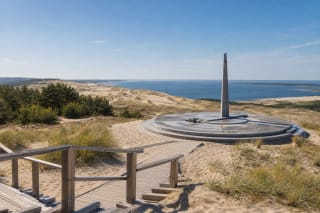
Parnidis Dune
The signature Nida dune with a sundial; the first viewpoint worth climbing when you arrive.
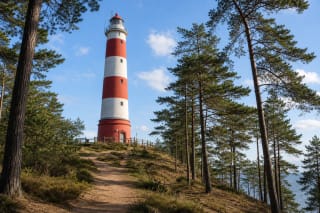
Nida Lighthouse
The Urbas Hill lighthouse and broad views toward the lagoon and dunes above town.
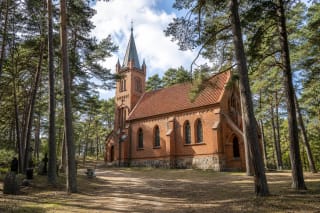
Nida Evangelical Lutheran Church
The 1888 church that recalls the Protestant heritage of Lithuania Minor in Nida.
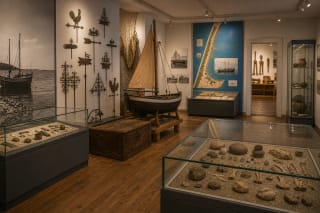
Curonian Spit History Museum
Exhibits about the spit, fishing life, and the Curonian way of living.
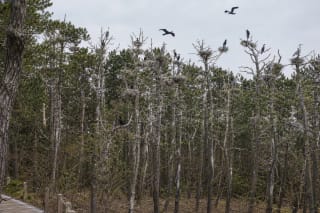
Juodkrantė cormorant and grey heron colony
One of Lithuania's largest bird colonies, on the route from Klaipėda to Nida.