- Place
- Nida, Neringa Municipality
- Region
- Neringa
- Type
- interactive outdoor oak sculpture in the Valley of Silence
- Address
- Valley of Silence, southern Nida, Neringa
- Coordinates
- 55.29680, 20.99718
- Visit duration
- 15-30 minutes; 1-2 hours with a Valley of Silence and Parnidis trail walk
- Best time
- a calm morning or evening in dry weather; timber may be slippery, and summer midday is busier
Neringa's Chair sculpture, Chair for Neringa
Which artwork this page identifies
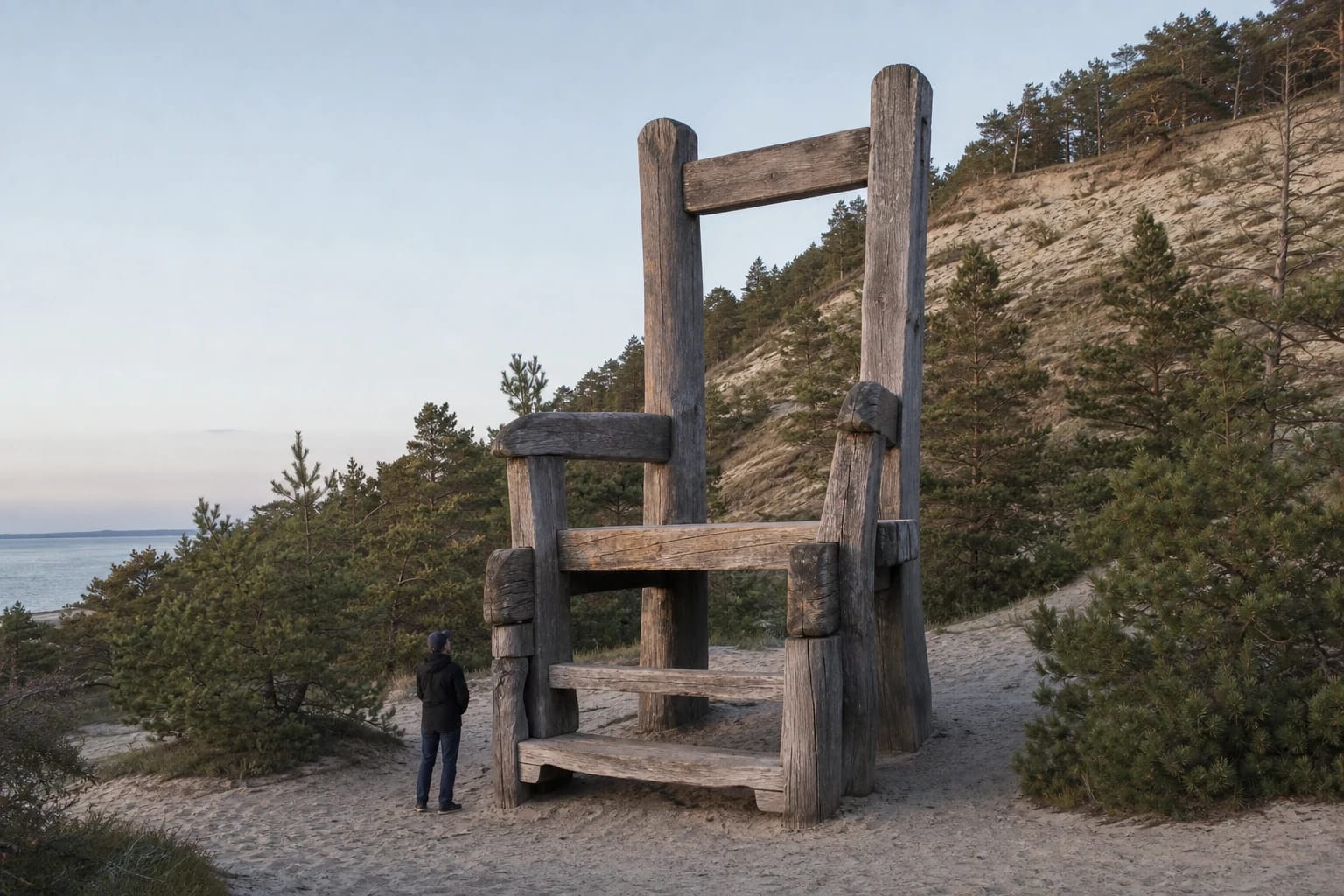
This page covers the nearly five-metre oak chair in the Valley of Silence at 55.2968032, 20.9971751. The sculpture stands in southern Nida at the northern foot of Parnidis Dune. It is not an ordinary trail bench or part of Sundial Square.
On 24 July 2026, the exact Google listing, place ID ChIJfa9dhyGX5EYRGsRmFjd7mnw, showed 4.8 out of 5 from 33 reviews. Neringa Municipality's 2026 events calendar also used the sculpture as a clear meeting point in the Valley of Silence.
A 2014 artwork and the giantess Neringa legend
The public-library Krašto gidas states that the sculpture was unveiled in 2014 and created by Albertas Danilevičius. Its giant chair form recalls the legend in which giantess Neringa piled up the sandy peninsula and protected people from the stormy sea.
The work deliberately uses massive oak and a form larger than the human body. Seen close up, it becomes both an illustration of the legend and a viewing point toward valley sand, low pine woodland, and the Parnidis slope.
Interactive sculpture, not ordinary stairs
The Krašto gidas object record says that visitors may climb and sit on the chair. It remains an outdoor timber artwork exposed to rain, sand, sun, and frost, so current condition matters more than a general description.
Climb only when there is no barrier, warning, loose element, or slippery surface. Keep children close, wear footwear with grip, and never jump from high parts. If uncertain, view the work safely from the ground.
Walking through the Valley of Silence
The sculpture is best reached on foot from Nida by following signs for the Valley of Silence and Parnidis nature trail. The coordinate marks the artwork, not parking. Leave vehicles legally in Nida and protect dune vegetation.
The national park describes the Valley of Silence as a calm place enclosed by dunes. Stay on marked routes, avoid damaging sandy slopes, and keep noise low. Uneven surfaces can make the return harder after rain or darkness.