- Place
- Pagėgiai Municipality
- Region
- Lithuania Minor
- Type
- ruins of an Evangelical Lutheran church
- Address
- Plaškiai, Stoniškiai eldership, Pagėgiai Municipality
- Coordinates
- 55.18102, 21.72151
- Visit duration
- 15-30 minutes, exterior only
- Best time
- daylight in calm, dry weather
Ruins of Plaškiai Evangelical Lutheran Church
A parish founded in 1695
Plaškiai Evangelical Lutheran parish was founded in 1695. Its first wooden church was consecrated near the end of the seventeenth century and was later replaced by a towerless stone-and-brick sanctuary.
Lithuanian-speaking Prussian Lithuanians long formed most of the parish. In 1922, Otto Obereigner, superintendent of the new Pagėgiai church district, settled at Plaškiai, giving the small church village wider administrative importance.
The neo-Romanesque church of 1900
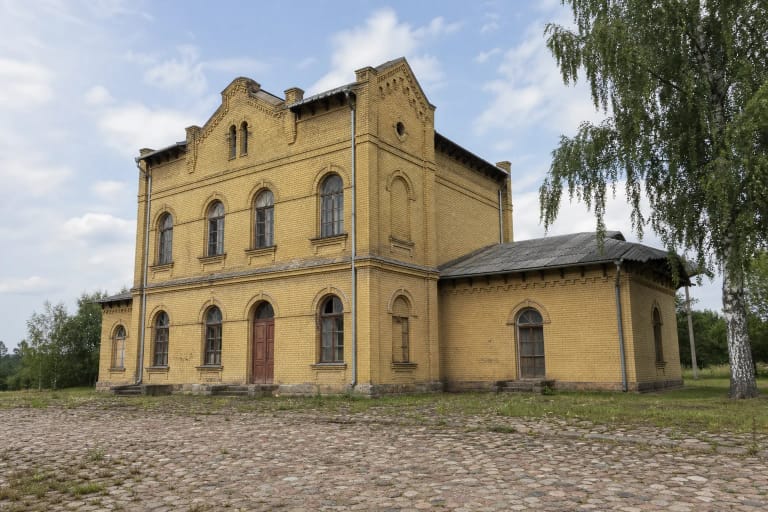
A large red-brick neo-Romanesque church was begun in the late nineteenth century and consecrated in 1900. The encyclopedia records a tower about 50 metres high, two bells, an organ and a spacious interior.
War, post-war adaptations and later neglect reduced the church to ruins. Surviving walls and part of the tower still communicate its former scale.
Structural safety and respect
This is not a stabilised visitor attraction. Bricks, roof remains and wall fragments can fall, so never enter unsupervised, climb masonry or approach unstable openings.
For an independent visit, view only from publicly accessible ground outside, avoid disturbing local residents and do not touch remains in the churchyard or cemetery. Postpone a visit during strong winds or storms.
Preservation efforts and organised worship
Information published by the Evangelical Lutheran Church in Lithuania shows that the community has sought to preserve the Plaškiai sanctuary and did not regard demolition as the desired solution. The site is therefore more than an ownerless picturesque ruin.
An official Reformation celebration and service was announced here in 2025. That organised event does not imply permanent free access to the interior. Follow official church announcements for future worship or conservation work and obey organisers' safety instructions.