- Place
- Pagėgiai Municipality
- Region
- Lithuania Minor
- Type
- historic railway station
- Address
- Stoniškiai village, Stoniškiai eldership, Pagėgiai Municipality
- Coordinates
- 55.19954, 21.76241
- Visit duration
- 15-30 minutes for the exterior
- Best time
- daylight and dry weather, using only publicly accessible places
The oldest surviving building in Stoniškiai
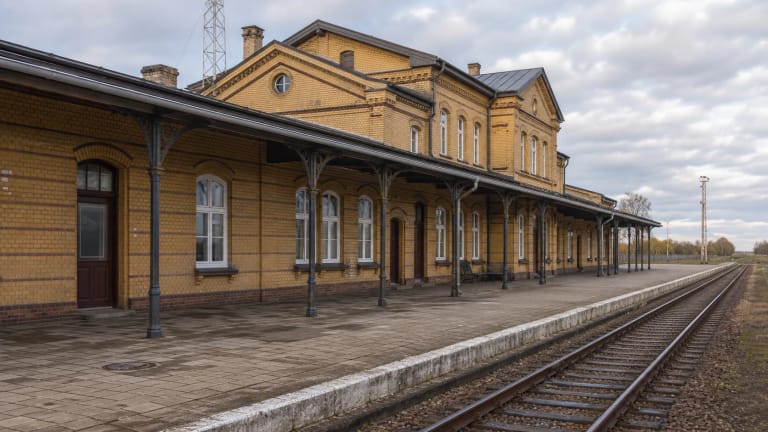
Local history published by Pagėgiai Municipality Vydūnas Public Library dates the station to about 1875, when trains began running through Stoniškiai. It describes this as the settlement's oldest surviving building.
The three-storey station is built of yellow brick. It once contained a waiting room, ticket office, buffets and staff accommodation, but it is not open as a museum today.
The railway ensemble and cobbled forecourt
Railway workers' housing, service buildings and a freight terminal were built with the station. The surviving cobbled forecourt helps convey the former scale and movement of the site.
A new station building was erected nearby in 1986 because automation equipment would not fit in the old one. The historic building then fell out of use and the local-history source describes it as deteriorating.
The 1875 line transformed the Pagėgiai area
Pagėgiai Municipality's history describes the 1875 railway from Tilsit towards Klaipėda as a major turning point for the area. Pagėgiai became a transport hub, while intermediate stations such as Stoniškiai connected smaller settlements to passenger and freight movement.
Compare the Stoniškiai building with the yellow-brick stations at Priekulė and Šilutė on the former route. Their shared materials and functions reveal a wider railway system, although each station now has a different condition and access regime.
Viewing the station safely
The coordinates identify the historic station, not a car park. Follow road signs, leave access clear and do not enter the private grounds around railway workers' housing.
Tracks are dangerous infrastructure. Do not cross except at an authorised crossing, walk on the railway formation or enter abandoned buildings. Photograph the station by daylight from the public lane or edge of the forecourt.