
Lithuania’s ethnographic regions
Lithuania Minor
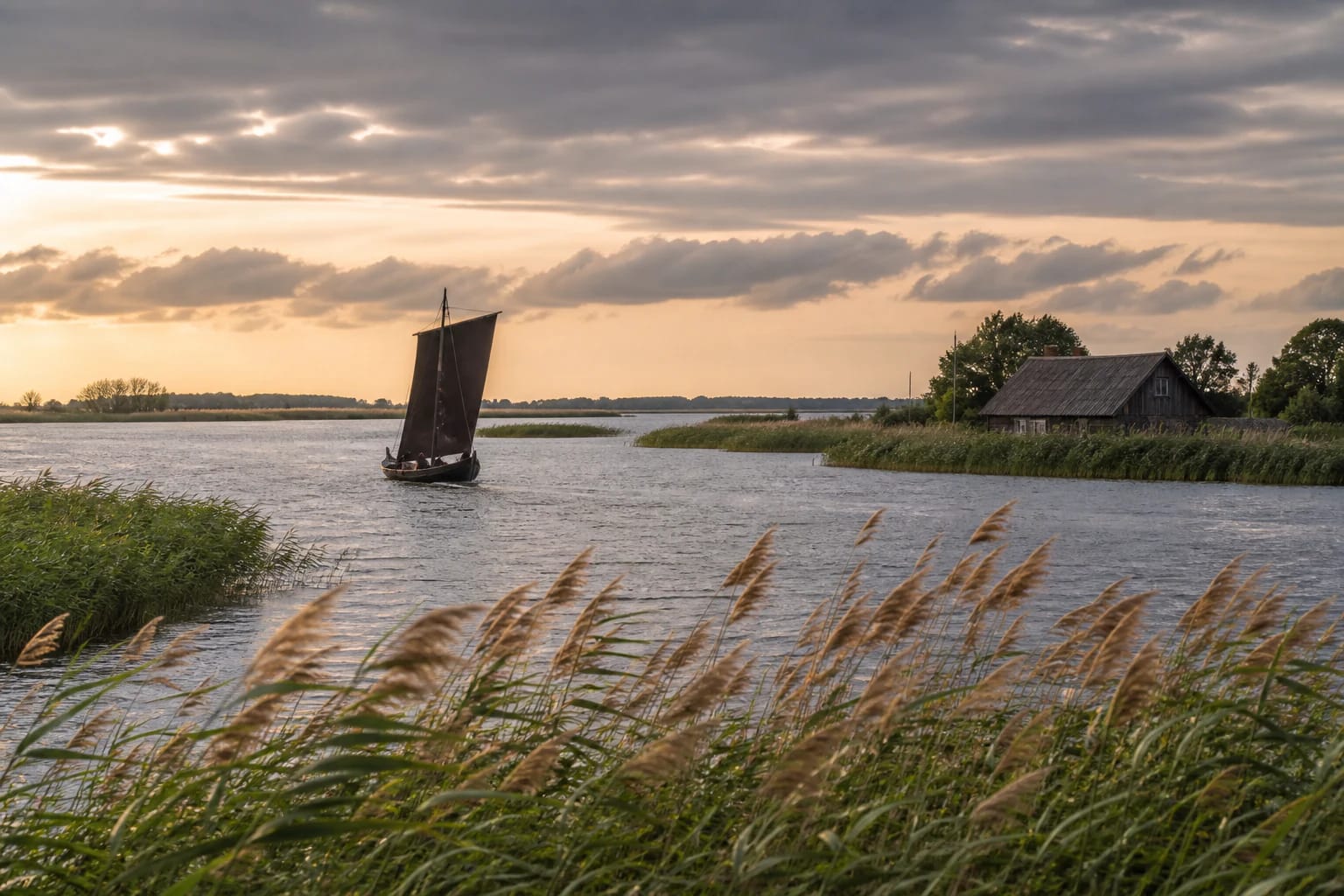
Lithuania Minor is the historic land of the Lietuvininkai and the coast in former Prussia; within Lithuania it is represented by the Klaipėda Region with the Curonian Spit, Nida, the Nemunas Delta, and Rambynas.
Lithuania Minor
Where to start
Choose a place, compare visiting times or explore the area on the map.
Key places to visit in Lithuania Minor:
Parnidis Dune
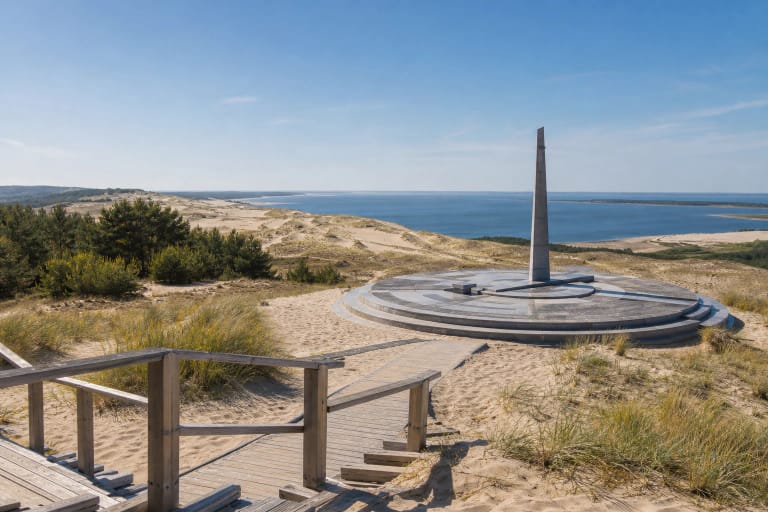
Parnidis Dune is one of Nida's strongest viewpoints: a 54.2 m dune ridge, white-dune landscape, directions toward the Curonian Lagoon and Baltic Sea,…
Nagliai Nature Reserve educational trail
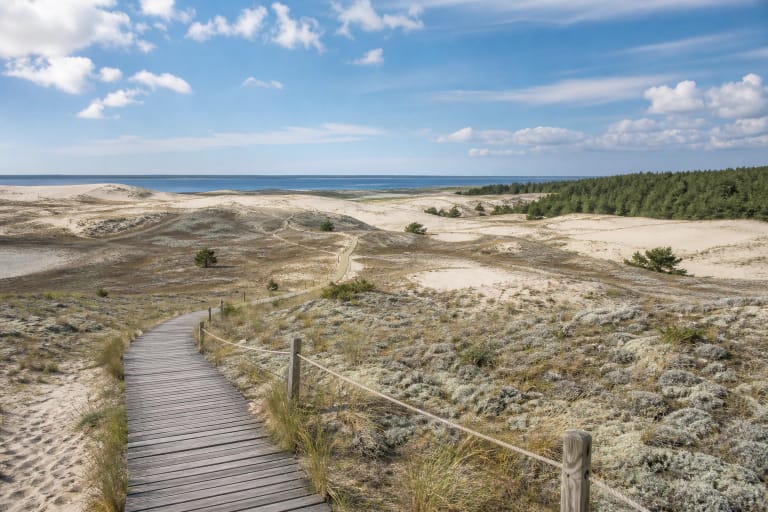
The Nagliai Nature Reserve educational trail crosses one of the most sensitive Curonian Spit landscapes: grey and white dunes, protected-species…
Vecekrugas Dune
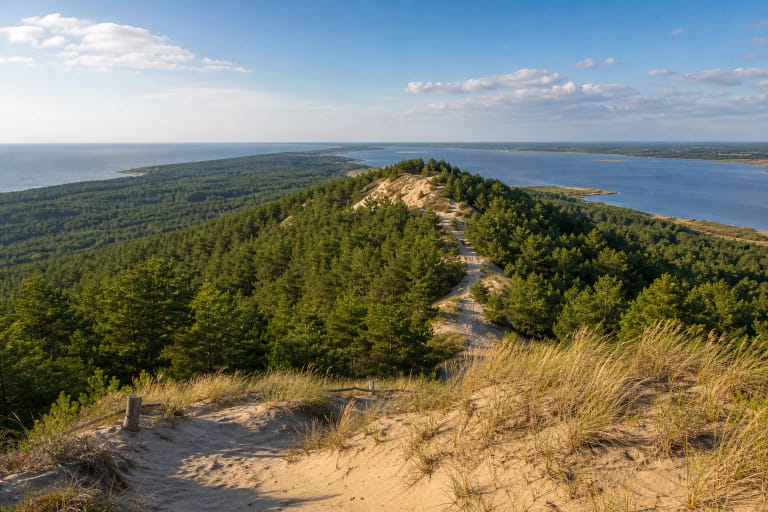
Vecekrugas Dune near Preila is one of the highest dunes on the Curonian Spit: a 67.2 m geomorphological natural monument with views across forest,…
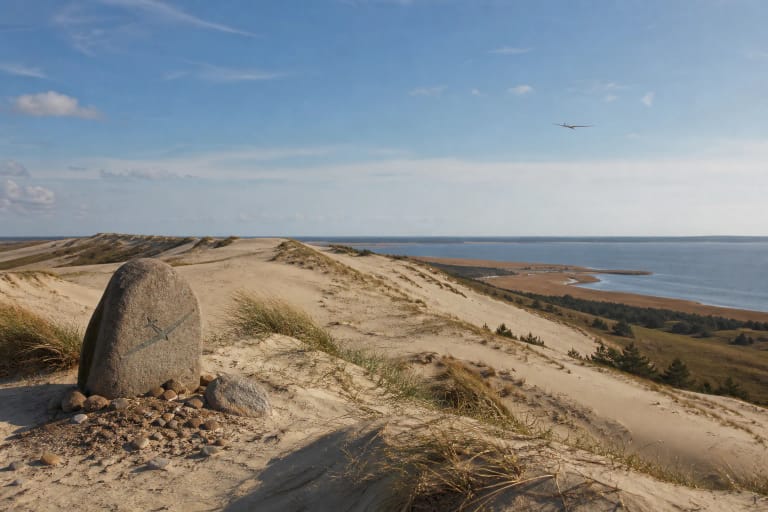
Gliders' Dune
Gliders' Dune, also called the Great Dune, lies south of Nida.
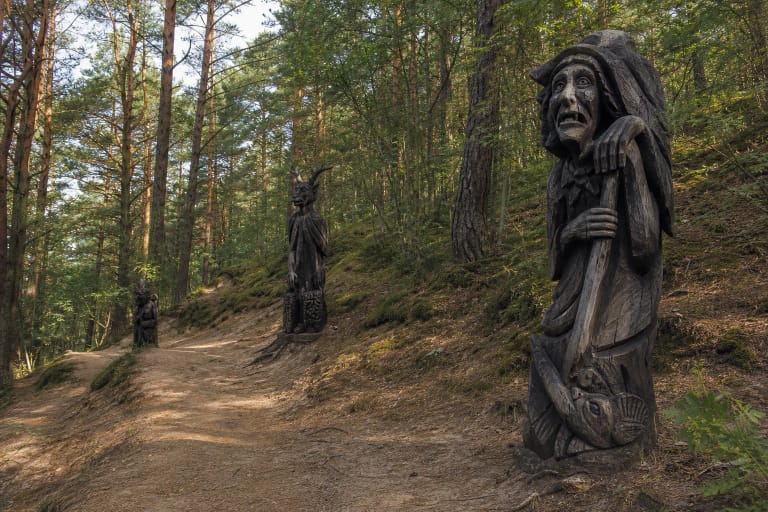
Hill of Witches
The Hill of Witches in Juodkrantė is a wooden sculpture trail in a pine forest, where the world of Lithuanian fairy tales, legends, witches, and…
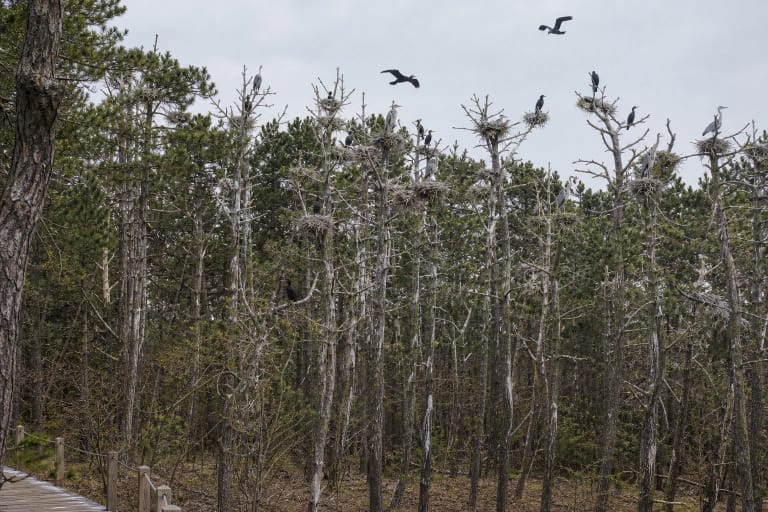
Juodkrantė cormorant and grey heron colony
The Juodkrantė cormorant and grey heron colony around Garnių Hill is one of the most striking natural stops on the Curonian Spit, where visitors see…
All places in this guide
Places on the mapParnidis Dune45-90 minutesNagliai Nature Reserve educational trail45-75 minutesVecekrugas Dune45-90 minutesGliders' Dune45-90 minutesHill of Witches45-90 minutesJuodkrantė cormorant and grey heron colony20-45 minutesVentė Cape1-2 hoursRambynas Hill45 minutes-1.5 hoursNemunas Delta2-6 hours, or a full day with a boat trip or birdwatchingAukštumala Raised Bog1-2 hours for the educational trailLithuanian Sea Museum2-4 hours, longer with the dolphinarium programme and a walk in SmiltynėKlaipėda Old Town1.5-3 hours; longer if you visit museums and the Danė quaysKlaipėda Castle Site and Castle Museum1.5-2.5 hours; longer with an educational activity or guideClock Museum in Klaipėda1-1.5 hours; longer with an educational activity or temporary exhibitionKlaipėda Sculpture Park45 minutes-1.5 hours; longer with a guided tour or historical routeŠilutė Hugo Scheu Manor1-2 hours; longer with Šilutė centre and a Pamarys routeMacikai Camp Complex45 minutes-1.5 hours; longer with a guide or deeper historical routeKintai Vydūnas Cultural Centre45 minutes-1.5 hours; longer with an exhibition, education programme, or Kintai routeMartynas Jankus Museum1-2 hours; longer with Rambynas Hill and the Bitėnai routeNida Lighthouse20-45 minutes; longer with a walk over Urbas HillThomas Mann Memorial Museum45 minutes-1.5 hours; longer with an exhibition or Thomas Mann Festival contextCuronian Spit History Museum45-90 minutes; longer when combined with a Nida cultural routeAmber Bay and the Sound Catcher45 minutes-1.5 hours; longer with the Juodkrantė dendrological trail and lagoon shoreHistory Museum of Lithuania Minor1-1.5 hours; longer with outdoor displays and an old-town routePranas Domšaitis Gallery1-2 hours; longer with temporary exhibitions and educational activitiesBlacksmithing Museum in Klaipėda45 minutes-1 hour; longer with an educational workshopShip-Museum Sūduvis45 minutes-1 hour; longer with an educational activity or escape roomMelnragė Piers45 minutes-1.5 hours; longer with Melnragė BeachKlaipėda University Botanical Garden1-2 hours; longer during flowering or with an educational activitySmiltynė Kurhaus20-45 minutes; longer with Smiltynė villas and the sea pathJuodkrantė Old Cemetery and Krikštai20-40 minutes; longer with a historic Juodkrantė walkLiudvikas Rėza Cultural Centre45 minutes-1 hour; longer during an event or exhibitionPervalka Lighthouse20-45 minutes from shore; longer by boatPreila Ethnographic Cemetery20-40 minutes; longer with a walk through PreilaUostadvaris Lighthouse30-60 minutes; longer with the water-lifting station and RusnėUostadvaris Water-Lifting Station30-60 minutes; longer with Uostadvaris Lighthouse and RusnėMingė Village1-2 hours; longer with a boat trip or extended Nemunas Delta routeRusnė Evangelical Lutheran Church20-45 minutes; longer with a Rusnė and Nemunas Delta routeŠvėkšna Manor and Park1-2 hours; longer with Švėkšna church and the townŠvėkšna St James the Apostle Church30-60 minutes; longer with the manor park and townKlaipėda Central Post Office20-40 minutes for the exterior; longer if you catch a carillon concertKlaipėda Mary Queen of Peace Church30-45 minutes; longer if you attend a service or concertSmalininkai Water Gauging Station30-60 minutes; longer with the Museum of Ancient TechnologyViešvilė State Nature Reserve2-4 hours with the educational trail and visitor centreAgluonėnai Ethnographic Homestead1-1.5 hours; longer with an educational program or barn-theatre eventPriekulė Ieva Simonaitytė Memorial Museum45 minutes-1 hour; longer with the park and town walkKing Wilhelm Canal1-2 hours; longer by bicycle along the canalKrokų Lanka Lake1-2 hours; longer for birdwatching or a boat tripVilkyškiai1-2 hours; longer with Witches' Spruce and the Rambynas areaNida Evangelical Lutheran Church20-40 minutes; longer during a concert or with the old cemeteryWitches' Spruce15-35 minutesTheatre Square and the Ännchen of Tharau Fountain15-30 minutes, longer with the old townBitėnai1-2 hours with the museum, longer with RambynasSmalininkai Museum of Ancient Technology1-1.5 hoursQueen Louise Bridge15-30 minutes from the Panemunė sideK. Banys Ethnographic Fisherman's Homestead30-60 minutes by prior arrangementMuseum of Freedom Fights and Deportation History1-1.5 hoursPagėgiai Kristijonas Donelaitis Gymnasium10-20 minutes for the exteriorBlack Ghost Sculpture10-20 minutes; longer if combined with the castle siteKlaipėda Puppet Theatre45-90 minutes for a performance; longer with an education programmeNida Fisherman's Ethnographic Homestead30-60 minutesŽemaičių Naumiestis Church of St Michael the Archangel20-40 minutes; longer during servicesSkirvytėlė30-60 minutes; longer with Rusnė and the deltaOpstainiai (Vilkyškiai) Hillfort30-60 minutesPriekulė St. Anthony of Padua Church15-30 minutes; longer if you can enterPriekulė Railway Station15-25 minutes for the exteriorLankupiai Lock20-40 minutesLankupiai Suspension Bridge15-25 minutesŠilutė Evangelical Lutheran Church20-40 minutes; longer during a concert or serviceŠilutė Railway Station10-20 minutes for the exteriorKintai Evangelical Lutheran Church20-40 minutes; longer during an eventKintai Great Thuja10-20 minutesŽalgiriai Interpretive Trail45-90 minutes; longer with a guided programmeRusnė Bridge and Viaduct10-20 minutes for a safe stop at viewpointsSaugos Evangelical Lutheran Church15-30 minutesKatyčiai Evangelical Lutheran Church15-30 minutesŠereitlaukis Manor Estate45-90 minutesPagėgiai Evangelical Lutheran Church15-30 minutesSailing Ship Meridianas15-30 minutes on the quay; 1-2 hours if visiting the restaurantKlaipėda Drama Theatre1.5-3 hours for a performance; 10-20 minutes to view the building and squareKlaipėda State Music Theatre1.5-3 hours for a performance; 10-20 minutes for the buildingKlaipėda Ethnoculture Centre30-60 minutes; longer during an event or educational programmeJono Kalnelis and the Bastion Complex30-60 minutesKlaipėda Gasworks Complex15-25 minutes for the exterior; 1-1.5 hours with MEMEL Auto MuseumKlaipėda University Campus20-45 minutes for the exteriorFriedrich's Passage15-30 minutes; longer if visiting restaurants or cafesMizgiriai Amber Museum45-75 minutesMary Help of Christians Church in Nida20-40 minutesNida Art Colony30-90 minutes for an exhibition or event; longer for residency and course participantsNida Ethnographic Cemetery and Krikštai20-45 minutesPervalka Village45-90 minutes; 2 hours or more with a shore routePreila Village45-90 minutes; 2-3 hours with a walking routeBulvikis Cape30-60 minutes; longer when combined with the Nida-Preila routeKarvaičiai Village Site and Dune45-90 minutes; longer with a Preila walking routeSkirpstas Hill and the Liudvikas Rėza Sculpture20-40 minutes; longer with a Pervalka shore routeAvikalnis Cape20-45 minutesSmiltynė Beach2-4 hours; longer when combined with Smiltynė forest trailsSt Francis of Assisi Church in Klaipėda45-90 minutes; longer for a concert, exhibition, or eventAlbatross Monument20-40 minutes; longer with the Lithuanian Sea Museum and KopgalisThe Sleuth Sculpture10-20 minutes; longer with the Sculpture Park and New TownDanė River Cycle Path1-2 hours cycling with stops; 2-3 hours walking one wayBaltic Sea Animal Rehabilitation Centreabout 1 hour, plus the ferry and 1.8 km journey from the Old Ferry TerminalVydūnas Square20-40 minutes; longer for a quiet rest or to read the thoughts carved into graniteEscape Bunker 1944about 1 hour for the game, plus time to arrive and receive instructionsSąjūdis Park1-2 hours for a walk and play; longer for a skate or BMX sessionPriekulė Art and Culture Centre1.5-3 hours for a play or concert; approximately 20-30 minutes for Market Square and the exterior without an eventMėmelio Vynas Winery1-3 hours depending on the tasting programme agreed in advanceGiruliai Beach1-4 hours; allow half a day for a longer coastal or pinewood walkJuodkrantė Dendrological Educational Trail45-75 minutes one way; 1.5-2 hours returning along the same path or connecting with central JuodkrantėDercekliai Pond30-60 minutes for a quiet waterside stop; longer only after checking swimming or angling conditionsDanė Riverside Square45 minutes to 2 hours; longer when children use the play area or the square forms part of a central-city walkŽardė Hillfort45-90 minutes for the hillfort and pond edge; 2-3 hours when combined with the museum's prehistory exhibitionKalviai Gravel Quarry at Ketvergiai45-90 minutes for quiet observation from the shoreSmiltynė Yacht Club30-60 minutes to view the harbour setting; allow separate time for a stay, event, or boat servicePreila Beach2-4 hours; longer if you plan to swim or wait for sunsetJuodkrantė Beach2-4 hours; longer for a coastal walk or sunsetJuodkrantė Evangelical Lutheran Church20-40 minutes; longer for a service, concert, or visit to the old cemeteryVentė Cape Ornithological Station1.5-2 hours; longer during intensive migration or with a booked tourVentė Cape Lighthouse30-60 minutes for the lighthouse and viewpoint; 1-2 hours with the Bird Migration Exhibition and lagoon shoreRusnė Island3-6 hours for the main island stops; a full day for a slow cycling route or longer visitsAukštumala Nature Trail1-1.5 hours for the approximately 2.4 km return walkNemunas Delta Regional Park Visitor Centre45-90 minutes for the exhibition and route planning; longer with a tour or education programmeKlaipėda Cruise Ship Terminal30-60 minutes for the waterfront and ships; longer during a cruise arrival or city eventKlaipėda Church of St Joseph the Worker20-40 minutes; about 1 hour when attending MassKlaipėda County Ieva Simonaitytė Public Library45-90 minutes; longer for an exhibition, event, or time in a reading roomKlaipėda Recreation Park1-2 hours; 2-4 hours with sport or the paid treetop coursePriekulė Evangelical Lutheran Church15-30 minutes for the exterior; 30-60 minutes if the interior is open or you attend worshipM.S.C. Memelland and Antanas Poška Monument10-20 minutes; about 1 hour with Klaipėda Old Town and the castle siteNida Harbour30-60 minutes for the waterfront and harbour panorama; arriving by boat depends on permission and mooring arrangementsNida Gliding School Memorial Stonea short stop at the memorial site; the complete official 19 km gliding-school heritage route takes 3-5.5 hoursAgainst the Wind Sculpture in Nida15-30 minutes; 1-2 hours with the Parnidis Dune viewpoints and sundialVytautas Kernagis Memorial Sculpture15-30 minutes; longer for the music or a walk along the lagoon promenadeJuodkrantė Pier20-45 minutes for the pier and lagoon panorama; a boat trip follows the selected operator's timetableJuodkrantė Stone Sculpture Park45 minutes-1 hour 15 minutes; longer if you read the labels and walk the full waterfront sectionKintai Harbour20-45 minutes to view it from land; launching, mooring, or taking a boat trip must be arranged separatelyRusnė Pier15-30 minutes for the quay and Atmata view; arrival by boat or mooring must be arranged separatelyŠilutė Small-Craft Harbour30-60 minutes to view it from land; launching, mooring, or taking a boat trip must be arranged separatelyŠilutė Old Market Square30-60 minutes; 1-2 hours with the Šyša riverfront and historic centre of ŠilutėŽemaičių Naumiestis Evangelical Lutheran Church20-40 minutes for the church, belfry, and churchyard exterior; longer for a service or eventŠvėkšna Museum45-75 minutes; 2-3 hours with the manor park, church, and town centreŠvyturio Arena2-4 hours depending on the event; doors normally open approximately one hour beforehandCuronian Spit National Park Visitor Centreabout 1 hour for the exhibition presentation, plus time for the reading room and outdoor spaceArtists' Dune in Preila30-60 minutes; longer when walking from central Preila or lingering at the viewpointNida Aerodromeonly for a pre-arranged visit or an announced public event; do not plan an independent walk around the aerodromeKlaipėda Swing Bridge10-20 minutes; longer with the castle site and harbour walkKiss Sculpture in Klaipėda10-20 minutes; 45-90 minutes with the Old Ferry, Cruise Ship Terminal, or Danė waterfrontFisherman Sculpture in Klaipėda15-30 minutes; longer while walking the Danė quays and Old TownDanė River Waterfront30 to 60 minutes; about 1.5 hours when combined with the old town, castle site, or Danė Riverside SquareKlaipėda Friendship Park45 minutes to 1.5 hours for a walk; about 2-3 hours for the full 18-basket disc golf courseHagen's Dune30-60 minutes; longer when combined with a walk through SmiltynėMalūno Park and Pond in Klaipėda45-90 minutes for a walk around the pond; longer with the playgrounds, birdwatching, or a leisurely waterside breakMelnragė Park in Klaipėda40-90 minutes for the park; 1.5-3 hours when combined with the beach and Melnragė north pierOak Grove Park in Klaipėda45-90 minutes for a walk; 1.5-2 hours when using the play, sports or dog areaKlaipėda Town Hall20-40 minutes for the exterior and historical context; longer only for a prearranged visit or eventKlaipėda Narrow-Gauge Railway Station15-30 minutes for the exterior; 1-2 hours with a restaurant visitPaul Lindenau Shipyard Exhibitionabout 45-75 minutes, depending on the programme agreed in advanceArch Monument to a United Lithuania in Klaipėda15-30 minutes for the monument; 1-2 hours with Danė Square and Klaipėda Old TownNida Weathervane Display30-60 minutes for the full waterfront displayNida Walk of Fame15-30 minutes for the handprints; 45-60 minutes with the harbour and lagoon waterfrontLNDM Pamario Gallery in Juodkrantė45-90 minutes for the exhibitions and outdoor sculptures; longer for an education session or eventJuodkrantė Lighthouse10-20 minutes at the tower; 1.5-2.5 hours with the Miško katedra routeKintai Forestry Recreation Trail1-1.5 hours for the 2.2 km trail; about 2-3 hours if returning on the same pathTulkiaragė Nature Trailabout 1-2 hours for the 2.4-3.6 km return walk; longer for birdwatchingGardamas Lourdes Grotto and Spring20-40 minutes; about one hour with the grounds of St Roch ChurchŠilutė Church of the Holy Cross20-35 minutes for the exterior and churchyard; about 45-60 minutes when the church is open and the interior can be viewed quietlyŠvyturys BHouse1.5 hours for the tour; 2-3 hours with the gastrobar or an eventKlaipėda Concert Hall1.5-2.5 hours for a concert; 10-20 minutes to view the historic exterior without attending an eventKlaipėda Culture Factory1-3 hours for a chosen performance, film, exhibition, or event; 20-40 minutes for the exterior and Jono Hill surroundingsThe Magical Mouse in Klaipėda10-20 minutes; 45-90 minutes when combined with other miniature sculptures in Klaipėda Old TownKintai Observation Tower20-40 minutes, or longer for birdwatching and sunsetŠilutė Secrets45-90 minutes for the full routeIeva Simonaitytė Hill25-50 minutes to climb, view southern Klaipėda, and walk around the foot of the hillYellow Bridge in Šilutė10-20 minutes to see the historic location; the bridge itself is unavailable during restorationŠilutė Fountain10-25 minutes to rest in the square; 30-45 minutes with nearby historic streetsKlaipėda Exhibition Hall45-90 minutes for exhibitions; about 1-2 hours with a tour, educational activity or eventBaroti Gallery30-60 minutes; longer for an opening or eventOrthodox Church of All Russian Saints in Klaipėda25-40 minutes when the church is open; longer when attending a serviceChrist the King Church in Klaipėda25-45 minutes for quiet viewing; longer when attending MassKristijonas Donelaitis Square in Klaipėda20-40 minutes; longer when combined with an architecture walk along Liepų StreetNeringa Sculpture in Klaipėda15-30 minutes; 1-2 hours when combined with Klaipėda Old TownCat with a Gentleman's Face10-20 minutes; 45-90 minutes when combined with other Old Town sculpturesThe Dragon Sculpture in Klaipėda10-20 minutes; 45-90 minutes as part of a route through Klaipėda Old Town's small public sculpturesOld Town Post Sculpture10-20 minutes; longer as a stop on an Old Town sculpture walkThe Rooftop Chimney Sweep in Klaipėda10-20 minutes; longer as part of an Old Town sculpture walkKlaipėda Evangelical Baptist Church15-30 minutes for the exterior; allow the time set by the congregation when attending worshipKlaipėda KCCC Art Yard15-30 minutes for the courtyard and architecture; 1-2 hours for a booked workshop or eventOld Town Guard Sculpture10-20 minutes; longer as a stop on Klaipėda's small-sculpture routeThe Four Winds in Klaipėda15-30 minutes; about 1 hour with the castle site and harbour sculpturesPot with Money Sculpture10-20 minutes; longer with Birža Bridge and the Danė waterfrontOld Ferry Terminal and North Horn15-30 minutes for the terminal and waterfront, plus waiting and crossing timeKlaipėda Lighthouse15-30 minutes for an exterior view from lawful public approachesKlaipėda Central Beach1-4 hours; about an hour is enough for sunset or a short walkAulaukis Lake30-60 minutesŽvejų Rūmai in Klaipėdaevent-dependent, usually 1.5-3 hoursSt Casimir's Church in Klaipėda25-45 minutes when openSt Bruno of Querfurt Church in Klaipėda25-45 minutes when openGiruliai Library30-60 minutes; longer for an event or exhibitionGiruliai Railway Station15-30 minutes; longer when travelling by train or walking to the coastChurch of Faith, Hope, Love and Sophia in Klaipėda25-45 minutes when openKlaipėda Old Believers Church20-35 minutes when open; longer when attending worshipKlaipėda New Apostolic Church15-30 minutes when open; longer when attending worshipKauno Atžalynas Library and Pelėdžiukas Children's Centre30-90 minutes; longer for an event or workshopKlaipėda Swimming Pool1 hour 30 minutes-3 hours, depending on ticket and facilitiesScala Dream Climbing Centre1.5-3 hours; single-entry climbing time inside is unlimitedSimon Dach House in Klaipėda30-90 minutes for a public event; longer for a tour or concertNida Central Beach1-4 hours; longer for a full beach day in suitable weatherNida Naturist Beach1-3 hours; longer in suitable beach weatherChairs for Two in Neringa15-30 minutes; about 1 hour with a section of the dendrological trailI Melnragė Beach1-4 hours; about an hour is enough for a short walk or sunsetPervalka Birdwatching Tower20-45 minutes; 1-2 hours with a Pervalka shoreline walkSmalininkai Kartodromefollow the programme of a directly confirmed leisure session or specific eventOžkų Ragas Birdwatching Tower20-45 minutes; 1-2 hours with a walk from PreilaNeringa's Chair15-30 minutes; 1-2 hours with a Valley of Silence and Parnidis trail walkThe Italian View in Nida15-30 minutes; 45-90 minutes with the Thomas Mann Memorial Museum surroundingsRusnė Island Ethnocultural and Information Centreaccording to the event or educational activity; about 15-30 minutes for information and a short stopLife on the Curonian Spit in the Mid-19th Century15-30 minutes; 45-90 minutes when reading the engravings and combining it with an old-town walkValley of Death in Nida30-60 minutes; 1.5-2 hours when combined with the Parnidis and Gliders' dune areaPagryniai Oak10-20 minutesKatyčiai Market Square20-40 minutesKintai Art Residency30 minutes-3 hours, depending on the event or workshopRusnė Love Maple10-20 minutes; about 1 hour with central RusnėVilkyčiai Park30-60 minutesKintai Smagurinė Bakery10-30 minutesŽukai Evangelical Lutheran Church15-30 minutes; longer during a service or eventBala VR Gaming Space1-2 hours, depending on the game and teamViešvilė Church of the Transfiguration15-30 minutes; longer during MassRusnė Monkey Bridge15-30 minutes; 1-2 hours with the Pakalnė waterfront routeWolf Children Memorial15-30 minutes; allow time to read the trilingual panel slowlyRusnė Beach30-90 minutes; less outside summer or when water is highSim Studija Klaipėdaabout 1 hour; allow more time for an event or lessonŠilutė City Park30-90 minutes depending on the chosen section of pathBeždžionių Beach in Šilutė30-120 minutes depending on the walk or picnic plannedFridrichas Bajoraitis Public Library30-90 minutes; allow the duration stated for a scheduled eventVilkyčiai Autocross Trackfollow the event programme, usually several hours or a full race dayRambynas Regional Park Visitor Centre45-90 minutes, plus time for Rambynas HillPagėgiai Cultural Centreaccording to the event, usually 60-150 minutesMerguva Lake Viewing Platform20-45 minutes; allow longer for birdwatchingPagėgiai Central Park30-60 minutes; longer during town eventsStoniškiai Railway Station15-30 minutes for the exteriorŠilutė Railway Bridge15-25 minutes from public approachesPlaškiai Church Ruins15-30 minutes, exterior onlyViešvilė Fish Ladder20-45 minutesDituva Suspension Bridge15-30 minutesPriekulė Suspension Bridge15-30 minutes; longer with Vingis ParkPriekulė Vingis Park45-90 minutesSmalininkai Park20-45 minutesSecond Melnragė Beach1-4 hours; about an hour is enough for a shoreline walk or sunsetLithuania Minor Picture Garden45-75 minutes for the garden; 1.5-2 hours with the Martynas Jankus MuseumParnidis Educational Trailabout 1 hour for the 1.9 km route in one direction; 1.5-2 hours with the return, four viewpoints, and information panelsSmiltynė-Juodkrantė Section of the Curonian Spit Cycle Path2-3 hours one way with short stops; 4-6 hours if returning by the same routeUrbo Hill45-90 minutes; longer if you visit Nida Lighthouse or combine the stop with other Nida routesPervalka Beach2-4 hours; longer when combining the beach with Pervalka village, a forest walk, or birdwatchingVidkiemis Oak Alley30-60 minutes for a representative section; longer when walking a larger part of the linear siteInkakliai Chapel of the Visitation of the Blessed Virgin Mary30-60 minutesVainutas Church of St John the Baptist30-45 minutesNemunas Riverside Viewpoint II20-40 minutesVilkėnų Watermill30–60 minutes for the exterior and water setting, longer with the Švėkšna sights“Walking with a Fish” Sculpture30–60 minutes with a walk along the Melnragė pier
About this area
Lithuania Minor, also known as Prussian Lithuania, is the historic region inhabited by the Lietuvininkai in the north of former Prussia. Today the part belonging to Lithuania is the Klaipėda Region: Klaipėda, the Curonian Spit with Nida, the Nemunas Delta, Šilutė, and the Pagėgiai area with Rambynas Hill. It is a land of coastal dunes, fishing villages, Lutheran heritage, and the cradle of Lithuanian writing, where visitors find the UNESCO-protected Curonian Spit, Curonian Lagoon weathervanes, and the mouths of the Nemunas.
Lithuania Minor: land of the Lietuvininkai and the coast
Lithuania Minor is a historic Lithuanian-inhabited region in former Prussia, beside the Baltic Sea and the lower Nemunas. Unlike Greater Lithuania, this land never belonged to the Grand Duchy of Lithuania; for many centuries it was part of Prussia and later Germany. Today the larger part of historic Lithuania Minor belongs to the Kaliningrad Region, while Lithuania holds its northern part, the Klaipėda Region.
The Lithuanian part includes the city of Klaipėda, Neringa with the Curonian Spit, the Šilutė area with the Nemunas Delta and Rusnė, and the Pagėgiai area with Rambynas Hill. Its landscape is dominated by sand dunes, the Curonian Lagoon, the seacoast, and the flooded meadows of the Nemunas Delta. Klaipėda, historically Memel, is the main city of the region and Lithuania's only seaport.
Lietuvininkai, dialect, and Lutheran identity
The old inhabitants of the region were the Lietuvininkai, or Prussian Lithuanians. They spoke southern West Aukštaitian dialect forms of the Klaipėda Region, with Samogitian features and Germanisms. Religion marked them off most clearly from other Lithuanians: in Lithuania Minor, Lutheranism, especially Evangelical Lutheranism, prevailed rather than the Catholicism dominant in the rest of Lithuania.
Lutheran culture, literacy, and the influence of the German state shaped a distinct Lietuvininkai identity, visible in architecture, small cemeteries, hymns, and daily life. After the Second World War, most of the old inhabitants withdrew or were deported, so the living Lietuvininkai tradition almost disappeared; its heritage is now preserved in museums and places of memory.
History: from Prussia to the Klaipėda Region
In the thirteenth century the region was conquered by the Teutonic Order, but Lithuanian-speaking old inhabitants long remained in the villages. Through the centuries the region belonged to Prussia and the German Empire. After the First World War, the Klaipėda Region was separated from Germany and joined to Lithuania after the 1923 uprising; in 1939 it was occupied again by Nazi Germany, and after 1945 it remained with Lithuania.
Historic Lithuania Minor, especially the part now in the Kaliningrad Region, is linked with major figures in Lithuanian culture. In Königsberg, or Karaliaučius, Martynas Mažvydas' Catechism, the first Lithuanian book, was printed in 1547. In Tolminkiemis, Kristijonas Donelaitis wrote The Seasons, the first work of Lithuanian belles-lettres.
Cradle of Lithuanian writing and living traditions
Lithuania Minor is considered the cradle of Lithuanian writing: the first Lithuanian book, the first Lithuanian grammar, and Bible translations appeared here, while Lithuanian literary work clustered around Königsberg University and its printing houses. During the Lithuanian press ban of 1864-1904, Lithuanian books were printed in Lithuania Minor and carried across the border.
Regional daily life was shaped by fishing crafts, smoked-fish traditions, and the colourful Curonian Lagoon weathervanes that once marked the affiliation of fishing villages. The table reflects coastal and lagoon fish dishes. Nature and festivals such as Joninės and Jorė can be explored in the traditions section, while fish dishes belong with the food pages.
What to see: the Curonian Spit, Klaipėda, and the Nemunas Delta
The region's greatest treasure is the Curonian Spit, inscribed on the UNESCO World Heritage List in 2000. Here you find Nida with Parnidis Dune, the sundial and lighthouse, Thomas Mann's summer house, fishing ethnography, and seaside paths. Klaipėda Old Town with half-timbered architecture, the castle site and museums, and Smiltynė with its kurhaus reveal the port city's history.
The Nemunas Delta and the lagoon are best understood on Rusnė Island, at Ventė Cape with its ornithological station, where birds are watched and ringed, and in the Šilutė area. Near Pagėgiai rises sacred Rambynas Hill above the Nemunas, one of the region's most important memory places. The places-to-visit thread below gathers the region's objects.
Practical tips for visitors
The Curonian Spit is reached from Klaipėda by ferries across to Smiltynė, and entering Curonian Spit National Park by car involves an ecological fee. In summer Nida and Smiltynė are very busy, so travel and accommodation are worth planning ahead. Spring and autumn are especially good for birdwatching at Ventė.
Protected-area rules apply on the Curonian Spit and in the Nemunas Delta: on dunes, walk only on paths and stairs because they are easily damaged. The region is convenient to combine as one route: Klaipėda, Neringa, and the Nemunas Delta follow the lagoon edge. In coastal taverns, smoked fish is worth trying.
Lithuania Minor: frequently asked questions
What is Lithuania Minor?
Lithuania Minor is the historic land of the Lietuvininkai in former Prussia. Lithuania holds its northern part, the Klaipėda Region with the Curonian Spit and the Nemunas Delta.
How is Lithuania Minor different from the rest of Lithuania?
It never belonged to the Grand Duchy of Lithuania, but was part of Prussia and Germany; Lutheranism rather than Catholicism prevailed, and German cultural influence was strong.
Who are the Lietuvininkai?
The Lietuvininkai are the old inhabitants of Lithuania Minor, Prussian Lithuanians who spoke a distinctive dialect and mostly belonged to the Evangelical Lutheran faith.
Why is Lithuania Minor called the cradle of Lithuanian writing?
The first Lithuanian book, Martynas Mažvydas' Catechism, was printed in Königsberg in 1547; Kristijonas Donelaitis wrote here, and the first Lithuanian grammar and Bible translations also appeared in this region.
Is the Curonian Spit a UNESCO site?
Yes. The Curonian Spit was inscribed on the UNESCO World Heritage List in 2000 as a cultural landscape of exceptional value.
What should I not miss in Lithuania Minor?
The Curonian Spit with Nida and Parnidis Dune, Klaipėda Old Town and the castle site, Ventė Cape, the Nemunas Delta with Rusnė, and sacred Rambynas Hill.
How do you reach the Curonian Spit from Klaipėda?
From Klaipėda, ferries cross to Smiltynė. Entering Curonian Spit National Park by car involves an ecological fee.
Does Klaipėda belong to Lithuania Minor?
Yes. Klaipėda, historically Memel, is the most important Lithuania Minor city in Lithuania and the country's only seaport.
Lithuania Minor: what else to see
Parnidis Dune
A striking moving dune with a sundial in Nida, one of the clearest symbols of the Curonian Spit.
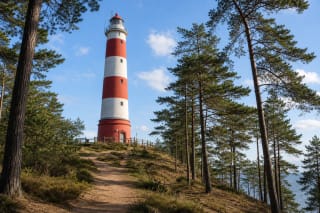
Nida Lighthouse
One of the best-known seaside lighthouses, with views toward the lagoon, the spit, and the Baltic Sea.
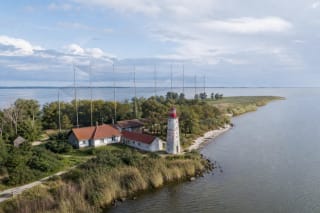
Ventė Cape
A Nemunas Delta headland with an old ornithological station where birds are observed and ringed.
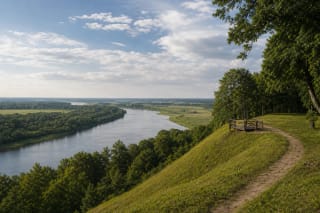
Rambynas Hill
A sacred hill of Lithuania Minor above the Nemunas near Pagėgiai, and an important place of memory.
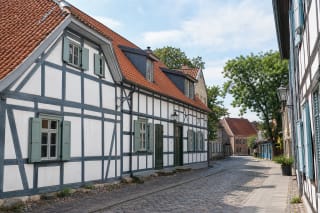
Klaipėda Old Town
The half-timbered heart of the port city, a gateway to Lithuania Minor and the coast.