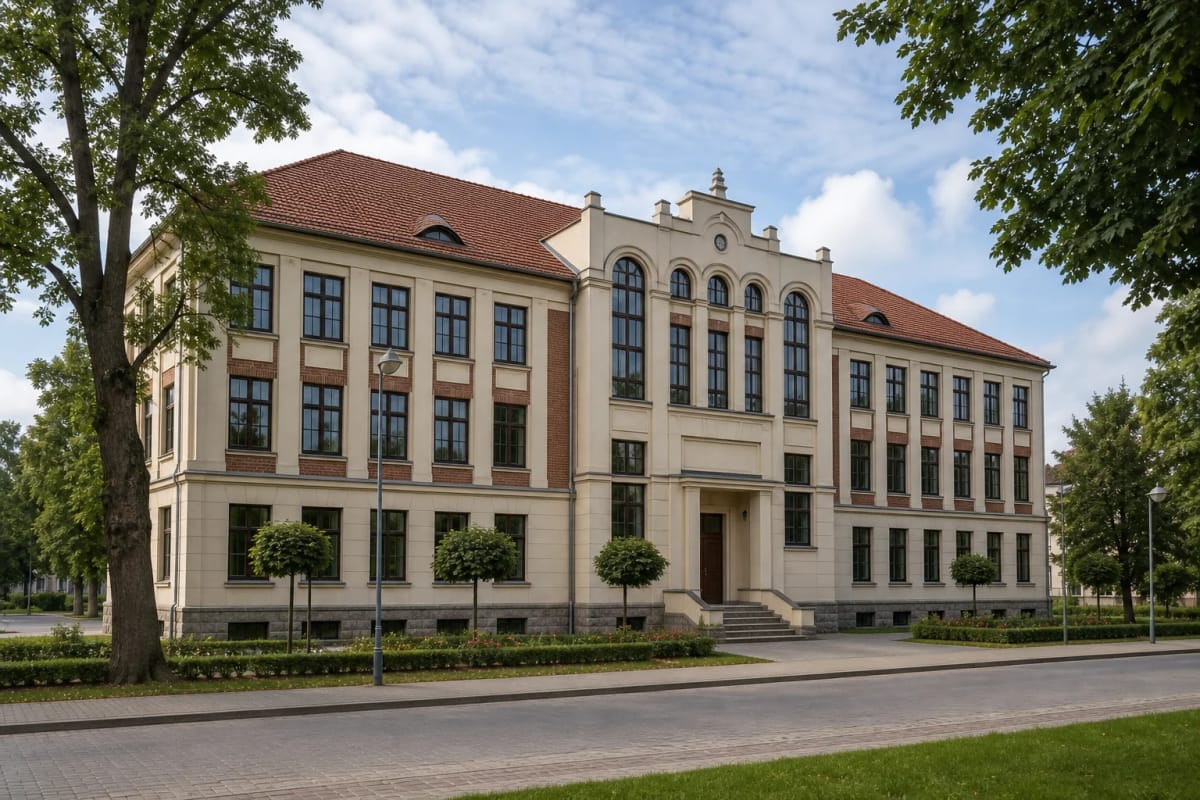
- Place
- Pagėgiai Municipality
- Region
- Lithuania Minor
- Type
- interwar gymnasium building, former school
- Address
- Jaunimo g. 3, Pagėgiai
- Coordinates
- 55.13340, 21.91350
Former Kristijonas Donelaitis Gymnasium, K. Donelaitis Progymnasium
Pagėgiai Kristijonas Donelaitis Gymnasium: an interwar school palace
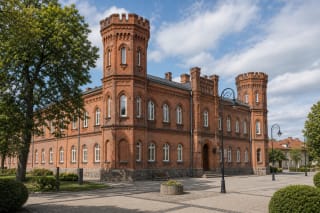
Pagėgiai Kristijonas Donelaitis Gymnasium is an impressive three-storey interwar school building on Jaunimo Street in Pagėgiai. It is the clearest witness to how, after the Klaipėda Region was joined to Lithuania in 1923, Pagėgiai became a fast-growing Lithuanian border centre of administration and culture.
It is important to know that the gymnasium no longer operates in this building. Since 2015 it has housed the Pagėgiai Municipality Vydūnas Public Library and other municipal institutions. The current city gymnasium, Algimantas Mackus Gymnasium, is in another building. This page is about the historic interwar gymnasium building.
Construction and Adomas Brakas
A Lithuanian progymnasium began operating in Pagėgiai in 1926 in rented rooms, but they soon became insufficient. In 1930, President Antanas Smetona visited the town and promised funds for a new building; the cornerstone was laid in November 1930, and 432,000 litas were allocated for construction.
The palace was built in 1930-1932 to a design by the Lithuania Minor artist Adomas Brakas, with architect Maksvytis assisting. Adomas Brakas was an important regional artist and organizer of the 1923 Klaipėda uprising; in Pagėgiai he also designed the Bank of Lithuania building. The school was ceremonially opened on 13 November 1932.
The gymnasium and its pupils
In 1934 the school received gymnasium status and the name of Kristijonas Donelaitis, the great poet of Lithuania Minor and author of The Seasons. It was one of the most modern Lithuanian schools of its time; just before the war it had about 468 pupils, 22 teachers, and a substantial library.
The painter Viktoras Vizgirda taught at the gymnasium, and its pupils included future poets Henrikas Nagys and Algimantas Mackus. The Donelaitis name was especially meaningful here: the poet was born nearby, in Lithuania Minor, so his name suited a Lithuanian school in the region.
1939 and later history
In March 1939, after Germany detached the Klaipėda Region, the gymnasium was closed the very next day. The first graduating class received its maturity certificates in Tauragė, a distinctive episode in Lithuanian educational history. After the war the school was restored, but in 1950 it lost the Donelaitis name and moved elsewhere.
The Jaunimo Street building later served educational administration, a children's home, and boarding-school needs; since 2015 it has housed municipal institutions and the Vydūnas Library. The building is valued as important interwar architectural heritage, although a separate confirmed cultural-property code could not be verified.
Visiting
This is an active municipal and cultural building, not a museum, so there are no tourist tickets or visiting hours. The exterior can be viewed at any time, while interior access depends on library and institutional opening hours.
Allow 10-20 minutes for viewing. The building is worth adding to a Pagėgiai interwar architecture route or wider Lithuania Minor itinerary with Rambynas Hill, Bitėnai, and Vilkyškiai. A school-history exhibition is kept in the present Algimantas Mackus Gymnasium, in another building.