- Place
- Nemunaitis, Alytus District Municipality
- Region
- Dzūkija
- Type
- three-aisled brick Gothic Revival church built in 1899-1904, with a high west tower, pinnacles, and a Lourdes grotto in the churchyard
- Address
- 25 Nemuno Street, Nemunaitis, LT-64205, Alytus District
- Coordinates
- 54.30220, 24.01924
- Visit duration
- 30-50 minutes for the exterior, churchyard gate, and Lourdes grotto; longer if the parish confirms an interior visit in advance
- Best time
- daylight for the architecture; before or after the 1 pm Sunday Mass only if a quiet interior visit has been agreed
Nemunaitis Church, Church of the Nativity of the Blessed Virgin Mary in Nemunaitis, Nemunaičio Švč. Mergelės Marijos Gimimo bažnyčia
Reading the yellow-brick Gothic Revival design from the churchyard gate
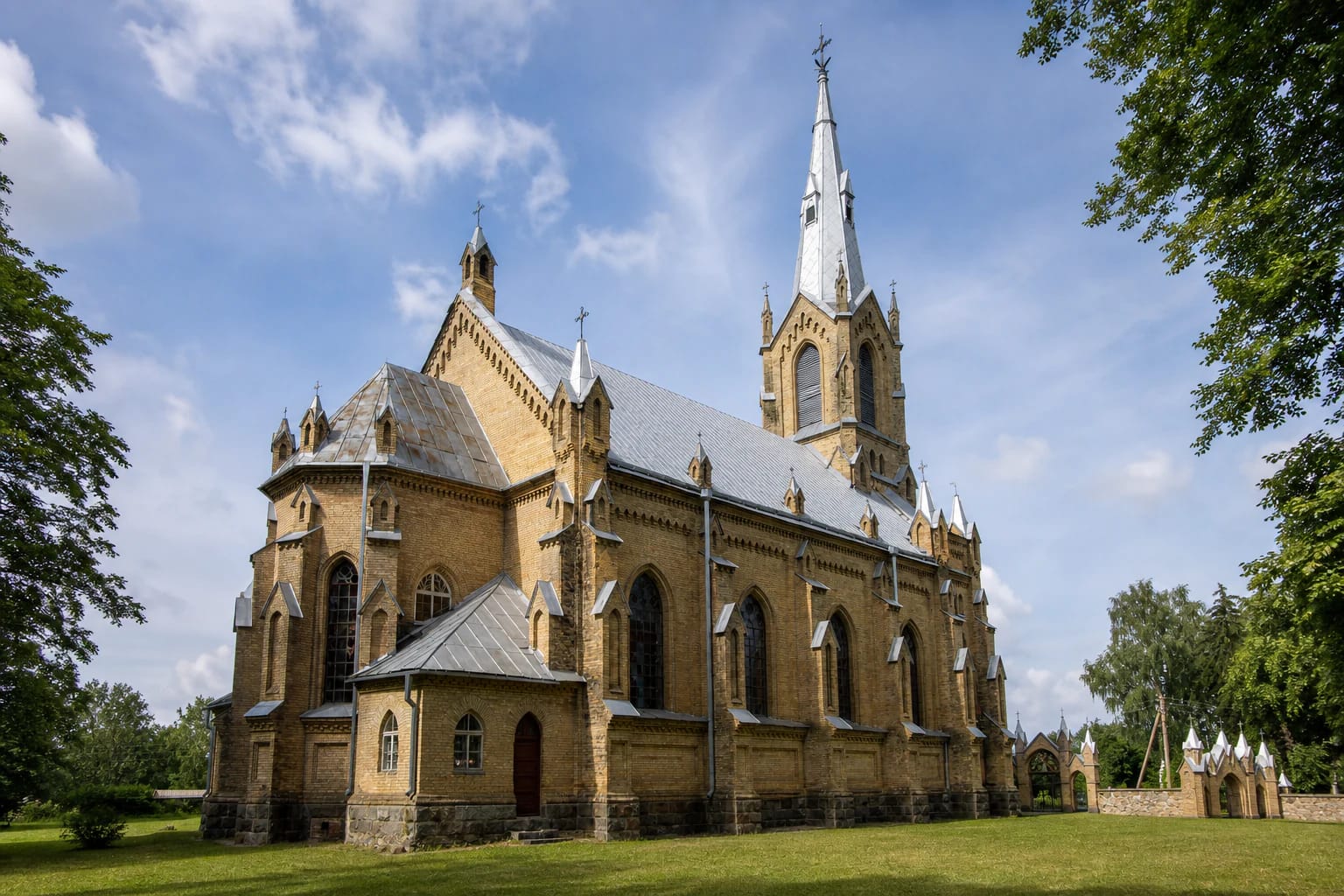
The facades are exposed yellow brick, so the architectural rhythm comes from masonry rather than painted ornament. A tall square west tower rises into an exceptionally long metal-clad spire. Smaller pinnacles cluster around it, while buttresses, lancet windows, and miniature triangular roofs articulate the aisle walls.
From the side, visitors can read the long three-aisled volume, the raised central nave, and the polygonal presbytery. Real photographs show a dark fieldstone plinth, pale sheet-metal roofs, and a fine band of small brick arches below the cornice. These details identify the actual building rather than a generic Gothic Revival church.
The churchyard gate is a landmark in its own right: several yellow-brick turrets with steep metal caps frame a high pointed opening and crucifix. Walk around the ensemble only on public paths and never climb the wall, gate, or buttresses.
From the parish established in 1625-1626 to the present church completed in 1904
VLE records a church and the establishment of a parish in Nemunaitis in 1625-1626. The present masonry building is not that first sanctuary. It was erected in 1899-1904 while Feliksas Baltuška, a priest associated with Lithuanian book-smuggling, led the parish and organised both construction and wider educational and social work.
The design is associated with engineer and architect Vaclovas Michnevičius. LIMIS places Nemunaitis among his early Gothic Revival churches and highlights their expressive proportions and precise detail. The building therefore matters beyond local history: it helps trace the spread of professional Gothic Revival design into smaller Lithuanian towns at the beginning of the twentieth century.
VLE first connects Nemunaitis with a castle in 1384, and the town briefly received Magdeburg rights in 1792. This wider history explains why such a substantial brick church stands in a small settlement today: it continued the ambitions of a much older parish and administrative centre.
A three-aisled interior that cannot be promised without prior arrangement
Alytus District Municipality describes the church as three-aisled and vaulted. Two rows of columns divide the nave and aisles, while tall lancet windows reinforce the vertical Gothic Revival character. The interior rewards close attention, but only when the parish has confirmed that the doors will be open.
On 27 July 2026, the Kaišiadorys Diocese page listed Sunday Mass at 1 pm. It published no daily tourist opening schedule, separate admission charge, guaranteed tour, or photography policy. Worship is not a sightseeing session: contact the parish before travelling if the interior matters to you and follow its instructions.
Official public information also gives no complete account of a step-free route, accessible toilet, or dedicated visitor parking. Park only where lawful, never obstruct the gates, and ask the parish about the most suitable entrance for individual mobility needs.
The 1930 Lourdes grotto belongs to the ensemble, not to the church interior
A Lourdes grotto in the churchyard extends the visit beyond the church walls. VLE's survey of Lithuanian Lourdes sites dates the Nemunaitis grotto to 1930. Such a grotto is a devotional space recalling the Marian apparitions at Lourdes in France, not simply a decorative garden folly.
Mary is represented in the grotto niche, with a figure associated with Saint Bernadette nearby. Inscriptions, statues, and devotional arrangements can be restored or changed, so older photographs may not reproduce the present condition exactly. Do not leave random objects or photograph people at prayer without consent.
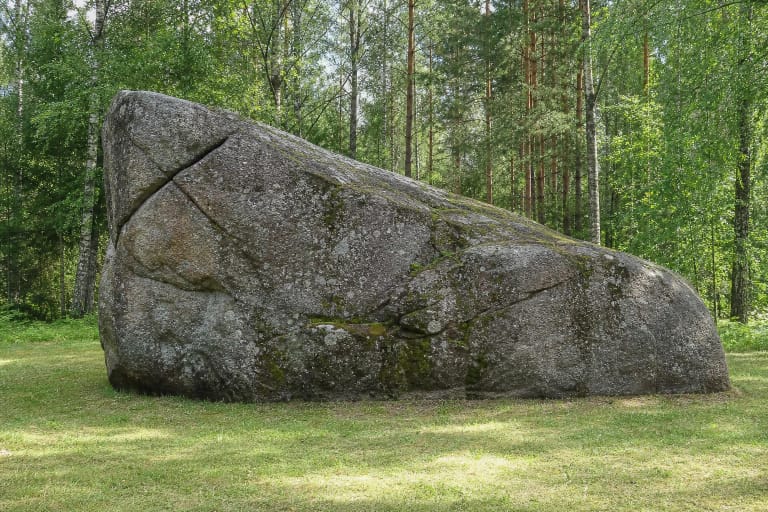
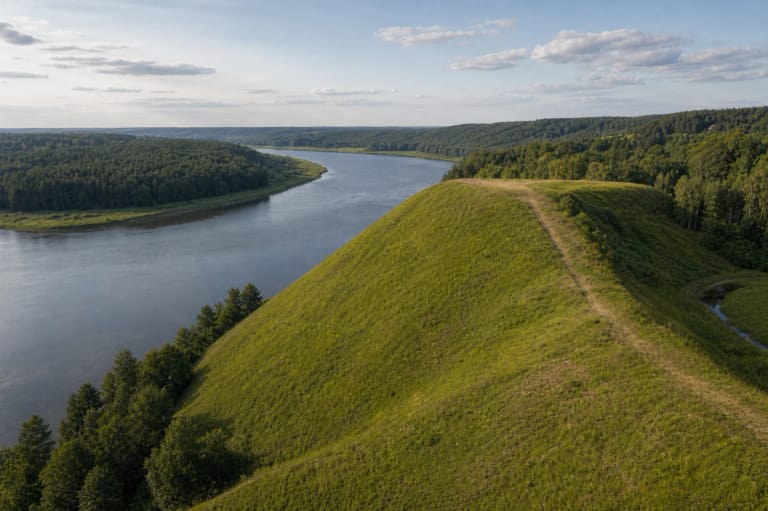
The church and grotto fit comfortably into a 30-50 minute stop. For a wider route, continue to Nemunaitis Hillfort or the Great Stone of Dzūkija, remembering that their histories and access arrangements are separate.
Exact location, mutable rating, and respectful visiting
The Google Maps point at 54.3022018, 24.0192364 identifies the church site at 25 Nemuno Street. It does not promise that navigation will end at a lawful parking bay or an unlocked gate, so follow road signs and local restrictions on the final approach.
On 27 July 2026, the exact Google Maps entry with Place ID ChIJuT3uy4u64EYR5zdWEK1HgzA showed 4.8/5 from 149 reviews. Both the average and count will change; this is a visitor-opinion metric, not a professional assessment of authenticity or structural condition.
The churchyard remains an active sacred space. Dress with restraint, speak quietly, keep pets outside the church, do not touch altars or statues, and always give parish worship and ceremonies priority.