
Lithuania’s ethnographic regions
Dzūkija
Dzūkija, also called Dainava, is Lithuania's south-eastern ethnographic region, known for pine forests, sandy soils, mushrooms, the Dzūkian dialect, the Nemunas loops, Trakai, and Dzūkija National Park.
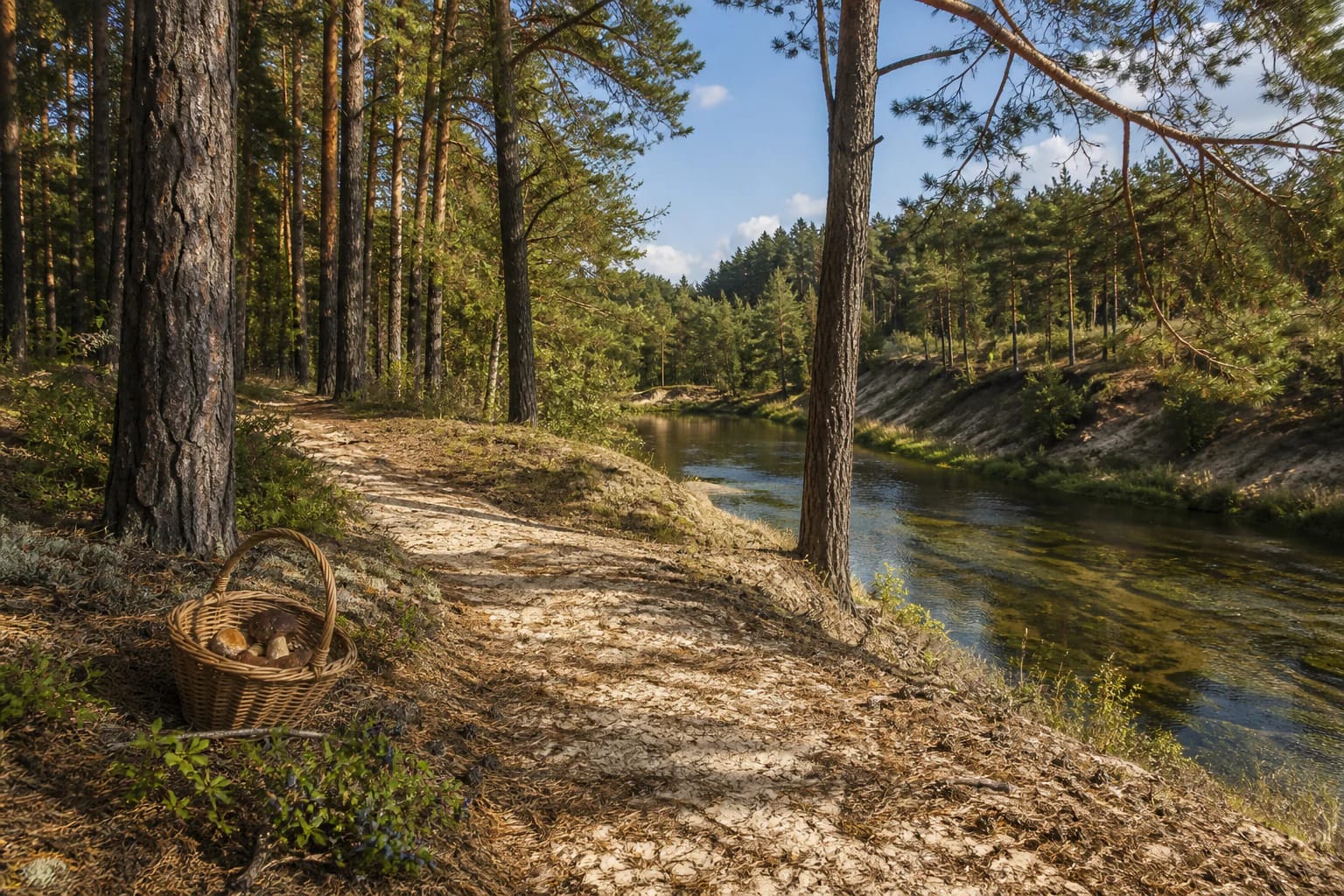
Dzūkija
Where to start
Choose a place, compare visiting times or explore the area on the map.
Key places to visit in Dzūkija:
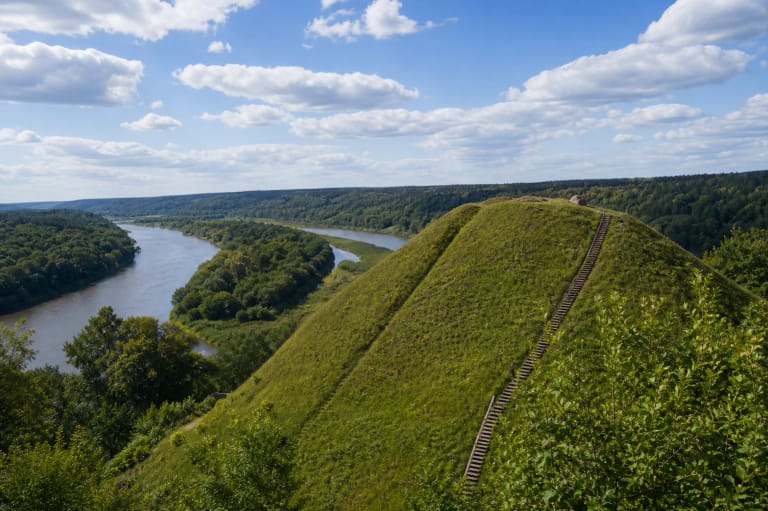
Merkinė Hillfort
Merkinė Hillfort stands near the Nemunas and Merkys confluence on a steep-sided hill that in the fourteenth and fifteenth centuries held one of the…
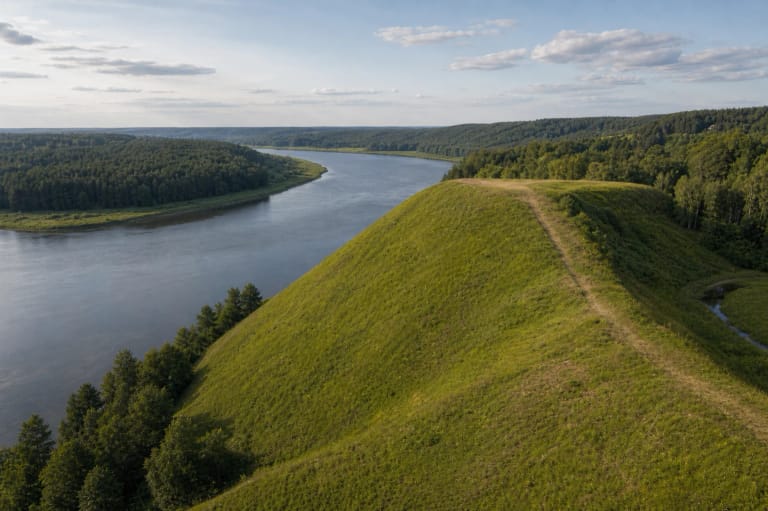
Punia Hillfort
Punia Hillfort, also called Margis Hill, rises at the Nemunas and Punelė confluence.
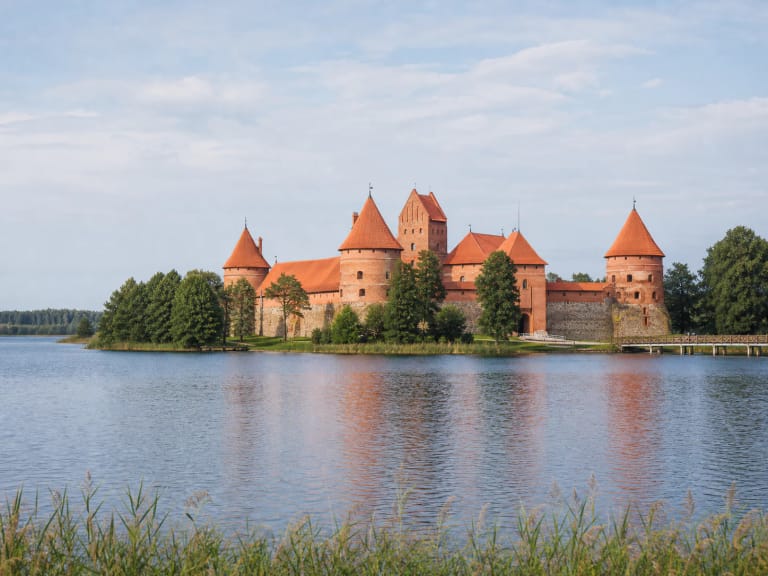
Trakai Island Castle
Trakai Island Castle in Lake Galvė is a red-brick Gothic castle begun by Kęstutis and completed by Vytautas, today serving as the core of the Trakai…
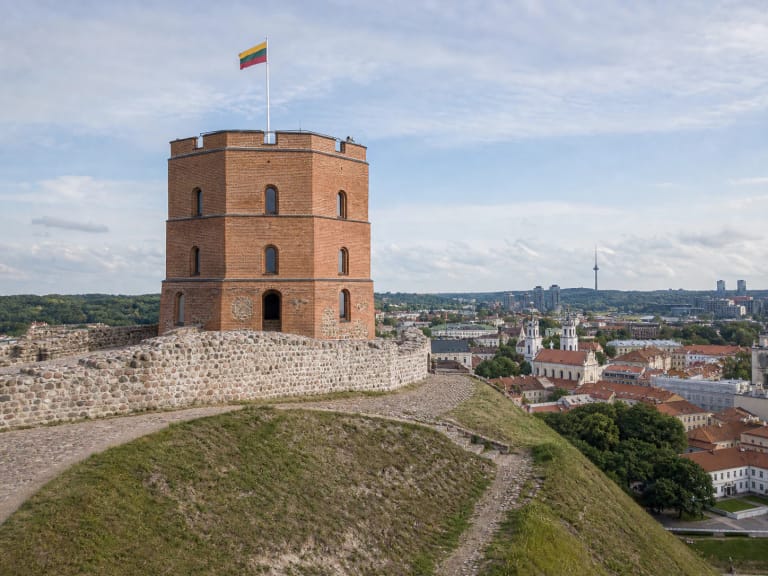
Gediminas Castle Tower
Gediminas Castle Tower on Castle Hill is the last strong visible sign of Vilnius Upper Castle and one of the best places to understand the capital…
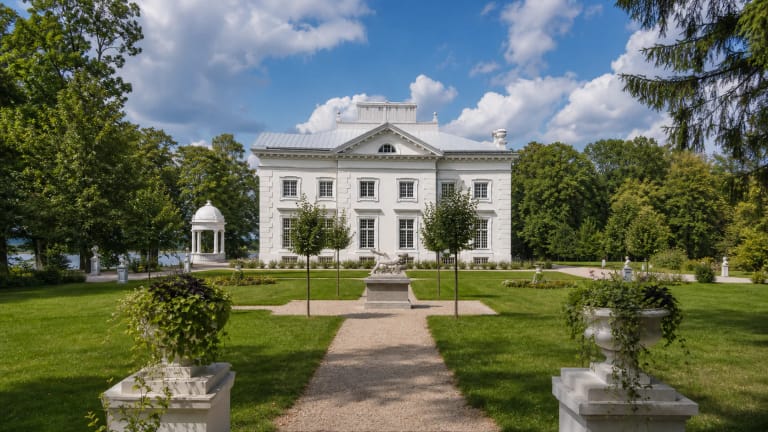
Užutrakis Manor
Užutrakis Manor is one of the most beautiful places in Trakai Historical National Park: Tiškevičiai palace, Édouard François André's park, Lake Galvė…
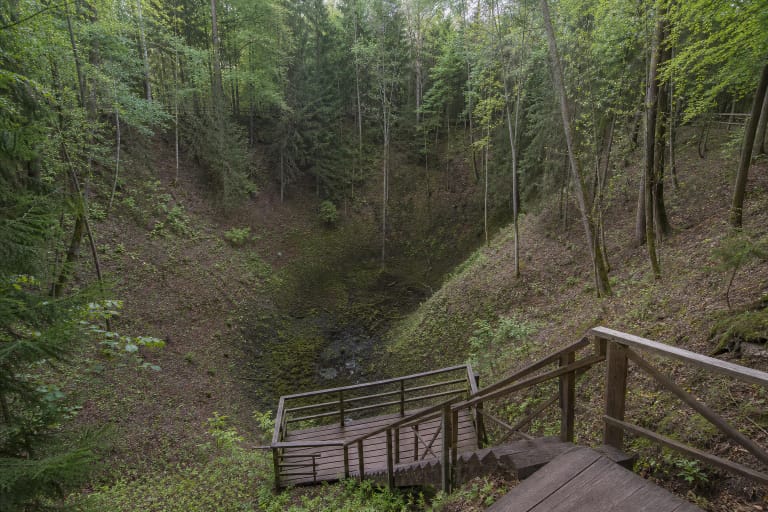
Devil's Pit
Devil's Pit is one of Lithuania's most striking hollows in Aukštadvaris Regional Park: a funnel-shaped natural monument about 40-42 m deep, with a…
All places in this guide
Places on the mapMerkinė Hillfort45 minutes to 1.5 hoursPunia Hillfort45 minutes-1.5 hoursTrakai Island Castle2-3 hoursGediminas Castle Tower1-1.5 hoursUžutrakis Manor2-3 hoursDevil's Pit45-90 minutesŪla Eye30-60 minutesŠkėvonys Exposure1-1.5 hoursSkališkiai Rock45-90 minutesMerkinė Observation Tower30-60 minutesBirštonas Observation Tower45-90 minutesMeteliai Observation Tower30-60 minutesHill of Three Crosses45-90 minutesPūčkoriai Outcrop45-120 minutesŽuvintas Biosphere Reserve1-3 hoursČepkeliai Mire1-2 hours for the educational trail, longer with a guideRaigardas Valley30-90 min. for the panorama and stopsLake Dusia1-3 hours for shores; longer with swimming or birdwatchingPūčkoriai Nature Trail1-3 hours, depending on the chosen loopDūkšta Nature Trailabout 2.5 hoursVarnikai Nature Trail1.5-2 hoursDūkštai Oakwood Nature Trail45-90 minutesŠilėnai Nature Trailabout 3 hoursZackagiris Nature Trail3-6 hours, depending on the chosen optionGates of Dawn20-60 minutes, longer if attending servicesVilnius Cathedral and Bell Tower45-120 minutes, longer with crypts or bell towerSt Anne's Church20-60 minutes, longer with the Bernardine ensembleVilnius University Ensemble45-120 minutes, longer with the bell tower or a guided tourUžupis Republic1-3 hours on footEuropos Parkas1.5-3 hours, longer for a slow art routeGeographical Centre of Europe20-45 minutes, longer if combined with Europos ParkasPalace of the Grand Dukes of Lithuania1.5-3 hoursVilnius TV Tower1-2 hoursMO Museum1-2 hoursLukiškės Prison 2.01-2 hoursBernardine Garden45 minutes to 1.5 hoursLiteratų Street15-40 minutesMarkučiai Manor1-2 hoursMedininkai Castle1-1.5 hoursLiubavas Manor1-2 hoursSapieha Palace1-2 hoursTrakų Vokė Manor1-2 hoursVerkiai Manor Estate1.5-3 hoursGlass Quarter in Vilnius30-90 minutes; longer when combined with Town Hall, Vilnius University, and a Jewish heritage routeVilnius Town Hall30-60 minutes for the exterior and square; longer with an event or guided visitBastion of the Vilnius Defensive Wall45-90 minutes; longer with the Subačius viewpoint and Gates of DawnPresidential Palace in Vilnius20-45 minutes for the square and facade; longer with a guided tourRasos Cemetery45-120 minutes; longer with an All Souls' Day or historical-memory routeBernardine Cemetery in Vilnius30-90 minutes; longer with an Užupis and Rasos Cemetery routeVilnius Calvary Way of the Cross2-4 hours; longer if walking the full prayer routeVilnius St Casimir's Church20-60 minutes; longer for services or a guided visitVilnius St Catherine's Church20-45 minutes for the exterior; longer with a concertDominican Church of the Holy Spirit in Vilnius20-60 minutes; longer if attending services or visiting the cryptsSt Faustina's House20-60 minutes; longer when combined with the Divine Mercy ShrineChurch Heritage Museum1-1.5 hours; allow up to 2 hours with an audio guide or guided tourMoney Museum in Vilnius45-90 minutes; plan longer with an education session or guided tourNational Gallery of Art1.5-2.5 hours; longer with temporary exhibitionsRadvila Palace Museum of Art1-2 hours; longer with temporary exhibitionsKazys Varnelis House-Museum1-1.5 hours independently; longer with a guide to the wider exhibitionSamuel Bak Museum1-1.5 hours; longer with a guide or when combining with other museum branchesMuseum of Lithuanian Jewish Culture and Identity1.5-2.5 hours; longer if you move slowly through every exhibitionVilnius Railway Museum1-1.5 hours for the museum; allow up to 2 hours with the Track ParkWooden Urban Architecture Museum in Vilnius45-90 minutes; longer with an education session or consultationTrakai Karaim Kenesa15-30 minutes for the exterior; longer only if an interior visit is arrangedAukštojas Hill30-60 minutes; longer if combined with Medininkai Castle and JuozapinėCECHAS VILNIUS Gallery45-90 minutes, depending on the exhibition and eventM. K. Čiurlionis Memorial Museum in Druskininkai45 min.-1.5 hours; longer with an event or educational activityDruskininkai City Museum45 min.-1.5 hours; longer with an exhibition or eventDruskininkai Cable Car30-60 min.; longer with a trip to Snow Arena or a walkLeipalingis Manor45 min.-1.5 hours; longer with a tour or eventMerkinė Region Museum45 minutes to 1.5 hours, longer with Merkinė Hillfort and the observation towerSubartonys Vincas Krėvė-Mickevičius Memorial Museum45 minutes to 1.5 hoursMarcinkonys Ethnographic Homestead45 minutes to 1.5 hours, longer with an education programme or specialist talkMargionys Barn Theatre30 minutes without an event; 1.5-2.5 hours during a performance or eventKapčiamiestis Emilija Pliaterytė Museum45 minutes-1.5 hours; longer with a guided tour and Kapčiamiestis memory sitesVeisiejai Manor45 minutes-1.5 hours; longer with the regional museum and lake shoresPuvočiai Village Observation Tower30-60 minutesGrūtas Park2-3 hoursJašiūnai Manor1-1.5 hoursNorviliškės Castle45 minutes-1.5 hours, depending on interior accessHouse of Signatories45 minutes to 1.5 hours, depending on the visiting rules in force at the timeTuskulėnai Peace Park1.5-2.5 hoursPaneriai Memorial1-2 hoursMerkinė Pyramid30-60 minutesSkroblus Springs30 minutes to 4 hoursKarmazinai Nature Trail2-3 hoursBaltoji Ančia1-3 hoursScarps of Neris Regional Park2-5 hoursLake Metelys1-2 hours for shore and viewpoint; longer for water routesLake Obelija45 minutes-2 hours for shore and viewpoints; longer for water routesLake Galvė islands1-2 hours for shore and island views; longer with the castle museum or a boat tripLiškiava Hillfort45 minutes to 1.5 hours, longer with the church and monastery ensembleKarmazinai Hillfort30-60 minutes for the hillfort, 2-3 hours with Karmazinai TrailŠvendubrė Devil's Stone20-40 min.Old Trees of Punia Forest1.5-3 hoursHollow Pine in Musteika45-90 minutes with the tree-beekeeping trail; shorter by the apiaryZervynos45 minutes to 2 hours, longer with the Ūla valley or a hikeMusteika1-2 hours, longer with the tree-beekeeping exhibitionMarcinkonys1-3 hours; half a day with the visitor centre and Zackagiris trailLynežeris Nature Trail45 minutes to 1.5 hours for a short village and lake walkŽiūrai Village30-60 minutes for a short stop, longer with park routesDubininkas Village30-60 minutes, longer with the Skroblus valleyLiškiava Monastery Ensemble1-2 hours, longer with a tour, crypts, and hillfortBakanauskai Bog30-60 minutes as a Skroblus trail stop; the full loop trail takes a daySkroblus Stream30 minutes to 4 hours depending on the chosen section; the full loop trail takes a dayMargionys Village45 minutes to 2 hours, longer with the Skroblus trail or a theatre eventVilnius Church of St Peter and St Paul30-90 minutes; longer if you spend time on the interior iconographyVilnius St John's Church and Bell Tower45-120 minutes; longer with the bell tower and university courtyardsVilnius Holy Spirit Orthodox Church20-60 minutes; longer if combined with the Gates of Dawn routeEnergy and Technology Museum in Vilnius1.5-3 hours; plan longer with educational activities or childrenMuseum of Occupations and Freedom Fights1.5-2.5 hours; allow more time for sensitive contentAngel Hill in Trakai30-75 minutes; longer if you read the dedications and combine it with the Galvė areaPivašiūnai Church30-90 minutes; plan more during indulgence feastsDieveniškės Historic Regional Park Visitor Centre45-90 minutes; longer with a route through Poškonys and Žižmai villagesPoškonys Ethnographic Village45-90 minutes; longer with the visitor centre and other villagesJuozapinė Hill30-60 minutes, longer with Aukštojas and MedininkaiAukštadvaris Regional Parkhalf a day to a full dayVingis Park1-3 hours, longer on event daysBelmontas Mill1-3 hours, depending on the trailVilnius St Nicholas Church20-30 minutesVilnius Church of St Francis of Assisi (Bernardine Church)30-45 minutes for the church; 1-1.5 hours with the St Anne ensembleVilnius Missionaries Church30-45 minutes for the exterior and panoramaVilnius St Teresa's Church20-30 minutes, often together with the Gates of DawnMuseum of Applied Arts and Design1-1.5 hoursTrakai Peninsula Castle30-60 minutes, easy to combine with Island CastleLentvaris Manor1-1.5 hours for exterior and parkSenieji Trakai Church and Monastery30-60 minutesMaišiagala Hillfort30-60 minutes with the monumentElektrėnai Church of the Blessed Virgin Mary, Queen of Martyrs30-45 minutesWhite Rose Bridge20-40 minutesAlytus Hillfort30-45 minutes; 1.5-2 hours with the bridge and old townPerloja Vytautas the Great Monument30-60 minutes with the townSimnas Church30-45 minutesGaidžiai Dune (Klonių Hill)30-60 minutes at the dune; about 3 hours for the full trailAntakalnis Cemetery1-1.5 hoursVilnius Choral Synagogue30-45 minutes, often with a guided visitVilnius Basilian Monastery and Holy Trinity Church30-45 minutesTrinapolis Church and Trinitarian Monastery30-45 minutes for the exterior and surroundingsSapieha Park45 minutes-1.5 hoursPavilniai Regional Park2-4 hours for the Pūčkoriai loop; a full day for several trailsAštrioji Kirsna Manor1-2 hours; longer with the stud farm or overnight stayAlytus Regional Museum1-1.5 hours; longer with memorial branchesNaujoji Vilnia Deportation Memorial15-30 minutesHalė Market30-60 minutesVilnius University Botanical Garden in Kairėnai2-4 hoursDruskininkai Snow Arena2-4 hoursDruskupis Mineral Water Evaporation Tower15-30 minutesMedininkai Tragedy Memorial20-40 minutes for the memorial; longer with the museumAnzelmas Matutis Memorial Museum30-60 minutes, including the sculpture parkVeisiejai Regional Parkhalf day to full dayDaugai1.5-3 hoursVilnius Ghetto Memorial45 minutes to 1.5 hours, self-guided in open streetsGreen Lakes (Balsys) Nature Trail2-4 hours for the roughly 10 km loop around BalsysBirštonas Sacral Museum45-60 minutesPunia Forest Educational Trailabout 3-4 hours, around 8.8 kmGirios Aidas Forest Museum1-1.5 hours, including the outdoor trailVijūnėlė Park1-2 hoursMergelių Akys Lake20-40 min.Freedom Fights Museum, Lazdijai1-1.5 hoursSaulės Trail (Druskininkai)1.5-3 hours, 6.8-9 kmGlynas Landscape Reserve1-2 hoursCentre for Civil Education90-150 minutes; 3-4 hours to open a substantial share of the digital material in sequenceRepublic of Paulava60-90 minutes; 2-3 hours with a pre-arranged icehouse exhibition or detailed guided tourBasilica of the Visitation of the Blessed Virgin Mary in Trakai45-75 minutes; 2-3 hours with Trakai Peninsula Castle and the historic centreVilnius Picture Gallery1.5-2.5 hours; approximately 3 hours with a temporary exhibition or palace-history tourAdam Mickiewicz Memorial Museumcurrently closed; check the official reopening notice before planning a visitLithuanian National Opera and Ballet Theatre2-4 hours depending on the performance; about 1.5 hours only for an announced tourKneipp Garden20-45 minutes for the three stations; 1.5-2 hours with Vytautas Park, the Kurhaus, and the Nemunas promenadeEvangelical Lutheran Church in Vilnius30-45 minutes; longer for worship or a concertSt Joseph Church in Pilaitė, Vilnius20-40 minutes for the exterior and interior, if the church is openBirutės Vila Mineral Water Pavilion20-30 minutes; 1-1.5 hours with Kneipp Garden, Vytautas Park, and the Nemunas promenadeŽvėrynas Bridge20-40 minutes; 1-2 hours with a Neris riverfront and Žvėrynas walkŽirmūnai Beach1-3 hours for relaxing, sport, and swimming only when the latest official notices permit itTauras Hill45-90 minutes; 1.5-2 hours with the Lutheran Garden and Lukiškės SquareVilnius Japanese Garden1 to 1.5 hours; longer during blossom or with childrenKalnai Park Open-Air Stage30-60 minutes for a non-event visit; according to the organiser's programme during an eventPlikakalnis Outcrop45 minutes to 2 hours, depending on which trail sections are openVingriai Springs Square20-45 minutes; about 1.5 hours with the MO Museum surroundings and the nearest part of the Old TownAlytus City Theatre15-25 minutes for the exterior; 1.5-3 hours for a performance or event; according to the selected education programmeVidzgiris Botanical Reserve1.5-3 hours for the roughly 3 km educational trail and nature stopsChurch of the Assumption of the Blessed Virgin Mary in Leipalingis30-45 minutes for the exterior and interior when the church is open; 1-1.5 hours together with Leipalingis Manor and the town centreVeisiejai Church of St George30-60 minutes for the exterior, churchyard, belfry, and interior when the church is open; access to the crypts must be arranged separatelyLazdijai Regional Museum1-1.5 hours; longer with a booked education session or separate visits to the museum's branchesDruskininkai Musical Fountain20-35 minutes for one music-and-water performance; 60-90 minutes together with Spa Park, the Beauty Spring, mineral-water pavilion, and Nemunas riverfrontMeteliai Regional Park Visitor Centre45-90 minutes for the exhibition and route planning; longer with a tour or education programmeAlytus City Garden45-75 minutes for the park, fountain, and memorial features; 1.5-2 hours during a concert or together with Freedom Angel SquareChurch of Our Lady of the Scapular in Druskininkai35-50 minutes for the exterior, vaulting, and art; 1.5-2 hours together with the City Museum opposite and Vilniaus AvenueNemajūnai Church of Saints Peter and Paul30-45 minutes; 1.5-2 hours when combined with Birštonas Sacral Museum or another stop in the Nemunas LoopsAlytus Audiovisual Arts Centre60-90 minutes for the building, Shalom, Alytus!, and the temporary exhibition; around two hours with a guided tour or concertRaižiai Mosque30-45 minutes for the exterior, sundials, and Vytautas monument; 60-90 minutes if an interior introduction has been arranged in advancePrelomčiškė Hillfort45-75 minutes for the hillfort and Dusia panorama; roughly 2-2.5 hours with the 3.2-kilometre Prelomčiškė Hills circuit(AV17)GALLERY45–90 minutesMėčiūnai Hillfort45-75 minutes for the hill and Lake Ančia shore; longer if part of the forest-track approach must be walkedDomantonys Heart Oak10-20 minutes to view the silhouette from permitted roadside or homestead access without moving deeper into private spaceRed Stone at Balkasodis35-60 minutes, including the final walk of about 0.5 kilometres described by the official local visitor informationHollow Širvintas Oak20-35 minutes for both Širvintas oaks; longer when walking from the Meteliai visitor centre on the Bijotai-Širvintas forest trailStrėva Sinkhole30–60 minutesŽvirgždėnai Pine Tree15-30 minutes to view the silhouette, trunk, and roadside setting from a safe distanceMančiagirė Cliffs3-4 hours for the roughly 9-kilometre circuit from Mančiagirė, including the viewpoint and time to observe the different cliffs; allow longer if wet ground slows the walkMatiešionys Hillfort30-60 minutes for the hillfort and ravine relief; allow 1-2 hours if walking from a more distant safe stopping place or exploring the vicinityŠaudzyklos Hill30-60 minutes for the viewpoint, stairs, and Grūda footbridge, excluding the approach; 4-6 hours for the complete 13.8-kilometre Zackagiris TrailGreat Boulder of Dzūkija30-60 minutes for the boulder, information panel, and a short section of forest path; allow longer if the final part of the road has to be walkedButeliūnai Hillfort30-45 minutes for the landform, summit, and view of Lake Prapuntas; allow longer only for a lawful walk along village roadsKaukai Hillfort45-75 minutes for Kaukai Hillfort, its earthworks, and the Peršėkė bank; plan a longer look at the Kaukai-Obelytė landscape only after checking current access across the streamLiškiava Sacred Hill35-60 minutes for Church Hill; 1.5-3 hours with Liškiava Hillfort and the monastery ensembleRadžiūnai Hillfort1.5-2.5 hours for the roughly 4-kilometre forest loop and hillfort; a shorter visit is possible by returning along the same route from the hillDruskininkai Thick Pine Tree15-30 minutes for the pine, roots, and information sign; 45-60 minutes with a walk along Lake DruskonisGrožio Spring in Druskininkai15-30 minutes; about 45-75 minutes together with the Spa Park and nearby pump roomPaveisininkai Hillfort60-120 minutes for the archaeological complex, excluding a potentially long walk from a safe place to leave a carStėgaliai Bison Sanctuary45-90 minutes for the viewing walkway, keeper's hut, and unhurried wildlife watching; allow the time confirmed by the park if booking an educational visitBambininkai Hillfort30-60 minutes for the summit, defensive bank, steps, and landform beside the BambenaGirinio Nature Trail1-1.5 hours for the 3.6 km loop, longer for quiet birdwatching and a stop by the pondVeisiejai Observation Tower20-40 minutes for the tower; 1-2 hours with the Lake Snaigynas shore or Veisiejai visitor centreGreat Širvintas Oak20-35 minutes for both Širvintas oaks; longer when combined with the Bijotai-Širvintas Forest nature trailDailidė Lakes1.5-3 hours for both lakes, the shoreline paths, the Jurgis Kunčinas bridge, and time beside Great DailidėMergelės Akelės Birdwatching Centre1.5-2.5 hours for the 2.4 km trail and unhurried birdwatching; the 1.2 km shortcut takes less time, while accommodation is booked separatelyGlūkas Lake1-3 hours for the bathing area, forest-shore views, and rest; longer for lawful campingVainežeris Park1.5-2.5 hours for the park trail, avenues, and lakeshore; 2.5-3.5 hours including the separate route to OkopkaOath Hill in Kasčiūnai20-45 minutes as a separate stop; 4-7 hours for the selected 14 or 28 km Vanago kovų takais route, depending on pace and stopsTrakas Pine20-30 minutes at the tree; longer if the final forest-road section must be walkedRumbonys Hillfort30-60 minutes for the steps, enclosure, bank, and valley landform; allow longer after rainAlovė Exposure45-90 minutes from a legal stopping point to the exposure and back; allow longer when the woodland approach is wet or difficult to followLietuvio Lime Tree10-20 minutes at the tree; 1-2 hours when combined with Margionys and the Skroblus springsRudamina Hillfort45-75 minutes for the ascent, the 75 by 51 metre enclosure, the ring bank, and contrasting sides of the footAntončikas Spring20-40 minutes at the spring; several hours when combined with the full 12.4 km Skroblus Nature TrailPoteronys Hillfort30-60 minutes for the foot, rampart, ditch, timber steps, and small summit enclosureAklažeris20-40 minutes as a route stop; about 3 hours for the 10.9 km Per šventas agles route, longer for the 13.8 km Zackagiris TrailMikniūnai Hillfort45-90 minutes for the final walk, the foot settlement, and the wooded moundBarčiai Hillfort45-75 minutes for the pine-covered mound, enclosure, terraced earthworks, and the cross commemorating Juozas UlbinasMarcinkonys Hollow Pine, Forest Compartment 12710-25 minutes to view the tree safely from the roadside; longer only when combining it with routes around MarcinkonysKrūminiai Hillfort40-75 minutes for the approach, the foot of the mound, two lines of earthworks, and the small enclosureEinoronys Hillfort45-75 minutes for the approach, views of the mound from its foot, the plateau, terrace, and former triangulation-tower footprintValkininkai Nature Trail45-90 minutes for an approximately 1-1.5 km route, allowing extra time for navigation and a pause beside the MerkysGeruliai Hillfort in Prienai District30-60 minutes to examine the rampart, ditch, and Obeltis-side landform; allow longer if the final approach must be walkedNoreikiškės II Hillfort30-60 minutes for the approach and for reading the subtle ramparts and ditches; allow extra time when seasonal ground conditions are difficultPaliūnai Hillfort30-60 minutes to read the mound's form, the position of the southern settlement, and the open Paliūnai fieldscapeNemunaitis Hillfort45-90 minutes for the surviving enclosure, defensive ditch, and outer-bailey relief, excluding the time needed to identify clear lawful accessElveriškė Hillfort30-60 minutes to read the mound, bank, terrace, and foot setting, excluding any walk from a legal place to leave a vehicleEžerėliai Hillfort30-45 minutes to examine the hill profile, summit, and north-western terrace, provided legal access has been confirmed before the tripPanemuninkai Hillfort20-40 minutes for the hillfort itself, although legal marked access forms part of the 8.8 km Punia Forest loop; allow several hours for the complete circuitAniškis Hillfort30-45 minutes to examine the legally accessible banks and ditch, excluding the unverified approachAtesninkai Hillfort20-40 minutes to examine the relief itself, but only if a clearly lawful approach is available; the unverified approach is not includedDirmiškiai Hillfort30-60 minutes to examine the hillfort relief and its foot, excluding the unverified approachToy Museum Vilniusabout 1 hour; allow 1-1.5 hours for slower exploration and more time with the hands-on displaysContemporary Art Centre, Vilnius1.5-2.5 hours for the exhibitions and building; about 20-40 minutes for the free Sculpture Courtyard when there is no time for the galleriesCastellan's House, Vilnius1.5-2 hours for the exhibition and architectural layers; about 2.5 hours for a slow visit using the audio guideVokiečių 6, Vilniusabout 1-1.5 hours for one temporary exhibition and the reading room; longer for a tour, education session, or eventVytautas Kasiulis Museum of Art1-2 hours; longer with a guided visit, workshop or several temporary exhibitionsOpen Gallery, Vilnius30-45 minutes for a short circuit or about 1.5-2 hours with the long audio guide and outlying worksChiune Sugihara Sakura Park, Vilnius30-60 minutes; longer for a picnic, photography, or a combined visit with the National Gallery of Art and the Neris riverbankEarth Interior Information Centre, Vievisabout 1.5-2 hours for a booked tour, the indoor displays and part of the boulder park; agree the exact length when registeringElektrėnai Pontoon Pier20-40 minutes for the pier's form, rest features and reservoir view; 1-2 hours with the shoreline path and the separate municipal beachAbromiškės Manor1-1.5 hours for the palace exterior, granary museum, and accessible park area; longer with a prearranged tourGrabijolai Village45-90 minutes for the village itself; allow longer only for a separate walk in the surrounding valleyGrabijolai Nature Trailabout 2 hours in the official description; allow 2-3 hours with stops or on wet groundKazokiškės Church of Our Lady Victorious30-60 minutes for the church, bell tower, gate, and churchyard; longer during Mass or a major feastWagner Palace in Šalčininkai30-60 minutes for the exterior and park; longer only for an announced public eventAna Krepštul Museum1-1.5 hours; allow longer for a pre-arranged tour or a combined visit to Tabariškės church and cemeteryRūdninkai Forest Continental Dunes45-90 minutes for the sandy landscape if access is permitted; about 2 hours for the municipality's 6 km route only after current confirmationBėčionys Hillfort30-60 minutes for the hillfort; longer with the Bėčionys landscape and a picnicFreedom Angel Monument in Alytus15-30 minutes for the monument and reliefs; 45-90 minutes with Alytus City Garden and a short central-city walkAlytus Youth Park and Sculptures60-90 minutes for the ten sculptures and ponds; 2-3 hours with a playground, sports area, or picnicKurnėnai School Complex60-90 minutes for the building, restored classroom fittings, and wind pump; longer with a pre-booked activity or eventSt Louis Church in Alytus30-60 minutes for the facade, churchyard, and interior when open; longer during worship or an eventKarolis Dineika Wellness Park1-2 hours for a walk; 2-4 hours when using the paid cascade-bath and sauna complexDruskininkai Water Park2-4 hours; a full day if you choose the sauna zone and an unhurried visitDruskininkai Spa Park45-90 minutes for the park, pump room, and riverfront; approximately 1.5-2 hours if you wait for a Musical Fountain show and descend to Grožio SpringDruskininkai Church of the Icon of the Mother of God “Joy of All Who Sorrow”20-35 minutes for the exterior and interior if the church is open; longer when attending a serviceA. Česnulis Park and the Tree Cake Museum2-3 hours for both sites without a booked activity; about 1.5-2 hours for the park aloneDzūkija National Park Visitor Centre in Marcinkonys45 minutes-1.5 hours for the centre; 3-6 hours when combined with a chosen Zackagiris Trail circuitDargužiai Crafts Centre30-45 minutes for an exhibition or display; 1-1.5 hours with a pre-booked workshopM. K. Čiurlionis Birthplace Memorial20-40 minutes; up to 1 hour with the full churchyard and church when openChurch of the Visitation of the Blessed Virgin Mary in Valkininkai30-45 minutes for the church and churchyard; 1-1.5 hours together with historic Valkininkai squareMotiejus Gustaitis Memorial House45-75 minutes; longer with a pre-booked education session and a visit to the adjacent Lazdijai Regional MuseumBattle of Kalniškė Site45 minutes to 1.5 hours for the memorial hill, separate burial place, and forest terrain; allow longer for sections of the interpretive routeLukiškės Square45-90 minutes for the square and its historical markers; 2-3 hours when combined with the Museum of Occupations and Freedom FightsVincas Kudirka Square30-60 minutes; 1.5-2.5 hours when combined with a Gediminas Avenue walk between Cathedral and Lukiškės squaresVilnius Museum of Illusions1-1.5 hours; allow up to 2 hours with children, photography, or explanations from gallery staffAutomuziejus Vilnius1.5-2.5 hours independently; a detailed guided tour takes approximately 1.5-2 hoursWhite Bridge in Vilnius20-45 minutes for the bridge; 1.5-3 hours with the right-bank sports grounds and riverfront pathZoopark Vilnius1.5-2.5 hours; longer if you plan around public or keeper feeding timesKing Mindaugas Bridge15-30 minutes for the bridge; 1.5-3 hours with Gediminas Hill, Cathedral Square, and the Neris embankmentSubačius Observation Deck20-40 minutes for the panorama; 1.5-3 hours with Kūdrų Park, Užupis, and the Bastion of the Vilnius Defensive WallOzo Park45 minutes to 1.5 hours for a pond walk; up to 2 hours including play or sports areasLiepkalnis2-4 hours for an open-season ski session; longer with equipment hire or a lessonReformatų Park45 minutes to 1.5 hours; longer if you read each heritage marker and combine the park with nearby New Town sightsUNO Park Druskininkai1 hour 30 minutes to 2 hours 30 minutes according to the ticket, plus time for registration and the safety briefingDainų Valley in Alytus30-60 minutes for the valley and bridge; 1.5-3 hours with Resort Park, the Dailidė Lakes, and Alytus HillfortHouse of Histories, Vilnius1-1.5 hours for one exhibition; 2-3 hours for two exhibitions and a slower look at the buildingSt Casimir Church in Alytus30-60 minutes for the exterior and interior when open; longer for Mass or a pre-arranged pilgrimage programmeAdventica Vilnius2-4 hours; a day ticket suits children who need longer breaks and want to repeat favourite areasStrėva Green Trail3-5 hours; longer after rain or with extended stops at lakes and the sinkholeVilnius Airport Plane-Spotting Site30-90 minutes, best timed around the current flight schedule and wind directionUNO Park Vilnius2-3 hours; the official time allowance depends on ticket category and course choiceElektrėnai Beach1-4 hours, with longer stays possible for swimming and sport on a warm dayVU Botanical Garden Vingis Branch1-2 hours, or up to three during an exhibition, guided tour, or flowering eventSapieginė Nature and Recreation Trail1.5-2.5 hours depending on pace, surface and route choicesVarėna Legends and Folktales Park45 minutes-1.5 hours, or longer with the playgroundsDūkštos Church of St Anne30-60 minutes; longer when attending Mass or exploring the churchyard slowlyBelmontas Adventure Park2-3 hours including registration, briefing and selected coursesMaišiagala (Houvalt) Manor45-75 minutes for the manor and exhibition, or 2-2.5 hours with a pre-booked workshopVytautas Butkevičius Stone Park45-90 minutesElektrėnai Vaikų Pasaulis Park1-2 hoursRūdiškės Sacred Heart of Jesus Church30-60 minutes; longer if you attend Mass and walk through the churchyardWładysław Syrokomla Museum45-90 minutes; longer with a workshop or guided tourBukaučiškės Manor Chapel-Mausoleum30-60 minutes; longer if you walk down to Lake Didžiulis and look for estate tracesM. K. Čiurlionis House in Vilnius30-60 minutes; longer for a concert, lecture, or virtual-reality sessionUžupis Art Incubator30-60 minutes; longer for an exhibition or eventCathedral of the Dormition in Vilnius20-45 minutes; longer during a service or for a detailed architectural visitVilnius Amber Museum-Gallery30-60 minutesLithuanian Theatre, Music and Cinema Museum1-2 hours; longer when combining several exhibitions with a Muzeoteka tourLithuanian Art Centre TARTLE60-90 minutes independently, or according to the guided-tour lengthSensory Art Centre in Vilniusabout 50 minutes per session; arrive at least 10-15 minutes earlyGreen House Holocaust Exhibition60-90 minutes; the guided tour lasts about 60 minutesLithuanian Customs Museum60-90 minutes according to the pre-arranged programmeLithuanian Culinary Heritage Museum45-75 minutes; the official tour lasts about 45 minutesChurch of Saints Constantine and Michael in Vilnius15-35 minutes; longer during servicesVincas Mykolaitis-Putinas Museum30-50 minutes independently or 60-75 minutes on the Mykolaitis-Putinas tourChurch of the Nativity of the Mother of God in Trakai15-30 minutes; longer during servicesChurch of the Guardian Angels in Alytus25-50 minutes for the church and memorial groundsV. K. Jonynas Gallery60-90 minutes; longer for an education programme or concertTerra Recognita Gallery25-50 minutes; longer for a conversation about the work or choosing an original pieceVDA Titanikas Exhibition Halls40-80 minutes; longer during graduate shows or several openingsVilnius Church of Our Lady of the Sign20-40 minutes; longer for a service or a walk through the Žvėrynas approachesBirštonas Kurhaus20-40 minutes for the exterior; longer for a concert, exhibition, or conferenceChurch of St Anthony of Padua in Birštonas30-50 minutes outside servicesŽvėrinčius Forest Trail1-2 hours for a short section; 2-4 hours for a longer walk or rideVilnius Evangelical Reformed Church20-40 minutes, longer for worship or a concertChurch of Divine Providence in Vilnius20-35 minutes outside servicesChurch of St Ignatius in Vilnius25-40 minutes outside servicesAll Saints Church in Vilnius30-50 minutes outside servicesChurch of St Raphael the Archangel in Vilnius30-45 minutes outside servicesFranciscan Church of the Assumption in Vilnius40-60 minutes outside servicesOrthodox Church of St Alexander Nevsky in Vilnius25-40 minutes outside servicesChurch of Blessed Jurgis Matulaitis in Vilnius30-50 minutes outside servicesOrthodox Church of St Nicholas in Vilnius25-40 minutes outside servicesAukštadvaris Regional Park Visitor Centre45-90 minutes for the exhibition and route planning; longer for a booked education programmeMeteliai Church of the Transfiguration20-40 minutes for the exterior; longer if your visit coincides with Mass and entry is appropriateNedzingė Church of the Holy Trinity30-60 minutes; longer if you explore the church-complex settingLithuanian National Drama Theatre2-3 hours for a performance; 10-20 minutes for the facade and the Three MusesLithuanian National Philharmonic Society1.5-2.5 hours for a concert; about 1 hour for a pre-arranged tourChurch of Saints Philip and James in Vilnius30-60 minutes for the church; another 15 minutes for a seasonal short carillon recitalChurch of the Holy Trinity in Sudervė20-40 minutes for the exterior and churchyard; 30-60 minutes if the church is open and you see the interiorChurch of the Annunciation in Lentvaris20-40 minutes for the exterior and churchyard; 40-60 minutes if there is time to examine the wall paintings quietlyNemėžis Tatar Mosque20-30 minutes for the exterior and mizar setting; 45-60 minutes if an interior visit has been arranged with the communityVarėna Song Valley30-90 minutes outside an event; according to the programme during an eventNemunas Loops Regional Park Visitor Centre45-75 minutes for an independent visit; 1-2 hours with a guided tour or education programmeVievis St Anne's Church30-60 minutes for the exterior, churchyard and squareBirštonas Hillfort30-60 minutes; allow roughly 1-1.5 hours for a leisurely walk through Vytautas ParkŽiežulis Trail45-60 minutes there and back; longer with time by the lakeGlūkas Railway Bridge Remains20-40 minutesGlėbas Hydrographic Reserve30-90 minutes from a chosen lawful access pointDapkiškės Manor45-90 minutes for an arranged tour or activity; events follow their own programmeLove Island Viewpoint15-30 minutes; longer as part of a Nemunas riverside walkDruskos Studija45-60 minutes for the display; about 1.5-2 hours for an activityMenų Kalvė Craft Centre30-60 minutes for an exhibition and open studios; 1-3 hours for a chosen activity“Erasmus+” Wall “It Is Never Late____”20-40 minutesDaugai Church of Divine Providence30-60 minutes; longer if the church is open and you want time for the artGėlių Street CeramicsAbout 2 hours; children under 7 often need about 1 hourLaser Arena1.5-2 hours including briefing and several gamesSpeedway Kartodrome1-3 hours; this depends on the number of sessions, preparation, and group sizeKryžiai Chapel of Our Lady, Queen of the Rosary45-75 minutes for the present shrine and old chapel site; longer when attending Mass or an indulgence feastNemunaitis Church of the Nativity of the Blessed Virgin Mary30-50 minutes for the exterior, churchyard gate, and Lourdes grotto; longer if the parish confirms an interior visit in advanceRumbonys Church of the Holy Trinity25-45 minutes for the exterior, six-column portico, separate bell tower, and churchyard; longer only if an interior visit has been arrangedBabriškės Church of Saint Michael the Archangel30-50 minutes for the fieldstone masonry, twin-towered facade, chapel, and a respectful circuit of the churchyard and cemeteryAkmuo Church of the Crucified Jesus30-50 minutes for the towerless log architecture, open bell tower, and a respectful circuit of the cemetery churchyardŠventežeris Church of the Nativity of the Blessed Virgin Mary35-60 minutes for the four-column facade, stepped massing, separate belfry, and interior when the church is openPunia Church of Saint James the Apostle35-60 minutes for the twin-towered facade, cruciform massing, works of art, and churchyard when the church is openButrimonys Vortex Fountain25-50 minutes for the vortex, illumination, triangular square plan, and a quiet break in the public spaceJotvingių kiemas Open-Air Museum1-1.5 hours for the stones, rural objects, border markers, and the creator's interpretationAlytus Old Town Square30-60 minutes for the fountain, Jurgis Kunčinas inscriptions, squirrel sculpture, and Dainava partisan memorialLazdijai City Park45-90 minutes for the stream and park facilities; 1.5-3 hours with the playground or an eventAukštadvaris Hillfort45-75 minutesVerknė Oxbow Spring20-40 minutesOnuškis Church of Saints Philip and James30-60 minutesRykantai Holy Trinity Church30-60 minutesStakai Oak20-40 minutes; about 1-2 hours when combined with the Stakai conglomerate blocksGauja Educational Trail1-1.5 hours; longer if you read all 18 learning stationsRūdninkai Holy Trinity Church25-45 minutesKalesninkai Church of the Immaculate Conception35-60 minutesUžupis Cat5-15 minutes; 45-90 minutes with an Užupis art and history walkVileišiai Palace15-30 minutes for the exterior; about 1-1.5 hours for a pre-arranged tourNaujoji Vilnia Burial Mounds30-45 minutes; longer when combined with a hike through Barsukynė or the Vilnia valleyChurch of Jesus the Redeemer in Vilnius20-40 minutes; longer for a service, concert, or community eventPavilnys Church of Christ the King and St Thérèse20-35 minutes; longer during Mass or a parish feastZemach Shabad Monument10-20 minutes; 30-45 minutes when exploring the surrounding former Jewish-quarter street planHilarijus Raduškevičius Palace15-25 minutes for the exterior; according to programme when attending an eventNeris Oxbow Valley45-75 minutes for the ponds and boardwalk loop; up to 2 hours including play or sports areasRoad Museum in Vievis1-1.5 hours; about two hours with a pre-booked tour or education sessionSaidė Nature Trailabout 1 hour; 1-1.5 hours for an unhurried look at the confluence and hillfortStirniai Hillfort40-60 minutes; about 1.5 hours when combined with the Saidė and Neris confluenceLentvaris Lake1-3 hours for the beach, promenade, and recreation zone; longer when combined with Lentvaris ManorSemeliškės Church of St Lawrence30-50 minutes for the church, bell tower, and churchyard; 1-2 hours with the old part of SemeliškėsBirštonas Museum45-75 minutes for the permanent exhibition and villa architecture; longer with a tour or temporary exhibitionEišiškės Church of the Ascension of Christ35-60 minutesTurgeliai Church of the Assumption30-50 minutes for the churchyard, architecture, and interior when open; follow the liturgy if attending MassVilnius Shrine of Divine Mercy30-60 minutes for the architecture, original painting, and quiet prayer; longer for Mass or adorationNaujoji Rėva Hillfort45-75 minutes; about 3 hours for the full Šilėnai-Naujoji Rėva trailBuivydai Hillfortabout 45-75 minutes for the hillfort alone; about 2.5-3 hours for the full 5-kilometre Dūkšta Nature TrailPūčkoriai Hillfortabout 30-60 minutes for the hillfort; 1-3 hours with a chosen loop of the Pūčkoriai Nature TrailBradeliškės Hillfortabout 30-60 minutes for the hillfort alone; roughly 2-3 hours for the full 5 km Dūkšta Nature Trail, depending on pace and conditionsThe Ramanauskas-Vanagas and Vitkus-Kazimieraitis Command Postabout 30-60 minutes for the command-post site alone; roughly 4-7 hours for the 14 km circuit or a full day for the 28 km routeGlitiškės Oak20-40 minutes; longer when attending a manor event or exploring the Lake Širvys shoreFirst Alytus Historic Square30-60 minutesRiešė Church of St Stanislaus20-40 minutes; longer if you combine it with the Riešė areaKarvys Church of St Joseph20-40 minutes; longer if you examine the churchyard gate and nearby roadsSumskas Church of St Michael the Archangel30-60 minutes; longer if you explore Sumskas and the former monastery groundsGlitiškės Manor Estate45-90 minutes; longer during a palace event or a walk by Lake ŠirvysSakiškės Bluff30-60 minutes; longer if you walk down towards the river or join a Neris routeFamily Entertainment Park “O kas čia?”2-4 hours depending on children's ages, play pace, and programmeGrybiškiai Oak30-60 minutes for the tree and its settingDvarčionys Geomorphological Reserve1-2 hours for a walk along a chosen edge of the reserve; longer for an unfamiliar routeKučkuriškės Hillfort45-90 minutes to find the hillfort, climb it, and read the platform relief; longer when combining it with a Vilnia valley routeIlgai1-2 hours for the landscape and a legally reached shore; longer for a separate recreation stopMošos, Naujasodžių Hillfort with Settlement45 minutes-1.5 hours; longer if walking the Skrebio Forest trailPinyklos Mythological Spring30-60 minutes at the spring; longer if combined with a Neris Regional Park routeVilsos Stream Waterfallsabout 1-2 hours; up to 4 hours if combined with a longer walk in the Vilsos Valley areaQueen of Oaksabout 30-60 minutes for the tree and its setting; longer if combined with Dūkštai Oak Grove TrailElniakampis Lakeabout 1-2 hours; longer if combined with a woodland route or another Neris Regional Park siteRastinėnai Springabout 30-60 minutes; longer if combined with a woodland walkŠeškiuko Lakeletabout 30-60 minutes; longer if you walk along the entire Šeškinė EskerŠeškinė Slopes Geomorphological Reserveabout 1-2 hours; longer if combined with Šeškinė Esker and the city's green routesLake Akmenaabout 1-3 hours; longer if combined with a Trakai Historical National Park routeLake Spindžiusabout 1-3 hours; longer if combined with the Strėva Green Trail or other park sitesLake Balsys2-4 hours for the lakeshore, viewpoint, and recreation; less if you visit only the main beachLake Galvė2-4 hours for shore panoramas and island views; longer with a boat trip or castle visitLake Vilkokšnis2-4 hours for one shore perspective and the Žuklijai hillforts; longer to explore the lake areaGreen Lakes3-5 hours for several lake perspectives, a beach, or a trail; longer with Verkiai ManorLake Balžis3-4 hours for one beach, a walk, and a quiet lakeside breakLake Tapeliai3-5 hours for swimming, a walk, and a lakeside breakLake Margis1-2 hours for a selected lakeshore stop; longer when combined with a Trakai District routeLake Skaistis2-4 hours for one shore or a visit combined with Užutrakis Park; allow longer for the wider Trakai lake district and linked routesVelniakampio Viewpointabout 2.5 hours for the full 7 km Karmazinai Nature Trail; shorter only via a separately checked direct approachKaroliniškės Landscape Reserve1-3 hours for a chosen trail; longer if you combine the reserve with Vingis Park or the Plikakalnis areaPanerių Erosion Hills Landscape Reserve2-4 hours for a chosen woodland route; longer if you combine nature with Panerių cultural heritageRibiškės Landscape Reserveabout 3-4 hours for the 6 km loop with climbs and stopsBukčiai Forest Park2-4 hours for a chosen 6-8 km route; allow at least 1 hour for a shorter walkLake Akmena Beach2-4 hours for swimming, relaxing, a picnic, and a short lakeside walkBalžis Beach II2-3 hours for swimming, quiet rest, and a short workoutTapeliai Beach II3-5 hours for swimming, barbecuing, walking, and quiet restBalžis Beach I2-4 hours for swimming, relaxing, and walking by the lakeValakampiai Beach I2-5 hours for swimming, sport, a picnic, and a walk along the NerisGela Beach2-4 hours for swimming, walking, and a quiet lakeside visitValakampiai Beach II2-4 hours for quiet recreation, swimming, walking, and a picnicPaverkniai Hillfort and Foot Settlement45 minutes-1 hour; longer if you study the approach, stairs, and Verknė valley settingVytautas Jurgis Meška Park1-2 hours; the official 2.1 km park route is described as about a 40-minute walkLake Ančia2-4 hours for one shore or trail; a full day with Veisiejai, a recreation site, and a regional-park routeLake Vilkinys30-90 minutes at a chosen lawful access point; a longer walk depends on the shore selectedLake Niedulis30-90 minutes at a chosen lawful access point; a longer walk depends on the shore condition and routeLake Ilgis near Pivašiūnai2-4 hours for the lake, Pivašiūnai shore area, and village sites; 45-90 minutes for a short stopLake Ilgis near Grūtas1-2 hours for the shore and a quiet stop; longer when combined with Grūtas Park or other Druskininkai-area sitesBijotai-Širvintas Forest Nature Trail1.5-2 hours for the main loop with stops; the shorter 2.9 km branch takes less timeŽuvintas1-2 hours at the southeastern shore, nature trail, and visitor centreGlėbas1-2 hours at the water and forest shoreČepkeliai Bog Educational Trailabout 1-2 hours with stops at the interpretation boards, tower, and bog viewing platformVerkiai Regional Park2-4 hours for one park sector; a full day for several routes and heritage sitesNeris Regional Park2-4 hours for one route; a full day for a broader park visitTrakai Historical National Park3-5 hours for Trakai; a full day for the park with Užutrakis and other sitesElektrėnai Reservoir1-3 hours for one shoreline; a half-day for water activities and town stopsAusiutiškės Conglomerate30-60 minutes for the object and Neris valley viewLake Stanka30-90 minutes for a quiet stop; longer when combined with a Strėva routeSpindžius-Spindžiukas Lake Channel20-45 minutes for the channel and bridge; longer with a Strėva routeTotoriškės Beach1-3 hours for swimming, relaxing, and a short lakeside walkAukštadvaris Beach1-3 hours for swimming, relaxing by the water, and a short walkŽingiai Campsite2-4 hours for a day visit or one camping night if current rules allow itLake Antavilis30-60 minutes at a lawfully accessible shore; longer only when combined with other Antaviliai forest sitesKarageliškiai Campsite1-3 hours for a short stop; longer stays depend on your plan and local rulesGariūnai Viewpoint30-60 minutes at the viewpoint; longer if you walk the Paneriai hillsRokantiškiai Viewpoint30-60 minutes at the viewpoint; longer if you continue into Pavilniai Regional ParkIlgutis Lake Beach2-4 hours, for beach time, swimming, and a quiet stay by the lakeVisoriai Forest Park45-90 minutesŽemyna Square20-45 minutesDivine Mercy Church in Kalveliai20-45 minutes when the church is openTankodromas1-3 hours depending on the booked activityWakeWay Cable Park2-4 hours depending on queues, lessons, and rest timeLake Metelys Bathing Area1-3 hours; on a warm day, allow longer for time by the waterPrelomčiškė Hills Walking Trail1 hour 20 minutes-1.5 hours; longer with viewpoint and hillfort stopsVidzgiris Nature Trail3-4 hours for the full route of about 9 km; 1.5-2.5 hours for a chosen ecological learning trail circuitSeirijis Lake Bathing Area1-3 hours for swimming and rest; about one hour is enough for a short stopVolandos Gallery30-60 minutesAP Gallery45 minutes-1.5 hours, depending on the exhibition or eventDūmų Fabrikas1-2 hours during an event, or 30-45 minutes for the exteriorRoyal Horse Resort2-4 hours, depending on the booked activity or competitionVerkiai Park Waterfall30-60 minutes for the waterfall and mill area; longer with the Verkiai Manor routeBeatričė's House45-90 minutes, depending on the display and programmeRomain Gary Monument10-20 minutesBekešo Hill45-90 minutesBalsiai Mythology Park45 minutes-1.5 hoursPilaitė Windmill20-45 minutesJonas Mekas Visual Arts Center45 minutes-1.5 hoursAWAY2-4 hours; allow a full day if combining water activities, the beach and downtimeMemory Path45 minutes-1.5 hours; longer if following the full described route and stopping at the sculpturesDieveniškės Church of the Blessed Virgin Mary of the Rosary30-60 minutes; longer if your visit coincides with worship or you walk around the whole churchyardBirštonas Dvarelis2-4 hours; longer if you book an extended education programme or additional outingButrimonių Church of St Michael the Archangel30-60 minutes for the exterior, churchyard, and a quiet visit if entry is allowedVarėna Pedestrian Alley30-60 minutes for a walk along the alleyKrikštonys Church of Christ the King30-60 minutes if the church is open; longer if you also walk around the churchyardTurgeliai Chapel of St Felix Valua30-45 minutes; longer if combined with the Turgeliai heritage routePranas Dzūkas Ethnographic Homestead1-2 hours, depending on which buildings are open and whether you join a tourLabyrinthus45 minutes to several hours, depending on the scenarioPirčiupiai Mother Memorial30-60 minutesJuozo Balčiaus-Balučio Headquarters and Partisan Bunker30–45 minutes while reading the memorial information at an unhurried paceBastėjos Hill20–40 minutes; longer around sunset or when combined with an Old Town routeMotertis Stream Tunnel30-60 minutesVilkiškės Manor Estate1-2 hoursTamsu Baisuabout 1.5-2 hours; depending on preparation and the selected scenarioVU Observatory of Ideasup to 1.5 hours on a registered tourBirštonas Wake Park1-2 hours for one session with preparation; longer if you combine activitiesAukštadvaris Church of the Transfiguration of Christ30-60 minutes for the facade, churchyard, and a quiet interior visit if it is openMargutis (Egg) Sculpture10-20 minutesEuropos Centro Golf Club3-5 hoursPaupys1-3 hoursPew Pew VR Arena1-2 hoursKrosna Church of St Matthew the Apostle30-60 minutes; longer if combined with Krosna and the Lazdijai district routeAdam Mickiewicz Monument20-40 minutes; longer if combined with a Bernardine-quarter routePaneriai Railway Tunnel30-60 minutes for a safe exterior view, if access is possible at the timeLevandų uostas1-2 hours for an arranged programme; less if you only visit the fields during the seasonVievio Beach1-2 hours; longer if you want an unhurried time by the lakeVašingtono Square Fountain20-45 minutes, or longer if you explore the whole squareGrybų Manor Stables1-3 hours, or longer for a booked riding or family programmeGalerija VARTAI45-90 minutes for an exhibition; longer if you combine it with an event or an Old Town cultural routeGODÒ Gallery45-90 minutes for the current exhibition; longer if a talk or event is taking placeHADO Arena Vilnius1.5-2 hours for a reserved session with briefing; longer if you combine it with Vilnius OutletLAVA FLOOR by SMART GAMESone hour of play plus time for instructions and changing shoesMažųjų karalystė1–3 hours depending on free play or a booked celebrationLithuanian Police Museum45–75 minutes; allow the time confirmed by the museum for a group programmeRobo Arena Vilnius1-2 hoursAlisa Children's Play World1-3 hoursChurch of Our Lady of Mercy of the Gate of Dawn in Bezdonys20-45 minutes, respecting worship and parish arrangementsAltanas Hill30-60 minutes
About this area
Dzūkija, also known as Dainava, is the ethnographic region of south-eastern Lithuania: a land of pine forests, sandy ground, deep river valleys, and quiet small towns. It is the kingdom of mushrooms and berries, the home of the Dzūkian dialect and a famously song-rich culture. Visitors find Trakai castles, the Nemunas loops, Dzūkija National Park with Marcinkonys and Čepkeliai Marsh, the resort of Druskininkai, and many hillforts.
Dzūkija: forests, sand, and mushrooms
Dzūkija covers south-eastern Lithuania, from the areas around Vilnius and Trakai to Druskininkai and the Lithuanian-Belarusian borderland. It is the most forested Lithuanian region: large pinewoods grow on sandy, poor soils, while the Nemunas, Merkys, Ūla, and Grūda rivers wind through the land. Because agriculture was difficult on poor ground, people long relied on forest goods, which is why Dzūkija is rightly called the land of mushrooms and berries.
Dzūkija should not be equated with the whole of Alytus or Vilnius County: ethnographic and administrative boundaries do not coincide. EKGT’s map specification treats regional boundaries as approximate because cultural features overlap at their edges. Vilnius and Kaunas city territories are not assigned to a single ethnographic region, except for protected areas with a distinctive regional character. This guide explores Dzūkija through the areas around Alytus, Varėna, Merkinė, Druskininkai and Trakai.
The Dzūkian dialect and singing identity
Dzūkija is associated with southern Aukštaitian speech and the consonant-pronunciation features known as dzūkavimas. This does not mean replacing every d and t with dz and c: pronunciation depends on the sound environment and the particular local variety. An ethnographic region is not an exact map of a single speech area, so a speaker’s locality matters when listening.
Dzūkija is famous for singing; people often say that Dzūkians are born singing. Regional songs are melodic and abundant, and the folklore tradition is especially alive around Varėna and Marcinkonys. Museums, ethnographic homesteads, mushroom festivals, and tradition days keep Dzūkian identity visible today.
Mushrooms, songs, and living traditions
Dzūkian cuisine reflects the forest region: mushroom and berry dishes, buckwheat porridge, potato and buckwheat griddle cakes, and homemade sweets all appear. Mushroom picking is not only an activity but a way of life, especially around Varėna, often called Lithuania's mushroom capital.
Songs, tales, and legends about lakes, hillforts, and stones carried by devils are important in local culture. Calendar customs also remain visible. Traditional food pages and mythology pages give broader context for the region's table and narrative folklore.
What to see: Trakai, Nemunas loops, and forests
The best-known sight is Trakai Island Castle on an island in Lake Galvė, joined by Trakai Peninsula Castle and Karaim heritage. Along the Nemunas, visit Punia, Merkinė, and Liškiava hillforts and the Liškiava monastery ensemble. In the forest interior, Dzūkija National Park offers the Marcinkonys ethnographic homestead and Čepkeliai Marsh, Lithuania's largest raised bog.
For active travel and resort life, Druskininkai has the M. K. Čiurlionis Memorial Museum, a water park, and Snow Arena. Nearby Grūtas Park displays Soviet-era sculptures in an open-air setting. The places-to-visit stream below gathers regional sights from Trakai to the southern borderlands.
Practical tips for travellers
It is easiest to divide Dzūkija into several routes: Trakai and the Vilnius area; the Nemunas loops and hillforts near Birštonas, Punia, and Merkinė; and the southern forests with Dzūkija National Park and Druskininkai. Late summer and autumn are best for mushrooms, berries, and forest travel, while winter suits Druskininkai's leisure centres.
In Dzūkija National Park and Čepkeliai Strict Nature Reserve, follow marked trails and visiting rules because these are sensitive protected areas. Carry documents near the border. Many places are easiest by car, but the Nemunas loops and park rivers are also rewarding by kayak.
Dzūkija: frequently asked questions
Where is Dzūkija?
Dzūkija is an ethnographic region in south-eastern Lithuania. Its cultural boundaries do not coincide with counties or municipalities. Under EKGT’s specification, Vilnius city is not assigned to one region, apart from protected areas with a distinctive regional character.
Why is Dzūkija also called Dainava?
Dainava is the old name of these lands, known from medieval sources. It also fits the region's song-rich identity, so Dzūkija is often poetically called the land of Dainava.
What is dzūkavimas?
Dzūkavimas names consonant-pronunciation features found in southern Aukštaitian and some other local varieties. They occur in particular sound environments; mechanically replacing every d and t with dz and c would not correctly transcribe the dialect.
Why is Dzūkija called the mushroom region?
Because sandy, poor soils and large pine forests made mushroom and berry gathering a long-standing part of life. The Varėna area is considered Lithuania's mushroom capital.
What should you see in Dzūkija?
Trakai Island Castle, the Nemunas loops with Punia and Merkinė hillforts, Dzūkija National Park with Čepkeliai Marsh, Druskininkai resort, and Grūtas Park.
Is Trakai part of Dzūkija?
Yes. In ethnographic terms the Trakai area belongs to Dzūkija, though it has its own distinctive multicultural, especially Karaim, history.
What is Čepkeliai Marsh?
Čepkeliai Marsh is Lithuania's largest raised bog, in southern Dzūkija, protected as part of Čepkeliai State Nature Reserve near Dzūkija National Park.
When is the best time to visit Dzūkija?
Late summer and autumn are best for mushrooms, berries, and forest travel, while winter brings resort activities in Druskininkai.
Dzūkija: what else to see
Trakai Island Castle
Dzūkija's best-known landmark: a Gothic castle on an island in Lake Galvė.
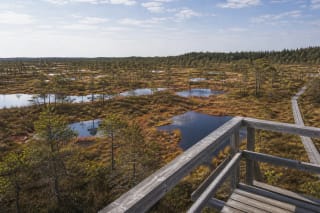
Čepkeliai Marsh
Lithuania's largest raised bog, protected in southern Dzūkija.
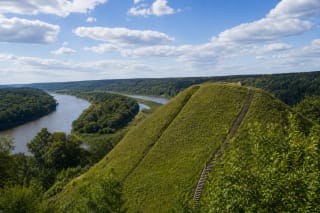
Merkinė Hillfort
One of the key hillforts on the Nemunas defensive line inside Dzūkija National Park.
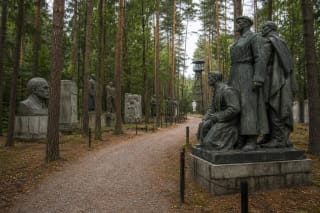
Grūtas Park
An open-air exhibition of Soviet-era sculptures near Druskininkai.
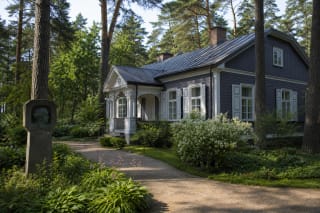
Druskininkai M. K. Čiurlionis Memorial Museum
The place where M. K. Čiurlionis spent his childhood in the famous Dzūkian resort.
Dzūkija: sources
- Visuotinė Lietuvių enciklopedija: Dzūkija
- Visuotinė Lietuvių enciklopedija: dzūkai
- Visuotinė Lietuvių enciklopedija: Dzūkijos nacionalinis parkas
- Etninės kultūros globos taryba: Dzūkija
- Visuotinė Lietuvių enciklopedija: Trakai
- EKGT: specification for Lithuania’s ethnographic-region dataset (2023), p. 1
- LKI / tarmes.lt: Lithuanian dialect classification