- Place
- Vilnius City Municipality
- Region
- Vilnius
- Type
- burial-mound cemetery from the second half of the first millennium and an accessible archaeological site
- Address
- A. Kojelavičiaus g. 46-48, Vilnius
- Coordinates
- 54.69805, 25.38077
- Visit duration
- 30-45 minutes; longer when combined with a hike through Barsukynė or the Vilnia valley
- Best time
- in dry daylight, when the woodland relief, steps, and low mound outlines are easiest to read
Naujosios Vilnios pilkapynas, Rokantiškės burial mounds, Naujoji Vilnia tumuli
Four mounds beside a ravine above the Vilnia valley
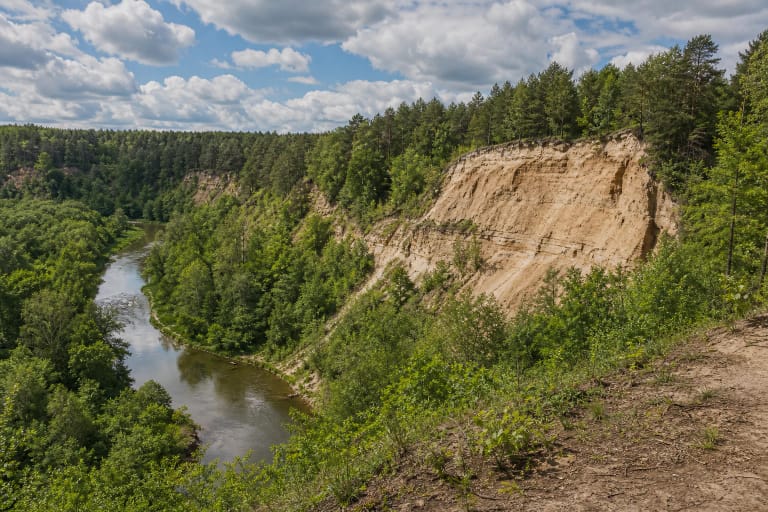
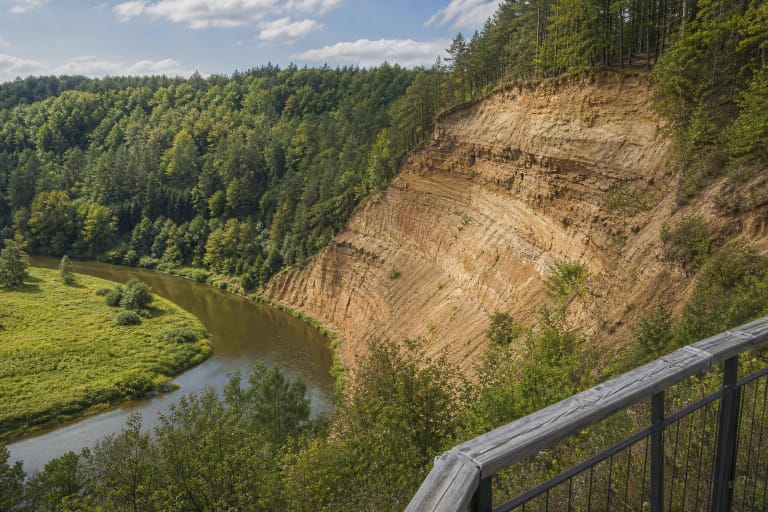
The burial ground occupies Barsukynė Forest, on the former lands of Rokantiškės, beside the eastern rim of a ravine opening into the Vilnia valley. Four mounds remain visibly legible. This is not one dominant hill, so slow down and look for several low circular forms rising above the woodland floor.
Lithuania's State Service for Protected Areas gives the larger mounds as 9-10 metres in diameter and up to 1.6 metres high. The smaller examples are around 6 metres across and up to 1 metre high. Dug pits have damaged the southern mounds, so their profiles are not equally clear.
The cemetery belongs broadly to the second half of the first millennium, while two mounds investigated later were dated to the tenth and eleventh centuries. It is an archaeological burial place, not a hillfort and not a reconstructed ritual village.
Excavations revealed human and horse burials
The Pavilniai and Verkiai Regional Parks authority reports that Adam Plater excavated here in the nineteenth century and found forty cremated human burials, thirty-two uncremated horse burials, and grave goods dating from the sixth to twelfth centuries. They included weapons, jewellery, and horse equipment.
Two tenth- and eleventh-century mounds were studied later. One contained a pyre site, burnt bone, clay pots, broad-bladed iron axes, a double-edged sword, a sickle, and other finds. The authority says this material is held by the State Archaeological Museum in Warsaw.
These records support a specific account of burial practice and grave goods, but they do not reveal the names of the people buried here. Unknown identities or beliefs should not be filled with modern legends.
The carved-stone display is not a cache of local grave goods
Fieldstones in the visitor area reproduce ancient carvings recorded at different locations across Lithuania. The open-air display draws attention to signs cut into stone, but its rocks are not grave goods excavated from these four mounds.
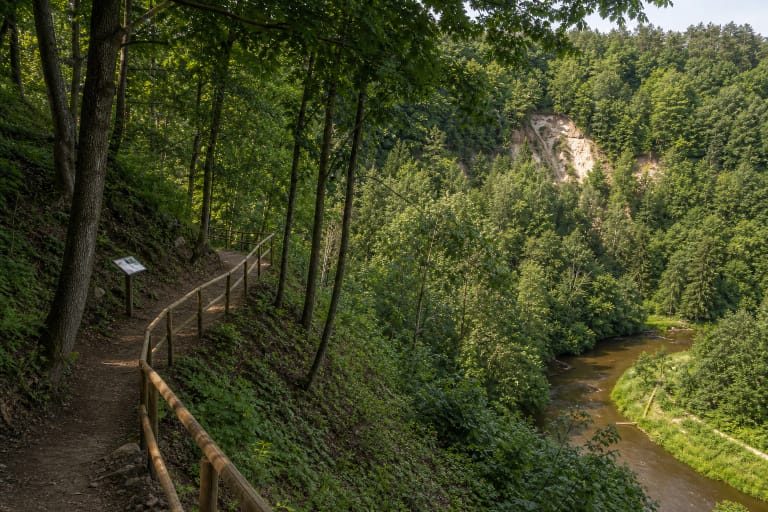
A sign marks the foot of the hill, steps lead upward, and interpretation is available on site. The more open slope offers views towards the Vilnia valley, the surroundings of Rokantiškės pond, and the forest, linking archaeology to Pavilniai's strongly folded relief.
Candles are lit and hymns sung here around All Souls' Day. This is a living modern act of remembrance beside an ancient cemetery; it should not automatically be presented as an exact revival of first-millennium ritual.
Finding the site and visiting responsibly
The exact Google listing gives A. Kojelavičiaus g. 46-48 and coordinates 54.6980451, 25.3807724. The protected-areas portal provides the rounded point 54.699, 25.380, so pins may differ slightly between maps. Follow the signs and steps rather than trying to walk in a straight line up the slope.
Entry is free, and there is no ticket office or indoor exhibition with set opening hours. Visit in dry daylight; rain can make the steps, exposed roots, and woodland slope slippery. This is not a level, universally accessible promenade.
Do not dig, move stones, light fires on the mounds, or drive across their surfaces. Archaeological deposits may lie immediately below the path, so visitors should stay on established routes and leave the place unchanged.
How to read the 4.8 Google rating
On 27 July 2026, the exact Naujosios Vilnios pilkapynas listing showed 4.8 out of 5 and approximately 100 reviews. It indicates that this small archaeological site draws real visitor interest, but says nothing about whether the steps are dry, grass recently cut, or interpretation undamaged on a particular day.
The site rewards more than a quick photograph. Understanding the scale of its four mounds, distinguishing the original cemetery from the later stone display, and treating it as an ancient burial place make the visit substantially more meaningful.