- Place
- Plungė District Municipality
- Region
- Samogitia
- Type
- 1900 eclectic church with a tower, churchyard gate and historic rectory ensemble
- Address
- 1A Liepų Street, Kuliai, 90371 Plungė District
- Coordinates
- 55.80565, 21.65283
- Visit duration
- 45-90 minutes
- Best time
- in daylight for the exterior, or according to Kuliai parish times for worship and an interior visit
Kuliai Church, Kuliai Church of St Stanislaus
A church in the centre of Kuliai
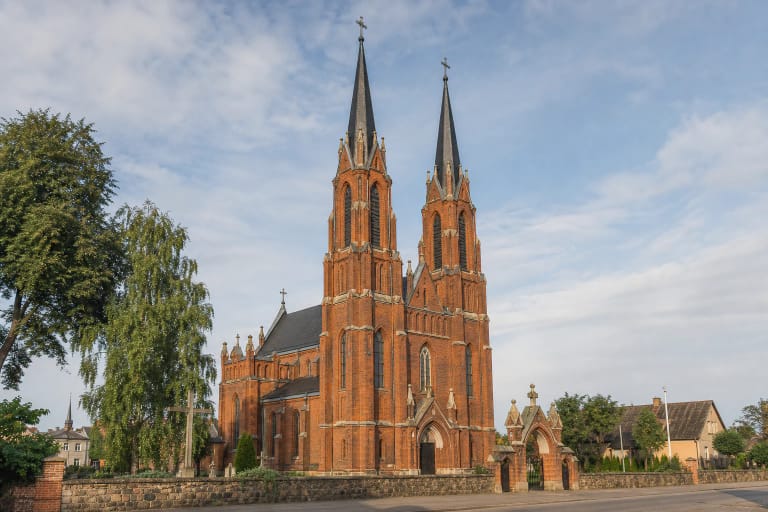
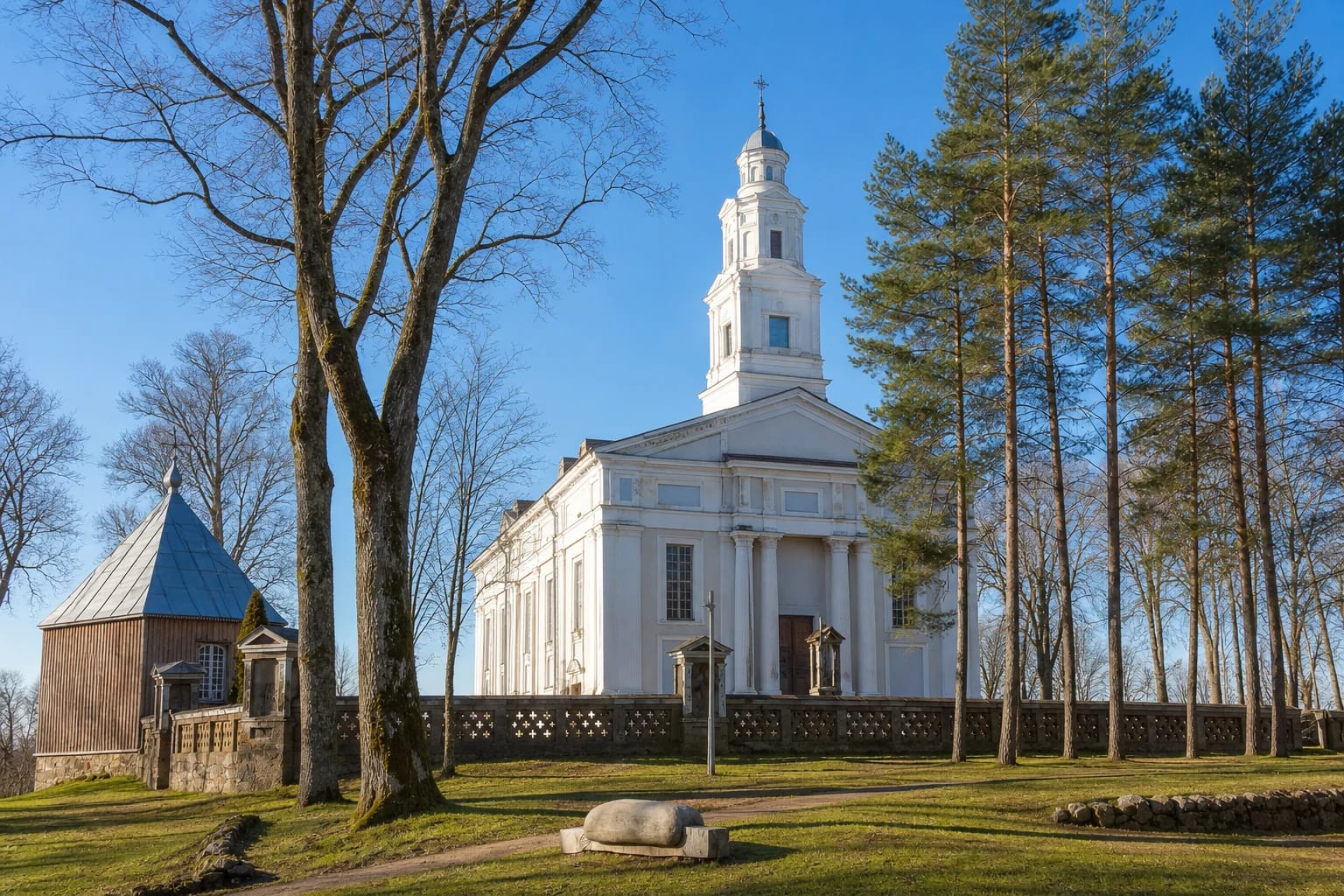
Kuliai Church of St Bishop Stanislaus stands at 1A Liepų Street in Kuliai, Plungė District. White walls, a high central tower, churchyard fence and a line of trees make it a clear town landmark that works both as a brief stop and as a longer heritage visit.
This is an active parish church, not only a photogenic historic backdrop. A visitor should distinguish a public churchyard look from entry inside, which depends on worship, parish arrangements and any work taking place that day.
The site coordinates 55.8056497, 21.6528348 identify the church rather than the nearby regional museum. They help with orientation, but do not mark a particular churchyard gate or parking place.
Architecture from 1900
The church was built in 1900 to a design by Swedish architect Karl Eduard Strandmann. Its eclectic forms, pilasters and tall tower create a classical impression, and the white exterior changes character as light moves across the façade.
The churchyard gate, fence and separate wooden pentagonal belfry complete the main building. Together they show that Kuliai's sacred heritage is an ensemble rather than a single tower, with the surrounding details as important as the façade.
The calm town setting makes the building's plaster, windows, cornices and door proportions easy to read at close range. It is larger than a roadside chapel but should not be imagined as a metropolitan cathedral.
Interior and works of art
Kuliai Church contains a late-seventeenth-century image of the Virgin Mary, eighteenth-century images of Our Lady of the Scapular and Saint Anthony, and nineteenth-century wooden sculptures of Mary and Christ. These dates reveal an interior connecting several historical periods.
The church also has bells cast in 1719 and 1740. They belong to the church's history rather than a guaranteed visitor display, so anyone admitted inside should keep quiet, avoid touching artworks and respect worship.
There is no permanent self-guided opening schedule for the artworks. If a particular painting, bell or altar matters to your visit, ask the parish in advance and arrange interior access.
The rectory and community heritage
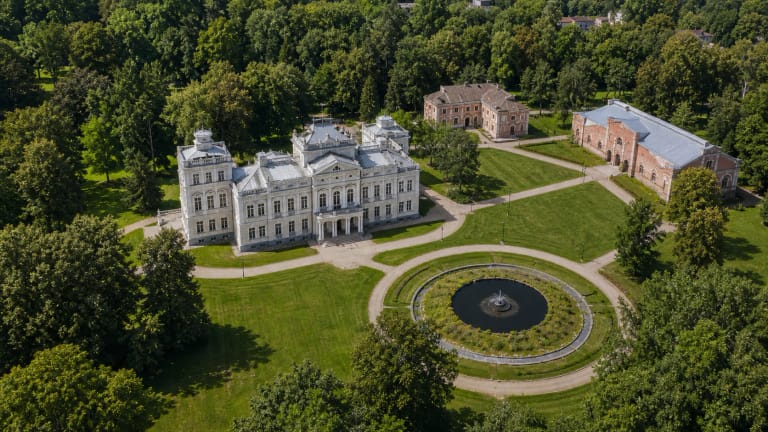
The church setting includes historic rectory buildings. The Department of Cultural Heritage describes the northern ensemble building as a late-seventeenth-century structure with Baroque features, later adapted for church servants and a kitchen, making it an important part of Kuliai's heritage.
Roof, chimneys, façades, windows, doors and interior spaces were repaired in 2022-2023, with the building intended for community and artists' activities. It is not the church interior or the regional museum, so check separately which ensemble spaces are open.
The rectory, church and nearby museum form a cluster but retain different functions. Plan them as separate stops and follow any signs or parish instructions when work, a community meeting or an arts activity limits access.
A practical Kuliai visit
Daylight is best for the exterior, while worship and an interior visit should follow the parish's current information. An ordinary churchyard visit does not require a ticket, but events or repairs can affect access, so check the timetable before travelling.
Allow 45-90 minutes for the façade, tower, churchyard, belfry and rectory setting. Check the parish notices and the separate regional museum opening information before departure, because the ensemble spaces may have different access arrangements.
For a longer route, continue from the church and rectory setting to the Kuliai regional museum or to heritage sites in Plungė and Rietavas. Check the museum's hours separately because they do not follow the church's arrangements.