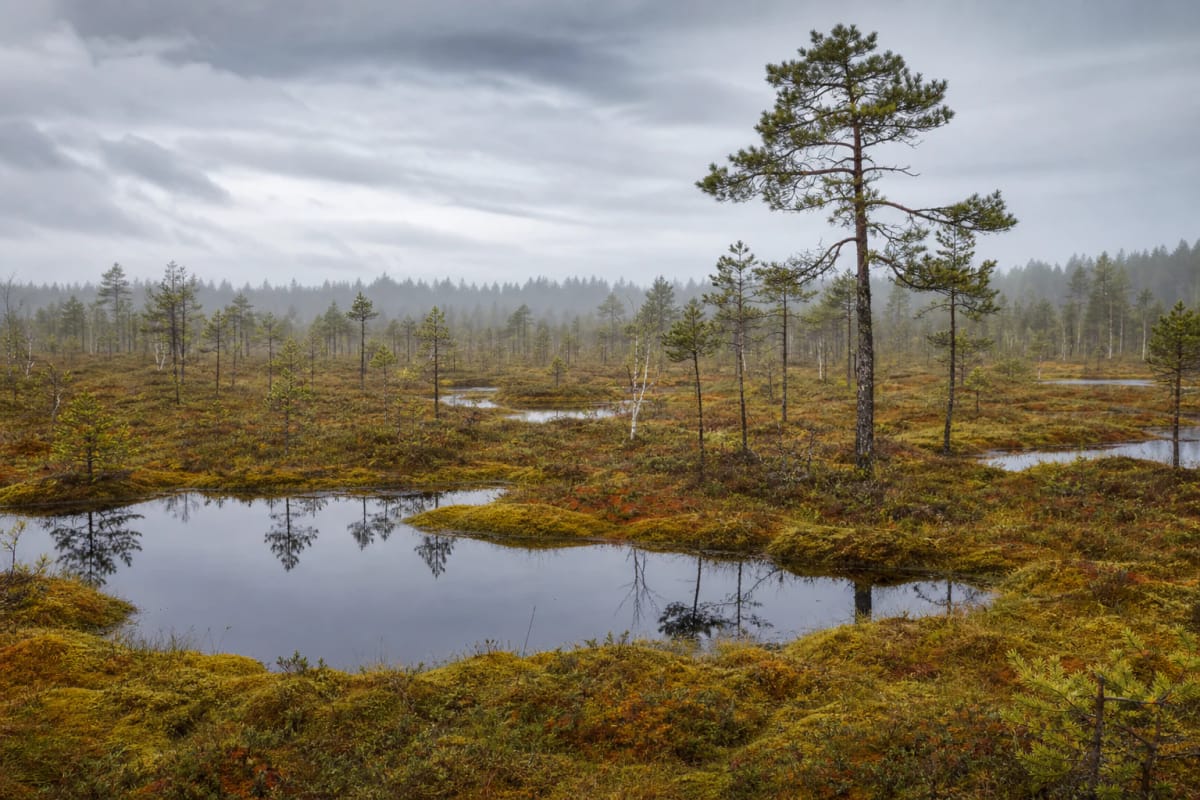
- Place
- Reiskiai, Plungė District Municipality
- Region
- Samogitia
- Type
- raised bog and telmological reserve
- Address
- Kuliai forests, about 4.5 km north-west of Kuliai, Plungė District
- Coordinates
- 55.83100, 21.57900
Reiskiai bog, Reiskiai raised bog
Reiskių tyras: the largest wetland in Samogitia
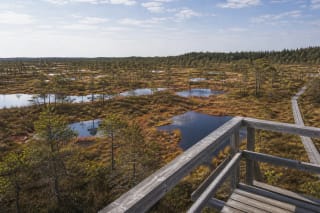
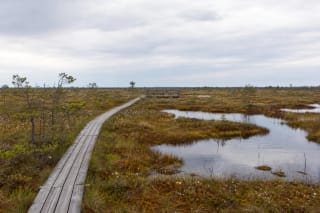
Reiskių tyras lies in the Kuliai forests, about 4.5 km north-west of Kuliai in Plungė District. It is the largest wetland of Plungė District and of Samogitia as a whole: a typical western Lithuanian domed open raised bog surrounded by sphagnum bog plains. The bog itself covers about 875 ha, although some sources give smaller figures.
The most important thing to know before planning a trip is that there is no installed educational trail or observation tower here. The bog is crossed by impassable quagmires, so it can be explored safely only with a local guide who knows safe routes. This distinguishes Reiskiai from bogs adapted with boardwalks, such as Aukštumala or Aukštasis Tyras.
Raised-bog nature
Reiskių tyras is a typical raised bog with a pronounced domed centre. The average peat layer is about 3.9 m thick and reaches up to 8.3 m in the thickest place. In the centre and north-east are bog pools and hollows, while islands have formed on higher places; on the largest island grow old trees, including a powerful oak more than 4 m thick.
The Alantas stream crosses the bog: clear, with a sandy bed, inhabited by otters and kingfishers. Together these features create a rare, almost tundra-like landscape where open plains, quagmires, and wooded islands meet.
Birds and protected species
Reiskių tyras is especially important for birds. Cranes wander through open plains and forest clearings, European golden plovers breed here, and rare birds of prey such as white-tailed eagles and lesser spotted eagles occur. During migrations, cranes, ducks, and geese stop here, and whooper swans appear on the lake.
Many rare plants listed in Lithuania's Red Book grow in the bog, including orchids and distinctive western Lithuanian raised-bog plants. Because of these values, the whole telmological reserve is part of the Natura 2000 European ecological network, protected both as a habitat and bird protection area.
Protection and importance
Reiskiai is protected by the Reiskių tyras telmological and landscape reserves; the landscape reserve was established already in 1960 to preserve drumlin moraine relief and the bog complex. The forests here have not been cut since 1960, so a natural environment has survived.
Reiskių tyras is included among Lithuania's most important bogs and is considered a potential wetland of international importance. It is one of Samogitia's most valuable natural objects, even though access limits ordinary tourism.
How to visit Reiskių tyras
Reiskių tyras is not a mass-tourism site; it is a wild bog without a trail, so trips should be made only with a guide who knows safe routes. Such experiential hikes usually last about three hours and require rubber boots or special bog footwear and proper preparation.
There is no permanent visiting schedule or ticket system. Hikes are organised seasonally and in advance. Before planning a trip, check current official information and do not enter the bog independently; it is dangerous.