
Things to do in Lithuania
Things to do in Plungė
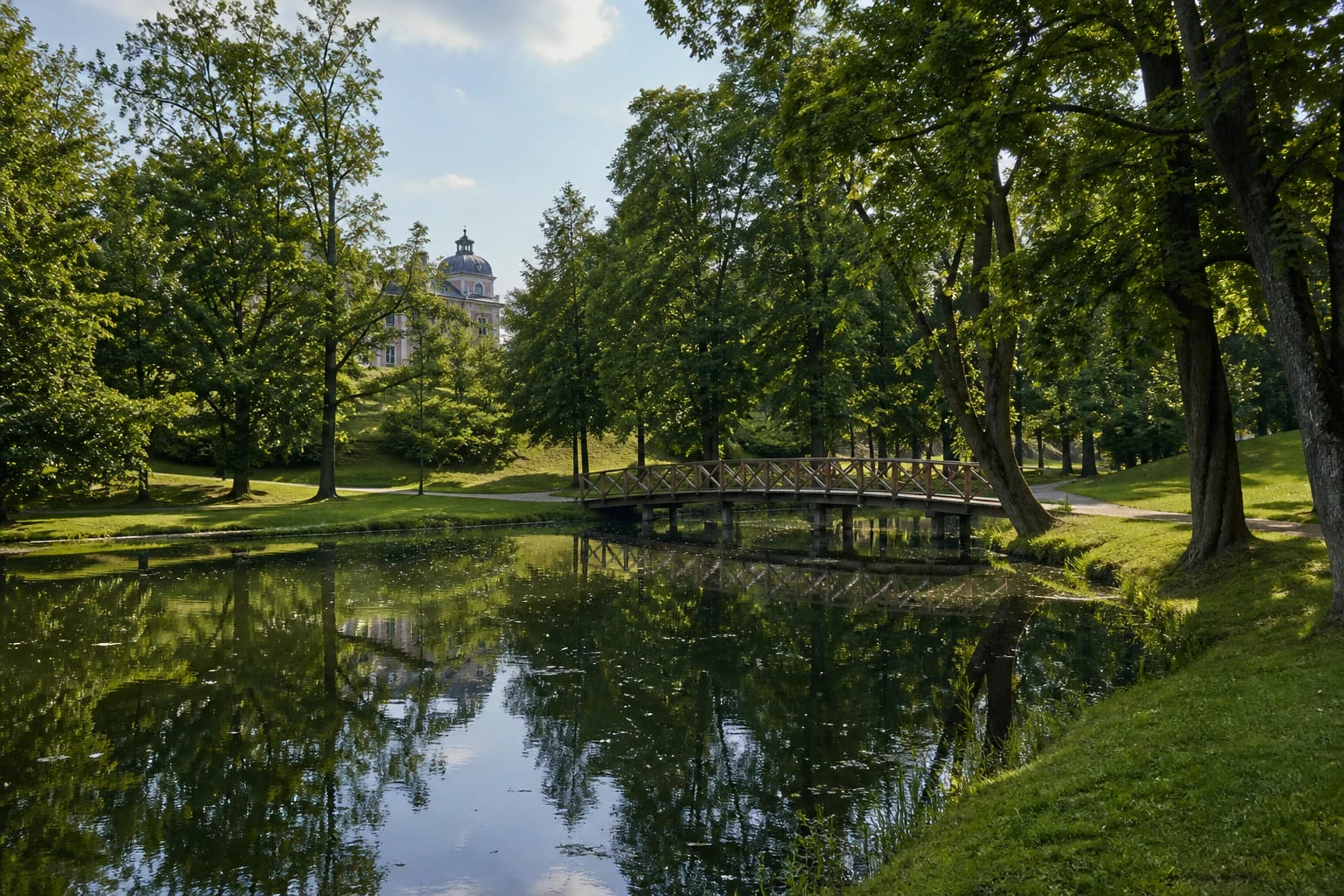
Plungė is a Samogitian town and the most convenient gateway to Žemaitija National Park: the Oginski Manor with the Žemaičiai Art Museum and park stand in town, while nearby Plateliai, Lake Plateliai, and the Cold War Museum in Plokštinė open the national park.
Plungė
Where to start
Choose a place, compare visiting times or explore the area on the map.
Key places to visit in Plungė and Žemaitija National Park:
Plungė Oginski Manor
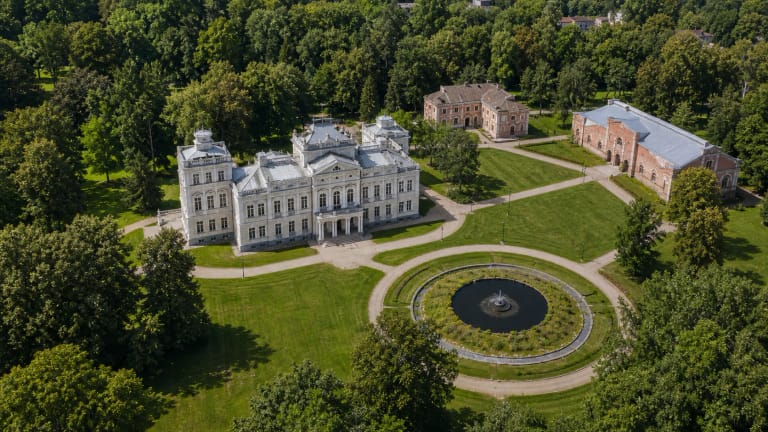
Plungė Oginski Manor is one of Samogitia's strongest manor ensembles: a Neo-Renaissance palace, two service wings, a Neo-Gothic stable,…
Lake Plateliai
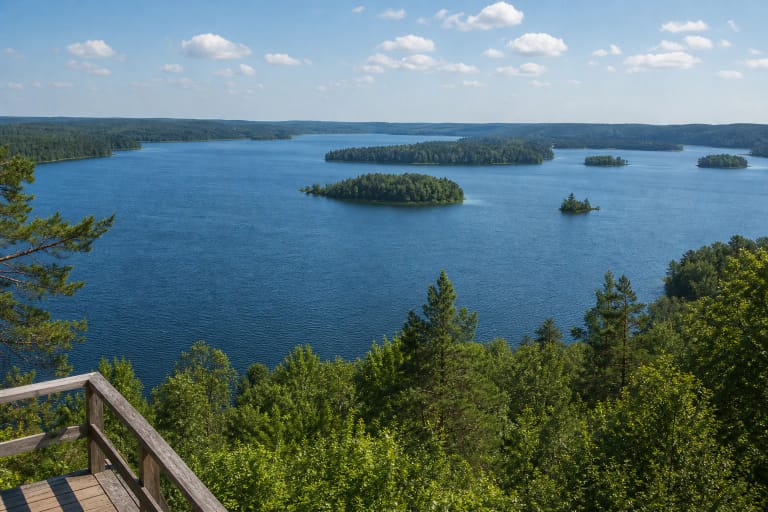
Lake Plateliai is the largest lake in Samogitia and the centre of Žemaitija National Park, with islands, Castle Island history, a viewpoint, trails,…
Žemaičių Kalvarija Basilica
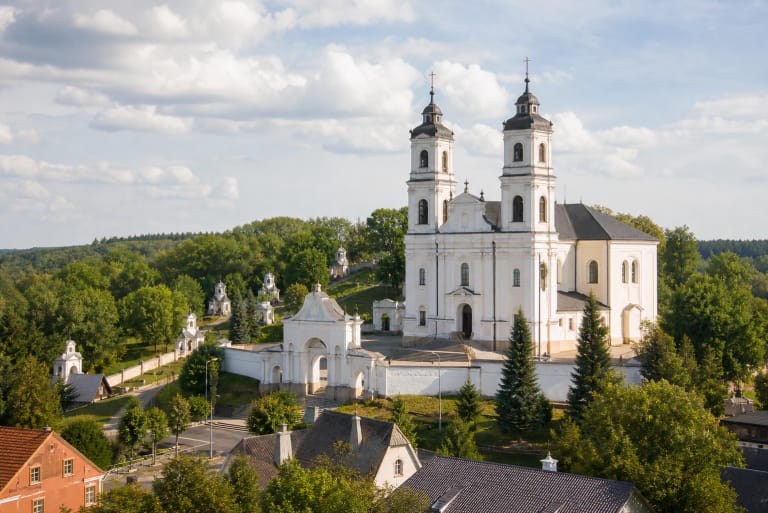
Žemaičių Kalvarija Basilica is one of Samogitia's most important pilgrimage centres, joining seventeenth-century Dominican tradition, a venerated…
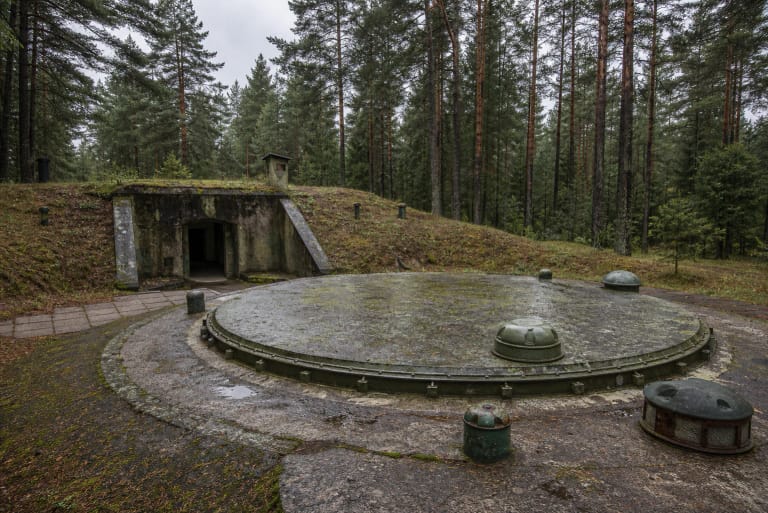
Cold War Museum in Plokštinė
The Cold War Museum in Plokštinė operates in a former secret Soviet underground ballistic missile base near Plateliai, one of Lithuania's strongest…
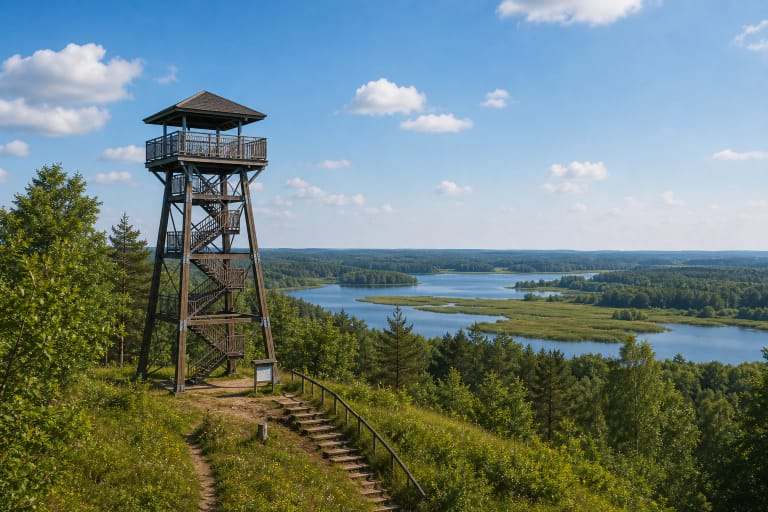
Siberijos Observation Tower
Siberijos Observation Tower is a 15 m viewpoint on Cidabras, or Būgnas, Hill, 165.7 m above sea level, in Žemaitija National Park, opening views of…
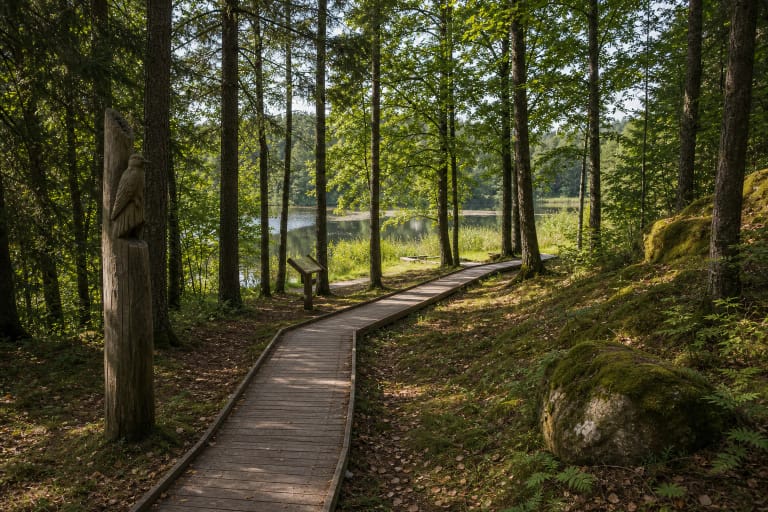
Paplatelė Educational Trail
Paplatelė Educational Trail is an approximately 2.3 km forest route on the eastern side of Lake Plateliai in Žemaitija National Park, leading through…
All places in this guide
Places on the mapPlungė Oginski Manor2-4 hoursLake Plateliai1-3 hours for viewpoints and a trail; a full day with swimming or cyclingŽemaičių Kalvarija Basilica1-2 hours for the basilica; 3-5 hours with walking the Calvary HillsCold War Museum in Plokštinė1-1.5 hours, longer with a guide and Žemaitija National Park routeSiberijos Observation Tower20-45 minutes; longer with Plateliai or Paplatelė TrailPaplatelė Educational Trail1-1.5 hours; longer with stops by water and wooden sculpturesGardų Ozas Educational Trail30-60 minutes; longer with a Žemaičių Kalvarija routePlateliai Manor Park45-90 minutes; longer with Lake Plateliai and park exhibitionsPlateliai1-2 hours for the town; a full day with the lake and park sitesLake Beržoras30-90 minutes for the shore and Beržoras village; longer with PlateliaiMingėla Oak10-25 minutesMikytai Sacred Hill45-90 minutes; about 1 km for the trail and stopsReiskių Tyrasguided bog hike about 3 hoursVytautas Mačernis Grave and Educational Trail45-90 minutes, trail out and backUžgavėnės Mask Exhibition30-60 minutesBabrungėnai Watermill30-45 minutesGegrėnai Hillforts1-1.5 hours for the 1.6 km trailŽemaitė Memorial Museum45-60 minutesPlokštinė Nature Trailabout 1.5 hours for roughly 3 kmKuliai Area Museum45-75 minutes; about 1.5-2 hours with a guided walk through KuliaiGandinga Hillfort I1-1.5 hours for the hillfort, outwork, and Babrungas riverside path; 2-3 hours for a wider archaeological-complex routeChurch of St John the Baptist in Plungė30-45 minutes for the church and bell tower exteriors; 1-1.5 hours including the interior, churchyard, and old rectoryBeržoras Church of St Stanislaus the Bishop45–90 minutesLitvak Memorial Garden30-60 minutes to read the map and individual memorial markers slowlyKaušėnai Holocaust Victims Memorial45-75 minutes for a slow visit to the Memory Wall, oak sculptures, burial grounds, and Alley of RescuersJogaudai Observation Tower30-45 minutes for the tower and quarry view; 60-90 minutes for unhurried birdwatchingAlsėdžiai Hillfort 'Žvėrinyčia'30-60 minutes to examine the earthworks, summit, and events valleyŽemaičių Kalvarija Hillfort - St John's Hill30-60 minutes for the hillfort; approximately 3 hours for the complete Stations of the Cross route with its hymnsGegrėnai Church of Jesus of Nazareth20-40 minutes for the churchyard and exterior; up to 1 hour when the church is open and the interior can be viewed without disturbing worshipLaisvės Avenue and the Independence Decade Monument in Plungė30-45 minutes for the avenue and monument; 1.5-3 hours with Oginski Manor Park and central PlungėŠeirė Nature Trail1.5-2.5 hours for the 4.1 km loopChurch of Saints Peter and Paul in Plateliai25-45 minutes; longer when attending MassPlungė Lourdes Grotto20-45 minutes for the grotto, terrace and historical context; longer for private prayer or a ceremony confirmed in advanceChurch of St Mark the Evangelist in Šateikiai30-45 minutes for the exterior and churchyard; up to 60 minutes if the church is open and the interior can be seen without disturbing worshipChurch of the Immaculate Conception in Alsėdžiai35-50 minutes for the full complex; around 60 minutes if the church is open and the interior can be viewed without disturbing worshipPakutuvėnai Church of St Anthony of Padua30-45 minutes for the church and its setting; longer for Mass, the patronal feast, or a pre-arranged Pakūta eventOktopusas Diving Centre1-3 hours depending on the selected diveŽemaitija National Park1-3 days, depending on chosen trails, museums, Lake Plateliai, and heritage sitesPlungė Sea2-4 hours for the shore, beach, and paths; longer if you add water activities or Plungė sightsPlatelių Lake Eastern-Shore Viewpoint20–45 minutes; longer if you want to watch the lake quietly or include it in the cycling routeBabrungo Valley45-90 minutesKuliai Church of St Bishop Stanislaus45-90 minutesPlungė Old Town Square30-60 minutes
About this area
Plungė is a town in Telšiai County, Samogitia, and one of the easiest gateways to Žemaitija National Park. In Plungė itself, the impressive Oginski Manor ensemble houses the Žemaičiai Art Museum and a large park. A short drive north begins the lake-filled national park with Plateliai, Lake Plateliai, and the Cold War Museum in a former underground missile base. Plungė is best visited together with the surrounding Samogitian landscape.
Plungė and Žemaitija National Park
Plungė lies in Telšiai County, in the heart of Samogitia, by the Babrungas River. As a travel base it matters for two reasons: one of Lithuania's strongest manor ensembles stands in town, and Žemaitija National Park begins north of Plungė with lakes, forests, and cultural heritage. For that reason Plungė often becomes the base for a longer Samogitian route.
The park's centre is Plateliai, a town on Lake Plateliai about 15 km north of Plungė. The park administration and visitor centre are located there, so many visitors naturally combine Plungė and Plateliai into one route: the manor first, then lakes, trails, and the Plokštinė underground site.
Plungė Oginski Manor and the Žemaičiai Art Museum
The town's main treasure is Plungė Oginski Manor. The ensemble includes a Neo-Renaissance palace, two service wings, a Neo-Gothic stable, clocktower-orangerie, and a broad park. The palace was built after Prince Mykolas Oginskis acquired the estate in 1873; working with architect Karl Lorenz, he had it completed and solemnly consecrated in 1879. Since 1994 it has housed the Žemaičiai Art Museum.
The manor is important for music history as well. Young Mikalojus Konstantinas Čiurlionis studied and played flute in Oginskis's orchestra school here, and Oginskis later supported his studies in Warsaw. In the park, which covers several dozen hectares, look for the chain of ponds, the clocktower-orangerie, and the famous Perkūnas Oak, described by VLE as one of Lithuania's oldest and largest oaks.
Plateliai and Lake Plateliai
Plateliai is the cultural centre of Žemaitija National Park, standing beside Samogitia's largest lake. The town's landmark is the wooden Church of Saints Peter and Paul, built between 1654 and 1744. Nearby are the manor estate and park, the thickest ash tree in Lithuania, known as the Witch's Ash, and an Užgavėnės mask exhibition founded in 1996 in the manor stable.
Lake Plateliai is the park's main natural object, with islands, bays, and shores suited to boating, swimming, and fishing. From Plateliai it is easy to reach the Paplatelė educational trail, cycling routes around the lake, and the road to Plokštinė. For many travellers, Plateliai is the most natural base for exploring the national park.
The Cold War Museum in Plokštinė
One of the park's most unusual sites is the Cold War Museum in Plokštinė, installed in a real former Soviet underground ballistic missile base hidden in the forest near Plateliai. VLE notes that it was one of the first Soviet underground R-12 missile bases, built in 1960-1962 with four silo launchers and closed in 1978.
The present museum officially opened after reconstruction at the end of 2012, when one silo was adapted for visitors. Part of the exhibition is underground, so the visit feels physically different from an ordinary museum. Dress warmly and consider the stairs and enclosed spaces. It is one of Lithuania's strongest twentieth-century military-history sites.
More Samogitia: what else to see
The Plungė area contains very different historical layers, so routes are easy to extend. In Žemaitija National Park, consider Lake Beržoras and Beržoras village, the Paplatelė and Plokštinė educational trails, and beyond the park Žemaičių Kalvarija with its pilgrimage tradition or the nearby Orvidai Homestead.
The Oginski theme naturally continues at the Rietavas Oginski Cultural History Museum in the neighbouring Rietavas Municipality. Together, Plungė and Rietavas show how one family shaped Samogitian culture, from music schools to economic modernization.
Practical tips: getting there and when to go
Plungė is reachable by car, bus, or train; the railway through the town connects western Lithuania with Klaipėda. From Plungė to Plateliai, a car is usually most convenient because public transport into the national park is limited. The easiest travel season is May to October, when most exhibitions are open and the lakes and parks show well.
The manor park, Plateliai town spaces, and lake shores are freely accessible, while the Žemaičiai Art Museum, Cold War Museum, and Užgavėnės mask exhibition have opening hours and tickets. Because prices and schedules change, and because the Cold War Museum is often better with a guide, check official sources before travelling.
Plungė: frequently asked questions
Where is Plungė?
Plungė is in Telšiai County, Samogitia, by the Babrungas River. It is a convenient base for visiting Žemaitija National Park.
Why is Plungė called a gateway to Žemaitija National Park?
Plateliai, the park centre, is about 15 km north of Plungė, and from the town it is easy to reach lakes, trails, and Plokštinė. Plungė itself has Oginski Manor, so the town and park work well as one route.
What should you see at Plungė Oginski Manor?
See the Neo-Renaissance palace with the Žemaičiai Art Museum, two service wings, Neo-Gothic stable, clocktower-orangerie, pond chain, and Perkūnas Oak in the park.
How is Plungė connected with M. K. Čiurlionis?
Young Mikalojus Konstantinas Čiurlionis studied and played flute in the Plungė manor orchestra school, and manor owner Mykolas Oginskis later supported his studies in Warsaw.
What is Plateliai?
Plateliai is a town in Žemaitija National Park on Samogitia's largest lake, with a wooden seventeenth-eighteenth-century church, manor estate, Witch's Ash, and Užgavėnės mask exhibition.
What is the Cold War Museum in Plokštinė?
It is a museum in a former secret Soviet underground ballistic missile base near Plateliai, built in 1960-1962 and opened as a reconstructed museum in 2012.
When is the best time to visit the Plungė area?
May to October is most convenient, when exhibitions are open and lakes and parks are at their best. In summer, plan parking and accommodation around Plateliai in advance.
How do you get to Plungė?
Plungė can be reached by car, bus, or train; the railway through town leads toward Klaipėda. A car is the easiest way to continue from Plungė to Plateliai.
Is visiting Plungė and the park free?
The manor park, Plateliai town, and lake shores are freely accessible. Museums and exhibitions have opening hours and tickets, so check official prices before visiting.
Plungė: what else to see
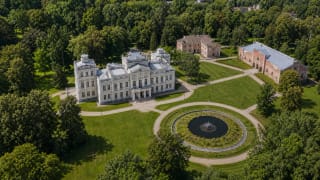
Plungė Oginski Manor
The Neo-Renaissance palace, park, and Žemaičiai Art Museum ensemble, Plungė's main heritage site.
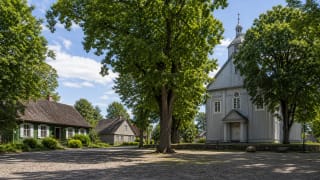
Plateliai
The Žemaitija National Park town with a wooden church, manor estate, and Užgavėnės mask exhibition.
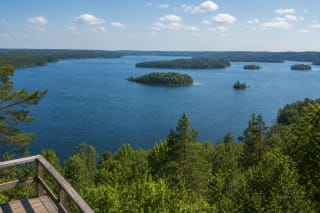
Lake Plateliai
Samogitia's largest lake with islands and shores, the national park's central natural feature.
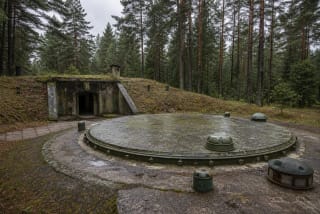
Cold War Museum in Plokštinė
A museum in a former Soviet underground missile base near Plateliai, one of the region's strongest military-history sites.
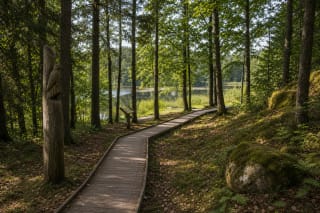
Paplatelė Educational Trail
A trail on the other side of the lake, useful for a more active exploration of the Plateliai area.