- Place
- Nausodis Eldership, Plungė District Municipality
- Region
- Plungė District
- Type
- botanical natural monument, a protected oak
- Coordinates
- 55.86960, 21.74320
Mingė Oak
Mingėla Oak, not Mingė village
In traveller lists this place is sometimes written as Mingė Oak, but protected-area and encyclopedic data call it Mingėla Oak. That matters because Mingė is a separate, well-known village in the Nemunas Delta, in Šilutė District, by the Minija River, in a completely different part of Lithuania from this tree.
Mingėla Oak is in Plungė District, Nausodis Eldership, in western Samogitia. This page therefore uses the officially confirmed name Mingėla Oak, leaving the Mingė Oak form only as a search and confusion marker; it should not be presented as a separately confirmed protected-object name.
A protected botanical natural monument
Saugoma.lt presents Mingėla Oak as a natural heritage object of the botanical type. VLE confirms this: in its description of Plungė District Municipality, it lists Mingėla, Perkūnas, and Stirbaičiai oaks, Plateliai Linden, Plateliai Elm, and Raganos Ash among the district's six botanical natural monuments. Mingėla Oak is therefore not a random old tree but an officially named local botanical monument.
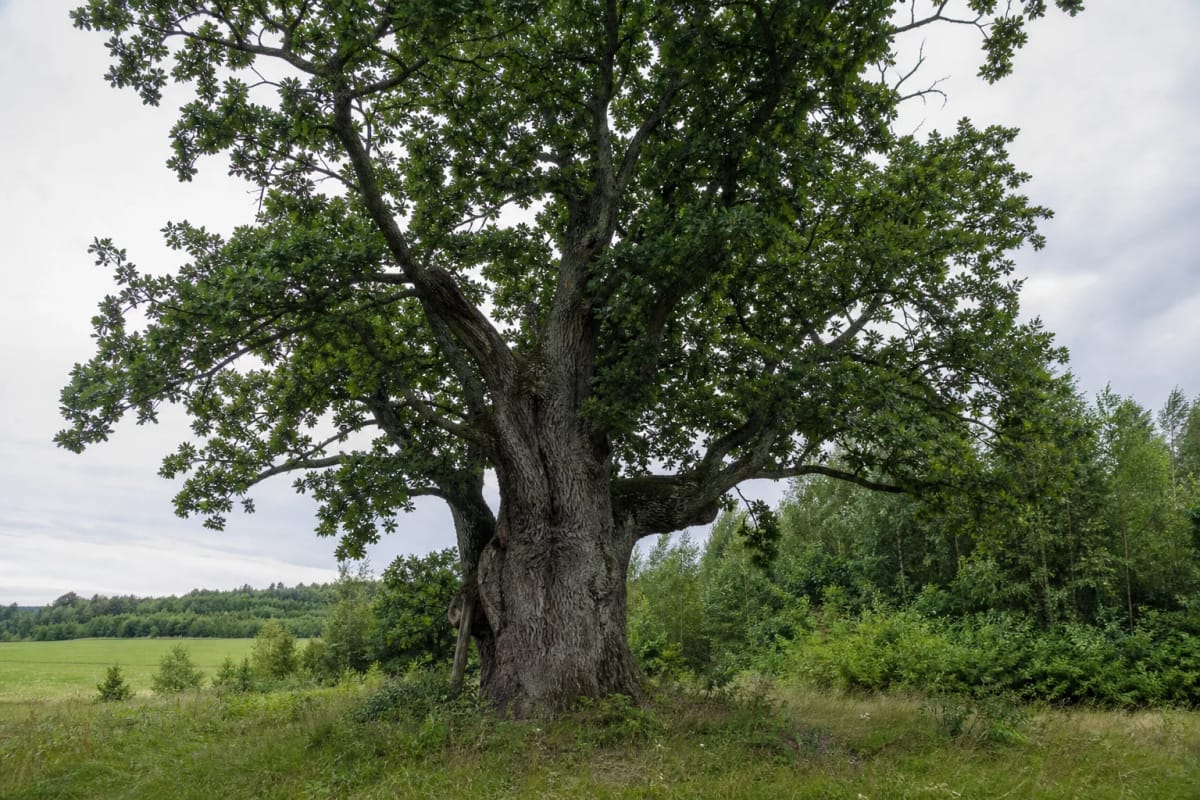
The main content of a visit is the tree itself: its trunk, crown, growing place, and impression of age. Protected-tree status also asks visitors to act carefully: avoid trampling the root zone, breaking branches, or altering the surroundings.
What the sources say, and what they do not
The Saugoma.lt object entry and data export for Mingėla Oak do not give a description, trunk girth, height, or age; they provide only the object type, coordinates (about 55.8696, 21.7432), and the last data update. This page therefore deliberately does not fabricate the tree's dimensions or age.
That restraint is more responsible than attractive-sounding detail. Until a reliable official figure exists, it is better to state the status and place clearly than to create an impression of precision the data do not support. Exact dimensions are worth checking on site, on an information sign if one is present.
Natural context of the Plungė region
Mingėla Oak belongs to the rich natural heritage of Plungė District. VLE notes that much of Žemaitija National Park lies in the district, along with part of Salantai Regional Park and several reserves. Among natural monuments are not only the botanical objects already named but also stones such as Galąstuvas and Dievo stalas, the Dyburių outcrop, and others. This old oak is part of a dense network of protected objects.
For that reason it is convenient to include Mingėla Oak in a wider Samogitian route rather than travel only for it. Nearby are Plungė Oginski Manor and the Žemaičiai Art Museum, and farther on Plateliai and Žemaitija National Park sites.
How to visit an old oak
Old solitary trees often look easy to approach, but their root zones are sensitive to trampling and soil compaction. Approach only as far as paths or local conditions allow, do not hang hammocks, break branches, or climb on roots. A protected tree is harmed not only by direct damage but by a constantly compacted visitor surface.
When photographing, step back enough to show not only the trunk but the width of the crown and the surrounding landscape; the impression of a solitary oak consists of both tree and place. Mingėla Oak has no museum hours or ticket. It is an outdoor natural monument, so check the map before travelling and do not drive through private land where there is no clear public access.