- Place
- Kaunas City Municipality
- Region
- Kaunas
- Type
- a forest park with natural walking paths, a Neris river edge, and a cycle route
- Address
- Kleboniškio Street, Kaunas
- Coordinates
- 54.95020, 23.93120
- Visit duration
- 1-3 hours for a short walk; the full 10 km cycle path and deeper forest need more time
- Best time
- in daylight from spring to autumn; the hills can be slippery in winter and trees should be checked after storms
Kleboniškis Park, Kleboniškis Forest Park in Kaunas
A wild-forest feeling beside the city
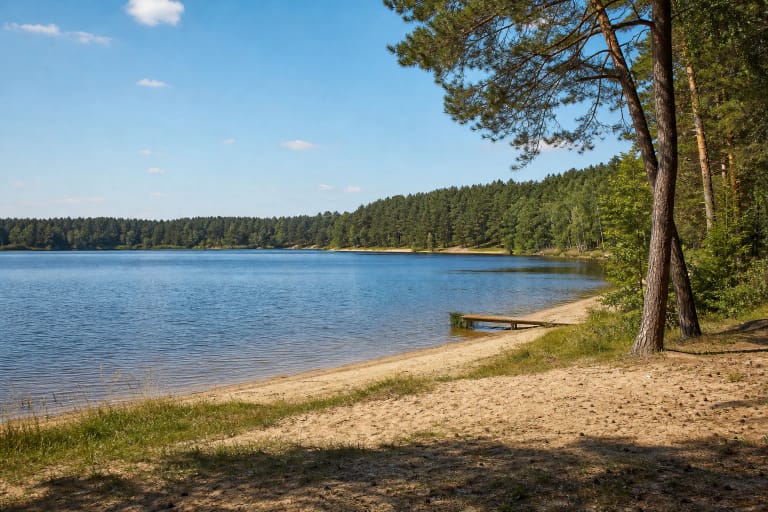
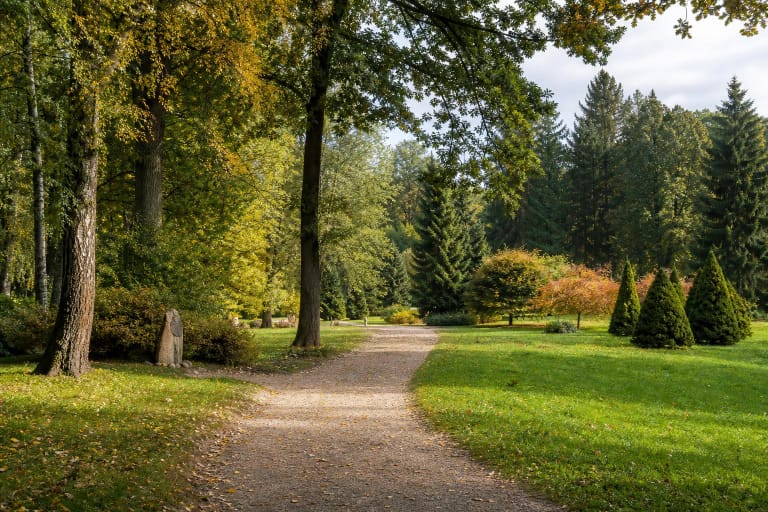
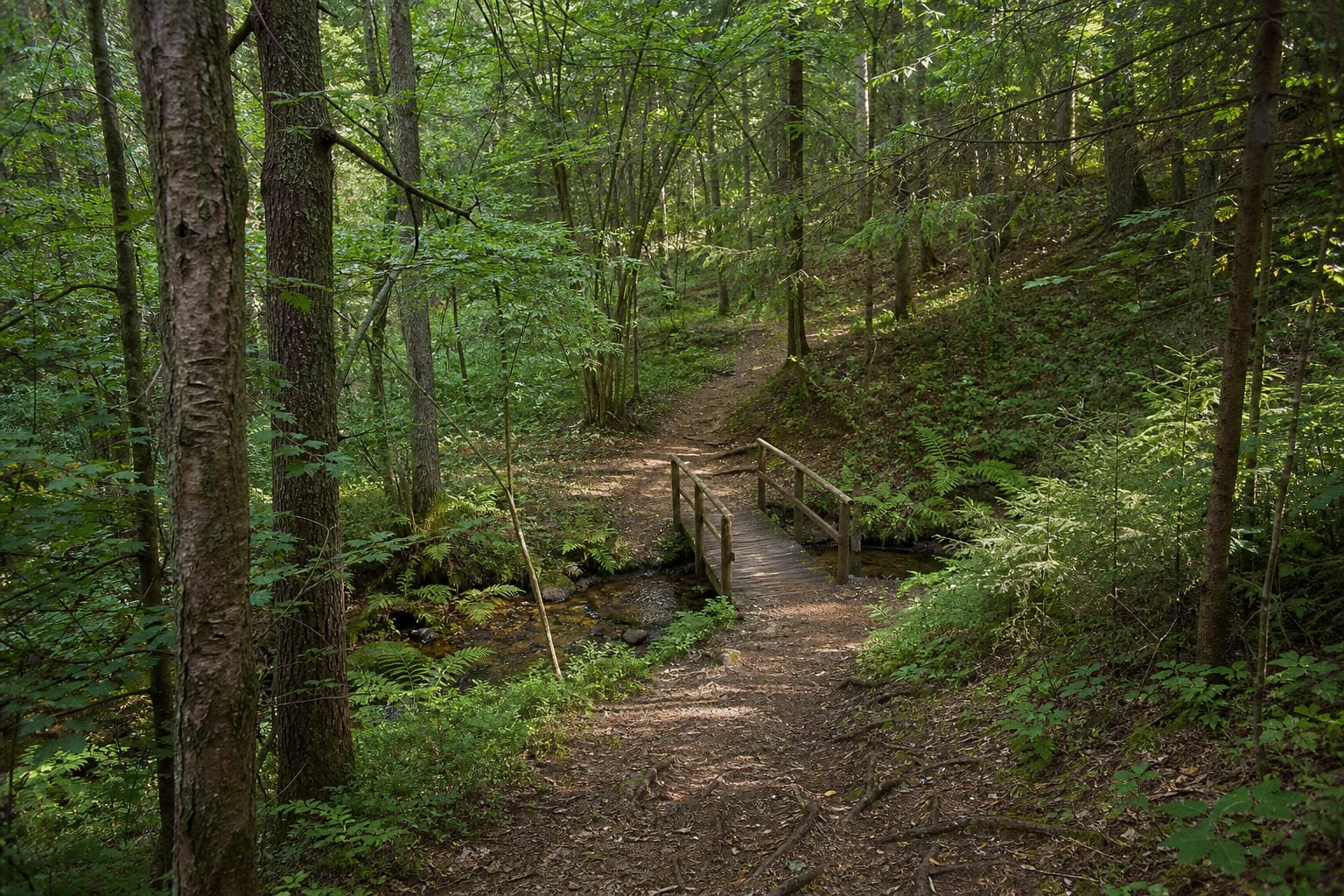
Kleboniškis Forest Park retains a wild-woodland character close to the city. The Neris borders it to the west and north, so visitor pressure is lower from the river side and the woodland interior remains quieter and less manicured. The southern part is where Kaunas residents most often arrive.
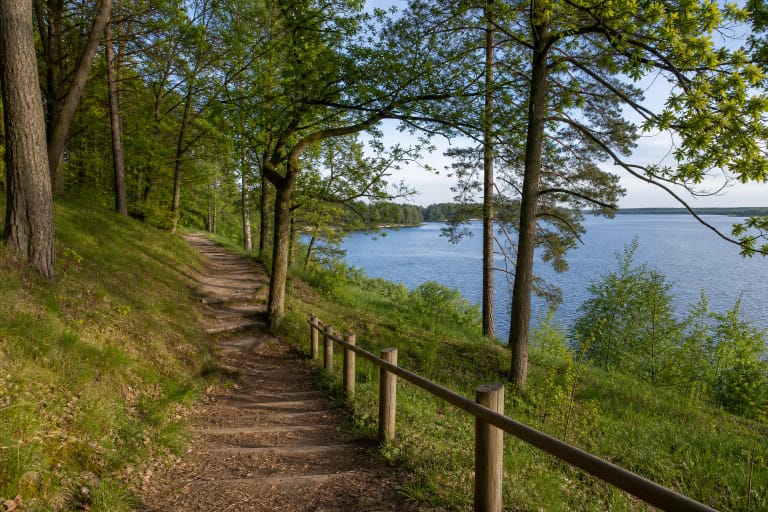
This is not one short, uniformly marked city path. Park entrances, natural woodland tracks, the cycle route, and the Neris edge make up a larger network. Choose a specific starting point and return direction before setting out, because the distance from one trail end to another can be much greater than the park name suggests.
The Neris protects the northern edge
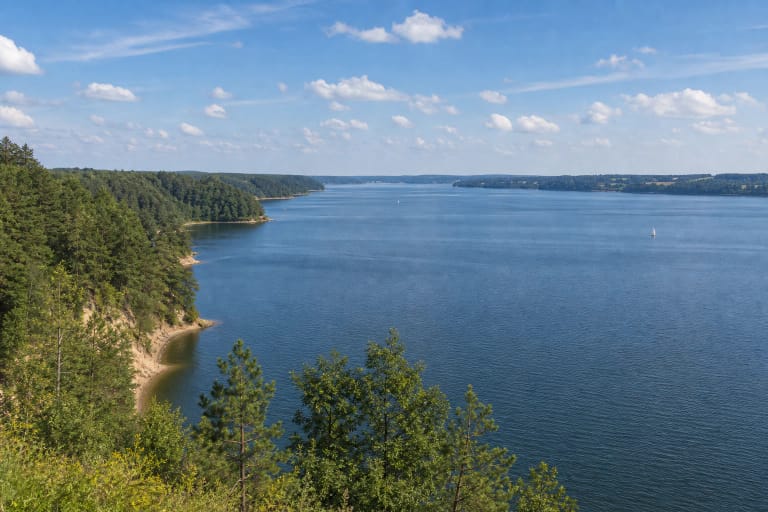
The Neris wraps around the western and northern sides of the park. From a riverside path you see more than water: valley relief, changing forest density, and bank vegetation explain why the interior can feel separated from the city even when a street is nearby.
Do not make new descents to the river or cross unstable slopes for a better view. Water level, wet ground, and fallen trees change which places are safe. If a path ends or becomes uncertain, turn back rather than forcing a way through scrub along the bank.
The river also means a real water hazard for children and dogs. Keep back from steep edges, supervise children continuously, and handle a dog so it cannot enter the current. The river edge is natural ground, not a managed beach.
A 10-kilometre cycle route and changing surfaces
Kaunas City Municipality describes the Kleboniškis Forest cycle path as roughly 10 km and says it can be followed to Narėpai in Kaunas District. It is an attractive longer-day direction, but the municipal description is older and itself notes that some sections needed repairs.
Maintenance vehicles may use the cycle path, so cyclists and walkers should keep right, slow at blind bends, and leave the way clear. In summer, branches, sand, wet leaf piles, and potholes can hide surface changes.
For a simple walk, choose a short familiar section from Kleboniškio Street. For the full cycle route, carry water, allow extra time, and check whether you will return the same way or have another legal exit plan.
Kleboniškis Spring and water responsibility
The Eiguliai eldership information mentions the well-known Kleboniškis Spring, where people come to collect water rising from the ground. That is a local-use and place-memory fact, not a current drinking-water test or a summary of an official permit.
A natural spring can be affected by the environment, season, and surface runoff. Do not give children the water simply because it looks clear, and do not use shared cups. Bring your own water and follow the latest local warnings about whether the spring is suitable for drinking.
If a queue forms at the source, keep the path open and do not trample the wet edge. A spring is more sensitive than a paved drinking fountain: do not wash dishes, rearrange stones, or damage the surroundings.
A forest park with historical traces
The history of Kleboniškis is tied to Kaunas’s urban growth. VLE records that a large water-supply station was built there in 1929 and that the area was incorporated into Kaunas in 1959. Forest and city layers sit close together, so notice infrastructure history as well as trees.
The forest also contains traces of human activity from different periods, but not every mound or hollow is a marked site. Do not enter uncertain pits, disturb the ground, or take finds. If something appears to be cultural heritage or a military object, photograph it from the path and report it to the responsible institution.
An old forest needs extra caution after storms. Avoid strong wind, do not walk beneath hanging branches, and use an official detour around a closed section. The rough woodland character is the value of the place, not permission for visitors to manage it themselves.