- Place
- Kelmė, Kelmė District Municipality
- Region
- Samogitia
- Type
- a historic red-brick watermill with its hydraulic system, an operating hydroelectric plant, and a separately constructed fish pass
- Address
- 37 and 37A B. Laucevičiaus Street, Kelmė
- Coordinates
- 55.62847, 22.94182
- Visit duration
- 25-45 minutes to view the mill exterior, dam, and fish-pass setting from lawfully accessible paths; interior access is not included
- Best time
- a bright, dry day from late spring to autumn, when the brick elevations, Kražantė reservoir, dam, and water channels can be seen more safely
Kelmės senasis vandens malūnas, Kelmė Old Water Mill, Kražantė fish pass
Two connected features of very different dates share the same dam
Kelmė Water Mill stands on B. Laucevičiaus Street beside the dam of the Kražantė reservoir. The coordinates 55.628471, 22.941819 identify a representative point within the mill and hydraulic site along the visitor route, not the building's doorway or a guaranteed car park. In one compact setting, visitors can see the historic red-brick mill, reservoir, dam, pedestrian bridge, water channels, and the much later fish pass.
KVR code 2163 protects Kelmė Water Mill together with its architectural and engineering features, reservoir, dam slopes, intake, channels, and technological equipment. The fish pass is not an 1892 milling mechanism. It is a separate migration structure constructed at the existing Kražantė dam in 2014, and the two dates and functions should not be merged.
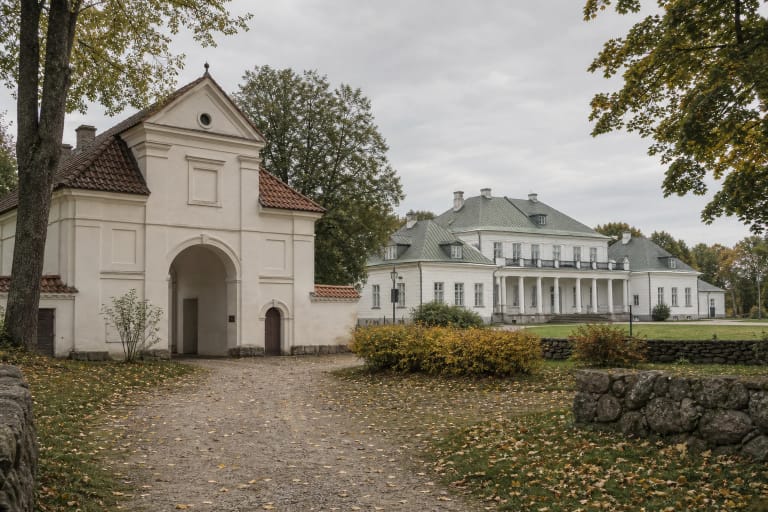
Nor should this property be confused with the watermill belonging to the Kelmė Manor ensemble. That separate mill carries KVR code 22389 and stands at 17 Prūdo Street. The mill at 37 and 37A B. Laucevičiaus Street is an independent state-protected property of regional significance. Municipal planning documents place it on a town visitor route, but that does not grant unrestricted entry to the hydroelectric building.
The 1892 mill moved from estate industry to wool carding and hydroelectric generation
KVR dates the mill to 1892 and connects it with the Gruževskis family, owners of Kelmė Manor. An 1890 inventory already mentions a mill beside the Kražantė that may have been built by estate owner Boleslovas Gružauskas. The register presents this as a possibility, not proven authorship. Documents from 1896 describe a new steam mill on the site, suggesting that the watermill may have been adapted for steam power.
A vertical Francis turbine replaced the waterwheel, and a hydroelectric installation was later added. During the Soviet period the building belonged to a domestic-services combine, while a wool-carding workshop operated in its annex. KVR says that the mill itself remained in use until about 1980, after which the property deteriorated.
Restoration began after a new owner acquired the mill in 2002. Between 2003 and 2005, work addressed the turbine and its chamber, the intake, discharge opening, and channel, restoring function to the hydraulic system; KVR gives 2003-2018 as the wider restoration period. The hydroelectric plant began operating in 2013. The mill entered the register in 1992 and was declared state-protected in 2005.
The brick shell preserves a working power-transmission system, not decorative nostalgia
The mill is a rectangular building of three storeys and an attic with a single-storey annex on its eastern side. A gabled roof covers ceramic-brick walls raised on a fieldstone plinth with granite-rubble infill. Inside the second and third storeys, KVR identifies half-timbered wall construction, timber beam floors, posts with braces, and a timber rafter roof.
Restrained brickwork and segmental-headed door and window openings define the historicist elevations. An arched discharge opening on the northern side was later blocked and replaced by a rectangular opening. The roof also records successive interventions: Soviet-era asbestos-cement sheets covered the earlier wood-shingle type, and metal sheeting replaced them in 2018.
The mill's most important engineering fabric survives inside and beneath the building. KVR lists the transmission, pulleys, restored Francis turbine, guide apparatus and lever controls, intake and discharge channels, and restored guides for the sack hoist. Visitors should therefore not expect or invent a large external wooden wheel: the surviving system relied on a turbine and internal transmission. Registered machinery is not permission to inspect it without the owner's consent.
The 2014 fish pass provided a route, but 2015 telemetry exposed a weak entrance response
Municipal planning material gives the Kražantė reservoir an area of about 5 hectares and describes a water-level difference of roughly 3 metres at the dam. Migratory fish could not overcome that obstacle, so a fish pass was installed at the Kelmė town dam in 2014. Its purpose is to help fish reach spawning habitat upstream, not to provide a recreational water feature or a path for people.
In May 2015, researchers fitted acoustic tags to 30 vimba in the Kražantė. Very low water prevented normal detection of fish within the 50-metre approach zone. Only two tagged fish were detected at the entrance itself, and one passed through on its first attempt. Under the report's methodology this produced 50 percent efficiency among fish that reached the entrance; it does not mean that 15 of all 30 tagged vimba completed the passage.
The report characterised the fish pass as poor at attracting fish and recommended clearing the channel below the dam and steering fish away from the hydroelectric channel towards the pass. A later project summary's broad statement that the completed passes were effective must therefore be read alongside this detailed Kelmė result and its low-water limitations.
The channel was improved in 2022, while visitors still need to treat this as working infrastructure
From June to August 2022, vegetation and accumulated sediment were removed from a 152-metre section of the downstream channel below the Kelmė dam. A fish-guiding structure and seven low dams were also installed to raise water levels. The Fisheries Service declared the wider Kražantė and Vokė migration-improvement project complete at the end of 2023, but its announcement did not publish a new numerical performance study for the Kelmė fish pass.
No official timetable, admission charge, permanent exhibition, or regular interior tour is published for the mill. Because a hydroelectric plant operates in the building, the prudent plan is a 25-45 minute exterior stop using whichever paths and pedestrian bridge are lawfully open at the time. Interior access requires advance confirmation from the lawful owner or operator, and current official information should be checked before travelling.
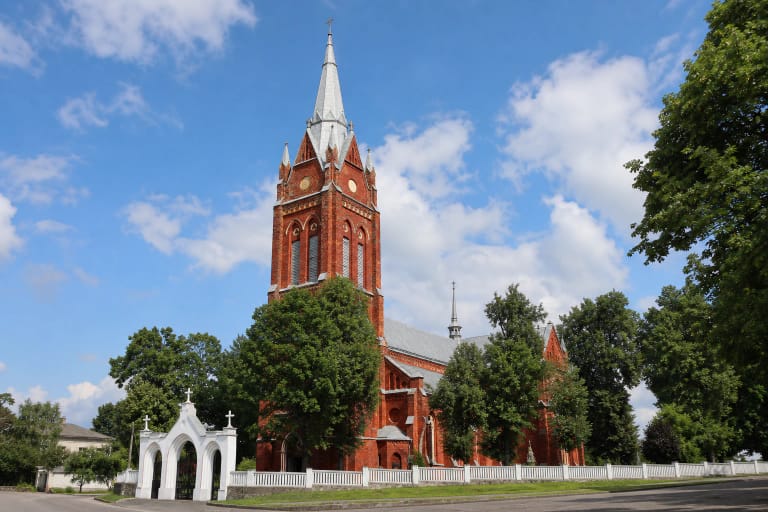
Do not climb onto the dam equipment, enter the fish-pass channel, or cross railings. Currents near the drops, wet concrete, and ice can all be hazardous. No official visitor-parking or step-free-access audit has been published, so leave vehicles only where current signs permit and assess surfaces and gradients on arrival. Kelmė Manor and the town's Church of the Assumption combine naturally with this short stop.