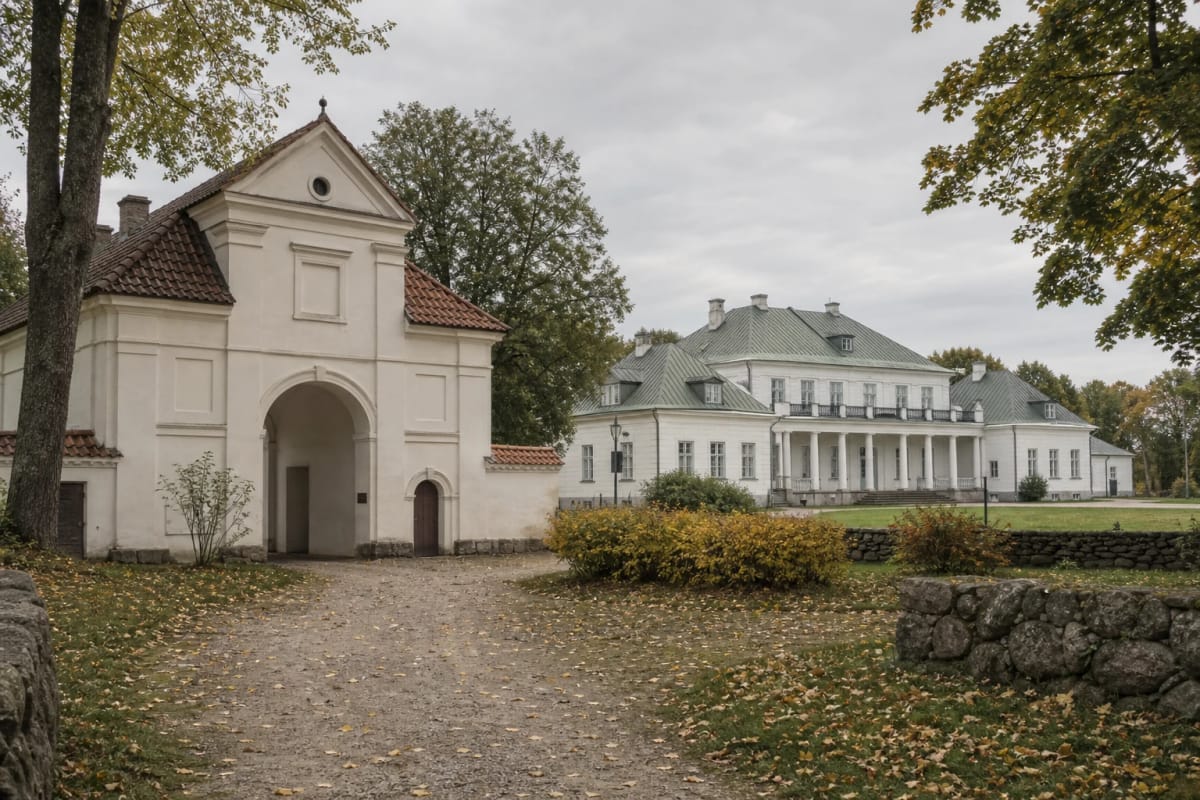
- Place
- Kelmė District Municipality
- Region
- Samogitia
- Type
- manor estate and Kelmė Regional Museum
- Address
- Dvaro g. 15, Kelmė
- Coordinates
- 55.63840, 22.93848
Kelmė Regional Museum, Gruževskis Manor
The Gruževskis manor estate
Kelmė Manor now operates as Kelmė Regional Museum, but its foundation is a long manor history. Museum material states that the Gruževskis family held Kelmė Manor from 1591 to 1940.
Such a long ownership period is rare and significant. It lets visitors read the manor not as the story of one building, but as a centre of family, town, estate economy, and political events over several centuries.
Palace and architecture
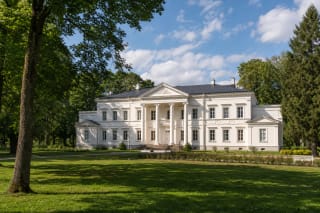
The masonry palace of Kelmė Manor began to be built around 1780. Later, in the late nineteenth century, manor buildings were changed and repaired; research data indicates that architect Franciszek Lehmann prepared an 1892 reconstruction project.
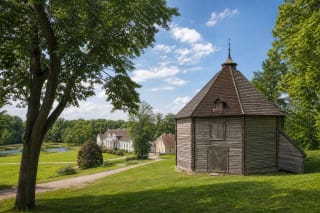
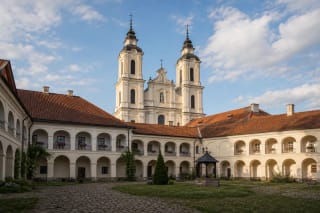
When visiting, look at the palace, gate building, park, and the manor estate's relation to the town space. Kelmė Manor is not an isolated country residence: it is closely tied to the identity of Kelmė itself.
Memory of the 1831 uprising
Kelmė Manor is linked with the 1831 uprising in Lithuania. In manor history this is an especially important layer because noble estates often became places of political decision-making, meetings, and resistance logistics.
This episode should be understood as part of political memory. The manor here tells not only of everyday noble life, but also of nineteenth-century Lithuanian society's conflicts, hopes, and defeats.
Kelmė Regional Museum
The museum lets visitors experience the manor not only from the outside. Exhibitions and education programmes connect architecture with local history, regional culture, uprising memory, and manor life.
If you have time, choose a guide or education programme. The manor's history is dense, and without a story some buildings and symbols may remain only a pleasant background.
Opening hours and tickets
During research, Kelmė Regional Museum's visitor information page listed hours Monday-Friday 8:00-18:00 and Saturday 11:00-16:00. Adult tickets were 2 EUR, child tickets 1 EUR, family tickets 3 EUR, and guide service 20 EUR; the page also included wording about discounts during renovation.
Prices, discounts, and visiting conditions can change, so check the Kelmė Regional Museum information page before travelling.