- Place
- Kražiai, Kelmė District Municipality
- Region
- Kelmė District
- Type
- historic Samogitian town with a Jesuit college and sacred heritage
- Coordinates
- 55.60290, 22.68830
Kražiai town, Krože
Kražiai: a Samogitian centre of learning and sacred memory
Kražiai is an old small town in Kelmė District, spread on both sides of the Kražantė River. VLE notes that it has been called a town since the fifteenth century; in earlier periods the area had a castle and hosted assemblies of the Samogitian nobility. Yet Kražiai's lasting weight comes less from size than from its Jesuit college and from the 1893 Kražiai massacre.
Today Kražiai is best understood as a whole historical and sacred-heritage town. The college building with its museum, Baroque churches, chapel, and Medžiokalnis nature reserve survive as parts of one memory landscape. It is worth coming here not for a single monument, but for the layered history of the place.
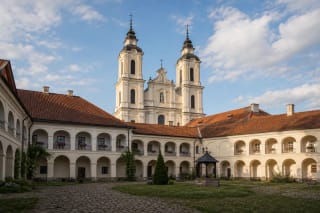
Kražiai Jesuit College
VLE describes Kražiai Jesuit College as one of Lithuania's most important centres of education and Jesuit learning. It operated from the early seventeenth century until 1844. Its establishment was supported by the Radziwiłł and Chodkiewicz magnate families, though sources give the founding date differently, either 1614 or 1616. Teaching was in Latin, the college had a rich library and school theatre, and student numbers grew to several hundred.
Among the college's teachers was the prominent Baroque poet Motiejus Kazimieras Sarbievijus, whose name is now carried by the Kražiai cultural centre. After the suppression of the Jesuit order the school became secular, was taken over by Vilnius University in 1817, and in 1844 was moved to Kaunas. The restored college building now houses the Kražiai M. K. Sarbievijus Cultural Centre and museum.
The Kražiai massacre of 1893
Kražiai entered Lithuanian history most forcefully through the Kražiai massacre of 1893. VLE describes it as a violent action by the tsarist authorities against Kražiai parishioners who resisted the closing and demolition of the former Benedictine convent church. After the convent was closed, the authorities moved to destroy the church as well, and local people guarded it day and night.
In November 1893 the governor arrived in Kražiai with police, followed by Cossacks, and the resistance was crushed by force. About nine people were killed; many others were wounded, arrested, and sentenced. Later, after international outrage, punishments were softened and the church was not demolished. The massacre drew broad Western criticism of tsarist oppression and strengthened Lithuanian national consciousness.
Churches and sacred heritage
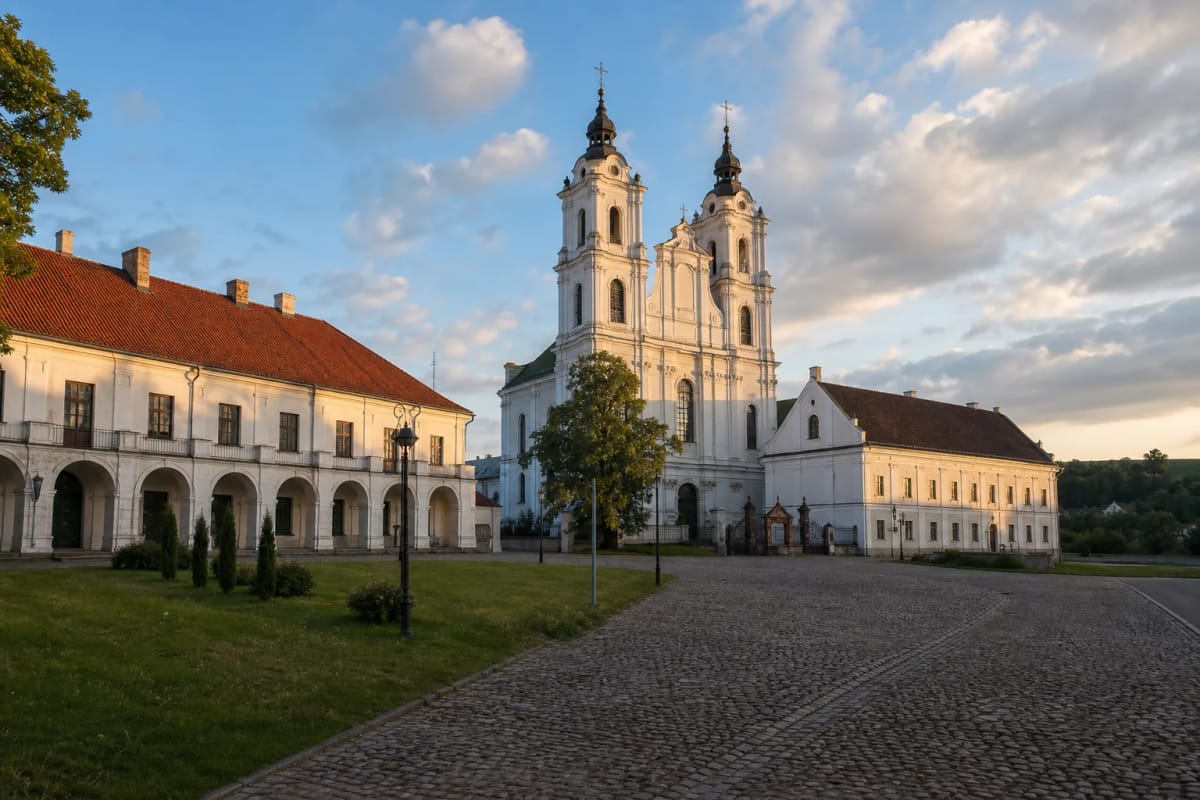
The most important sanctuary in Kražiai is the former Benedictine Church of the Immaculate Conception of the Blessed Virgin Mary, a late-Baroque building. Sources state that it was built in the mid-eighteenth century according to a design by the Jesuit mathematician and architect Tomas Žebrauskas; this is the church defended by parishioners during the Kražiai massacre. Valuable Baroque altars survive inside.
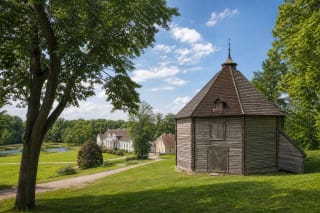
Nearby are the stone-built St Roch Chapel, the churchyard wall with gates, and other elements of the sacred ensemble. Kražiai Old Town is protected as an urban-heritage value, so the town is best viewed as a coherent historical setting rather than as isolated buildings.
Medžiokalnis and visiting
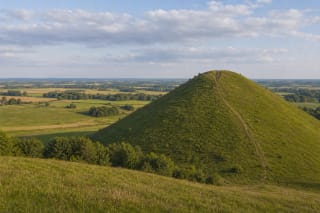
On the northern edge of Kražiai is Medžiokalnis Botanical Reserve, an oak-covered hill with an educational forest and rich flora. The place is linked with an old tradition of sacredness, and in summer Joninės celebrations are held here, so nature and folklore meet the town's written history.
When visiting Kražiai, include the college building and museum, the Benedictine church, St Roch Chapel, and Medžiokalnis. Museum tours usually need to be booked in advance, and current hours and prices should be checked with the Kražiai M. K. Sarbievijus Cultural Centre because they can change. Kražiai combines well with Tytuvėnai, Kurtuvėnai, and other Samogitian sites.