- Category
- Work and Craft Buildings
- Type
- Grain-milling and mechanical-energy structures
- Context
- mill, water mill, windmill, post mill, cap mill, millstones, sails, dam, miller
- Source status
- well attested
Watermill, Windmill, Post mill, Cap mill
Traditional Mills: types and elements
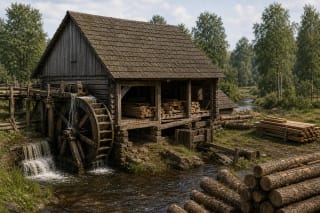
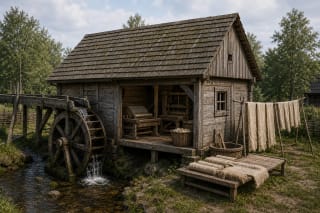
Watermill: A mill whose mechanism is driven by a water wheel or turbine.
Post windmill: A windmill whose whole body turns on a post to face the wind.
Cap windmill: A windmill where only the upper cap with sails turns.
What is a traditional mill?
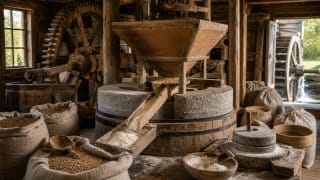
A mill is both a building and a mechanism for grinding grain or doing other work using water, wind, animal, steam, or electric power. In traditional culture it was more than a technical device; it was a local economic center.
A mill connected farmers, the miller, roads, water or wind, field harvests, and bread making.
History in Lithuania
Water and animal-powered mills are known in Lithuania from the Middle Ages, windmills from a later period, and steam and electric mills spread with technological modernization. According to VLE, water and animal-powered mills appeared in Lithuania in the 13th century, with the first watermill mentioned in 1256; windmills appeared in the 14th century, steam mills in the mid-19th century, and electric mills in the early 20th century. At first mills were built by feudal lords and merchants, and from the second half of the 19th century also by peasants.
In the 19th and early 20th centuries watermills were especially important in Žemaitija and Eastern Aukštaitija, while windmills were more common in Central Lithuania and Užnemunė.
Watermills
A watermill needed a stream or river, dam, water channel, wheel, or turbine. The building could be wooden or masonry, sometimes with a living part for the miller.
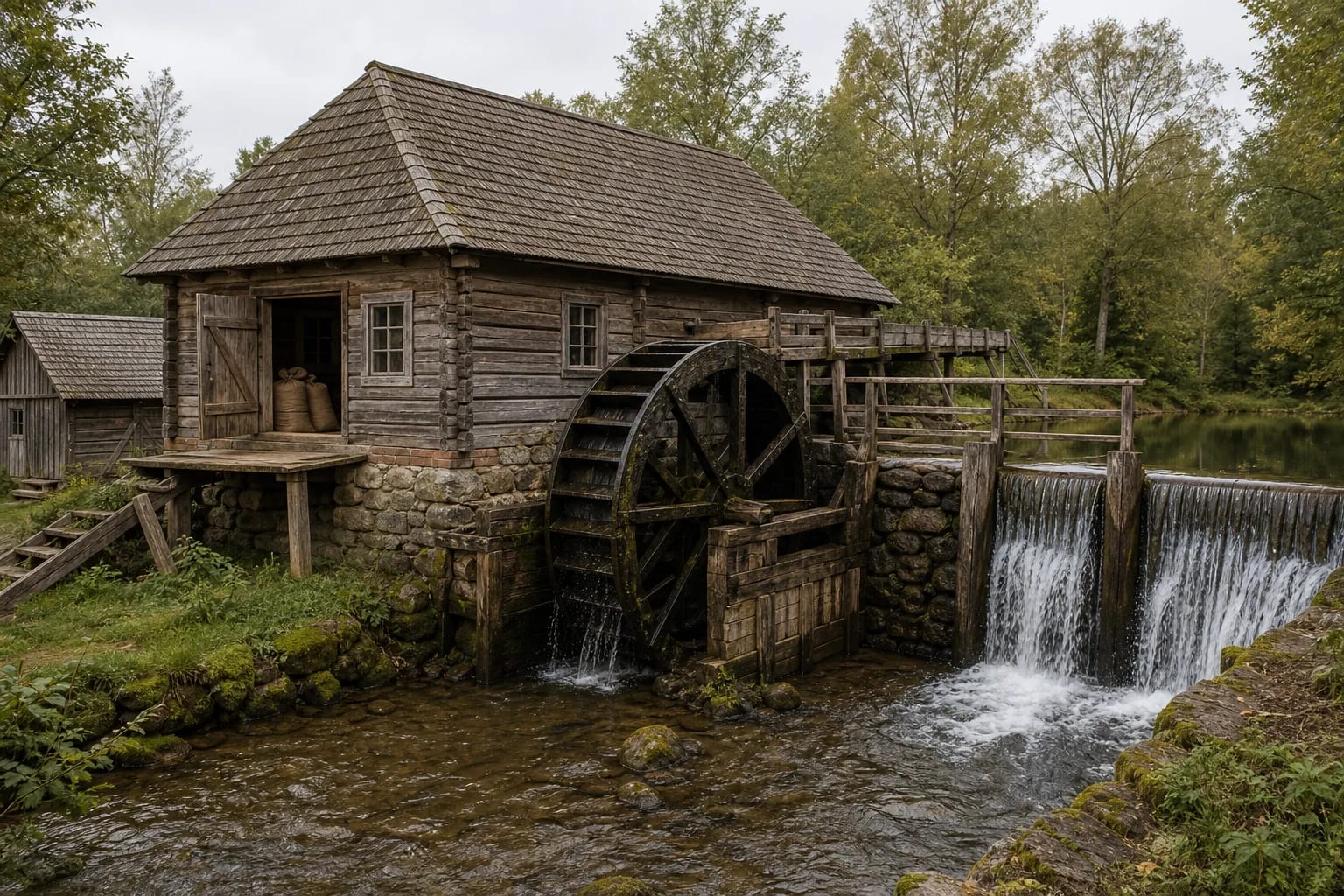
A watermill changed the landscape: it created a pond, road, bridge, and a place to which people brought grain.
Windmills
Windmills had several types. In a post mill the entire body turns toward the wind; in a cap mill only the upper part with the sails turns. These differences determine the building's appearance.
The sails, tall silhouette, and open position in the landscape made the windmill one of the most recognizable objects of traditional technology. According to VLE, post windmills were 2-3 stories high, up to 12 m, while cap mills were 3-5 stories high, up to 20 m; their sails were 8-12 m long and 2-2.5 m wide, and four-sailed mills were most common.
Heritage value
A mill should be protected as a whole: building, mechanism, millstones, sails, water system, road, and landscape. Without the mechanism it loses part of its meaning.
Traditional mills also help explain other production buildings, because sawmills, carding workshops, fulling mills, and smithies often gathered near them.