- Place
- Kaunas City Municipality
- Region
- Kaunas
- Type
- nineteenth-century Kaunas Fortress complex
- Address
- Pilviškių g., Kaunas
- Coordinates
- 54.86222, 23.87636
- Visit duration
- 45-75 minutes for the exterior grounds; longer only during an organised event or tour
- Best time
- a dry day in full daylight; check for announced tours or access restrictions before travelling
Fort II, Second Fort, Kaunas Fortress Fort No. 2
How to read the Second Fort
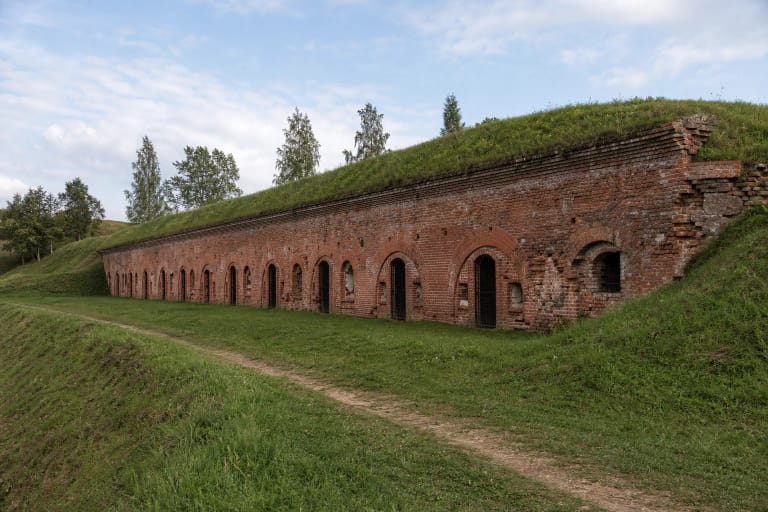
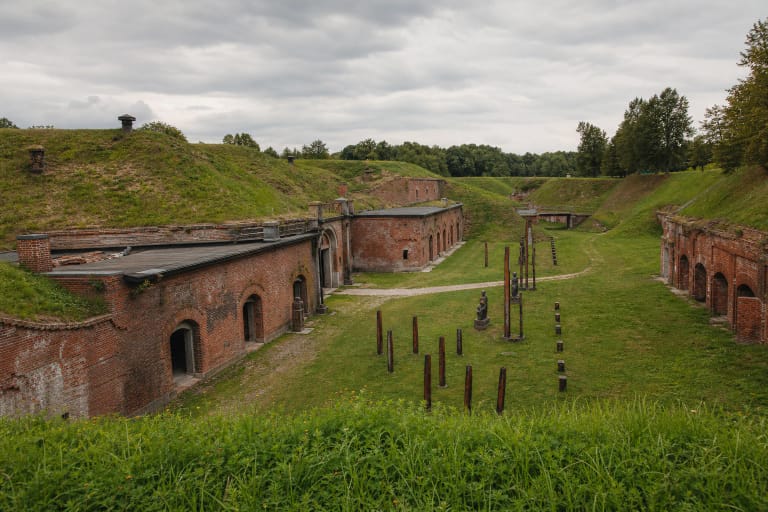
Fort II was built in 1882-1889 and reconstructed at the end of the nineteenth and beginning of the twentieth century. Its plan is a regular elongated hexagon with a strictly symmetrical layout. Barracks occupy the rear, artillery and infantry positions once stood on the defensive rampart, and casemates beneath it held ammunition.
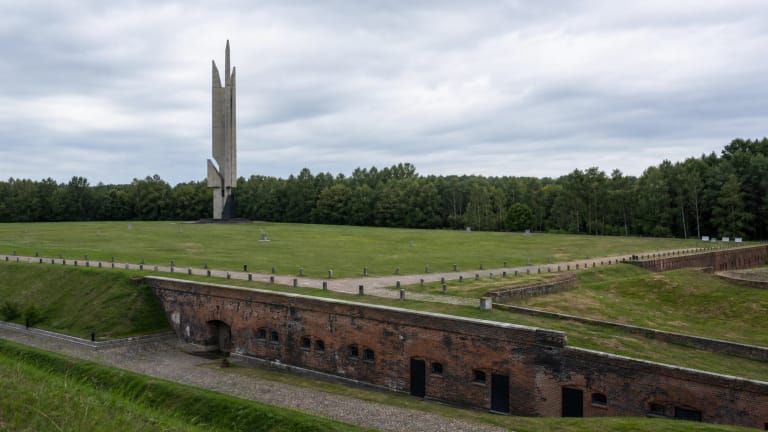
Underground passages known as posterns connected separate parts of the work. Caponiers and half-caponiers provided flanking fire along the ditch, while a vaulted red-brick counterscarp wall enclosed its outer edge. Later modernisation added functional concrete structures. From outside, look for the meeting of three distinct materials: shaped earth, red brick, and later concrete.
Why the Second Fort became a major battlefield in 1915
At the beginning of the First World War, Forts I, II, and III formed the particularly reinforced First Defence Sector of Kaunas Fortress. In August 1915 this sector faced the main force of the German assault. According to VLE, the weapons used against Kaunas included 420 mm mortars whose projectiles weighed about 920 kg and could travel 11-14 km. Nineteenth-century brickwork and early concrete could not offer sufficient protection against them.
The Kaunas Fortress Park history records hits on the Second Fort's kitchen, officers' casemate, and other structures. The garrison withdrew only after its ranks had been thinned and artillery shells and rifle ammunition had run out. VLE dates the German capture of Fort II to 16 August 1915; the city and fortress fell two days later. Visible breaks in the masonry are therefore evidence of a documented battle, not merely the result of long abandonment.
What happened after the First World War
Once its military role receded, the fort was reused in very practical ways. During the interwar housing shortage, its structures became a colony of low-cost flats. This was a stark reversal of the original purpose: damp, massive defensive rooms served as makeshift accommodation for residents with limited means.
During the Soviet period the fort stored military ammunition and vegetables, and it later stood abandoned. The current Kaunas Fortress Park description says that the site is being adapted for visitors and that trails and information boards are in preparation, but activation remains limited. Clean-up days, community events, lectures, tours, and hiking stops take place here rather than a daily museum programme.
What you can realistically see today
The fortification landscape itself is the main exhibit. From a safe exterior route, you can examine the geometry of the ramparts, lines of the ditches, red-brick walls, parts of the rear barracks, and artillery damage. Without a plan or guide, some grass-covered forms resemble ordinary hills, so reviewing the official structural description before travelling makes the visit much more legible.
This is not a restored castle or a permanently open museum. Dark openings, collapses, steep slopes, damp masonry, and underground voids can be dangerous. Grilles, barriers, and warnings mark boundaries that must not be bypassed. Enter interior spaces only when the responsible operator explicitly opens them for a particular event or tour and a guide accompanies the group.
Arrival, duration, and preparation
The fort stands in Julijanava by Pilviškių Street. The map coordinates mark the representative point of the Google listing within the complex, not a guaranteed open entrance or parking bay. Follow local traffic signs, do not block residential driveways, and do not drive onto the green fort grounds.
Allow 45-75 minutes for a safe exterior look. Choose a dry day and full daylight, wear closed footwear with a firm sole, and supervise children beside ditches and masonry openings. No permanent ticket office or daily opening hours are published. Check Kaunas Fortress Park channels for organised tours, events, temporary restrictions, and access news before setting out.
On 25 July 2026, the exact Google Maps listing held a rating of 4.5 out of 5 from 660 reviews. That substantial review count shows the site's visibility, but it does not remove the risks of an unrestored fortification. Personal safety matters more than reaching every part of the structure.