- Place
- Kaunas City Municipality
- Region
- Kaunas
- Type
- Kaunas Fortress fortification and landscape site
- Coordinates
- 54.86650, 23.78970
I Fort, First Fort
First Fort as a lesson in fortress relief
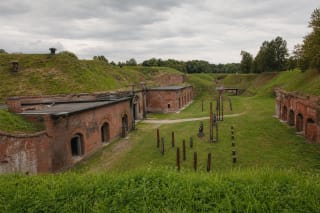
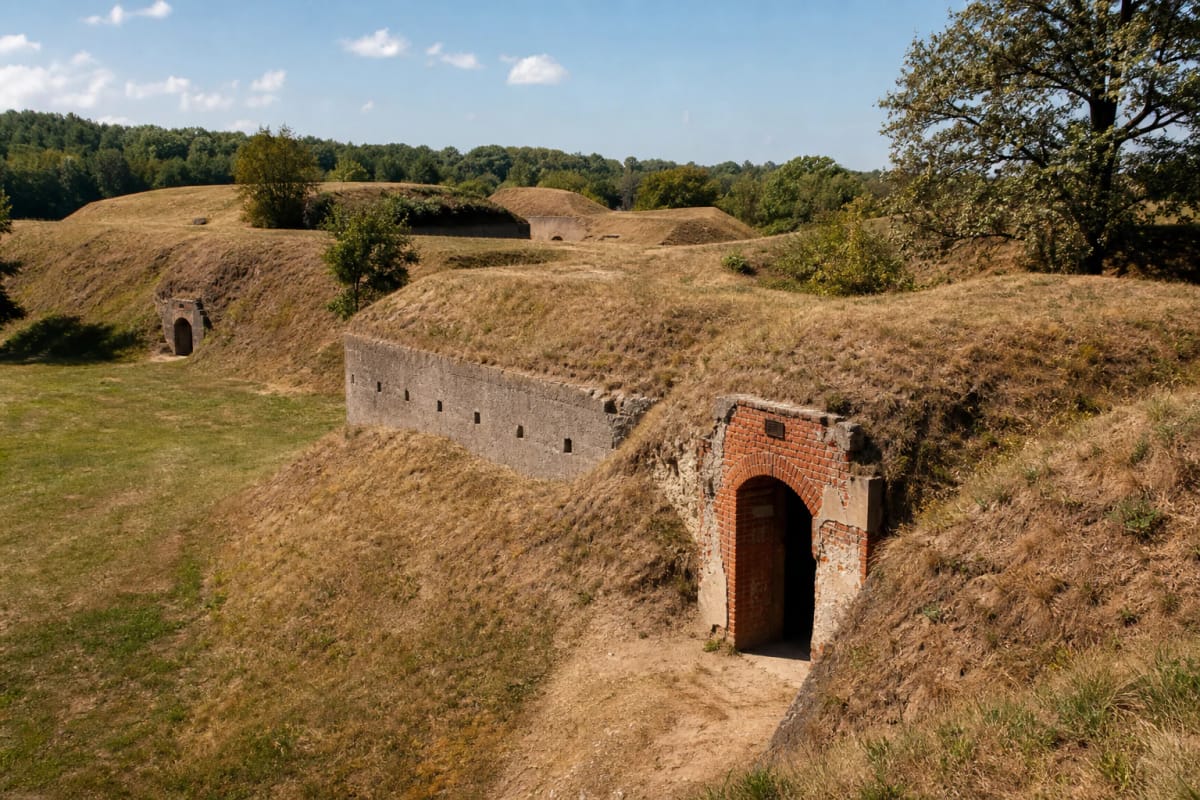
Kaunas Fortress First Fort is different from museum forts. The most important thing here is not display cases, but the landscape itself: earth ramparts, ditches, the fort's shape, and the way the defensive structure entered the western city edge near Kazliskiai. According to the Cultural Heritage Register, the fort is pentagonal in plan, with central and side posterns, corner and rear caponiers, a defensive ditch, and an almost unchanged glacis, or forward protective slope.
This kind of object is best for visitors who want to understand the Kaunas Fortress system physically. On a city map, the forts may look like separate points, but in the landscape it becomes clear that they were parts of a large defensive ring. The First Fort belonged to the first defensive sector of the fortress, encircling Kaunas from the west.
First Fort in the construction history of Kaunas Fortress
Kaunas Fortress began in 1879, when Emperor Alexander II signed the order for its construction, and the first seven forts, I-VII, were built in 1882-1890. The First Fort is one of the western forts on the left bank of the Nemunas, built of masonry and adapted for artillery and infantry defence. According to the Cultural Heritage Register, it was built in 1888-1889 and later strengthened in 1893 and 1908, when most of forts I-V were modernized with concrete.
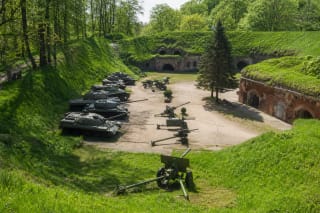
When visiting, compare the First Fort with the Sixth, Seventh, or Ninth Forts. This makes it easier to see how different places have gained different functions today: some hold museums, others are dominated by memorials, while the First Fort speaks more through the heritage landscape itself. VLE states that in the interwar period a gas chamber was installed in the First Fort, so this fort also has a difficult historical layer.
The logic of the Kaunas Fortress ring
The forts were built 0.5-2 km from the city boundary and 2-2.5 km from one another to close a continuous defensive ring. Kaunas, alongside Warsaw, Modlin, and Brest, was intended to become a first-class western-border fortress of the Russian Empire and withstand a long enemy siege of up to 180 days.
In August 1915 the German army, using 420 mm mortars, broke through the fortress defence; on August 16 the First Fort fell, and on August 18 the whole city and fortress were occupied. Standing by the First Fort ramparts, it is worth remembering that this engineering became powerless against new heavy artillery.
Safe visiting at Kaunas Fortress First Fort
Fortification sites can be dangerous: there are steep slopes, old structures, holes, and closed or unmaintained spaces. Visit the First Fort only in daylight, keep to clear paths, and do not enter dangerous places. Slopes are slippery after rain.
If you want deeper understanding, choose an organized fortress route or a specialist-led tour. Without context the fort can look like an overgrown hill, although it is actually a complex engineering object listed in the Cultural Heritage Register.
How to combine the First Fort with other Kaunas forts
The First Fort combines well with the Ninth Fort if you want to begin from a museum and memorial, or with the Sixth and Seventh Forts if you are interested in different ways the fortress has been reused. Such a route helps show that Kaunas Fortress is not one object, but a system of many forts, batteries, and defensive ramparts.
For a short visit, up to an hour is enough, but allow time for safe movement and orientation. This is more an outdoor heritage site than a traditional attraction with a ticket desk or clear exhibition.