- Place
- Kaunas City Municipality
- Region
- Kaunas
- Type
- historic fort
- Address
- 63B Lakūnų Road, Kaunas
- Coordinates
- 54.85038, 23.90713
- Visit duration
- 45-90 minutes; longer on a tour or during an event
- Best time
- daylight in dry weather; interiors at a pre-arranged time
Third Fort
A fort plan beneath the earthworks
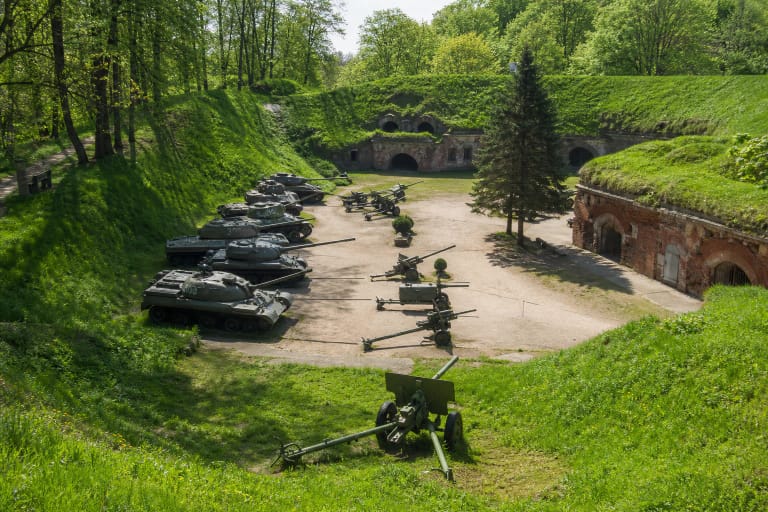
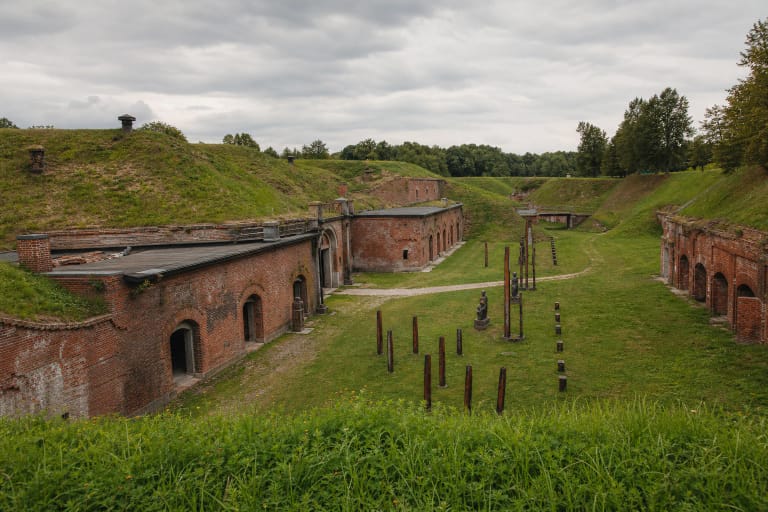
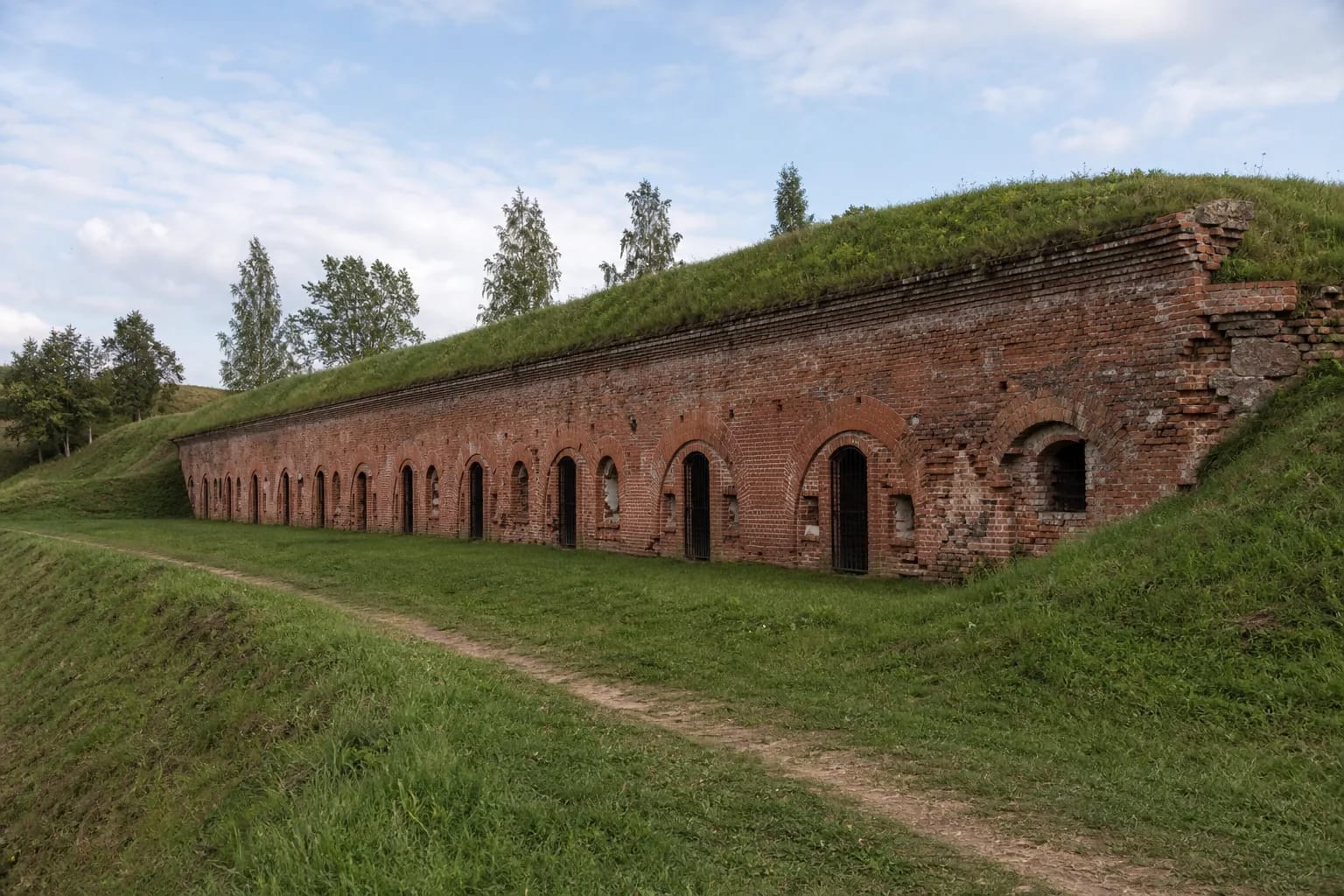
The Third Fort was built in 1882-1889 as part of Kaunas Fortress's first ring. Its plan is a regular elongated hexagon with a symmetrical composition. Barracks stand at the rear, artillery and infantry positions occupied the defensive rampart, and ammunition casemates lay beneath the earth.
Posterns connected the barracks and inner courtyards to the outer ditch. Caponiers and half-caponiers provided flanking fire, while a vaulted red-brick counterscarp wall enclosed the exterior. Read the site as a complete system of earth, masonry, and ditch, not as a collection of isolated ruins.
Modernisation before the Great War
The fort was strengthened around the turn of the 20th century as artillery changed. Most guns were moved from the ramparts to adjacent batteries, earthworks were thickened, and caponiers were reinforced with sand and concrete. Concrete intermediate half-caponiers were added above the barracks to fire across gaps between forts.
These changes expose two generations of fortification in one site: 19th-century red-brick vaults and later concrete defences. Material joints, blocked openings, and altered firing positions show how engineers tried to adapt an older fortress to more powerful artillery.
Scars of the 1915 bombardment
In early August 1915, during the German assault on Kaunas Fortress, the Third Fort came under heavy-artillery fire and resisted infantry attacks. On 16 August, after ten days of fighting, its garrison was among the last to withdraw from the attacked First Defence Sector.
Traces of 305- and 420-millimetre shell impacts, destroyed structures, and shell craters remain. They are documented battle evidence: do not climb damaged masonry or remove fragments. View them from the trail or with a guide who can distinguish actual battle scars from later decay.
From storage site to community fort
After the First World War, cheap housing occupied the fort. The German army stored food here during the Second World War; Soviet units later used it for ammunition storage until 1985. Kaunas Fortress Park and local volunteers have gradually reactivated the formerly abandoned grounds.
The fort now hosts tours, educational sessions, exhibitions, community festivals, and SteamPunk events; a Wellness Trail opened around it in 2024. Published administrative hours are weekdays 8:00-17:00, but they do not guarantee that every interior is open. Arrange tours and exhibitions in advance.