- Place
- Kaimelis, Šakiai District Municipality
- Region
- Suvalkija
- Type
- single-towered timber Catholic church built in 1860, with historic furnishings, a separate bell tower, and a stone churchyard wall
- Address
- Aušros g. 4, Kaimelis, Šakiai District
- Coordinates
- 55.06660, 22.80406
- Visit duration
- 25-45 minutes for the church and churchyard; about one hour when attending Mass
- Best time
- in daylight to examine the timber architecture, or before Sunday Mass at 10 am if you wish to see the interior respectfully
Kaimelis Church, Kiduliai Church, Kaimelio Šv. arkangelo Mykolo bažnyčia
A timber church on the left bank of the Nemunas
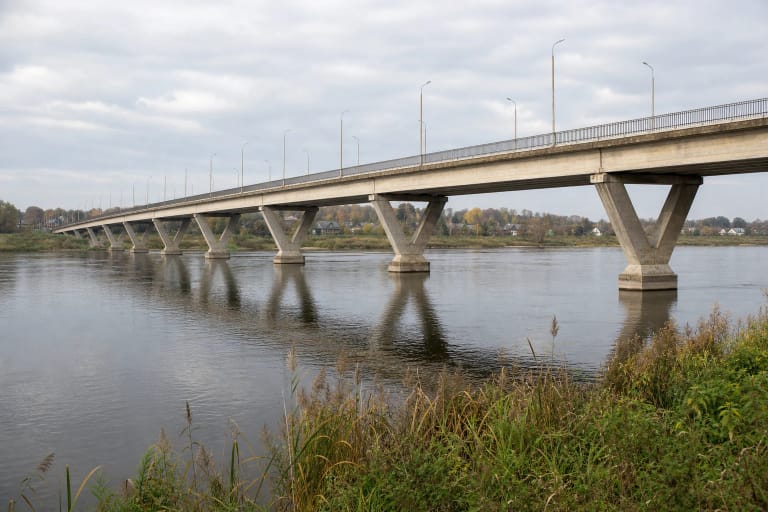
Kaimelis Church stands where the settlements of Kiduliai and Kaimelis approach the Jurbarkas bridge. It is roughly 3.5 kilometres from the Catholic church in Jurbarkas, yet crossing the Nemunas places you in Šakiai District and Suvalkija. That position makes it an easy addition to a route along the river.
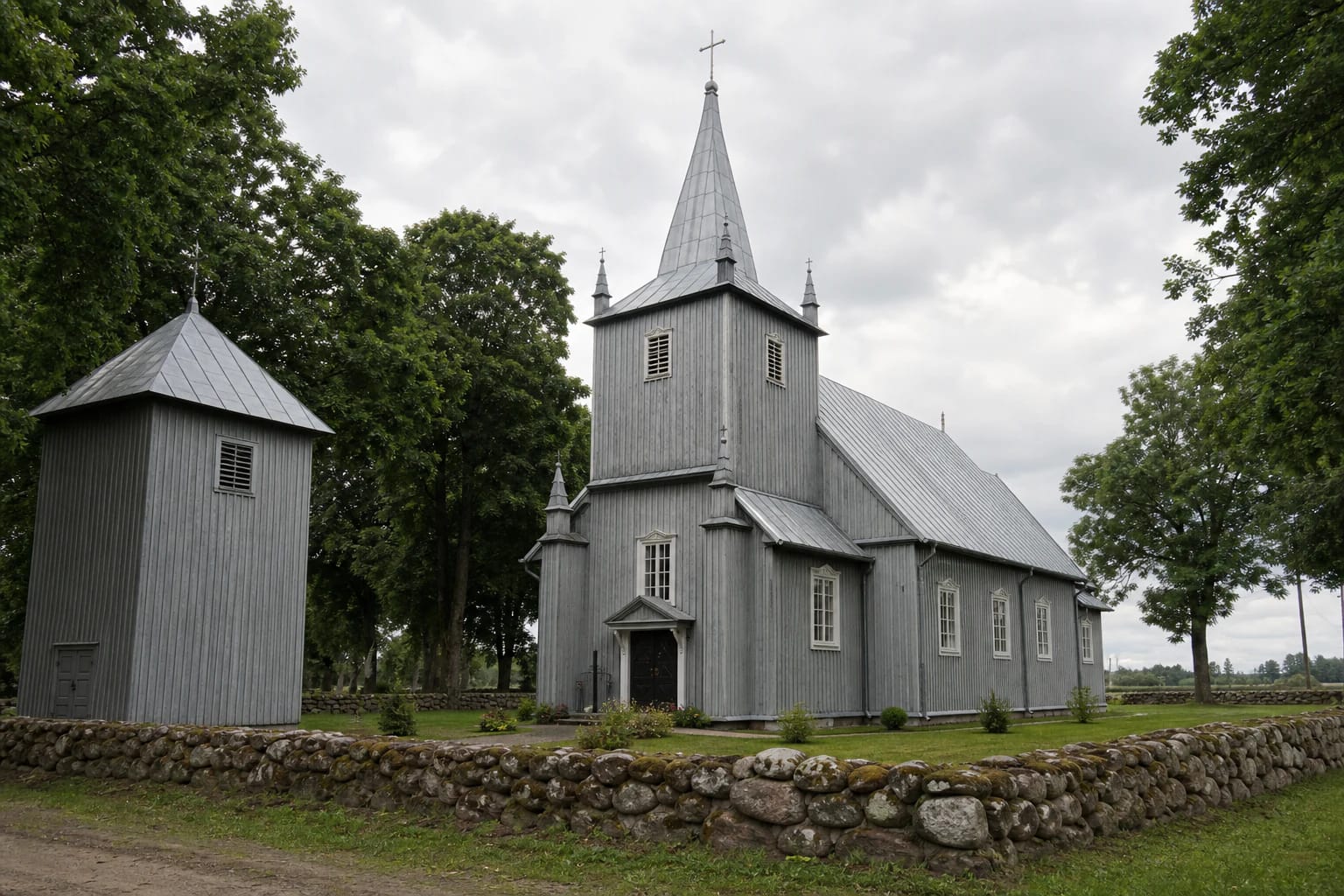
From the street you see a grey-clad rectangular timber volume, a high gabled roof, and the central tower rising over the principal facade. Vilkaviškis Diocese specifies seven pinnacles. A separate wooden bell tower stands alongside, and a low stone wall encloses the churchyard.
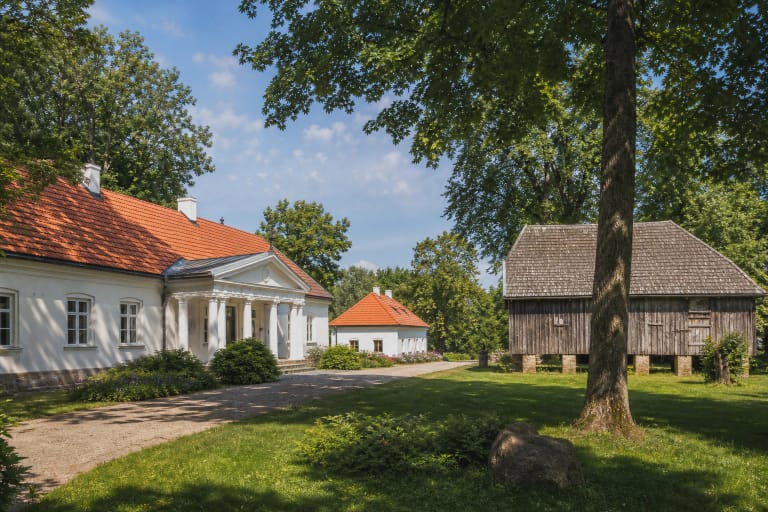
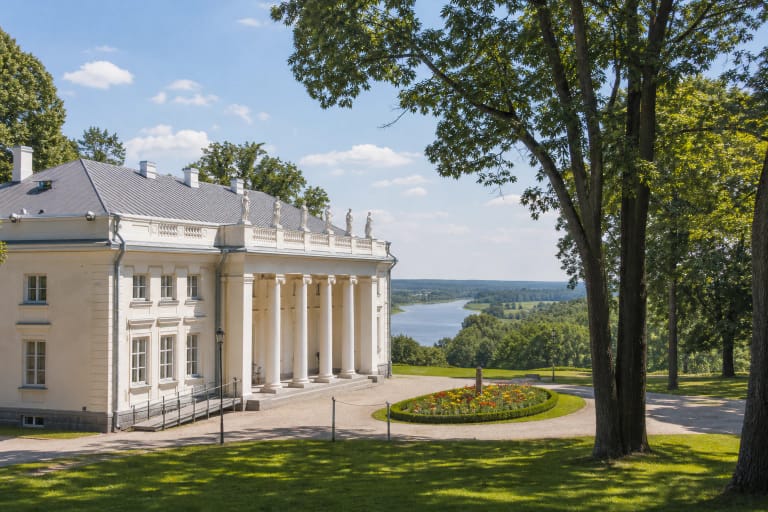
This is not a monumental city cathedral but a small active country church. Its qualities reveal themselves gradually: timber boarding, the silhouette of the pinnacles, mature trees, and the historic landscape of nearby Kiduliai Manor form a coherent piece of Užnemunė heritage.
From a 1636 estate chapel to a distinct community
Written sources first mention a chapel at Kiduliai Manor in 1636. It may have been used by Protestants for a period late in the 17th century. Tradition associates its consecration with 29 September 1685, but the diocesan history warns that Jonas Jeronimas Krispinas Kiršenšteinas, to whom the act is attributed, had not yet received episcopal ordination.
In 1703 a priest travelled from Jurbarkas to serve the chapel every third Sunday. In 1758 Bishop Antanas Dominykas Tiškevičius assigned it fourteen villages on the left bank of the Nemunas. The opening of baptismal and, later, marriage registers reflects the emergence of a more independent territorial community.
Ecclesiastical status changed more than once. In 1804 the church served 23 villages and 1,945 residents; early in the 19th century it became a filial church of Plokščiai. This complicated history explains why sources call the same place both Kiduliai Church and Kaimelis Church.
The 1860 church and its Historicist interior
The old chapel was used for worship until 1839 and demolished late in the 19th century. Benediktas Tiškevičius, owner of Kaimelis, built the present timber church in 1860. Auxiliary Bishop Juozapas Olekas consecrated it in 1885; repairs followed the Second World War, and conservation work was carried out in 2009.
Three Historicist altars occupy the presbytery and the fronts of the side aisles. Their present Neo-Baroque decoration is associated with the same unidentified workshop of Zanavykija joiners and carvers that worked in the churches of Slavikai, Plokščiai, Paluobiai, and Griškabūdis in the late 19th and early 20th centuries.
The pulpit, installed in 1843, was later remodelled and embellished with carving. The side altars preserve devotions to the Visitation of the Virgin Mary and Saint John of Nepomuk, while the parish's sacred-art catalogue identifies an upper-tier work as M. K. Čiurlionis's painting Saint Roch.
One of Lithuania's rarest chamber organs
A small instrument made in 1804 stands in the organ loft. An authentic inscription inside supports attribution to the Tilsit-born builder Theodor Tiedemann. The parish's published research describes it as the only documented and substantially authentic surviving work by this master in Lithuania.
The organ has one manual, six stops, and a Baroque case. It once included a rotating star of bells, or cymbelstern, but only the star and the opening for its stop mechanism survive. The case, little more than two metres high, resembles a domestic chamber organ rather than the instrument of a large church.
In 2019 the parish reported that the organ was unplayable and required professional restoration. As its condition may since have changed, do not infer its present state from that older appeal and never touch the instrument. Any close organ visit must be arranged with the parish.
Mass, access, and the address discrepancy
In 2026 Vilkaviškis Diocese listed Mass at 10 am on Sundays, 6 pm on Wednesdays and Fridays, 9 am on Thursdays, and 11 am on Saturdays. The parish website also gives a timetable that varies with the season, so check the latest notices before a special journey or call +370 345 62212.
There is no tourist ticket or permanent sightseeing timetable. The interior is most reliably accessible shortly before an advertised service, but visitors must not disrupt preparations or worship. Arrange a group, art, or organ visit in advance; the exterior and churchyard can be seen quietly during daylight.
Google Maps marks the entrance as Aušros g. 4, whereas the diocese and parish use Vilties g. 4. Both references lead to the same church and presbytery complex in Kaimelis, so the safest navigation method is the church's exact name or the map pin on this page.