- Place
- Smiltynė, Klaipėda City Municipality
- Region
- Curonian Spit
- Type
- forested Great Dune Ridge summit and memorial site
- Address
- Hagen's Dune, Smiltynė, Klaipėda
- Coordinates
- 55.68245, 21.12215
- Visit duration
- 30-60 minutes; longer when combined with a walk through Smiltynė
- Best time
- a bright morning or afternoon when forest paths are dry; leafless months may reveal more of the view
Hagen's Hill, Aukštasis kalnas, Hagen's Höh
Hagen's Dune in Smiltynė: what to expect
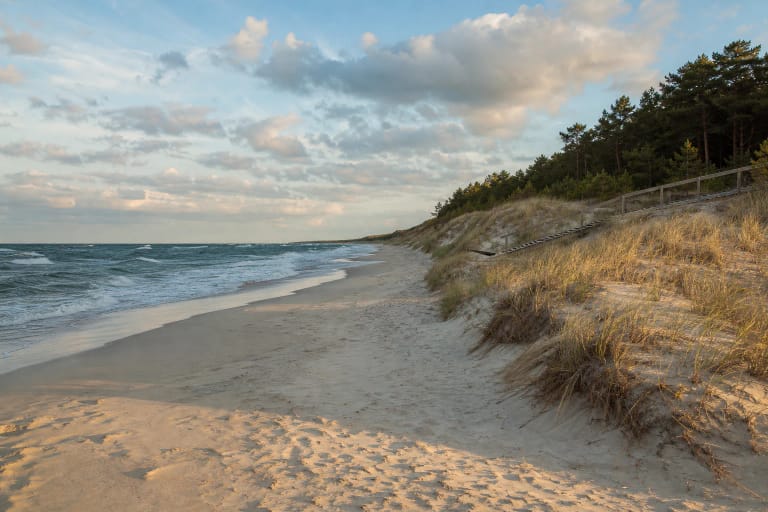
Hagen's Dune lies in Smiltynė at the northern end of the Curonian Spit. The official Lithuanian national park guide calls it Hageno kalnas or Aukštasis kalnas and gives an elevation of 36.4 m; VLE rounds the figure to 36 m. It is one of the higher dunes in this part of the spit, but it looks nothing like the exposed white dunes near Nida or in the Nagliai Nature Reserve.
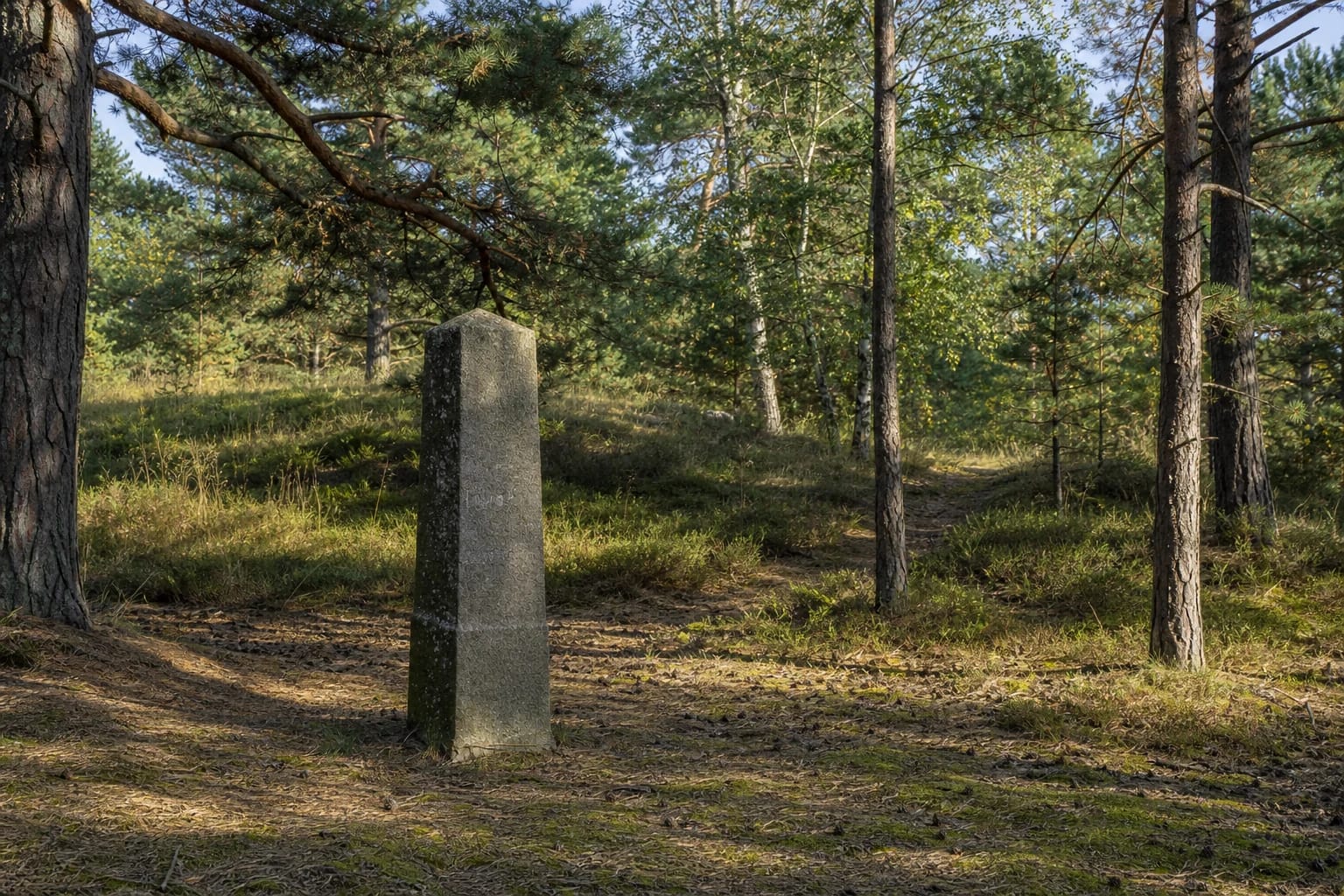
Forest covers the summit and slopes, and the main landmark is a narrow granite memorial in a small clearing. Come here not for a desert of sand but to read the landscape: beneath the pines and forest floor is a wind-built dune stabilised through sustained human work.
The Great Dune Ridge, not the coastal protective dune
Hagen's Dune is easily confused with the protective ridge beside the Baltic, but these are separate parts of the Curonian Spit's relief. VLE describes their order from sea to lagoon: beach, foredune or protective beach ridge, palve plain, Great Dune Ridge, lagoon-side palve, and lagoon shore. Hagen's Dune belongs to the forested Great Dune Ridge.
The protective coastal ridge runs closer to the Baltic and was formed as a barrier against windblown sand. The National Park Directorate dates the professional beginning of sand stabilisation to 1802; between 1810 and 1865, Klaipėda's magistrate rebuilt the ridge and planted individual dunes at Smiltynė. By 1904, roughly 98 km of protective ridge had been formed along the spit. Hagen's Dune belongs to the same long story of resisting moving sand, but it is not that seaward barrier.
Ludwig Hagen and the granite memorial
The park guide identifies the man commemorated at the summit as Ludwig Hagen (1829-1892), a Klaipėda Port construction inspector. He supervised afforestation in the northern Curonian Spit from 1886 to 1890. Klaipėda City Municipality adds that Hagen drew up expansion plans for major German ports and Klaipėda between 1876 and 1892 and taught at the Berlin Academy of Architecture.
The modest granite pillar carries Lithuanian and German dedications: 'In Memory of Ludwig Hagen. Hagen's Hill' and 'Zum Andenken an Ludwig Hagen. Hagen's Höh'. It commemorates a person and the dune-planting effort; it is neither an observation tower nor a large sculptural ensemble. The object is also marked with Klaipėda's maritime-heritage sign.
The sources can create a naming trap. In its wider account of the coastal protective ridge, the National Park Directorate separately mentions recommendations by G. Hagen, while its guide explicitly links the summit memorial to Ludwig Hagen (1829-1892). This page does not merge those two references into a single biography.
Wartime traces and the protected Hagen Ridge
The Curonian Spit National Park guide says trenches cross the slopes of Hagen's Hill because German forces established a defensive position here during the Second World War. These are traces in the forest terrain, not a visitor-ready military exhibition, so do not dig, disturb the ground, or leave permitted paths in search of objects.
Hagen Ridge Geomorphological Reserve was established to protect the hill and the surrounding dunes of the Great Dune Ridge. The wider Curonian Spit landscape was inscribed on the UNESCO World Heritage List as a cultural landscape in 2000. That status concerns the valuable system of the whole spit; it does not make the Hagen memorial a separate UNESCO-listed object.
A designated viewpoint without a promised panorama
The List of Observation Points for Lithuania's Most Valuable Landscape Panoramas, published through E-TAR, records the site as the Hagen's Hill viewing area. The planning document's LKS-94 point identifies the wider ridge, so this page uses the mapped memorial and viewpoint node to position the pin more precisely. It marks the visitor site, not a car park or the beginning of a trail.
The checked official sources do not confirm an observation tower or elevated platform at the summit. Trees cover the dune, so views of the lagoon, port, or spit depend on the exact position, foliage, and current forest management. Walk to Hagen's Dune for its wooded relief, memorial, and stabilisation story; treat a wide panorama as a possible bonus, not a promise.
How to visit Hagen's Dune
Hagen's Dune is in the Smiltynė forest south of the main settlement, with the New Ferry Terminal the nearest ferry approach. No authoritative source checked for this page publishes a dedicated Hagen's Dune trail length, so plan with the mapped site point, signs on the ground, and paths currently open to the public. A short visit to the dune and memorial normally takes 30-60 minutes, but that is an editorial estimate rather than an official route time.
No separate admission ticket or set opening hours were found for the dune and memorial. Ferry travel, vehicle transport, or parking may carry charges, so check the official ferry schedule and current prices before setting out. Stay on permitted paths, avoid disturbing sandy slopes, and protect the forest floor.
The approach crosses uneven forest relief and may be sandy, rooted, or wet; no confirmed step-free route to the memorial was found. If accessibility is important, contact the Curonian Spit National Park visitor centre before travelling and ask about current path conditions.