- Place
- Klaipėda City Municipality
- Region
- Klaipėda
- Type
- memorial to seafarers and sunken ships
- Address
- Smiltynės g. 3, Kopgalis, Klaipėda
- Coordinates
- 55.71753, 21.10210
Those Who Sailed and Never Returned, Albatrosas Monument
A harbour-side marker of remembrance
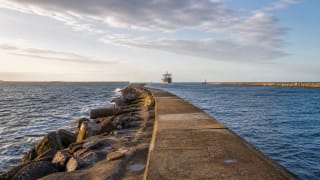
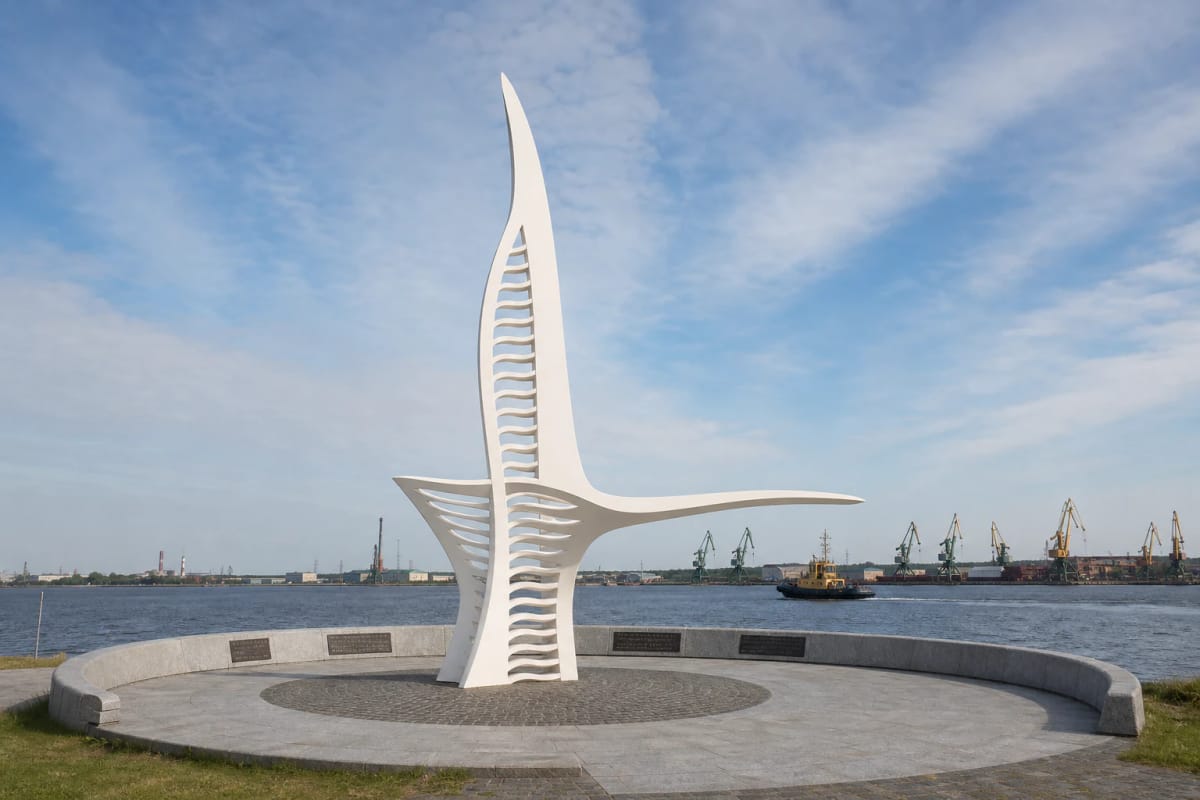
The Albatross Monument stands at Kopgalis on the lagoon quay in Smiltynė, beside the Lithuanian Sea Museum. Its location matters: ships continually move through Klaipėda harbour opposite, so the memorial directly faces the route by which seafarers depart and return.
Its official dedication is to Lithuanian seafarers who died and ships that sank. The remembrance extends beyond merchant crews to fishermen and recreational sailors - all those who put to sea and never came back.
How the monument began
The Lithuanian maritime journalists' club Marinus proposed commemorating loss at sea in Smiltynė. On September 6, 2007, the Minister of Transport and Communications formed a working group, and on April 11, 2008, Klaipėda State Seaport Authority signed a contract with sculptor Klaudijus Pūdymas and architect Mindaugas Zabarauskas.
The two authors developed the concept, model, and technical design. A government decision approved construction in December 2008, but the unveiling initially expected in 2009 was delayed. The white-metal composition was erected on October 17, 2011, and officially unveiled on December 3 that year.
Klaipėda State Seaport Authority implemented the project with Western Shipyard. That partnership is symbolically apt: not only artists and public institutions but the city's shipbuilding community helped make the memorial.
A 12-metre bird shaped by wings and waves
VLE gives the monument's height as 12 m, while the Seaport Authority describes it as a metal-sheet sculptural composition more than 10 m tall. From a distance, it reads first as an albatross rising upward, but its repeated horizontal cuts also suggest the rhythm of waves.
The albatross was chosen as a symbol of courage and freedom, a seabird that endures storms and accompanies ships. White surfaces sharpen the silhouette against lagoon water, harbour cranes, and sky, while its vertical scale makes it a quay landmark.
Granite plaques in the memorial setting record the names of Lithuanian seafarers, fishermen, and sailors who did not return, together with the names of sunken ships. Look beyond the bird silhouette and read the remembrance space at ground level.
A living tradition of maritime remembrance
Albatross is not only an object installed in 2011. Before the annual Sea Festival, remembrance ceremonies gather the maritime community, public institutions, and organisations here; wreaths are laid, music is performed, and a minute's silence honours people lost to the sea.
Klaipėda State Seaport Authority says the ceremonies remember more than 20 Lithuanian ships and roughly twice as many people who died at sea. The wording and list may be refined over time, but the tradition restores individuals and vessels to the city's public memory.
Since 2013, the monument's form has also been used for Klaipėda's Albatross maritime-culture award. A reduced sculpture is presented to people and organisations for their contribution to maritime culture, with the ceremony held beside the memorial - connecting loss with the continuation of living traditions.
How to visit the monument
The monument stands in an open quay area and has neither a separate ticket nor fixed visiting hours. Reach Smiltynė by ferry; from the Old Ferry Terminal, continue to Kopgalis on foot, by bicycle, or seasonal local transport. Check current timetables and prices before travelling.
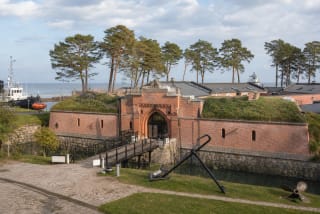
A focused stop takes 20-40 minutes, but the memorial combines naturally with the Lithuanian Sea Museum, Nerija Fort, and the Kopgalis waterfront. In the evening or at quieter times, it is easier to read the inscriptions and experience the place as a memorial rather than only a photo stop.
Do not climb on the sculpture or plaques, and do not disrupt official ceremonies. The quay is exposed to wind, so dress warmly outside summer and take care beside the water.