- Place
- Klaipėda City Municipality
- Region
- Klaipėda Region
- Type
- maritime museum, aquarium, and dolphinarium in Nerija Fort
- Address
- Smiltynės g. 3, Klaipėda
- Coordinates
- 55.71700, 21.10000
Sea Museum, Nerija Fort
Lithuanian Sea Museum: why go
The Lithuanian Sea Museum is more than an aquarium. It is set in Smiltynė, at the beginning of the Curonian Spit, in the historic Nerija Fort, so a visit combines a ferry crossing, coastal landscape, fortification, maritime history, and animal displays.
It is one of Klaipėda's most convenient family attractions, but it is not only a children's outing. The museum explains Lithuania's relationship with the sea: from shipping and fishing to the Baltic ecosystem, the aquarium, and modern educational programmes.
The Lithuanian Sea Museum and Nerija Fort
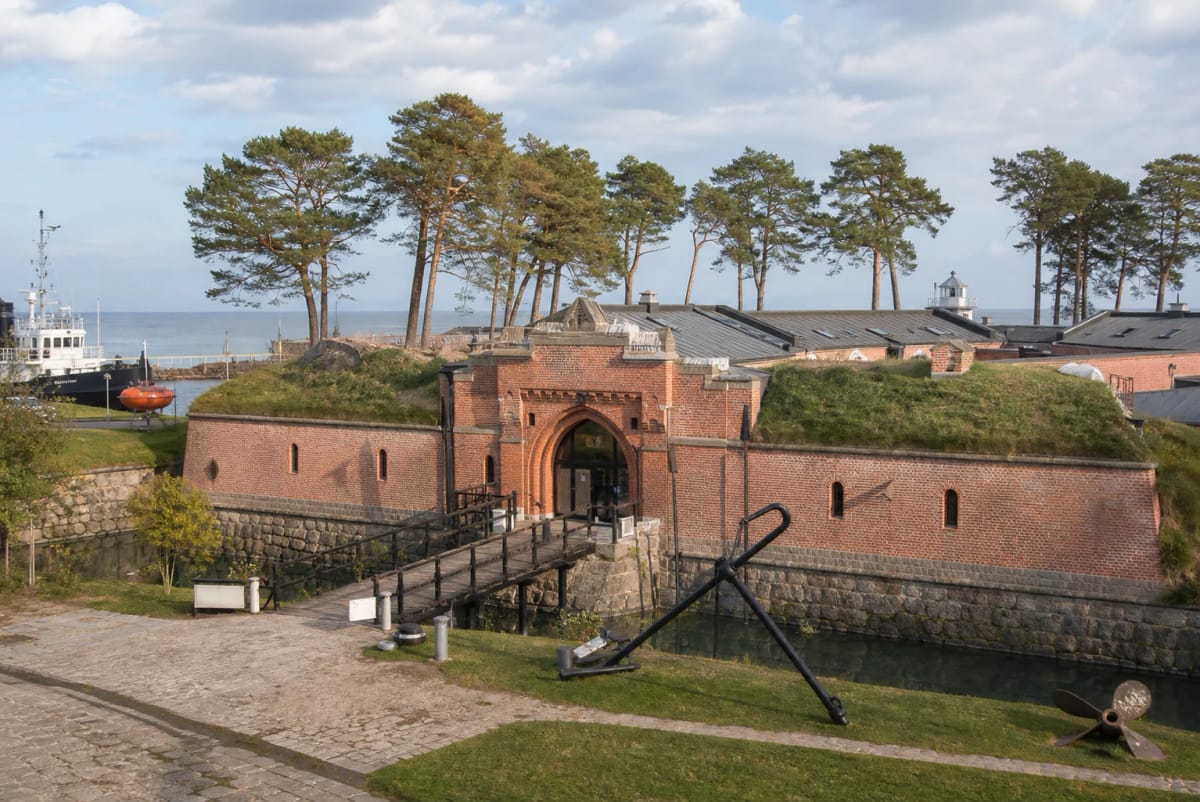
The official museum states that construction of Nerija Fort was begun by the Prussian army in 1864 and completed by Germany in 1871. It was part of the coastal defence system guarding the entrance to Klaipėda. The museum stands at Kopgalis, in northern Smiltynė, at the beginning of the Curonian Spit.
During the Soviet period and later, the fort's function changed. According to VLE, the Lithuanian Sea Museum was established in the reconstructed Nerija Fort in 1975 and ceremonially opened on July 28, 1979. Today's visitor therefore walks not through a neutral exhibition box but through a real fortification object. The museum complex covers about 13 ha, with 2,500 sq m of exhibition halls and 9,000 sq m of outdoor display.
The aquarium and exhibitions
The aquarium is installed in the spaces of Nerija Fort. VLE states that 25 aquariums contain about 180 species of marine cold-water, coral-reef, and freshwater fish and invertebrates. After the 2014-2017 reconstruction, an 18 m acrylic tunnel was installed, above which sturgeons nearly two metres long swim. The museum's total holdings exceed 98,200 exhibits, including a 20,000-item shell collection.
In the maritime-history part of the museum, you will find themes of shipping, fishing, navigation, coastal life, and maritime culture. Larger outdoor exhibits are also important: the ship-museum M52 Sūduvis, an authentic naval vessel; a floating kurėnas built in 2001; an ethnographic coastal fisherman's homestead; and a square of old fishing vessels, all working together with the fort architecture. The Baltic Sea Animal Rehabilitation Centre, which cares for seals and birds, also operates at Kopgalis.
Dolphinarium and shows
The dolphinarium is a separate part of the museum experience. VLE states that it was built in 1993 and opened in 1994 to a design by architect Petras Lapė. It houses Black Sea bottlenose dolphins; in 2010 the dolphinarium was reconstructed, and a dolphin-therapy centre for children with autism also operates. Programme times and tickets may differ from the aquarium or museum visit, so check the official page before travelling.
If travelling with children, the dolphinarium programme often becomes the main point of the visit. If your priority is history and exhibitions, the dolphinarium can be treated as an additional but not essential part.
How to get to the Lithuanian Sea Museum
The museum is in Smiltynė, so from Klaipėda you must cross by ferry. Pedestrians and cyclists usually use the Old Ferry Terminal, while cars use the New Ferry Terminal, but specific procedures and schedules can change.
In summer, plan extra time: ferries, car queues, parking, and tickets can become a significant part of the trip. The museum's official arrival page is the best source before departure.
How much time to spend
Allow at least 2 hours for the aquarium and main exhibitions alone. With the dolphinarium, outdoor exhibits, and a walk in Smiltynė, the visit easily takes half a day.
If you are visiting for the first time, do not treat the museum as a short stop between other Neringa sights. It works better as a full Klaipėda day route.
What to see nearby
The easiest combinations are Smiltynė beach, Kopgalis, a walk to the pier, or a longer journey into the Curonian Spit. If you stay in Klaipėda, it pairs well with the old town and Danė quays.
For wider seaside context, this theme connects well with Ventė Cape, Olando Kepurė, and the dunes of the Curonian Spit. Maritime history then meets both natural and cultural landscape.