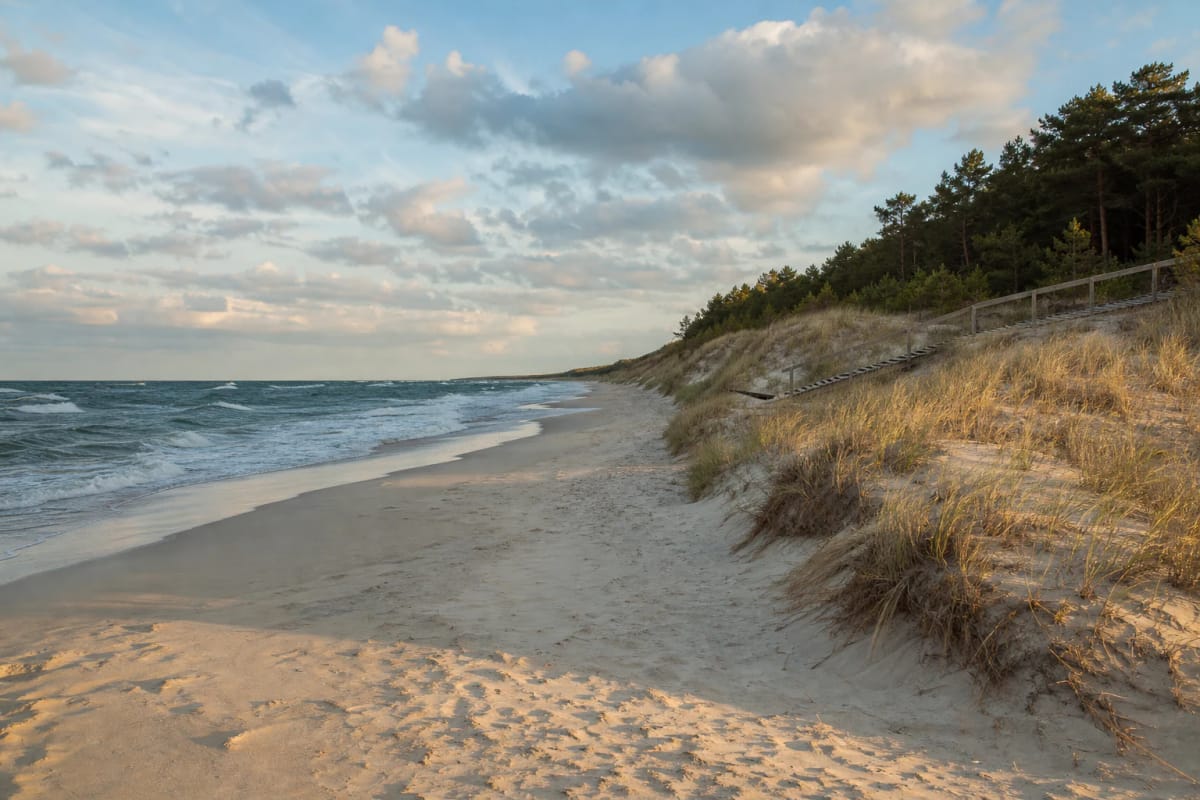
What makes Smiltynė Beach different
Smiltynė Beach belongs to Klaipėda, yet the Curonian Lagoon separates it from the city centre. The journey begins by ferry, continues through pine forest, and only then reaches the Baltic Sea, so even a short visit feels like a distinct excursion.
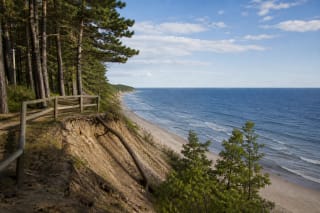
Three parallel bands define the place: the sandy shore washed by the sea, a protective dune ridge, and forest growing behind it. Use the designated dune crossings because the ridge is not simply a scenic viewpoint - it is a vulnerable coastal-protection system.
Smiltynė I and Smiltynė II beaches
Klaipėda City Municipality officially distinguishes Smiltynė I and Smiltynė II, and monitors bathing-water quality during the season. The main Smiltynė I access is at 55.697013, 21.099744, about 1.4 km from the Old Ferry Terminal, and is convenient on foot or by bicycle through the pine forest.
Smiltynė II lies farther south at 55.676667, 21.103187, about 1.9 km from the New Ferry Terminal. It is the more practical direction when bringing a car, although ferry and parking queues matter at summer peaks. Both zones belong to the same long coast, but their access logistics differ.
A dune ridge built by people
The beach landscape you see today is not solely the result of natural processes. The Curonian Spit National Park Directorate dates the professional start of sand stabilisation to 1802 and records that Klaipėda's magistrate restored and planted the protective ridge at Smiltynė between 1810 and 1865.
Workers formed the ridge by placing rows of brushwood and stakes along the shore, allowing windblown sand to accumulate, and then planting marram grass and sand couch. These plants tolerate burial and hold sand with their roots. Work has continued in different phases for more than two centuries, which is why boardwalks and restrictions on dune trampling protect functioning infrastructure.
From postal road to Klaipėda resort
Smiltynė's leisure tradition predates its present beach facilities. The National Park Directorate links the settlement's development to the old postal road and the Sandkrug inn that stood on a dune and gave the locality its historic name.
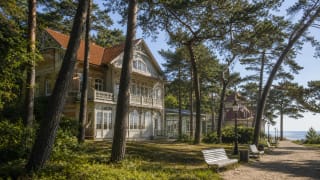
In the early twentieth century, Klaipėda merchants built a kurhaus, and promenades, leisure paths, pavilions, arbours, and villas for city residents appeared. The paths through the forest to the beaches were part of this resort design, and today's walk from lagoon to sea still follows the same spatial sequence.
Planning a swim or coastal walk
Check Klaipėdos paplūdimiai information for bathing-season dates and lifeguard duty hours. Before travelling, also check water quality, warning flags and ferry schedules; a summer date alone does not guarantee lifeguard cover.
The public beach is free to visit; separately booked services are not included. Check beach visiting terms with its administrator and ferry or vehicle-crossing fares with the carrier. Main beaches have public toilets and changing cabins in season; confirm availability on site. Pets are allowed only in designated areas, and grills and alcohol are prohibited on the beach.
For a quieter visit, come in the morning or on a weekday, and carry sun and wind protection as well as water. Outside summer, Smiltynė is excellent for a long walk, but keep a safe distance from the water and pier in stormy weather.