- Place
- Kretinga District Municipality
- Region
- Samogitia
- Type
- forest-clearing chapel with a spring, stone and sacred landscape markers
- Address
- Daubėnai village, Darbėnai eldership, Kretinga District Municipality (Joskaudai/Kadagynai Forest, Erškėtynas site)
- Coordinates
- 55.98367, 21.22653
- Visit duration
- 45-90 minutes
- Best time
- in daylight and drier weather; Pentecost and feast days are busier
Erškėtynas Chapel by the spring, Erškėtynė Chapel
A chapel in a forest clearing
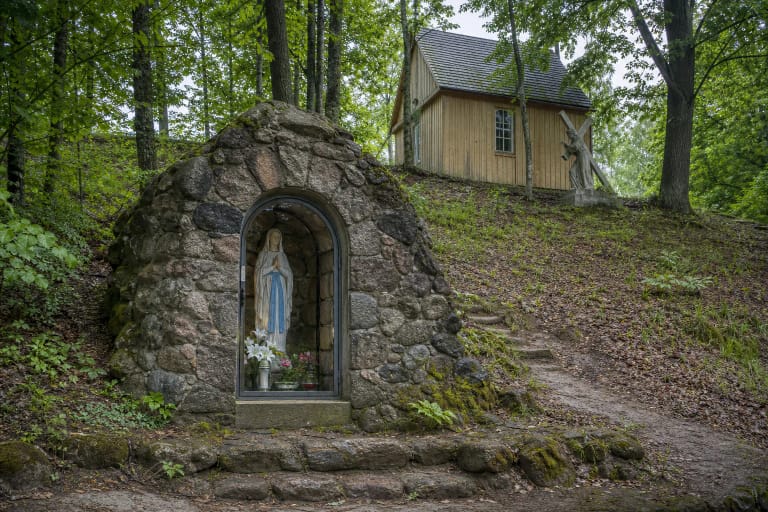
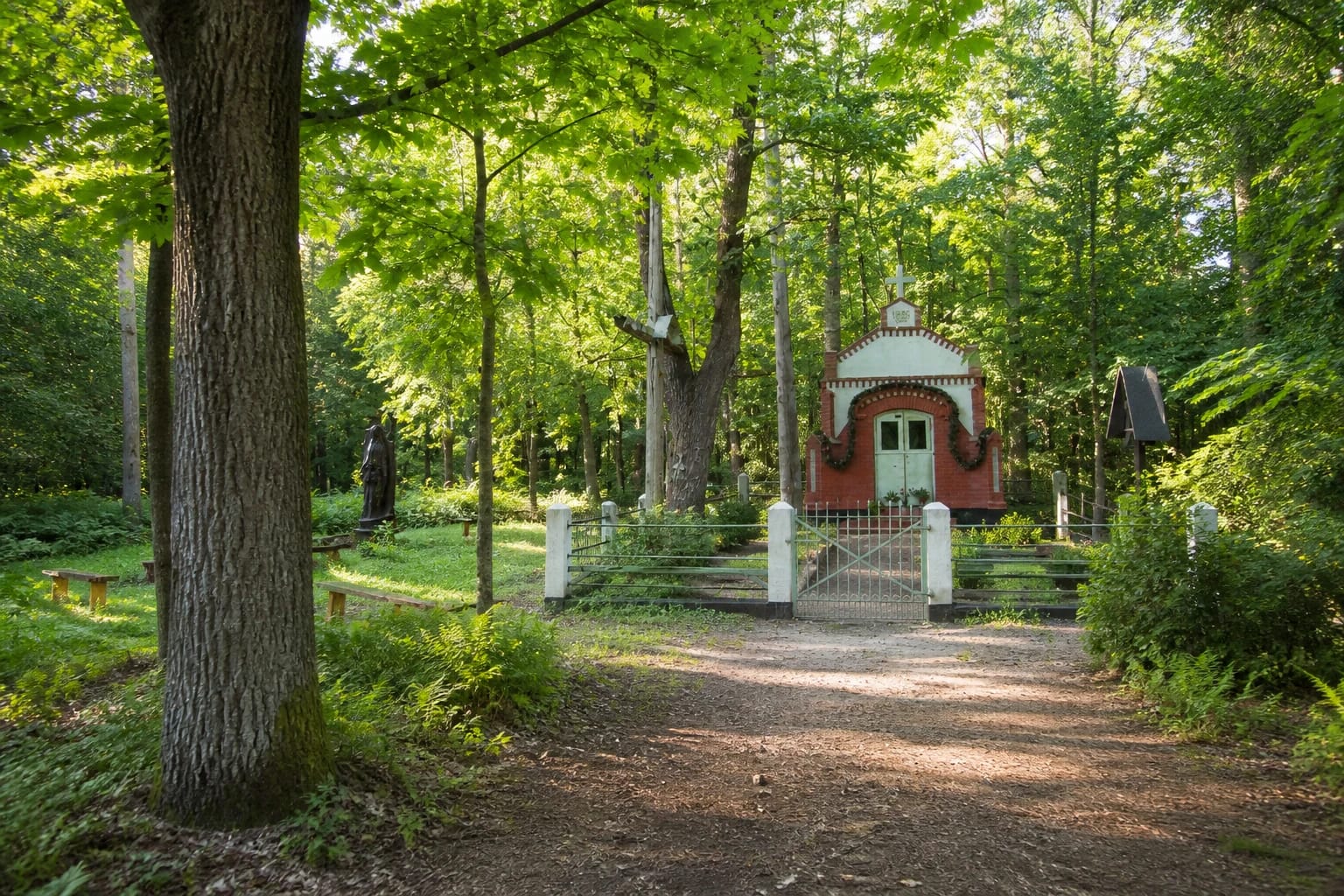
Erškėtynas Chapel lies in the Joskaudai and Kadagynai forest near Daubėnai, where a visitor arrives by woodland track and clearing rather than by a settlement street. The main landmark is a small rounded red-brick chapel with a pale gable, cross and low fence.
The destination is one connected place made up of the chapel, spring, stone, crosses and other memory markers. Plan it as a short sacred-landscape walk rather than as a photograph of a building alone; the woodland setting is part of what visitors come to experience.
The coordinates 55.983675, 21.226533 mark the chapel-and-spring site. A forest track can be rough or wet after rain, so reaching the gate by car may be uncomfortable.
A story of apparitions and heritage
The Kretinga Encyclopedia relates that in 1926 Barbora Dirvonskaitė-Pocienė saw the Virgin Mary by the stone from which the spring emerged. A wooden chapel followed that year, and in 1930 Vytautas Riepšas of Darbėnai built the larger masonry chapel.
The place was entered in the Cultural Heritage Register in 1993 under unique code 15056. Accounts of an older pagan temple should be treated as local legends and interpretations, not as an established archaeological fact; the documented twentieth-century chapel story is the firmer basis for a visit.
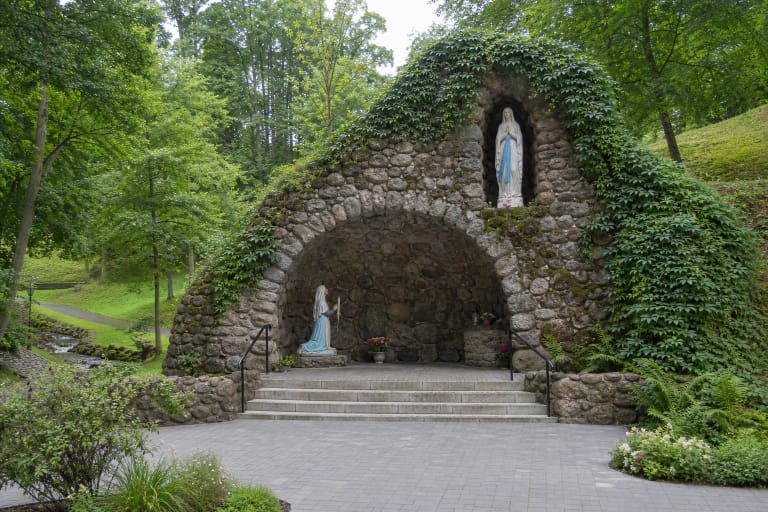
The clearing also carries traces of the pilgrimage setting formed around the chapel: paths, trees, crosses and places to pause. These features explain the destination's continuing meaning without turning local devotional memory into a verified ancient temple.
Inside the chapel and around it
The exterior has red fired-brick masonry, a rounded composition and pale gates, while the clearing includes trees, ferns, benches and small shelters. Visitors can pause in this setting even when the chapel interior is closed.
Inside are a wooden Crucifix, an unknown-maker Mary of Grace, and an image of Saint John Nepomuk. Access depends on the local community or a religious event, so do not touch sculptures or candles and accept an exterior visit when the door is closed.
The spring and stone belong to the same devotional setting, not to a separate attraction. Walk gently around the clearing, keep the woodland clean and let people who come to pray use the quiet spaces around the chapel.
The spring, stone and living tradition
The spring rises beneath a stone beside the chapel and is now surrounded by a well ring and concrete paving. Local tradition says people washed their eyes and faces there hoping for health or spiritual refreshment, but this is belief rather than medical evidence and the water should not be treated as guaranteed drinking water.
Kraštogidas gives the stone as about 2.2 m long, 1.6 m wide at ground level and 1.3 m high, with a black-granite memorial of the Virgin Mary. Pentecost and other feast days bring more visitors, candles and flowers, so leave the water clean and respect people who are praying.
The spring is part of a living religious tradition, but it is not certified as drinking water or medicine. Follow existing paths and leave candles or flowers only where the local community already places them.
A practical Erškėtynas visit
Visit in daylight, when you can assess the woodland track and read any local information safely. A fixed chapel timetable, toilet, or shop is not published, so bring water and plan for a self-directed woodland stop rather than a fully serviced attraction.
Allow 45-90 minutes for the chapel, stone, spring and clearing, with sturdy shoes after rain. Before travelling, check whether the track is passable and whether the chapel is open; do not assume that spring water is safe to drink.
Leave extra time for the forest approach and treat the clearing as a self-directed sacred stop. A quiet visit is easiest outside major feast days, but local worship and conditions can change the experience.