- Place
- Dubingiai, Molėtai District Municipality
- Region
- Aukštaitija
- Type
- active contemporary timber Catholic church built in 2012-2018 within a historic churchyard
- Address
- 2 Radvilų Street, Dubingiai, Molėtai District Municipality
- Coordinates
- 55.05724, 25.45205
- Visit duration
- 20-40 minutes for the church and churchyard; 2-4 hours with the castle site, bridge, and visitor centre
- Best time
- Sunday Mass or an announced event for interior access; daylight for examining the architecture
New Dubingiai Church, Dubingiai Church of St George the Martyr
A contemporary church that shows its age honestly
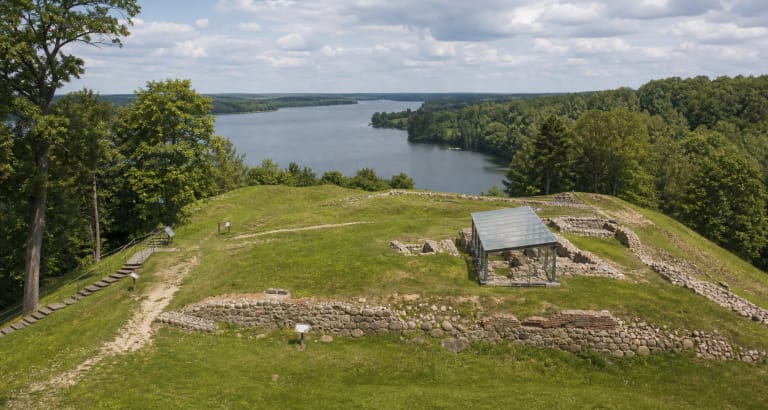
Dubingiai Church of St George stands on Radvilų Street in the village's historic churchyard. The coordinate 55.0572389, 25.4520487 marks the main entrance side. This is the present Catholic church in town, not the foundations of the former Reformed church displayed under a protective shelter at the castle site.
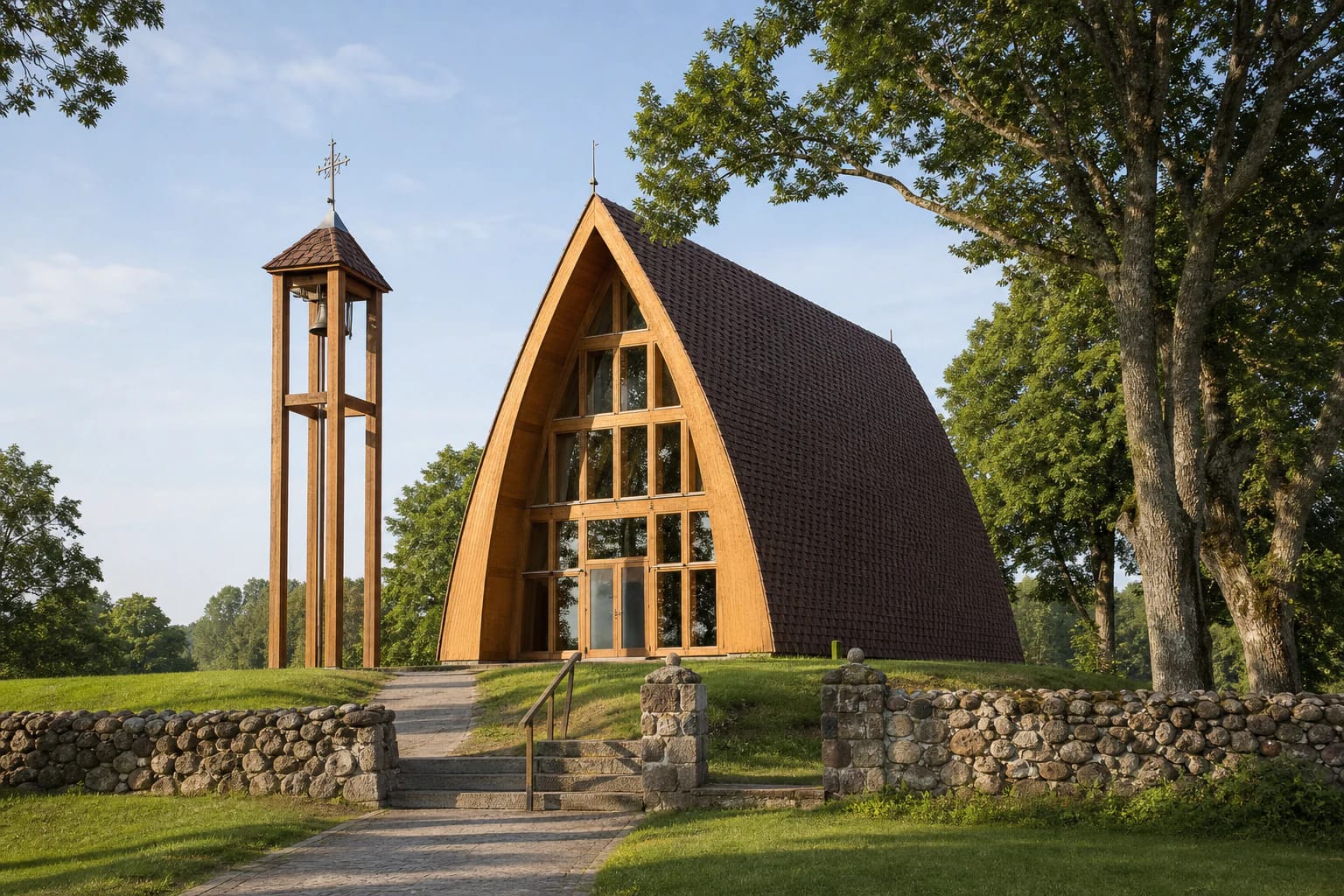
Architect Kęstutis Pempė and his team deliberately avoided copying Gothic, Baroque, or folk architecture. The principal motif is a clear timber arch forming a single-nave interior. A large glazed front admits daylight, while pitched surfaces and warm wood give the sanctuary a scale familiar from the region.
VDA research records that the community considered twelve proposals from the architects. The selected scheme was created by Kęstutis Pempė, Daiva Pauliukonienė, and Luis Miguel Corte-Real, with timber, stone, and clay tiles chosen as its principal materials.
From Vytautas's church to the fire of 1954
Dubingiai's Catholic tradition began elsewhere. VLE records a Catholic church in Vytautas's castle before 1430. It became a Reformed church around 1565, was later rebuilt, and burned in 1735. Its archaeological remains are now visible at the castle site.
A Catholic church in the village itself was begun in 1678, establishing this churchyard as a long-lived parish centre. Buildings and dedications changed, but today's sanctuary was deliberately returned to the same historical plot.
The previous timber Church of St George burned in 1954. Services moved to the cemetery chapel, which also burned in 1958. For more than half a century, the congregation worshipped in the former hospital and parish-house building.
Community choice and the Rusteikas' patronage
The idea of a new church gained momentum after local people identified it as the village's most important need. Aurelija and Aurelijus Rusteika took responsibility for funding and overseeing the project, with support from the parish, other donors, and Molėtai District Municipality.
Twelve models were publicly presented at Asveja Regional Park Visitor Centre in 2009. Residents discussed them with the architects and diocesan representatives, jointly choosing an arched timber design that retained the former church's scale and height.
The foundation stone was blessed on 13 October 2012. The main construction phase ran in 2013-2016, VLE dates the present church to 2018, and artists and craftsmen continued furnishing its interior until 2022. It was consecrated on 2 October 2022.
What to notice in the churchyard and interior
Outside, compare the new church's smooth arched frame with the separate old timber bell tower. The bell tower and churchyard wall with gates survive from the earlier sacred ensemble, so the site is more than a new building standing alone.
Inside, contemporary artists' work and deliberately revived local devotional motifs complement the restrained architecture. The image of St George, Stations of the Cross, altar, and other liturgical elements were conceived as parts of one sanctuary rather than incidental decoration.
The church also hosts sacred music, poetry, and community events. This explains its wider importance to a small village: it serves not only Sunday worship but also cultural life.
Mass, interior access, and planning a route
On 27 July 2026, the Diocese of Kaišiadorys listed Sunday Mass at 10:00. Times can change on feast days or when one priest serves several parishes, so check the official diocesan page or contact the parish before a special journey.
The churchyard can be viewed respectfully from outside, but the doors may be locked beyond services and events. There is no admission ticket; parish donations are voluntary. During worship, do not photograph people without permission or interrupt the liturgy.
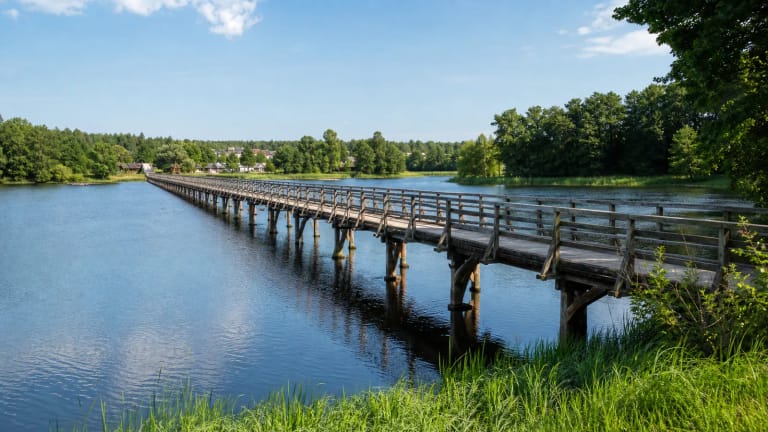
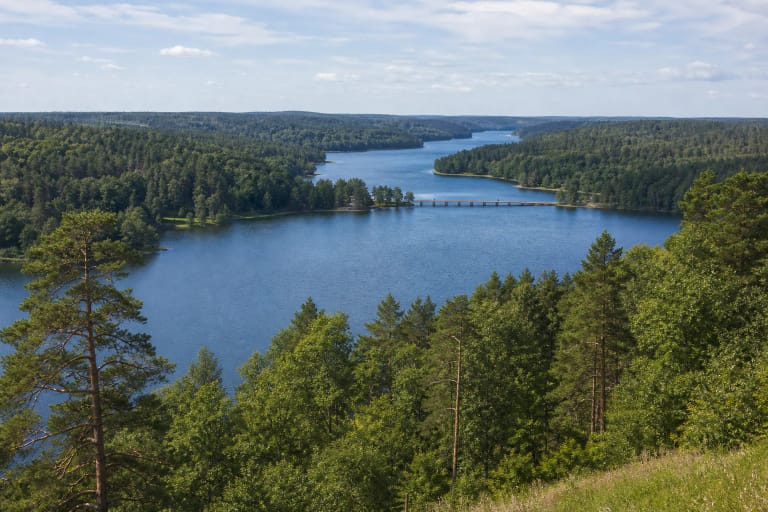
The castle site, visitor centre, and bridge are nearby, but each deserves its own time. A sensible sequence is to begin at the visitor centre, see the church and churchyard, and reserve the longer walking section for the castle site and Lake Asveja shore.