- Place
- Molėtai District Municipality
- Region
- Asveja Regional Park
- Type
- regional park information centre and paid interactive exhibition inside the protected 1842 Dubingiai tavern
- Address
- 1 Radvilų Street, 33261 Dubingiai, Molėtai District Municipality
- Coordinates
- 55.05815, 25.45326
- Visit duration
- 45-75 minutes for the centre; 2-4 hours with the separately visited Dubingiai Castle Site and bridge; the Jurkiškis trail needs extra time and a separate approach
- Best time
- during published Tuesday-Saturday hours and outside the lunch break; summer makes it easier to continue to the castle site and bridge, but recheck hours and prices before travelling
Asveja RP Visitor Centre, Dubingiai Tavern, Former Dubingiai Inn
The visitor centre, the regional park, and four Dubingiai stops are not one attraction
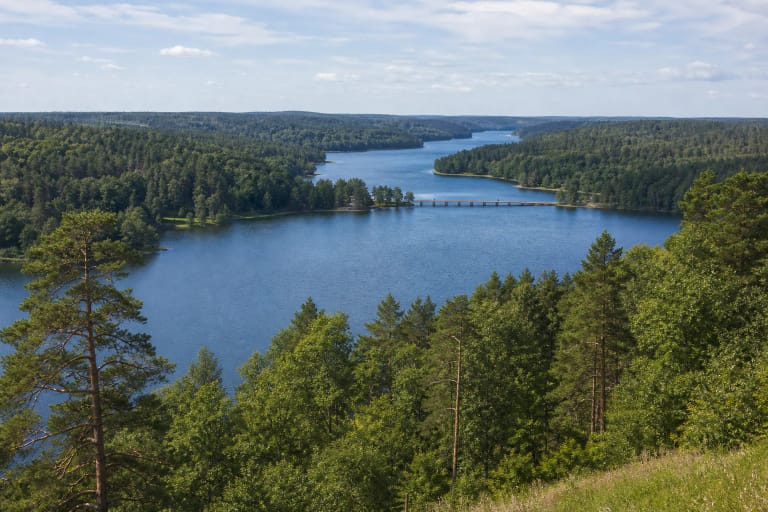
Asveja Regional Park Visitor Centre is an indoor exhibition and information point inside the former tavern at 1 Radvilų Street. The regional park covers 12,207 ha, while Lake Asveja stretches past many different shores. Reaching the centre is therefore not a ticket-controlled entrance into the whole park or the only route to the lake.
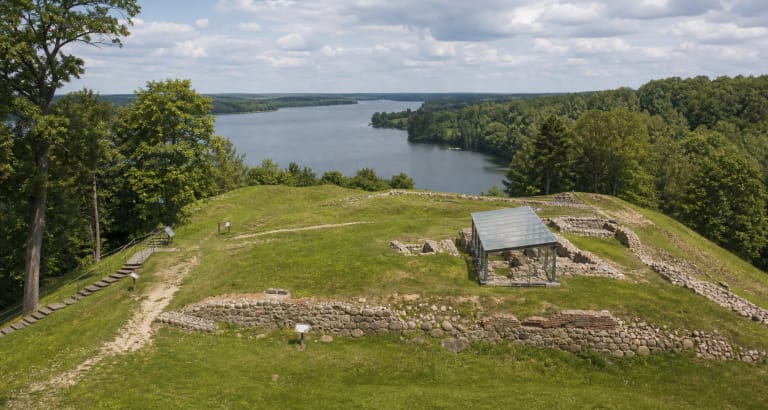
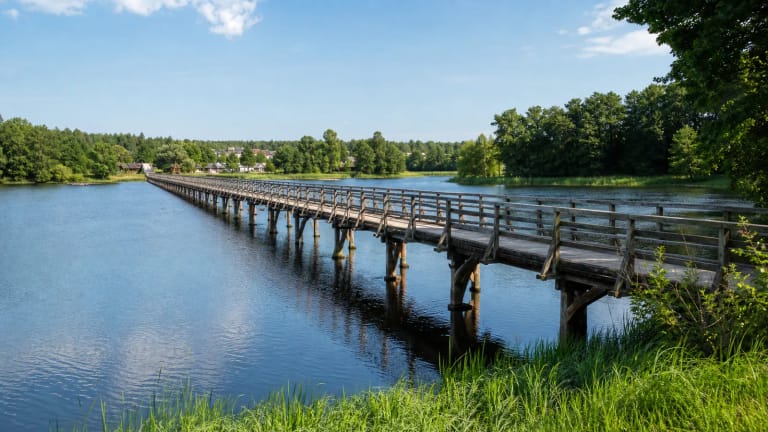
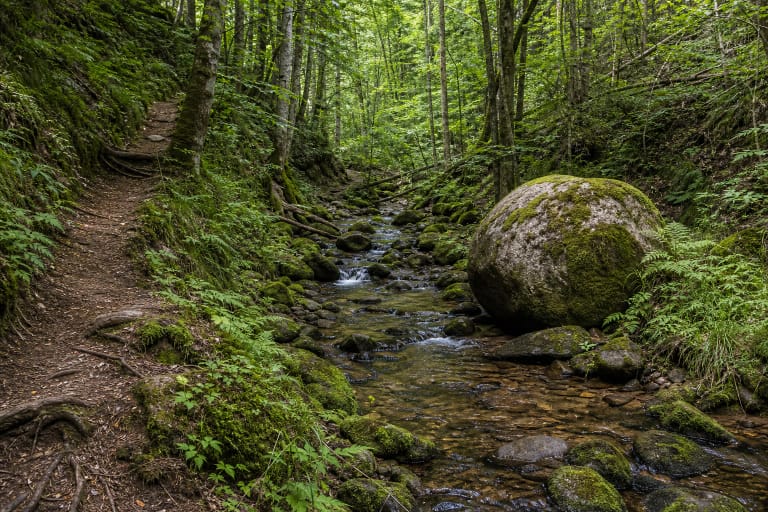
Dubingiai Castle Site with its Radziwiłł palace-remains display, the timber Dubingiai Bridge, and the Jurkiškis Stream Nature Trail have separate map points. The indoor display at the castle site has its own ticket, the bridge is both transport infrastructure and heritage, and the Jurkiškis trail begins about 4 km from central Dubingiai. One visitor-centre ticket does not automatically cover them.
The coordinates 55.058154, 25.453265 mark the OpenStreetMap information-centre point on the building. Because the data do not identify the exact public doorway threshold, the metadata use site rather than entrance. Official access information directs visitors with mobility impairments to a side door.
The exhibition connects Lithuania's longest lake with Dubingiai archaeology
The permanent interactive exhibition is titled Mysteries of Lithuania's Longest Lake and Its Archaeological Heritage. It explains how glaciers formed the narrow, winding Asveja channel, why the lake matters for more than its length, and what archaeology reveals about the area's past.
The cultural story links Dubingiai with the Radziwiłł family, Grand Duke Vytautas, and Antanas Smetona. Natural-history displays address wetlands, local biodiversity, the abundance of grass snakes, and the stony Jurkiškis stream. This makes the centre a useful first stop before the castle site or trail, where visitors must read the landscape without one continuous indoor narrative.
Staff provide visitor information and organise walks, guided visits, educational sessions, cultural events, and temporary exhibitions. These are not guaranteed components of every €2 self-guided ticket. Groups and visitors seeking a particular activity should arrange the date, language, duration, group size, and price in advance.
The 1842 tavern is a protected exhibit in its own right
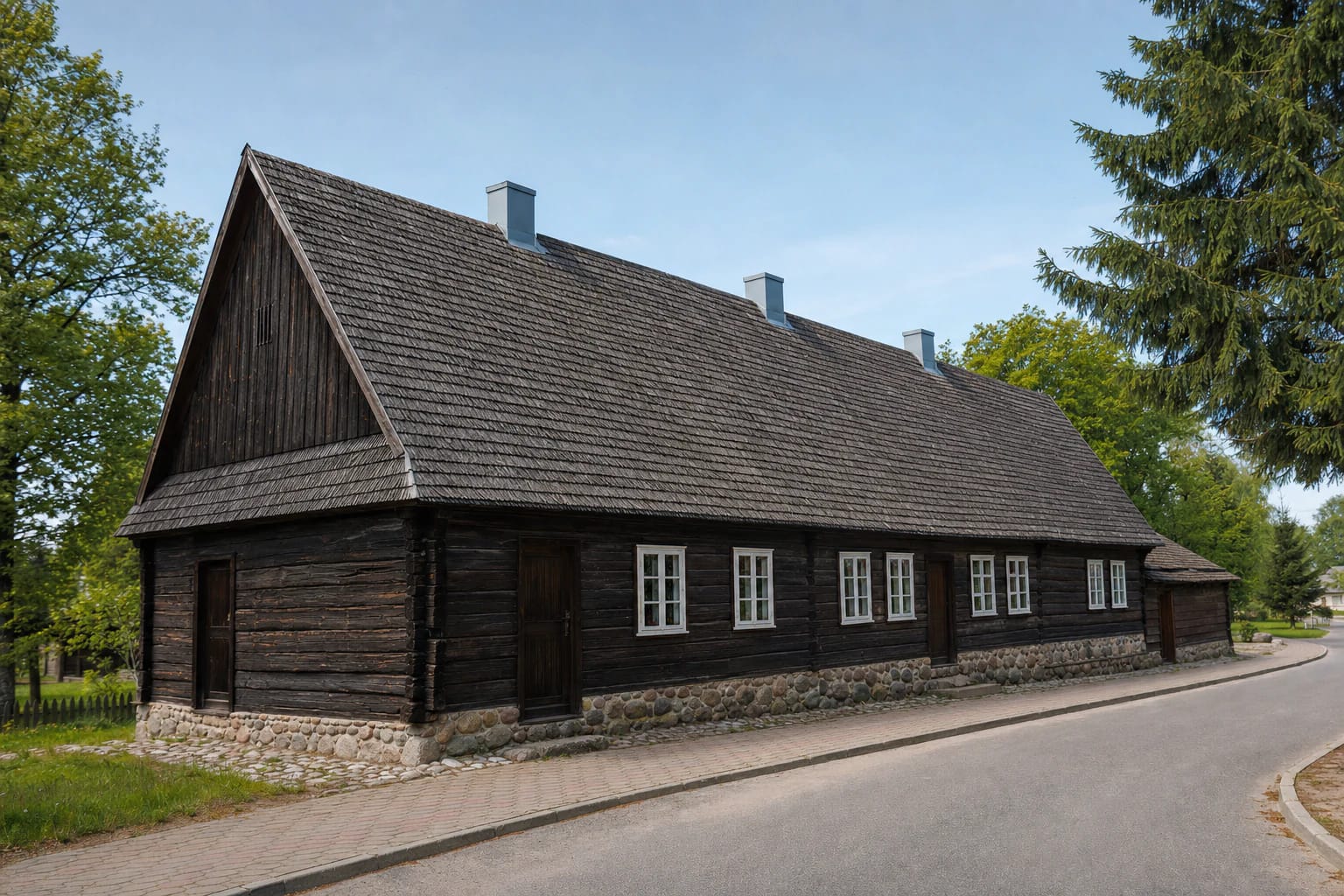
Count Boleslovas Tiškevičius built the Dubingiai tavern in 1842. Historical descriptions record a long rectangular timber plan and a porch with four columns. Its dark log walls, fieldstone base, small white-trimmed windows, and exceptionally high roof still read as an old roadside inn rather than a purpose-built twenty-first-century tourism pavilion.
A large shop operated here from 1919 to 1940. After the Second World War, people lived in the building, animals were kept in the carriage section, and milk was collected here. It was reconstructed for leisure use in 1968, transferred to Molėtai District Municipality in 2000, used by Molėtai Regional Museum, and adapted as the regional park visitor centre after restoration in 2008.
The former tavern is listed under Cultural Property Register code 1513. Its roof was renewed in 2022 with three layers of split aspen shingles. Fresh shingles were initially pale and expected to weather grey, explaining why photographs from different years show a noticeably different roof colour.
The park was created in 1992 and its management structure changed in 2022
Asveja Regional Park was established on 24 September 1992 to protect the Asveja lake district landscape, natural ecosystems, and cultural heritage. Current official information gives an area of 12,207 ha and highlights the Dubingiai urban ensemble and castle site, burial mounds, and historic villages among its cultural values.
Older descriptions still place the former Asveja Regional Park Directorate in the tavern. That wording is historically understandable but administratively outdated: on 1 July 2022, Asveja and seven other regional park directorates were merged into the Aukštaitija Protected Areas Directorate. The visitor centre now operates within its Asveja Regional Park group.
The reorganisation did not change the building's address or the exhibition's subject, but it explains why current contacts and documents carry the wider directorate's name. Check practical information through the latest Saugoma.lt or Aukštaitija Directorate channels rather than relying only on an old park-directorate page.
Verified 2026 seasonal hours and the €2 exhibition ticket
On 21 July 2026, the published 1 April-30 September schedule was Tuesday-Friday 9 am-6 pm with a lunch break from 1 pm to 1.45 pm, and Saturday 8.45 am-4.30 pm with the same break. From 1 October to 31 March it listed Tuesday-Friday 8 am-5 pm with lunch from noon to 12.30 pm, and Saturday 10 am-3 pm without a lunch break. Monday and Sunday were not listed as opening days.
The centre closes one hour earlier on the day before a public holiday and is closed on public holidays. Hours, staff fieldwork, and events can still alter access, especially outside summer, so call +370 626 53014 before a long journey.
Self-guided admission to the permanent exhibition cost €2 per person. A 50 per cent concession was advertised for school pupils, students, visitors with disabilities, and pensioners; children under seven entered free. This is admission to the indoor centre exhibition, not a fee for the entire regional park. Tours, education, and the castle-site palace-remains display have separate arrangements.
The ground floor is accessible, but the upper floor is not reachable for visitors with mobility impairments
There is an asphalt parking area. Official access information says that a side entrance has a ramp, the ground-floor exhibition is convenient to visit, and an adapted toilet is provided.
Visitors with mobility impairments cannot reach the upper floor. The word accessible should therefore not be taken to mean equal access to every part of the historic building. Before visiting, ask which section of the permanent or temporary display is upstairs and whether staff can provide an alternative presentation.
Deaf visitors may attend with an interpreter, but the official page does not promise a sign-language interpreter permanently on site. Allow 45-75 minutes for the self-guided exhibition. With the castle site and bridge, a Dubingiai visit usually needs 2-4 hours; the Jurkiškis trail is a separate outing with an additional drive.