- Place
- Klaipėda City Municipality
- Region
- Klaipėda
- Type
- Vytautas Karčiauskas's 2007 steel, bronze, and granite rainwater sculpture
- Address
- 16 Turgaus Street, on the Vežėjų Street wall, Klaipėda
- Coordinates
- 55.70847, 21.13479
- Visit duration
- 10-20 minutes; 45-90 minutes as part of a route through Klaipėda Old Town's small public sculptures
- Best time
- in daylight; after rain reveals the water feature, although wet old-town cobbles can be slippery
Slibinas, The Dragon, Sena istorija
The exact wall to look for
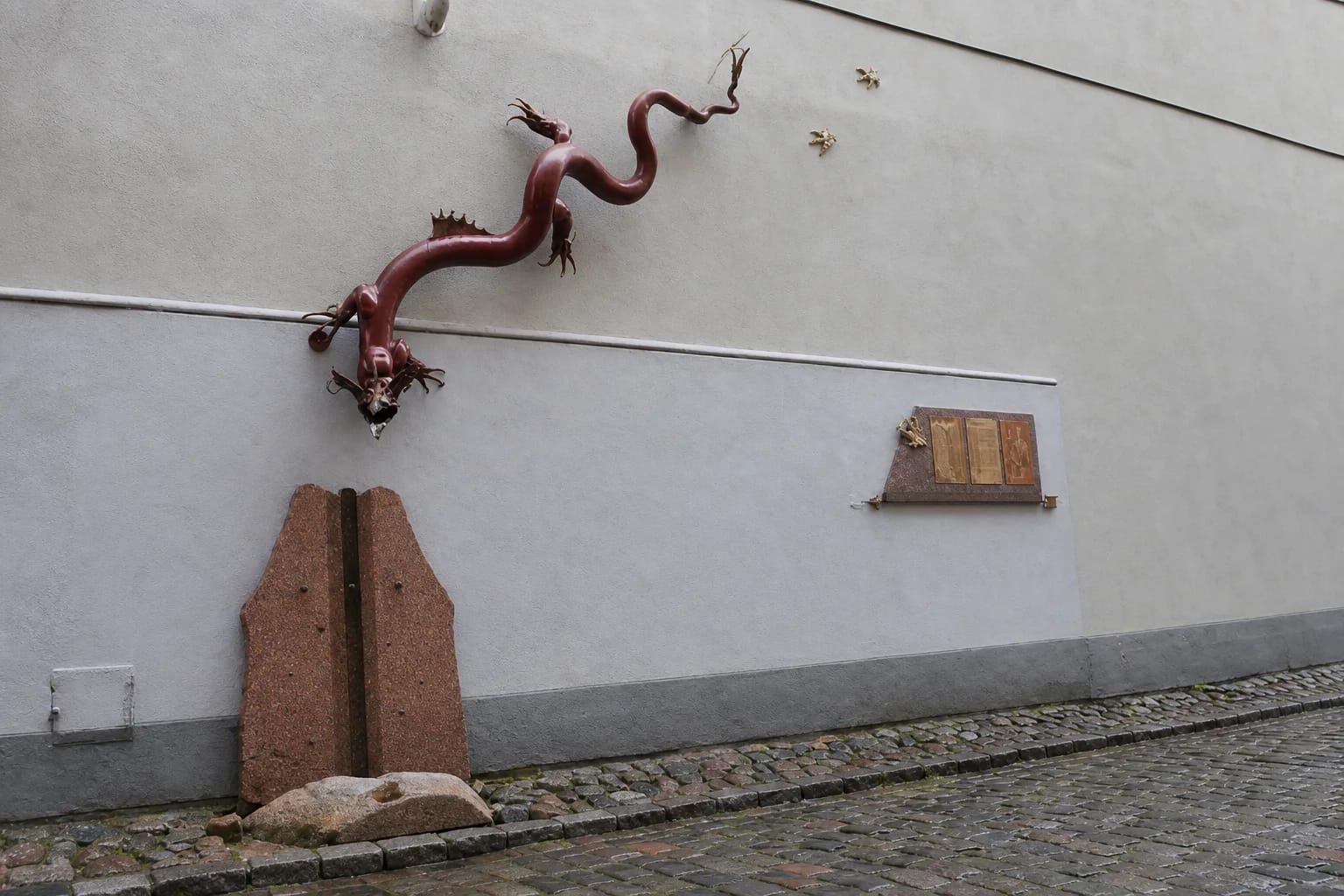
The Dragon does not stand on a separate plinth in the middle of a square. It winds across the side wall of the building at 16 Turgaus Street, facing Vežėjų Street and the setting of the former Pėda gallery. The Ieva Simonaitytė Public Library guide gives 16 Turgaus Street, while Klaipėda City Municipality's public-art inventory specifies that the work is on that building's Vežėjų Street wall.
For navigation, use 55.7084678, 21.1347861 rather than a generic Vežėjų Street number. The exact Google Maps listing is named “The Dragon” and has place ID ChIJOyOxkfDb5EYRzBQCO09q7OM. Its point marks the wall sculpture itself, not a car park.
A sculpture that also carries rainwater
The work's defining quality is not only its animal form but its physical connection with the building. The long red-brown body joins the rainwater line, coils across the rendered wall, and descends head first. In rain, water leaves the open jaws and falls into a split upright granite footprint below, turning an architectural service into a piece of public art.
Published dimensions differ slightly. The library guide describes an approximately 3.5-metre steel sculpture, while reporting from the time of installation gave about 3.2 metres and roughly 145 kilograms. The body is steel, with bronze and granite used in the wider composition. Three small bronze footprints higher on the wall extend the story from the roofline toward the Dragon.
Its architectural integration matters: the work cannot be understood apart from the wall, horizontal pipe, direction of water, and cobbled lane. Dry weather reveals the sculptural line; rain explains its downpipe function. Water flow nevertheless depends on rainfall and the system's condition, so visitors should not expect it on every visit.
Vytautas Karčiauskas's 2007 gift to Klaipėda
The Dragon was created by sculptor, jeweller, and metal artist Vytautas Karčiauskas, who founded Klaipėda's Pėda gallery. It was installed on the old-town wall and given to the city in 2007. A public presentation took place on 2 July during the Klampi pėda 594 event, which drew attention to a story surrounding Klaipėda's Lithuanian name.
The municipal library's list of Karčiauskas's works calls the 2007 old-town gift Sena istorija, or Old Story, and records steel, bronze, and granite as its materials. The more direct name Slibinas, the Dragon, became established in city and visitor sources. It is an example of Karčiauskas's metal art entering the working fabric of a building rather than merely being displayed beside it.
The swampy footprint is a city legend, not proven etymology
One story tells of two brothers looking for a place to settle by the coast. One took a route through the marshes and disappeared; the brother searching for him found only a large swampy or frightening footprint. Karčiauskas imagined that such a mark could have belonged to a one-headed dragon from folk tales and translated the idea into this wall sculpture.
The account needs careful framing. The Dragon is the artist's interpretation, and the swampy-footprint narrative is one legend about the city name rather than an etymology conclusively accepted by linguists. The artwork preserves an imaginative relationship with the name but does not replace documented city history.
Karčiauskas also associated the Dragon with opposing elements: earth and sky, water and fire. On the wall that idea becomes tangible without a long explanation. The metal creature descends from above, rain passes through its body, and the granite footprint meets the old-town stone paving.
Visiting and photographing the Dragon
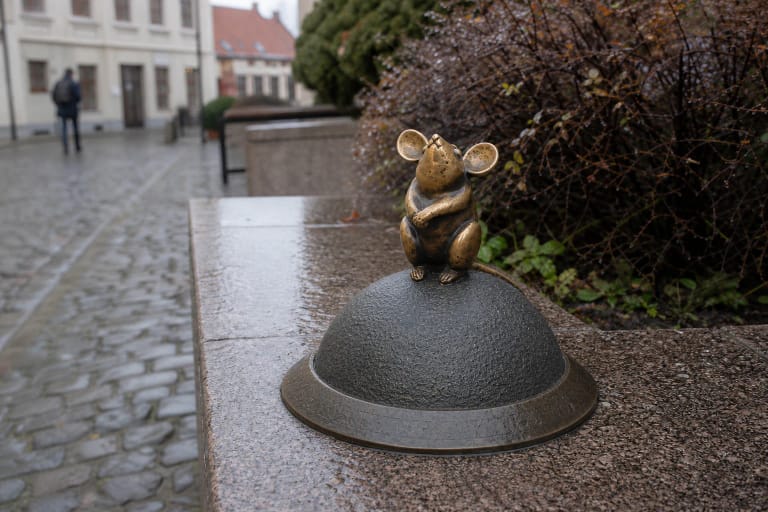
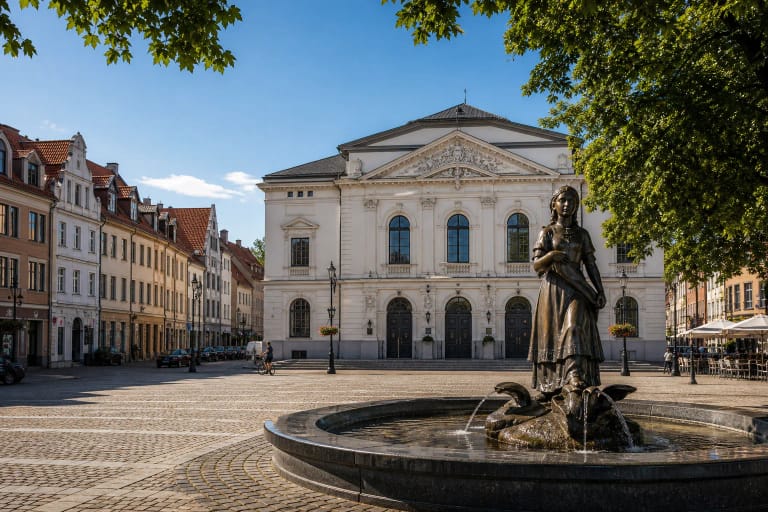
This is an outdoor sculpture visible from a public street, so there is no admission ticket, gate, or museum schedule. Allow 10-20 minutes for this stop, or at least 45-90 minutes for a route connecting it with the Magical Mouse, Theatre Square, the Danė waterfront, and other small Klaipėda sculptures.
Daylight makes the full line of the body, bronze footprints, and granite element easiest to see. Rain reveals the downpipe concept but can make the stone paving slippery. Keep the narrow street clear, do not climb onto the granite part or pull the metal details, and bear in mind that no official accessibility audit is published; uneven cobbles may be awkward for wheelchair users.
Water flow depends on rainfall and the condition of the downpipe, while temporary building or street work can alter access. Assess conditions on arrival and follow any temporary signs.