- Place
- Klaipėda City Municipality
- Region
- Klaipėda
- Type
- historic port-city centre, street network, and half-timbered quarters
- Address
- Theatre Square and surrounding old-town streets, Klaipėda
- Coordinates
- 55.71040, 21.13420
Memel Old Town, Old part of Klaipėda
Klaipėda Old Town: why it is different
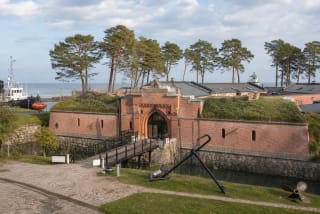
Klaipėda Old Town differs from the historic centres of Lithuania's other major cities. Its image was shaped not only by churches, town halls, and noble residences, but also by the castle, port, Danė River, warehouses, bridges, trading yards, and the urban tradition of Lithuania Minor.
For that reason, the best way to visit Klaipėda Old Town is slowly. Do not only walk to Theatre Square; turn into Aukštoji, Daržų, Didžioji Vandens, Tiltų, and Žvejų streets, look at the Danė quays, Biržos Bridge, the sailing ship Meridianas, and the old warehouse quarters.
The beginning of Memel and the city plan
VLE links Klaipėda's history with the Livonian Order castle built in 1252 near the Danė mouth. A town, long called Memel, formed beside the castle. This matters when walking through the old town: its core is not a decorative quarter by chance, but a structure created around a port and fortress environment.
In its description of Klaipėda architecture, VLE emphasizes that the old part of the city has a medieval street network whose outlines are tied to development in the thirteenth to fifteenth centuries. The street directions, block scale, and relationship with water explain why the old town so often alternates between narrow passages, sudden corners, and open quays.
Half-timbered architecture and port warehouses
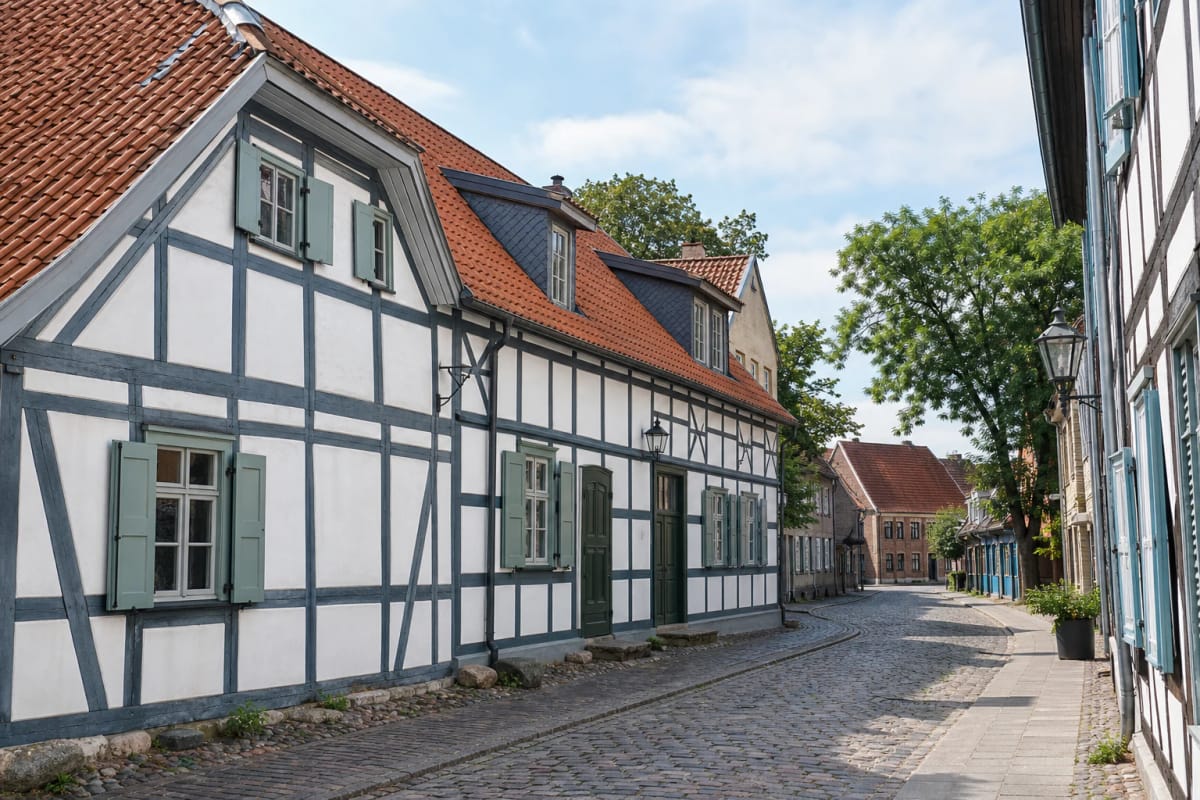
In Klaipėda Old Town, actively look for half-timbered architecture: buildings with timber frames and filled wall panels, typical of German and seaside trading environments. Around Aukštoji and Daržų streets, half-timbered buildings show most clearly that Klaipėda was long a culturally distinct Lithuanian urban space.
The old warehouse theme is closely tied to port-city memory. Surviving or reconstructed warehouse forms along the Danė quays and old-town streets recall trade, shipping, fish, and the movement of timber. This is not only a pretty facade; it is the form of the city's economic history.
Theatre Square, Ännchen, and the city's public stage
Theatre Square is the most recognizable old-town space. It functions as the city's stage: events take place here, walks begin here, and routes open toward the old town and the Danė. The square is completed by the Drama Theatre building and the Ännchen of Tharau fountain sculpture, which has become one of Klaipėda's symbols.
To understand the square historically, do not stop at a photograph by the fountain. Look at how it connects with Tiltų Street, the Danė quay, and the side of the city leading toward the castle. Then Theatre Square becomes not an isolated tourist square but a node between the castle, river, and trading town.
Danė quays, Biržos Bridge, and Meridianas
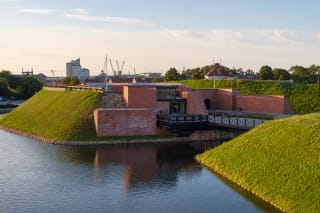
The part of the old town by the Danė is defined by Meridianas, Biržos Bridge, and the history of the quays. The sailing ship Meridianas was built in 1948 at the Turku shipyard in Finland and has stood by the Danė quay as a city symbol since 1971. Biržos Bridge is linked with the former setting of the Klaipėda merchants' exchange and has retained the function of a drawbridge.
This part of the old town works especially well toward evening, when light falls on the water and facades. It shows clearly that Klaipėda's historic centre is not only a landlocked old town; it has always faced the river, ships, and port labour.
The Great Fire and the lost old town
Today's Klaipėda Old Town is a combination of surviving, restored, and lost layers. In its history and architecture entries, VLE mentions the Great Fire of 1854, which strongly changed the city's appearance. The twentieth-century wars, Soviet-period transformations, and industrial and port expansion also affected the city.
Therefore, while walking through Klaipėda, do not look only for a single coherent old postcard. The strongest old-town experience is reading layers: where streets are old, where facades have been restored, where yards recall warehouses, and where former churches or trading buildings survive only in signs and city memory.
How to shape a walking route
A good first route begins at Theatre Square, follows Tiltų Street toward Biržos Bridge, pauses by Meridianas, returns to the half-timbered quarters around Aukštoji and Daržų streets, and then follows Žvejų Street toward the castle and old warehouses. That loop usually takes about 1.5-2 hours.
With more time, add the History Museum of Lithuania Minor, Blacksmithing Museum, Castle Museum, or Clock Museum. Then the old town becomes not just a walk but an introduction to Klaipėda, Memel, and Lithuania Minor.
What to notice on site
Notice the proportions of half-timbered buildings, narrow cobbled streets, warehouse doors, the heights of the Danė quays, bridge axes, and the way the old town opens to the water. These elements say more than individual sculptures or cafe signs.
For photographs, morning works best when the streets are quieter, and evening is better by the Danė. Theatre Square is livelier during events, while the half-timbered quarters show themselves best when there are fewer cars and people.