- Place
- Klaipėda City Municipality
- Region
- Klaipėda
- Type
- public sculpture by the Klaipėda castle moat and swing bridge
- Address
- Žvejų g. 22, Klaipėda
- Coordinates
- 55.70663, 21.12672
Black Ghost, Juodasis vaiduoklis sculpture, Gespenst
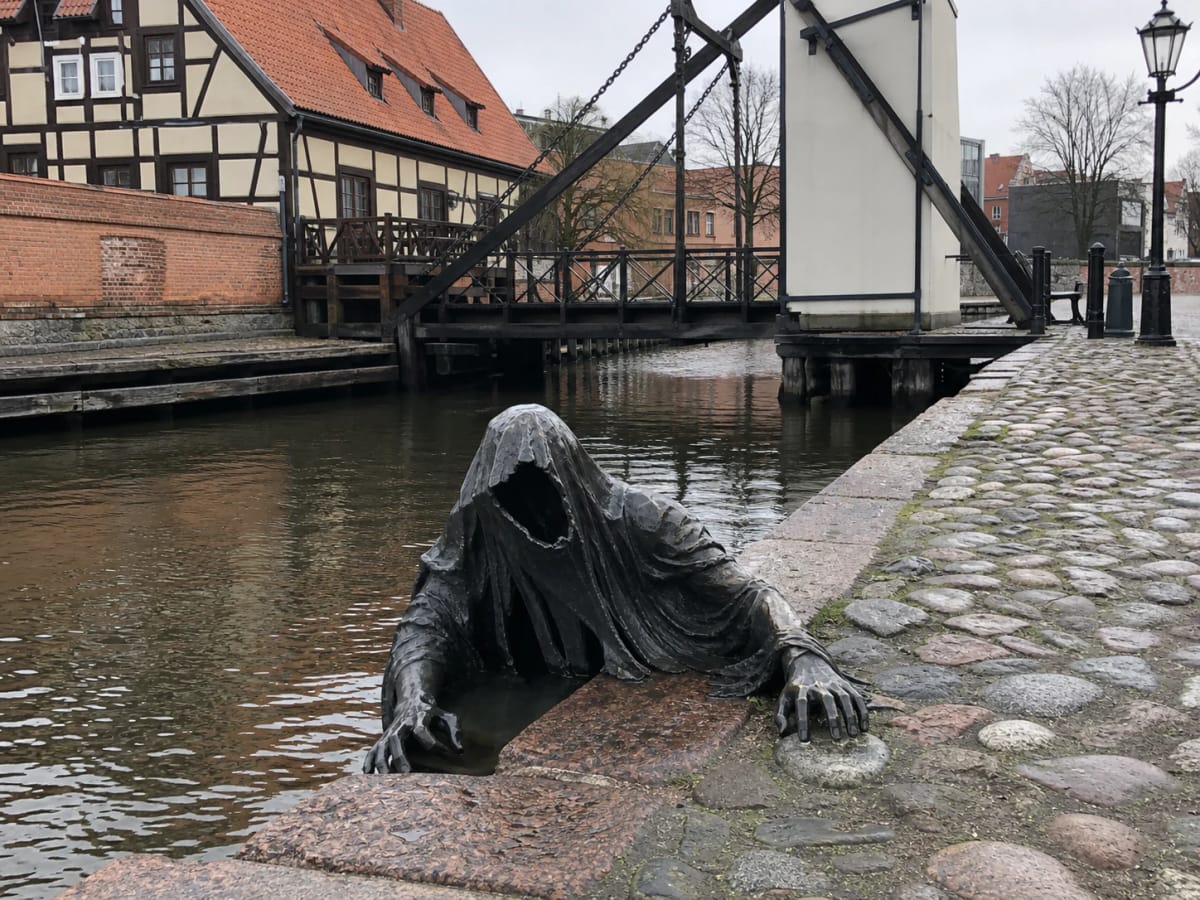
The Black Ghost by the Klaipėda castle moat
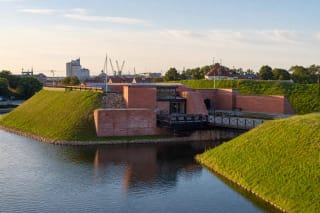
The Black Ghost is one of Klaipėda Old Town's most photographed sculptures. It stands on Žvejų Street beside the old castle moats and the small swing bridge, so it is not only a decorative city accent. The sculpture is tied directly to the historic space of the castle, water routes, and port city.
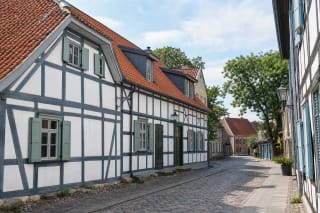
The place works as a short but dense introduction to Klaipėda. Within a few minutes' walk are the castle site, old warehouse areas, the Danė quays, and half-timbered old-town streets. For that reason, treat the Black Ghost as an opening point into old Memel, not just as a quick photo stop.
The 2010 bronze sculpture and its creators
The sculpture was placed here in 2010 and quickly became one of the most recognizable emblems of the port city. It was created by sculptors Svajūnas Jurkus and Sergejus Plotnikovas, with architects Vladas Balsys and Vaidotas Dapkevičius.
The bronze figure is about 2.4 m tall, with roughly half of it below the level of the waterfront walkway, as if the ghost were climbing out of the water. Beneath the long black cloak the figure is empty (only the hands are visible), so the sculpture feels expressive without any facial features - a sudden encounter with a legend rather than a portrait.
The legend of the evening of 19 February 1595
The Regional Heritage Guide presents a Klaipėda legend recorded in the East Prussian tradition of local tales. According to the story, on the evening of 19 February 1595, Klaipėda castle guard Hans von der Heide from Ditmarschen suddenly saw a bridge over the moat and, on it, a man wrapped in a long black cloak.
The ghost supposedly asked whether the castle lacked food and drink. When told that the stores were sufficient, the black-cloaked figure foretold that grain and firewood would soon run short, then vanished as the castle fortifications shook violently. This is a legend, not a documented historical event, and it is best read as a port-city tale about anxiety, supplies, and survival.
Form and artistic idea
That choice works especially well on site. The ghost appears to emerge from the castle moat, and a passer-by comes almost face to face with an empty hood. It is not a monument to one person. It is a character from city legend placed where water, bridge, and castle create the right atmosphere.
Because of this surprise, the Black Ghost has become a tourist emblem of Klaipėda and is often listed among the most original sculptures in Lithuania and the wider world. Even so, it works most strongly not in photographs but standing right by the water, where sculpture and legend merge.
Swing bridge and old port setting
The nearby swing bridge recalls the practical history of the castle moats. In the early eighteenth century the moats were used for boats and timber, which required a narrow channel linking the Danė River with the moat system while still preserving access to the castle.
Drawing on Jonas Tatoris's Old Klaipėda (1994), an early bridge had a 2.4 m opening for small boats. In 1839 it was rebuilt as a portal bridge with an 11.2 m opening, and in 1885 it was replaced by a metal portal opening bridge. This small old-town corner therefore joins legend with a layer of old Klaipėda's technical heritage.
How to visit
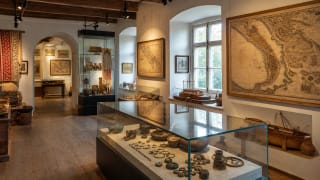
The sculpture stands in a public outdoor space, so it can be seen at any time and without a ticket. Give it at least 10-20 minutes, or more if you continue to the Klaipėda Castle Site, Castle Museum, or half-timbered streets of the old town.
For photographs, evening works strongly because shadows deepen near the water. Early morning is good when the old town is quieter. In rain or wind, the sculpture feels even closer to its story, but walk carefully near stones, wet paving, and the quay edge.