- Place
- Šilalė District Municipality
- Region
- Samogitia
- Type
- active Gothic Revival Roman Catholic parish church
- Address
- Vytauto Didžiojo g. 7, LT-75132 Šilalė
- Coordinates
- 55.49397, 22.18023
- Visit duration
- 25-45 minutes for architecture and interior; longer when attending worship
- Best time
- 20-30 minutes before a published Mass, when quiet interior access is most likely
Šilalė Church, St Francis of Assisi Church, Šilalė
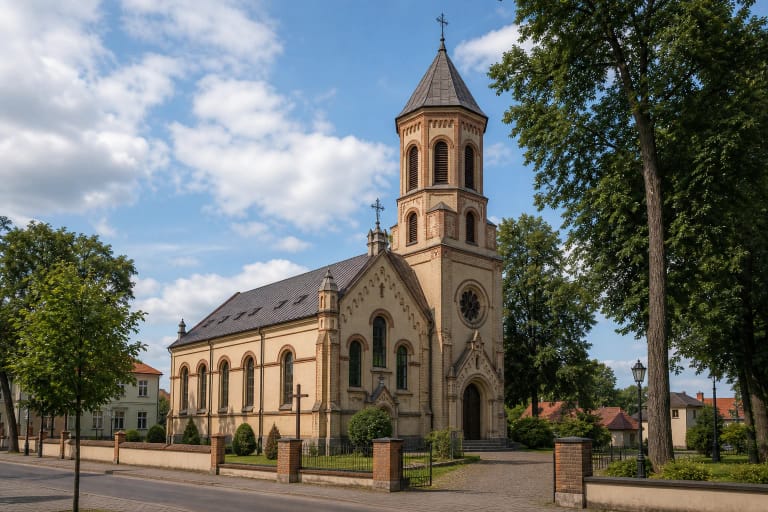
A Gothic Revival town landmark
The present church was built in 1905-1909 to a design by Polish architect Józef Pius Dziekoński. Red brick, buttresses, pointed windows, corner turrets, and a lofty central spire deliberately revive Gothic verticality. Its cruciform, three-aisled body faces the old town centre.
The tower reaches approximately 60 m and serves as Šilalė's long-distance landmark. Up close, study the patterned brickwork, stepped gables, narrow windows, and rhythm of the smaller turrets. The clearest full-facade view opens from across the street and through the churchyard gates.
From the 1533 parish to the present church
Šilalė's Catholic parish traces its beginning to 1533, when landowner Orvydas built a first church. Its sixteenth-century priest Jonas Tartila became an early promoter of Reformation ideas in Lithuania and withdrew to Lithuania Minor in 1536. The sanctuary later returned to Catholic use.
Pranas Piłsudski built a masonry church in 1769, but nineteenth-century enlargement plans remained unrealised. A replacement was designed in 1897, approved in 1900, and preceded by demolition of the old building in 1903. The present church rose through the work of Bonaventūras Pacevičius, Pranciškus Kuodys, and local parishioners and was consecrated in 1919.
Sculpture, stained glass, and timber altars
The interior combines an early twentieth-century Gothic Revival space with older art retained from previous sanctuaries. The encyclopaedia records valuable nineteenth-century paintings with metal coverings and eighteenth to nineteenth-century timber sculptures, including a Pietà, the Baptism of Christ, St Anthony, and St Isidore.
Timber altars occupy all three aisles and stained glass fills the windows with sacred narratives. Distinguish the building's date from the age of the objects displayed within it. Photography is appropriate only where no restriction is posted and it does not disturb prayer.
The 1912 Bruno Goebel organ
The organ was built in Königsberg in 1912 by Bruno Goebel's workshop. Regarded as one of his larger surviving instruments in Lithuania, it retains much original fabric. Its importance is musical and technological, demonstrating East Prussian organ-building links with Samogitian parishes.
A normal visit does not guarantee that it will be played. You may hear it during liturgy or an announced concert, when walking and photography should stop. Arrange any specialist organ viewing or access to the small sacristy collection with the parish.
Worship and respectful visiting
On 21 July 2026 the Diocese of Telšiai listed Mass on Sundays at 09:00, 12:00, and 18:00, weekdays at 18:00, and Saturdays at 18:00 plus mornings by arrangement. Confession begins half an hour before Mass. Recheck the parish page for feast and seasonal changes.
Church and churchyard access is free, but this is foremost a living place of worship. Dress respectfully, silence your phone, stay out of the sanctuary, and avoid photo sessions during rites. St Anne's feast is kept around 26 July and the titular feast of St Francis around 4 October.