- Place
- Šilalė District Municipality
- Region
- Samogitia
- Type
- municipally protected natural-heritage object in the Akmena River
- Address
- Akmena River near Kilpiniai and Andriejaičiai, Šilalė District
- Coordinates
- 55.42302, 22.23976
- Visit duration
- 25-50 minutes for the rapid and river valley
- Best time
- a dry day; watch only from a safe bank during spring melt or after heavy rain
Great Rapid of the Akmena
What a river rapid is
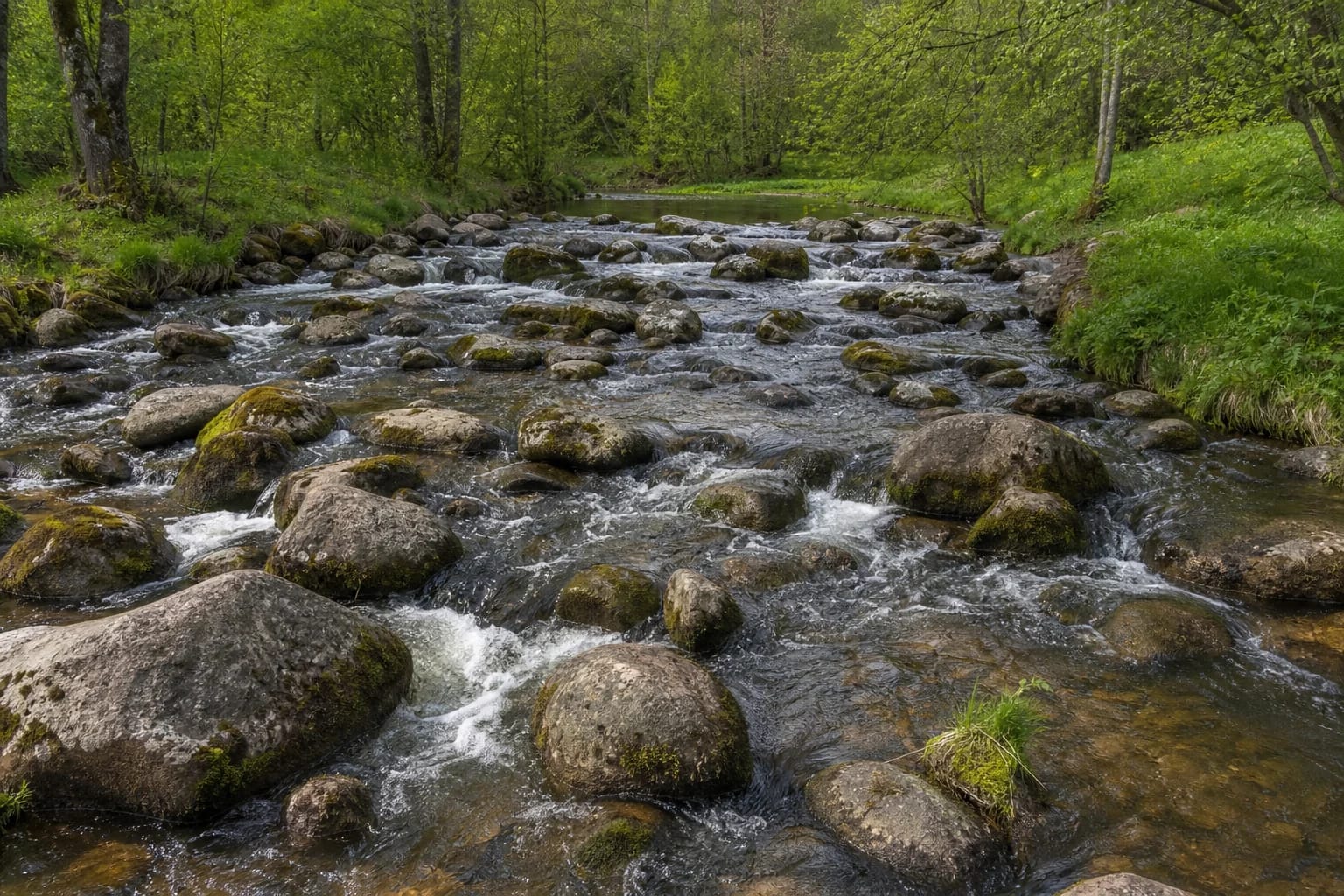
A rapid is a shallow stony threshold where water accelerates, divides into many currents, and foams between boulders. The Great Akmena Rapid covers 0.33 ha of the channel and is a natural-heritage object protected by Šilalė District Municipality.
It is neither a waterfall nor a built dam. Its value lies in the natural boulder accumulation and its connection to the geological development of the valley. Different water levels can turn the same threshold into roaring current or an exposed field of stones.
A legacy of glacial meltwater
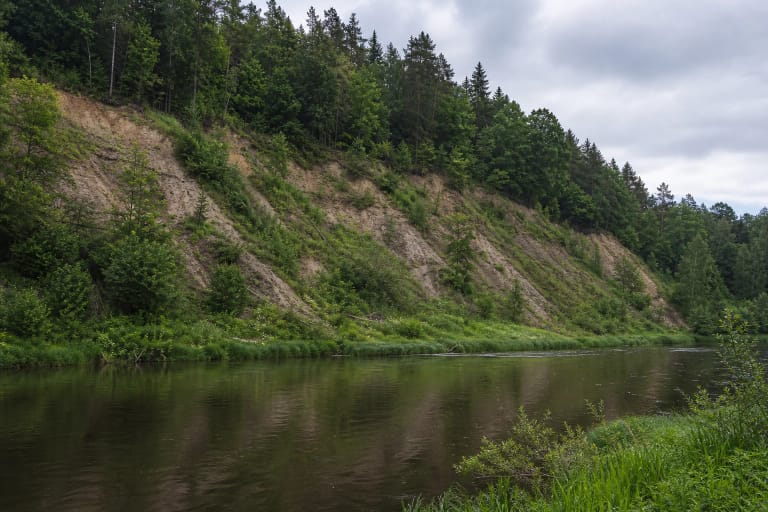
Geological studies show that meltwater carved large valleys around Andriejaičiai and Kilpiniai. As water receded, three terraces above the floodplain formed; the present Akmena channel occupies the lowest.
The Akmena's average gradient is about 1.86 m per kilometre and reaches 3 m/km downstream from Kilpiniai. The current can therefore wash fine sand and clay away, leaving heavier boulders of many sizes.
How the stone threshold accumulated
A swift river alone would not explain the dense boulder pile. A bottleneck immediately upstream long prevented stones from moving onward, so they collected within one channel section and formed the threshold.
The process continues: water sorts sediments, shifts smaller stones, and redirects currents. Do not collect boulders, rearrange them into small dams, or disturb the banks; even modest changes affect natural flow.
Access and river safety
The map point marks the rapid rather than a guaranteed paved car park. The final approach may use forest or gravel roads; leave vehicles only where signs permit and traffic remains clear. There is no ticket office.
At low water some stones can look crossable, but they are slippery, can shift, and conceal stronger current between them. Do not plan to ford the rapid, especially after rain or during snowmelt. Keep children and dogs close, watch from stable ground, and wear shoes with grip.