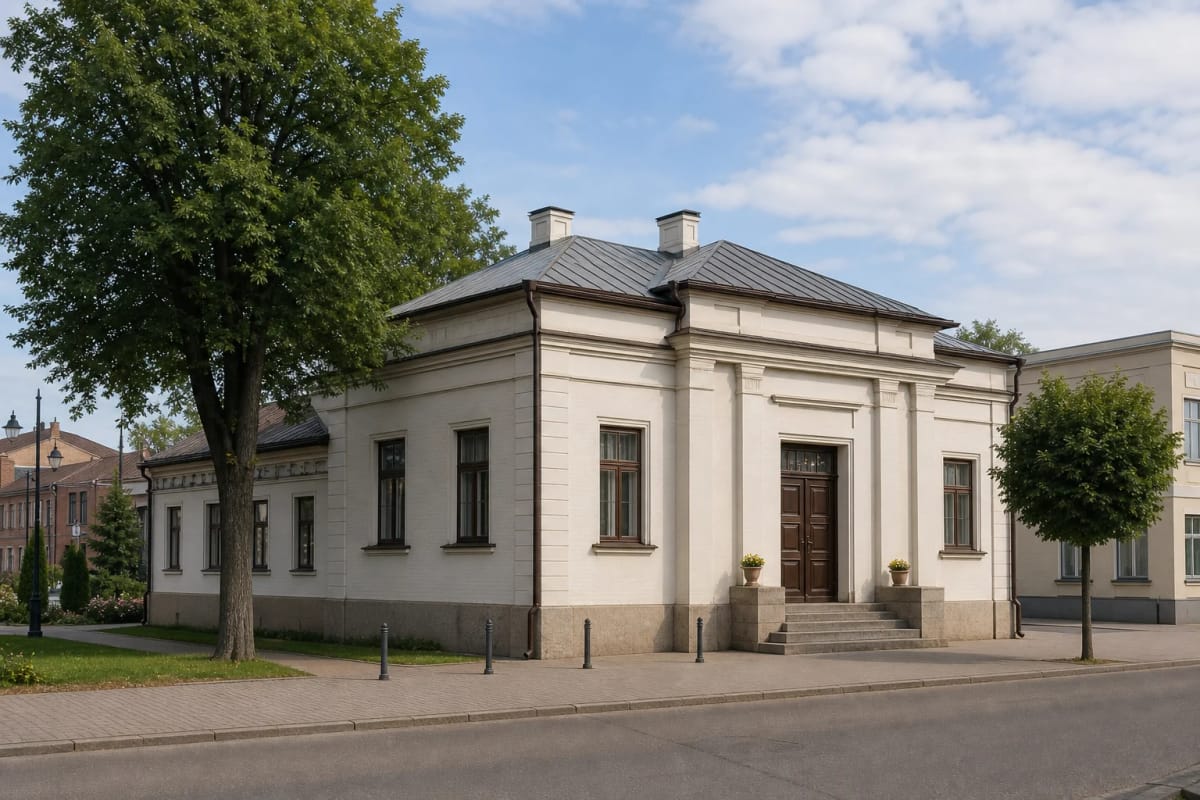
- Place
- Šilalė District Municipality
- Region
- Samogitia
- Type
- district local-history museum of history and ethnography
- Address
- S. Gaudėšiaus g. 4, Šilalė
- Coordinates
- 55.49060, 22.18140
Šilalė Museum, Šilalė Area Museum
Vladas Statkevičius Museum in Šilalė: Local History and Ethnography
The Vladas Statkevičius Museum in Šilalė is the Šilalė District municipal local-history museum, telling the story of the town and the material and spiritual culture of the Samogitian area. It is the main museum of the Šilalė region, and its halls host both temporary and educational exhibitions.
The museum collections contain more than 24,000 archaeological, historical, numismatic, and ethnographic exhibits, and the number continues to grow. The central museum operates in Šilalė town centre on S. Gaudėšiaus Street.
Vladas Statkevičius
The museum is named after local historian and teacher Vladas Statkevičius (1911-1999). For ten years he led the council of the Šilalė branch of the Lithuanian Local History Society, travelled through villages recording stories, photographed heritage, collected archaeological finds, and studied old sacred places and burial grounds.
He published more than one hundred articles, and in 1992 issued the monograph Šilališkiai: Darbai ir papročiai (People of Šilalė: Work and Customs). The material collected by Statkevičius formed the museum's foundation, so in 2006 the museum was named after him. This Vladas Statkevičius should not be confused with the dissident of the same name.
Foundation and Exhibitions
The museum's beginning dates to 1962, when a branch of the Lithuanian Local History Society was established in Šilalė; this is considered the museum's founding date. In 1994 it gained the status of Šilalė Area Museum, and in 2006 it received Vladas Statkevičius' name. It is useful to distinguish the two dates: 1962 for foundation and 2006 for naming.
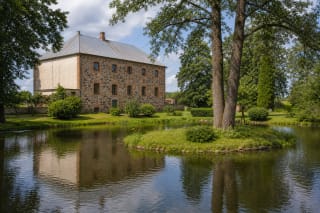
The exhibitions reflect the history and ethnography of Šilalė town and its region, from archaeological finds to rural household life and customs. The museum is more than one building: its divisions include the famous Dionizas Poška Baubliai in Bijotai, Upyna Ethnographic Museum, and Kazimieras Jaunius' granary in Lembas.
Visiting
At the time of research, the museum was open Tuesday-Friday 9:00-17:00 and Saturday 9:00-16:00, and closed Sunday and Monday. Tickets were inexpensive: about 0.50 EUR for adults, 0.30 EUR for school pupils, students, and seniors, with free entry for preschool children and disabled visitors. Check the official page for current hours and prices.
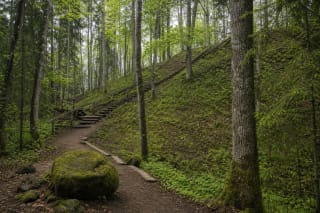
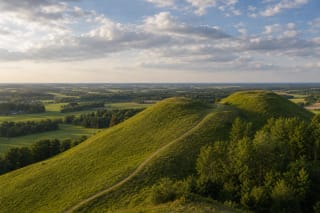
Allow 45-60 minutes for the central exhibition. A trip through the Šilalė area can become a full-day route by adding the Baubliai in Bijotai, the Upyna and Lembas divisions, and nearby hillfort and manor sites.