- Place
- Šilalė District Municipality
- Region
- Samogitia
- Type
- manor-estate fragments with a protected park
- Address
- Pajūris town, Pajūris Eldership, Šilalė District
- Coordinates
- 55.45520, 22.03620
Pajūris manor estate, Pajūris manor-estate fragments
Pajūris Manor: an Old Estate by the Jūra River
Pajūris Manor is in Pajūris town, Šilalė District, on the left bank of the Jūra River, about 12 km southwest of Šilalė. Here the name Pajūris does not mean the Baltic seashore; it means a place by the Jūra River. This is an inland town, not a coastal resort.
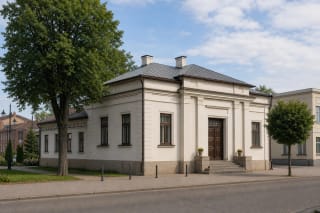
Only part of the centuries-old manor has survived, so the Cultural Heritage Register calls the object Pajūris manor-estate fragments. It is a state-protected estate of regional significance, covering about 11.4 ha.
The Brewery and Surviving Buildings
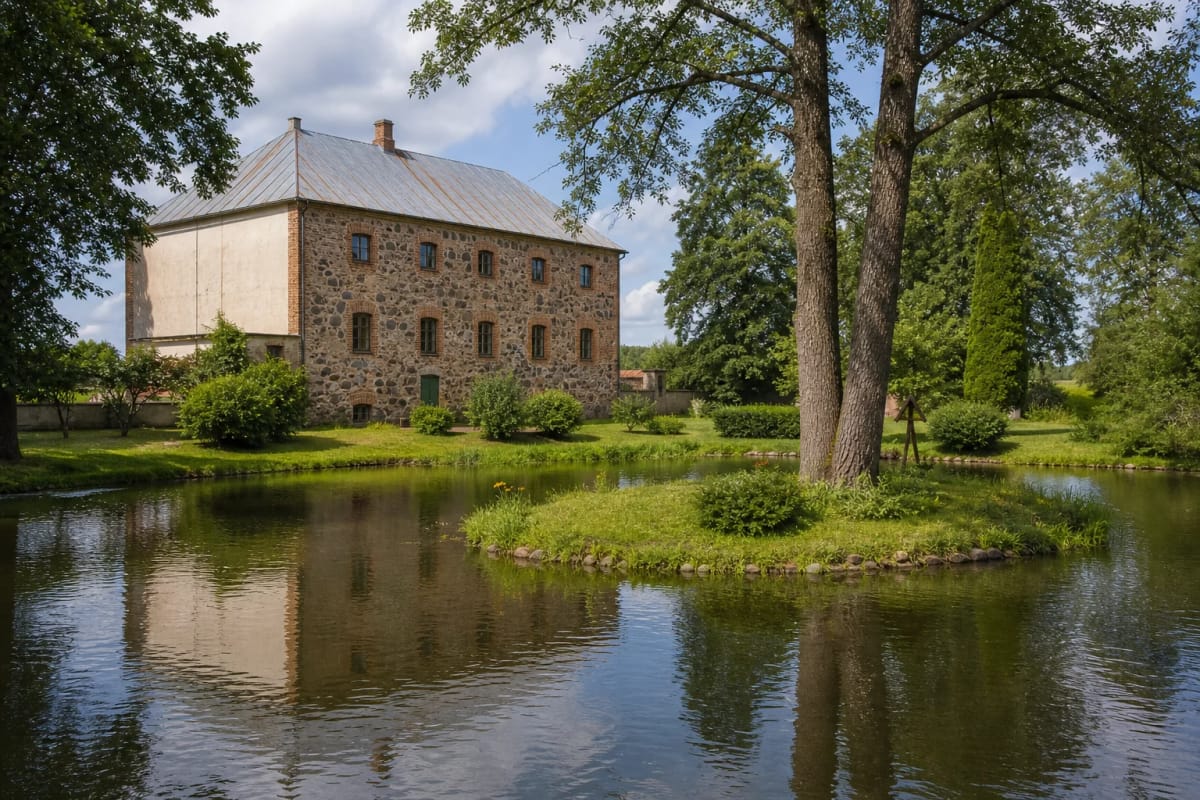
The most visible surviving building is the brick structure known as the brewery. It was once a distillery, built together with a brickworks by Jonas Povstanskis after he acquired the manor in 1859. The wooden manor house and most farm buildings have not survived; they decayed or burned, and the estate granary burned and was removed from the register in 2014.
The brewery building has an unusual history. In 1935 Kazimieras Nausėda donated part of the property to the Franciscans, who converted the former distillery into a monastery and moved their novitiate here; the monastery was solemnly consecrated on 19 May 1935. During the Soviet period the estate was nationalized and an agricultural school was established in the monastery building. Today apartments occupy the former brewery.
Estate History and Owners
Pajūris holdings are mentioned from the 16th century. In 1571 part of Pajūris Manor, lying between the Jūra and Lokysta rivers, passed to the foster daughter of the Rimkai family. In the 18th century the manor belonged to the Valavičius family; in 1854 it was bought by Adolfas Čapskis, marshal of Kaunas Governorate, and in 1859 he sold it to the Povstanskis family, who built the distillery.
In the early 20th century, Kazimieras Nausėda, who had returned from America, bought part of the manor with its brick buildings and set up a sawmill, water mill, and wool-carding workshop. The manor was nationalized in 1940. Some popular sources mention earlier dates or owners, but the most reliable data here is the heritage-register information.
Protected Park
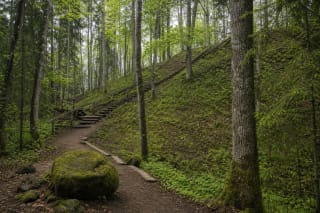
A state-protected manor park lies beside the buildings. Its most important feature is the system of three interconnected ponds in the central part, with an island in the first pond. The terrain descends in terraces toward the Jūra River.
The park preserves deciduous alleys, mainly ash, maple, and hornbeam, as well as individual old trees; an impressive oak grows near the third pond. It is a pleasant walking place, and the municipality has planned to renew the park and make it more actively used.
Visiting
Pajūris Manor is a freely accessible outdoor site: the protected park with ponds and old trees is a public walking space, while the brewery building is residential and in use, so it is viewed only from outside. There is no museum, ticket office, or opening-hours system here.
Allow 30-45 minutes. The best period is late spring to early autumn, when the park and ponds are at their most attractive. Combine the visit with Pajūris Holy Trinity Church, the Šilalė museum, and regional hillforts. Do not confuse this manor with nearby Pajūralis Manor by Kvėdarna.