- Place
- Plungė District Municipality
- Region
- Žemaitija National Park
- Type
- wooden sacred-heritage church with a belfry
- Address
- 2 Gaso Street, Beržoras, Plungė District
- Coordinates
- 56.02522, 21.81272
- Visit duration
- 45–90 minutes
- Best time
- Sunday morning for Mass, or daylight for the village and lake setting
Beržoras Church, Beržoro Šv. vysk. Stanislovo bažnyčia
A church beside Lake Beržoras
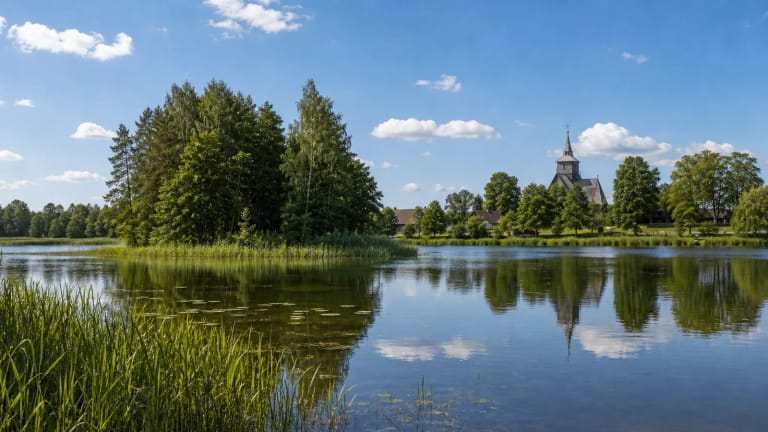
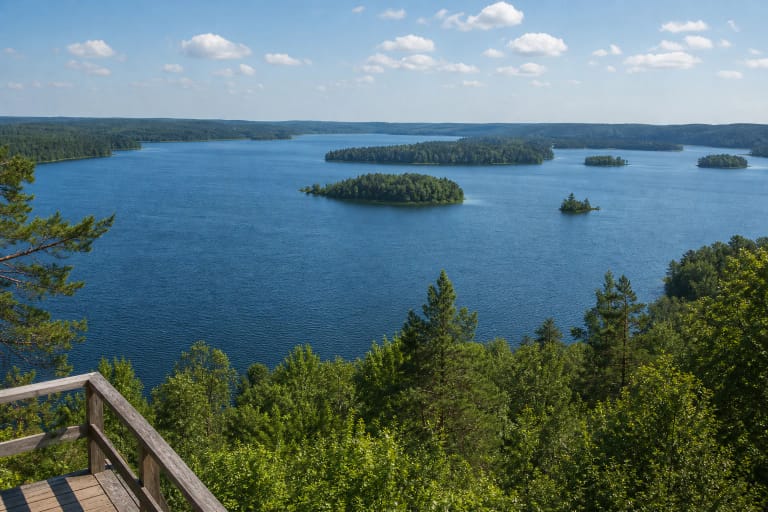
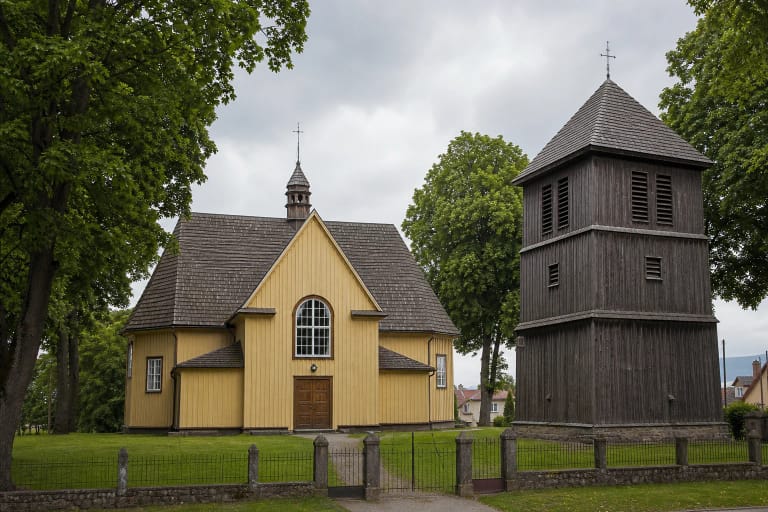
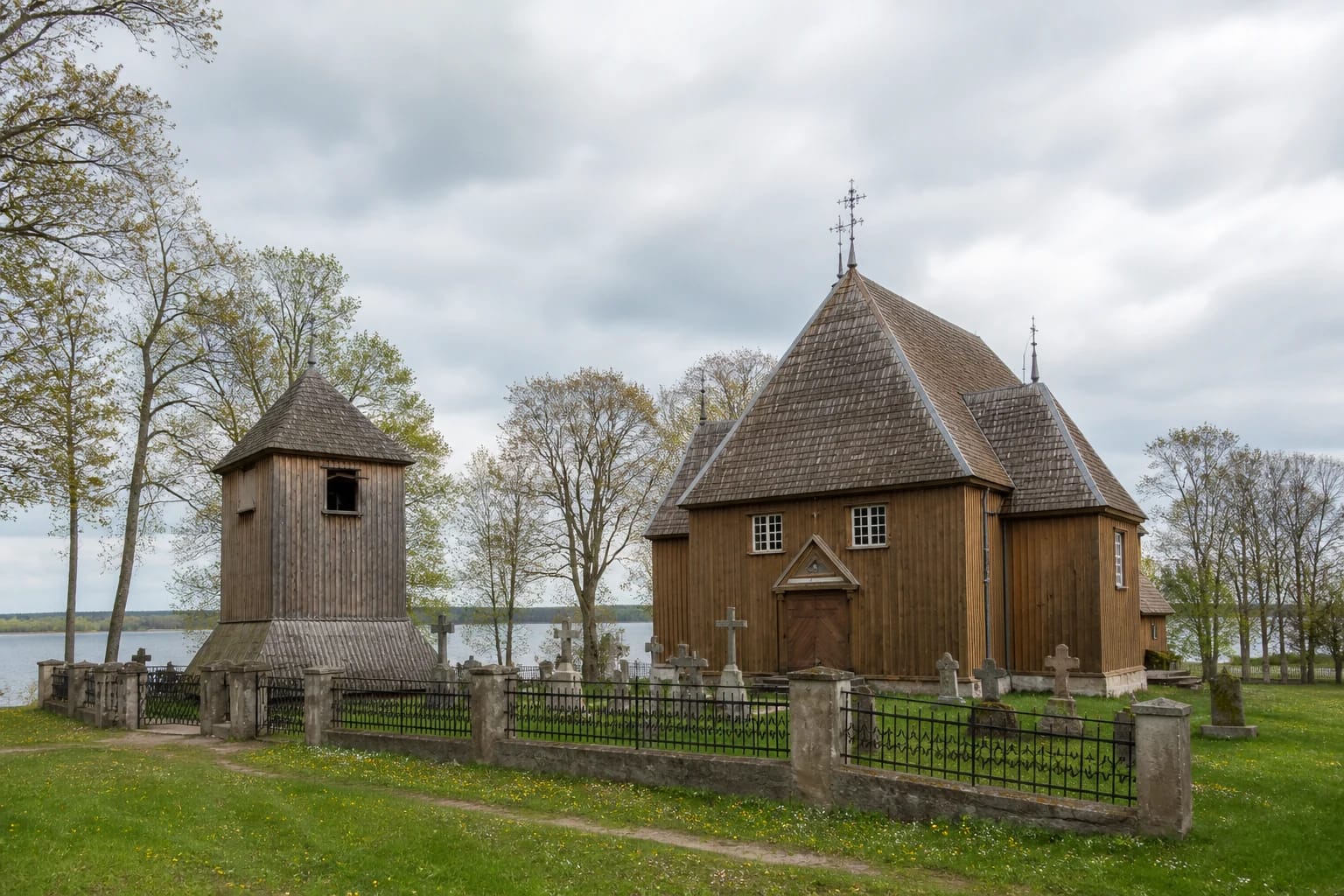
Beržoras Church stands on Gaso Street in the village of Beržoras, on the north-western shore of Lake Beržoras. You arrive not in a large town but in an old linear village, where the first impression combines a wooden church, separate belfry, cemetery, and lakeside landscape.
Beržoras is a surviving cultural-heritage village. Give the setting more than a quick façade photograph: walk around the churchyard, notice the relationship between church and belfry, and look towards the lake.
Folk wooden architecture
The church is a folk-architecture building with a Latin-cross plan, a three-sided apse, and a central towerlet. Its restrained volume rewards close viewing, when hand-worked timber, shingle roofing, and layers of later care become visible.
The interior retains works by local artists and Rococo carving in the high altar. Entry is not guaranteed as in a museum, so behave as in an active church during liturgy and arrange other interior visits or photography with the parish.
When was the church built?
The church is often dated to 1746, while dendrochronology identifies early timbers from 1737–1738 and another group from 1744–1745 and 1746–1747.
It is a mid-eighteenth-century building whose history is illuminated by several dating methods. A study on 11 July 2024 took 11 samples and produced 8 successful results.
Churchyard, belfry, and the Stations of the Cross
The Beržoras sacred ensemble continues beyond the church door. The churchyard contains the old Plateliai parish cemetery, a separate belfry, a chapel dedicated to St John of Nepomuk, and 14 wooden Stations of the Cross chapels.
The chapels were built in 1759–1760, destroyed in the middle of the twentieth century, and rebuilt after independence in the 1990s. Treat the route as a living religious and landscape site, respect the cemetery, and do not assume it functions like a uniform museum display.
A practical sacred-site visit
Telšiai Diocese lists Sunday Mass at 10:00, with services on other days by arrangement; confession is normally possible half an hour before Mass. Feast-day arrangements can differ, so confirm the time with the parish before making a dedicated journey.
Plan the visit in daylight, respect the cemetery and keep quiet during worship. If you want to see the interior or arrive with a group, check the parish arrangements first.